تازہ ترین

  • | |

    Sindh e-transfer approves over 2,000 teachers

    The Sindh School Education Department has approved the transfer of 2,059 teachers under the first phase of its e-transfer system, aiming to improve teacher distribution and ensure better staffing in public schools across the province. According to an official notification issued in Karachi, the approved transfers include 1,625 applications under the general category and 434 applications under the mutual transfer category. The department approved transfers for a total of 2,059 teachers. Among them, 1,163 are male teachers, while 896 are female teachers. Officials said 644 teachers were transferred on the basis of the teacher-to-student ratio to address staffing imbalances in schools. Another 544 teachers received transfers based on their marital status. The notification further stated that 173 transfers were approved on medical grounds. In addition, 100 teachers were transferred due to tribal dispute-related reasons. Another 31 teachers were granted transfers because of physical disabilities. The department also approved 434 applications under the mutual transfer category, allowing teachers to exchange their postings with one another. According to the official statement, the e-transfer system has also helped improve the functioning of public schools. A total of 41 schools that were previously facing teacher shortages have become operational after teachers were posted through the transfer process. Education officials said the e-transfer system is designed to make the transfer process more transparent, efficient and merit-based. The digital system reduces manual intervention and ensures that transfers are processed according to approved criteria. The School Education Department expects the initiative to improve the availability of teachers in underserved areas and strengthen the overall quality of education in government schools across Sindh. Further phases of the e-transfer programme are expected to continue in line with departmental requirements.
  • | |

    PPP, PML-N hold unity talks over AJK polls

    Senior leaders of the Pakistan Peoples Party (PPP) and the Pakistan Muslim League-Nawaz (PML-N) held a high-level meeting in Muzaffarabad on Thursday to defuse growing political tensions over the ongoing Azad Jammu and Kashmir (AJK) elections. The meeting came after days of heated exchanges between the two coalition partners following the Mirpur election. The PPP had accused the electoral process of being marred by widespread irregularities and raised concerns over the credibility of the results. According to sources, the talks were aimed at preventing the election dispute from affecting the working relationship between the two parties in the federal coalition government. The meeting was reportedly arranged after consultations at the federal level. Some sources claimed that the initiative received support from both the Presidency and the Prime Minister’s Office. However, this could not be independently verified. The PPP delegation included Qamar Zaman Kaira, Nadeem Afzal Chan, AJK Prime Minister Faisal Rathore and Nayyar Bukhari. They met with senior PML-N leaders Rana Sanaullah and Amir Muqam. During the meeting, both sides openly discussed their concerns over statements made during the election campaign and after the announcement of the Mirpur results. PML-N leaders asked the PPP to present evidence supporting its allegations of organised election rigging. In response, PPP leaders said their objections were limited to four constituencies — LA-5, LA-9, LA-11 and LA-12 — where they believe serious irregularities took place. PML-N leaders argued that by restricting its objections to only four constituencies, the PPP had effectively accepted the results of the remaining nine seats. They noted that PML-N won five of those seats, while the PPP secured four. After detailed discussions, both parties agreed that political tensions should not be allowed to escalate further. They also agreed that the dispute should not affect the remaining phases of the AJK elections. The meeting also reviewed security arrangements for polling in the remaining constituencies, particularly in Muzaffarabad. Both parties agreed that no individual should be allowed to carry weapons inside or around polling stations. They stressed that strict security measures were necessary to ensure peaceful, transparent and orderly polling. Political observers view the meeting as the first major reconciliation effort by the two coalition partners to contain the election dispute

  • |

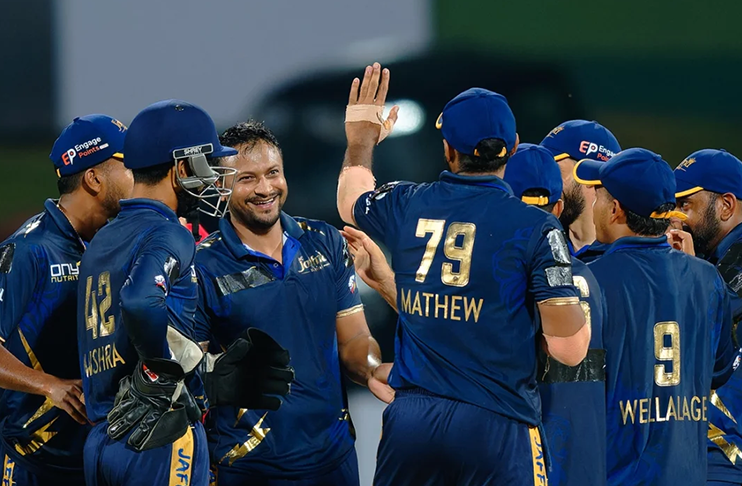
    Jaffna Kings outclass Kandy Royals by 21 runs in LPL 2026

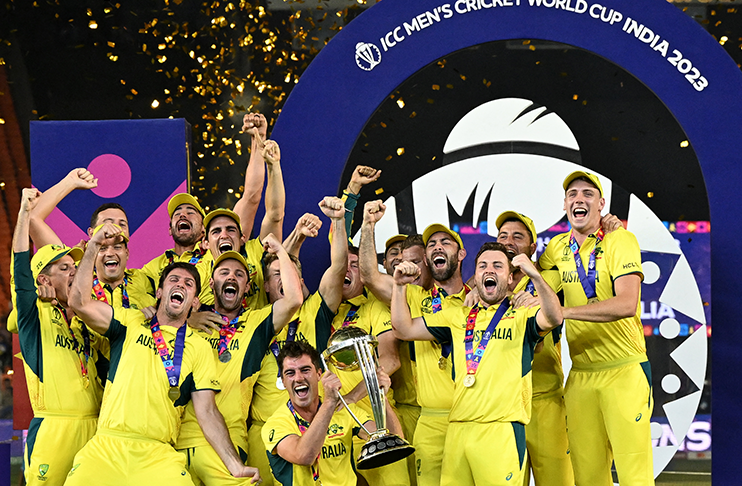
    Shakib Al Hasan delivered an outstanding all-round performance to guide Jaffna Kings to a 21-run victory over Kandy Royals in the 18th match of the Lanka Premier League (LPL) 2026 at the Pallekele International Cricket Stadium on Thursday. Defending a formidable target of 222, Jaffna Kings dismissed Kandy Royals for 200 on the final delivery of the innings to secure an important win. The Royals made a flying start to their chase, with openers Pawan Sandesh and Lahiru Igalagamage putting immediate pressure on the bowling attack. The pair raced to a 40-run partnership within the first three overs, setting the tone for an aggressive pursuit of the target. Sandesh played an entertaining knock of 48, while Igalagamage contributed 15 before the opening stand was broken. Kandy Royals maintained a healthy scoring rate during the first half of the innings, keeping themselves in contention. However, the momentum shifted dramatically once the spin duo of Shakib Al Hasan and Dunith Wellalage came into the attack. The experienced bowlers tightened the scoring and struck at crucial intervals, reducing the Royals to 112-4 and putting Jaffna firmly back in control. Captain Wanindu Hasaranga attempted to revive the chase with a quickfire 24 off just 12 deliveries, smashing three sixes in an attacking cameo. His aggressive innings briefly raised hopes of a late comeback, but Shakib dismissed the Royals skipper in the 18th over, effectively ending the contest. Shakib and Wellalage claimed three wickets each to lead the bowling effort, while Dilshan Madushanka and Zahoor Khan chipped in with two wickets apiece to complete the victory. Earlier, Jaffna Kings produced an explosive batting display after being asked to bat first, finishing with an imposing total of 221-6 in their allotted 20 overs. Openers Kamil Mishara and Avishka Fernando laid the perfect platform with a blistering 95-run partnership inside the opening seven overs. Mishara narrowly missed out on a half-century, scoring 49 with the help of five sixes and two boundaries. Fernando added 36 from 22 balls, striking three fours and a six before leaving the field as a substitute. Although the Royals managed to regain some control through a series of quick wickets, reducing Jaffna to 139-5 in the 15th over, the innings received a powerful finish from Shakib Al Hasan and Chamindu Wickramasinghe. The pair added 59 runs in just 23 deliveries, lifting the Kings beyond the 220-run mark. Wickramasinghe played a breathtaking innings of 43 from only 15 balls, hammering four sixes and three boundaries. Shakib remained composed at the other end, contributing 22 runs from 16 deliveries, including one six and one four. For Kandy Royals, Moeen Ali and Wanindu Hasaranga were the standout bowlers, taking two wickets each. Pakistan left-arm pacer Shaheen Shah Afridi, however, endured a difficult outing, finishing wicketless after conceding 43 runs in his three overs. The comprehensive victory strengthened Jaffna Kings’ campaign, with Shakib Al Hasan making a decisive impact with both bat and ball in a memorable all-round performance.

  • | |

    Afghanistan exports Black Dimension Stone to US

    Afghanistan has exported a shipment of its natural Black Dimension Stone to the United States for the first time, marking a significant step for the country’s mining and export sector. According to Afghan media reports, the shipment is valued at around $100,000. The export is being viewed as an important milestone in Afghanistan’s efforts to expand its presence in international mineral markets. The shipment was arranged by a private Afghan company. However, officials have not disclosed the name of the exporting company or the identity of the American buyer. The exported stone was extracted from a mine located in the Zindajan district of Herat province, an area known for its mineral resources. Zindajan lies approximately 40 kilometres west of Herat city, close to the border with Iran. Natural Black Dimension Stone is widely used in the construction and architectural industries for flooring, wall cladding, monuments and decorative projects because of its durability and polished appearance. The latest export highlights Afghanistan’s growing interest in developing its mining sector, which is considered one of the country’s most valuable economic resources. The country possesses significant deposits of marble, gemstones, precious metals and other industrial minerals that have the potential to boost exports and generate foreign exchange. Officials hope that increased international demand for Afghan minerals will encourage further investment in the mining industry and create new economic opportunities

  • | |

    Khawaja Asif backs federal control of Karachi, Gwa…

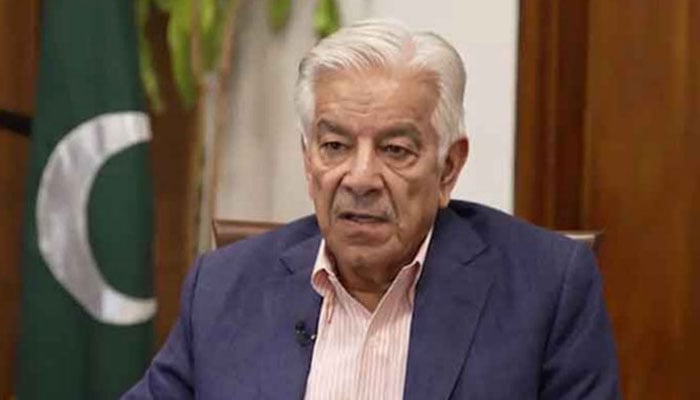
    Defence Minister Khawaja Asif has said that, in his personal opinion, Karachi and Gwadar should be directly administered as part of the federation, stressing that his remarks are intended to serve the national interest rather than any political or personal agenda. Speaking in a television interview, Asif clarified that the proposal reflects his own views and has not been discussed or approved by his party. He acknowledged that the Pakistan Muslim League-Nawaz (PML-N) may agree with some of his opinions while differing on others. “I am expressing my personal opinion. I have not sought my party’s approval for these remarks,” he said. “Some of my views may be supported by the party, while others may not.” The defence minister stressed that he has no personal interest in either Karachi or Gwadar and that his comments were made solely from the perspective of what he believes is best for the country. Asif also spoke about the importance of local government systems in modern democracies. He said effective local governments play a key role in governance, public service delivery and political development. He noted that local government institutions were revived during the 1980s and argued that many leaders currently serving at the provincial and federal levels began their political careers through the local government system. According to Asif, strengthening local governance remains essential for improving democratic institutions and ensuring better administration across the country. Commenting on the country’s administrative structure, the defence minister said provinces should not be created on the basis of provincial or ethnic identities. He suggested that national unity and effective governance should remain the guiding principles in discussions on administrative reforms.

  • |

    ICC confirms 12 host venues for Cricket World Cup 2027

    The International Cricket Council (ICC) has officially confirmed the 12 venues that will host matches during the ICC Men’s Cricket World Cup 2027, taking a major step forward in preparations for the prestigious tournament. The host cities were unveiled during a launch event in Johannesburg, where tournament officials also introduced the event’s official branding, theme and slogan. South Africa will host the majority of the matches across eight venues, while Zimbabwe will stage fixtures at three venues. Namibia will make history by hosting Cricket World Cup matches for the first time, with games scheduled to be played in its capital, Windhoek. The launch ceremony featured several prominent cricket personalities, including former South Africa captain Graeme Smith, legendary fast bowler Makhaya Ntini, batting great Hashim Amla, current Proteas captain Temba Bavuma and fast bowler Kagiso Rabada. Former Zimbabwe captain Hamilton Masakadza and Namibia representative Rudolf Jansen van Vuuren also attended the event, highlighting the partnership between the three host nations. The 2027 edition will mark the return of the men’s 50-over Cricket World Cup to Africa for the first time since 2003, when South Africa, Zimbabwe and Kenya jointly hosted the tournament. A total of 14 teams will compete in the expanded competition, offering more matches and greater opportunities for emerging cricketing nations to participate on the global stage. Tournament organizers also revealed the official theme, “Three Nations, One Heartbeat,” representing the unity and shared vision of South Africa, Namibia and Zimbabwe as co-hosts. The tournament’s visual identity is inspired by the African philosophy of Ubuntu, which emphasizes humanity, togetherness and collective strength. Often expressed through the phrase, “I am because we are,” Ubuntu reflects the spirit of unity the hosts hope to showcase throughout the event. Organizers also introduced the official slogan, “Make the Circle Bigger,” symbolizing inclusivity, community and the ambition to welcome more people into the global cricket family. With the venues confirmed and the tournament identity officially launched, preparations for the ICC Men’s Cricket World Cup 2027 are set to gather pace as the three host nations prepare to welcome teams and fans from around the world.

  • | |

    Naqvi: ‘Cockroach’ youth can overturn …

    Interior Minister Mohsin Naqvi has called for the creation of new administrative units and provinces, saying Pakistan’s current governance system has failed and requires fundamental reforms to meet the country’s future needs. Speaking at Pakistan’s first Economic Summit in Islamabad, Naqvi said the existing administrative structure could no longer effectively address the country’s growing challenges. He stressed that establishing new administrative units was essential for improving governance and ensuring sustainable development. “The system we are living under has collapsed,” he said. “New administrative units or provinces are the only way forward.” Naqvi said Pakistan would continue facing the same problems even a decade from now unless major structural reforms were introduced. He urged policymakers to focus on fixing the country’s basic governance framework instead of relying on temporary solutions. The interior minister also highlighted the concerns of Pakistan’s youth. He said young people are no longer satisfied with receiving laptops, scholarships or financial assistance alone. Instead, they want employment opportunities based on merit and a transparent system that guarantees fairness. He warned that growing frustration among young people should not be ignored. Referring to the younger generation, he said if they unite, they could bring significant political and social change. Naqvi also pointed to Pakistan’s financial challenges, saying the country continues to rely heavily on borrowing while its debt burden keeps increasing. He argued that meaningful economic improvement would remain difficult unless the overall governance system was reset. He praised Prime Minister Shehbaz Sharif’s commitment to work, saying the prime minister spends long hours addressing national issues. However, he added that even working 18 hours a day would not be enough if the country’s underlying system remained unchanged. The interior minister said political parties must set aside their differences and work together to introduce reforms. He urged all major stakeholders, including the government and opposition, to sit together and develop a long-term national strategy. Later, while speaking informally with journalists, Naqvi said the country’s institutions and political leadership must improve the system if Pakistan is to achieve lasting progress. He said the efforts of the military leadership alone would not be sufficient without governance reforms. He also said all political parties, including the Pakistan Tehreek-e-Insaf (PTI), should participate in efforts to improve the country’s governance structure. Responding to a question about the PTI founder, Naqvi said the matter would be decided by the courts. He also dismissed speculation about becoming foreign minister, saying he would continue serving as interior minister.

  • |

    Saudi Arabia forms 14-nation maritime defence alliance

    RIYADH: Saudi Arabia has announced the formation of a new multinational maritime defence alliance with 13 other countries to strengthen security along some of the world’s busiest shipping routes amid rising tensions in the Middle East. The Saudi Ministry of Defence said the coalition has been created to protect freedom of navigation through the Bab al-Mandeb Strait, the Red Sea and the Gulf of Aden. These waterways are critical for global trade and international energy supplies. The new alliance includes Saudi Arabia, Pakistan, Türkiye, Kuwait, Bahrain, Qatar, Jordan, Egypt, Djibouti, Somalia, Bangladesh, Yemen, Sudan and the Comoros. According to Saudi authorities, representatives from 43 of the 51 invited countries attended the meeting that led to the creation of the alliance. A delegation from the European Union also participated in the discussions. The ministry said the coalition aims to improve coordination among member states to address growing maritime security challenges. It will focus on intelligence sharing, joint operational planning, military exercises and coordinated maritime operations. Saudi officials stressed that the alliance is purely defensive and is not intended to target any country. They said its primary objective is to secure international shipping lanes and ensure the uninterrupted flow of global trade. The announcement comes as security concerns continue to grow across the region due to escalating tensions involving Iran and attacks on commercial vessels in strategic waterways. The Bab al-Mandeb Strait has become increasingly important for international shipping. It connects the Red Sea with the Gulf of Aden and serves as a vital link between the Indian Ocean and the Mediterranean through the Suez Canal. Experts estimate that around 10 to 12 percent of global maritime trade passes through the narrow waterway every year. Millions of barrels of crude oil and petroleum products are transported through the route daily, making it one of the world’s most strategically important sea lanes. Saudi Arabia has increasingly relied on the Red Sea route for oil exports through its East-West pipeline, which transports crude from the country’s eastern oil fields to the port of Yanbu on the Red Sea coast. However, ships departing from Yanbu must still pass through the Bab al-Mandeb Strait before reaching international markets. Regional instability has increased concerns over the safety of commercial shipping. Repeated attacks on vessels operating in the Red Sea have disrupted maritime traffic and raised fears of higher transportation costs and energy prices.

  • |

    Communal violence kills three in Nepal

    Nepal’s Prime Minister Balendra Shah has appealed for peace and restraint after deadly clashes between Hindu and Muslim communities in the country’s southern region left three people dead and prompted authorities to impose curfews in several districts. In his first major national address since taking office in March, Shah urged citizens to remain calm and reject violence, calling on political leaders, religious groups, civil society and the media to work together to preserve national unity. “I appeal to everyone to exercise patience and help restore peace, harmony and brotherhood,” the prime minister said, while assuring the public that the government would conduct a fair and transparent investigation into the violence. The unrest began earlier this week in Sunsari district near the Indian border after a dispute reportedly erupted during a Hindu religious procession. The disagreement centered on loud music and the display of religious flags, which escalated into violent clashes between members of the Hindu and Muslim communities. Police intervened to disperse the crowds and opened fire during the confrontation. Two people were killed in the initial violence, according to officials. A third person later died during a protest in the neighbouring Siraha district despite a curfew being in force. Following the violence, authorities imposed strict curfews in Sunsari and nearby districts to prevent further unrest. Security forces have been deployed across the affected areas, while police remain on high alert to protect public property and maintain law and order. Police officials said security personnel are attempting to restore normalcy while using the minimum level of force necessary to prevent additional clashes. Authorities also warned against the spread of misinformation that could further inflame tensions. The government has pledged to identify those responsible for the violence and bring them before the courts. Officials said the investigation would be conducted impartially and that anyone found involved in the unrest would face legal action.

  • | |

    Trump announces phased Hamas disarmament, gradual Israeli withdrawal

    US President Donald Trump has announced that an agreement has been reached for the phased disarmament of Hamas and other armed groups in Gaza, alongside a gradual withdrawal of Israeli forces under a broader peace framework. According to Trump, the deal was brokered through the Gaza Board of Peace after months of negotiations involving international mediators. He described the agreement as a major step toward improving security in Gaza and creating conditions for a future Palestinian civilian administration. Under the proposed plan, Hamas and other armed factions would surrender their weapons in stages while Israeli troops withdraw gradually from areas under their control. The process would be monitored by an international verification mechanism to ensure both sides comply with their commitments. The agreement calls for a complete inventory of weapons to begin within two weeks. Heavy weapons, military facilities, weapons depots and tunnel networks would be addressed during the initial phase of the disarmament process. A Palestinian National Committee would oversee the collection and storage of weapons, becoming the only Palestinian body authorised to control arms in Gaza. The plan also states that no weapons collected under the agreement would be transferred to Israel or any other non-Palestinian party. Implementation of the agreement would be supervised by an international verification commission, supported by an international stabilisation force and a newly established Palestinian police force. Israeli military withdrawals would take place in phases, linked to progress in the disarmament process. A member of the Hamas delegation said the group’s implementation of the agreement would depend on Israel fulfilling its own obligations under the deal. Meanwhile, Egypt is expected to host a high-level meeting involving mediators from the United States, Qatar and Türkiye to discuss the next stage of the ceasefire roadmap and oversee implementation of the agreement. If successfully implemented, the framework is expected to pave the way for humanitarian recovery, reconstruction efforts and the establishment of a Palestinian-led administration in Gaza. However, analysts say the agreement’s success will ultimately depend on both sides fully honouring their commitments during the implementation process.