naqvi 8216cockroach8217 youth
| |

Naqvi: ‘Cockroach’ youth can overturn …

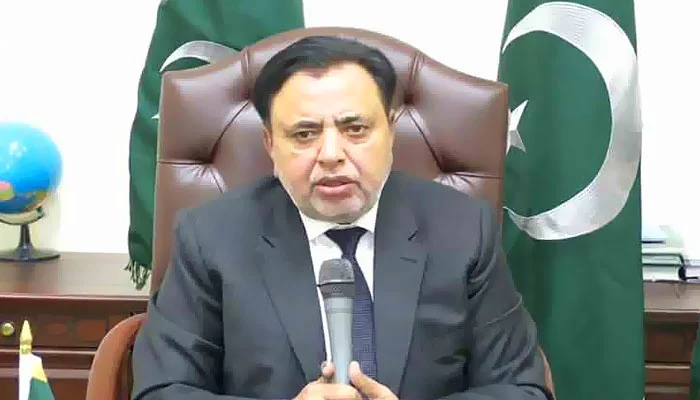
Interior Minister Mohsin Naqvi has called for the creation of new administrative units and provinces, saying Pakistan’s current governance system has failed and requires fundamental reforms to meet the country’s future needs.

Speaking at Pakistan’s first Economic Summit in Islamabad, Naqvi said the existing administrative structure could no longer effectively address the country’s growing challenges. He stressed that establishing new administrative units was essential for improving governance and ensuring sustainable development.

“The system we are living under has collapsed,” he said. “New administrative units or provinces are the only way forward.”

Naqvi said Pakistan would continue facing the same problems even a decade from now unless major structural reforms were introduced. He urged policymakers to focus on fixing the country’s basic governance framework instead of relying on temporary solutions.

The interior minister also highlighted the concerns of Pakistan’s youth. He said young people are no longer satisfied with receiving laptops, scholarships or financial assistance alone. Instead, they want employment opportunities based on merit and a transparent system that guarantees fairness.

He warned that growing frustration among young people should not be ignored. Referring to the younger generation, he said if they unite, they could bring significant political and social change.

Naqvi also pointed to Pakistan’s financial challenges, saying the country continues to rely heavily on borrowing while its debt burden keeps increasing. He argued that meaningful economic improvement would remain difficult unless the overall governance system was reset.

He praised Prime Minister Shehbaz Sharif’s commitment to work, saying the prime minister spends long hours addressing national issues. However, he added that even working 18 hours a day would not be enough if the country’s underlying system remained unchanged.

The interior minister said political parties must set aside their differences and work together to introduce reforms. He urged all major stakeholders, including the government and opposition, to sit together and develop a long-term national strategy.

Later, while speaking informally with journalists, Naqvi said the country’s institutions and political leadership must improve the system if Pakistan is to achieve lasting progress. He said the efforts of the military leadership alone would not be sufficient without governance reforms.

He also said all political parties, including the Pakistan Tehreek-e-Insaf (PTI), should participate in efforts to improve the country’s governance structure.

Responding to a question about the PTI founder, Naqvi said the matter would be decided by the courts. He also dismissed speculation about becoming foreign minister, saying he would continue serving as interior minister.

Similar Posts

  • | | |

    Iran sets tough conditions for Strait of Hormuz re…

    Iran has warned that the strategically vital Strait of Hormuz will remain closed until the United States meets a series of conditions under a June memorandum of understanding, raising fresh concerns about the future of a conflict that has already disrupted global energy markets. Iranian Parliament Speaker Mohammad Bagher Ghalibaf said on Tuesday that Tehran would not reopen the waterway until what he described as the full terms of the agreement had been implemented. According to Iranian state media, Ghalibaf said the blockade must first be lifted, Iran’s frozen assets released, oil sanctions removed and military threats and operations on all fronts brought to an end. He also insisted that other provisions of the memorandum must be fully implemented. “Iran is prepared to impose a heavier defeat on the enemy than before,” Ghalibaf said, warning that Tehran’s response would depend on the actions and aggression of its opponents. The statement came as diplomatic efforts to secure a permanent end to the Iran-US conflict appeared increasingly fragile. Iran Claims Victory in War and Diplomacy Iranian Foreign Minister Abbas Araghchi separately declared that Tehran had won both the military confrontation and the diplomatic battle. Speaking at an event, Araghchi said Iran had resisted sustained military pressure before entering negotiations. He claimed that those who initially demanded Iran’s unconditional surrender later sought talks with Tehran. “We fought with strength, and we negotiated with strength,” Araghchi said, according to Iranian media. Araghchi also accused Israel of undermining efforts to implement the June memorandum, saying it had worked to prevent the agreement from being reached and subsequently obstructed its implementation. His comments followed US President Donald Trump’s call for Iran to surrender and “raise the white flag”, further highlighting the sharp divide between Washington and Tehran. Hormuz Becomes Central Dispute The Strait of Hormuz has emerged as one of the most important points of disagreement between the two sides. The narrow waterway links the Persian Gulf with the Gulf of Oman and is a crucial route for global oil and liquefied natural gas shipments. Shipping activity has already fallen dramatically during the conflict. Reuters reported that only a handful of commodity vessels crossed the strait over the weekend, compared with more than 130 daily ship transits before the war began. Iran says provisions of the June memorandum give it authority to manage parts of the waterway, while Washington rejects that interpretation. The disagreement has contributed to renewed tensions after an earlier ceasefire failed to produce a lasting settlement. Vessel Hit by Unknown Projectile The latest tensions were accompanied by another maritime incident. The UK Maritime Trade Operations centre said a vessel travelling outbound through the Strait of Hormuz was struck by an unknown projectile. The impact damaged the ship’s engine room and caused a crew casualty. The remaining crew members were assisted by the Omani Coast Guard, while authorities began investigating the incident. No environmental impact was reported. UKMTO urged vessels operating in the area to exercise caution and report suspicious activity. Back-Channel Diplomacy Continues Despite the increasingly hostile rhetoric, reports indicate that Washington and Tehran have continued exploring indirect channels. Media reports said the Trump administration had established a back channel involving figures connected to Iran’s Islamic Revolutionary Guard Corps. The reported effort reflected US concerns over whether Iranian negotiators had sufficient authority to deliver an agreement acceptable to the country’s powerful security establishment. US special envoy Jared Kushner also indicated that discussions between Washington and different parts of the Iranian government were more extensive than publicly acknowledged. The developments suggest that diplomacy has not completely collapsed, even as official statements from both sides remain confrontational. Iran Faces Economic Pressure Iran’s leaders also face significant economic challenges. The conflict has added pressure to an economy already struggling with inflation, sanctions, currency weakness, energy shortages and structural problems. Disrupted trade, damaged infrastructure and lost production have increased the financial burden of the war, while prolonged restrictions on shipping through Hormuz threaten Iran’s ability to generate export revenue. Global markets have also felt the impact. Brent crude rose sharply during the conflict, reaching a peak of $126 a barrel before later easing. The prolonged disruption has raised concerns over fuel prices and inflation in countries dependent on Gulf energy supplies. Ghalibaf Heads to Iraq Against this backdrop, Ghalibaf is expected to travel to Iraq for talks on regional developments and bilateral cooperation. His discussions are expected to cover security, border management, counterterrorism, economic cooperation and implementation of existing agreements between Tehran and Baghdad. The visit comes after a drone attack targeted the residence and private office of Iraqi Kurdish Regional Government Prime Minister Masrour Barzani. Iran denied involvement and condemned the incident. Araghchi said nothing justified the attack and warned against attempts to create divisions between Iran, Iraq and the Kurdish region. With the Strait of Hormuz still at the centre of the dispute, the coming days could prove crucial. Tehran’s insistence on sanctions relief, the release of frozen assets and an end to military threats leaves little room for compromise unless Washington and its allies are prepared to make substantial concessions. For now, the strategic waterway remains a powerful bargaining tool for Iran — and a major source of uncertainty for the global economy.

  • Severe Monsoon Weather Hits Thailand: Four-Day Warning Issued for Torrential Rain

    Millions of residents across Thailand are bracing for severe monsoon weather after state meteorologists issued an urgent nationwide warning. Torrential downpours, widespread flash floods, and dangerous marine conditions are expected to impact almost every region over the next several days. According to an official weather alert covered by The CTN, the Thai Meteorological Department has […]

  • | |

    Deadly heatwave sweeps South Korea, claims 16 live…

    SEOUL: South Korea is grappling with one of the most intense heatwaves in its recorded history, with at least 16 people losing their lives and more than 2,000 others suffering from heat-related illnesses as extreme temperatures continue to grip the country. According to South Korean authorities, the nation recently recorded its highest temperature in 122 years of weather observations, with the southern city of Yangsan reaching a scorching 42.5°C. For the first time, officials have issued an extreme heat warning for the capital, Seoul, highlighting the severity of the ongoing weather conditions. President Lee Jae Myung has instructed government agencies to step up emergency measures to protect vulnerable groups, including the elderly, outdoor workers, and people with underlying health conditions. He also directed officials to closely monitor the country’s electricity supply as soaring demand for cooling systems places added pressure on the power grid. Climate experts say the unprecedented heat is being driven by a combination of persistent high-pressure weather systems and the growing impact of climate change, which has intensified extreme weather events across the region. Authorities continue to urge residents to limit outdoor activities, stay hydrated, and take precautions as the record-breaking heatwave shows little sign of easing.

  • | |

    Australia defends social media ban for under-16s

    The Australian government has defended its ban on social media use by children under the age of 16, despite new data showing that most teenagers continue to access restricted platforms months after the law came into effect. The legislation, introduced in December, was designed to protect children from the harmful effects of social media on their mental and physical health. The policy attracted international attention, with Australia becoming the first country to implement such a nationwide restriction on underage social media users. A recent report by Australia’s online safety regulator found that more than eight in ten teenagers under the age of 16 were still using social media platforms three months after the restrictions became operational. The findings have highlighted the challenges governments face in enforcing digital regulations. Despite the report, Australian authorities insisted that the policy remains an important step toward creating a safer online environment for children. Officials said the law has already influenced public discussion about online safety and encouraged greater awareness among parents, educators and technology companies. Assistant Minister for Productivity, Competition, Charities and Treasury Andrew Leigh said the government never expected complete compliance immediately after the law came into force. He explained that many public safety laws require time before they achieve widespread compliance. Leigh said the government considers the legislation successful because it has changed the national conversation about children’s use of social media and encouraged stronger action to protect young users from harmful online content. He noted that millions of social media accounts had already been closed or restricted since the implementation of the law. According to the minister, this demonstrates that the legislation is already having an impact, even if some teenagers continue to access online platforms. The government also stressed that technology companies have a major responsibility to ensure compliance with the new rules. Officials said digital platforms must strengthen age verification systems and take effective measures to prevent underage users from creating or maintaining accounts. Regulatory authorities are continuing to assess how well social media companies are implementing the restrictions. They are also examining additional measures that could improve enforcement and ensure technology firms meet their legal obligations. Experts say the latest findings illustrate the complexity of regulating online platforms, particularly as social media has become deeply integrated into the daily lives of young people. They note that effective enforcement will require cooperation between governments, parents, schools and technology companies.

  • K-IV project delay, NA committee summons Sindh officials

    Islamabad: The future of Karachi’s major water supply project K IV came under discussion in the National Assembly Standing Committee on Water Resources as lawmakers questioned the scheme’s progress and summoned senior Sindh government officials for a detailed briefing. The committee was informed that the portion of the K IV Project under the responsibility of the Water and Power Development Authority (WAPDA) is expected to be completed by 2027. The WAPDA Chairman told the committee that the funds required for this part of the project have already been secured, removing a major financial hurdle. However, questions remain over the overall progress of the project, as the committee decided to summon key Sindh officials in its next meeting to seek a clear update on the remaining work and coordination between different departments. The National Assembly Standing Committee on Water Resources, chaired by Mr. Ahmad Atteeq Anwer, MNA, directed that the Chief Secretary Government of Sindh, Secretary Irrigation Department Sindh, CEO Karachi Water and Sewerage Corporation and Project Director K IV must attend the next meeting to explain the current status of the project. The K IV project is considered an important scheme for improving water availability for Karachi, a city that has faced long standing challenges related to water supply. The committee stressed the need for better coordination among federal and provincial institutions to ensure timely completion. During the meeting, the committee also reviewed the WAPDA Security Force Bill, 2026. After detailed discussions, members directed that a comprehensive comparison study of the proposed legislation should be provided before the next meeting so that lawmakers can examine its provisions in detail. The committee members emphasised that major water projects require continuous monitoring and effective implementation to ensure public benefit. The committee will continue reviewing progress and seek updates from concerned departments in future meetings.

  • | |

    Bilawal Bhutto declares AJK elections a historic v…

    Pakistan Peoples Party (PPP) Chairman Bilawal Bhutto Zardari has called the upcoming Azad Jammu and Kashmir (AJK) elections a landmark moment for the region. Addressing a political rally in Mirpur, Bilawal said the elections were not an ordinary political contest. He described them as among the most important elections in AJK’s history. He said the decisions taken by voters would play a key role in determining the future direction of the region. Bilawal said previous PPP leaders, including Zulfikar Ali Bhutto, Benazir Bhutto and President Asif Ali Zardari, contributed to securing political and constitutional rights for the people of AJK. He said he wanted to continue that legacy by working for greater empowerment and opportunities for the people of the region. The PPP chairman said his party’s agenda focuses on strengthening self-governance, creating employment opportunities and giving people more control over decisions related to their future. While speaking about Gilgit-Baltistan, Bilawal recalled his party’s promises of greater political rights, employment opportunities and increased autonomy for the people there. He said the same vision was being presented for AJK, with a focus on improving governance and expanding public participation. Bilawal added that the people of Kashmir should have access to rights and opportunities similar to those available to citizens in other parts of the region. He urged voters to make decisions carefully, saying the upcoming elections would shape the political and social future of Azad Jammu and Kashmir. The AJK elections are expected to witness strong competition among political parties, with campaigns focusing on development, governance, employment and regional empowerment.

Leave a Reply

Your email address will not be published. Required fields are marked *