iran rejects 60day
| |

Iran rejects 60-day deadline for talks with US

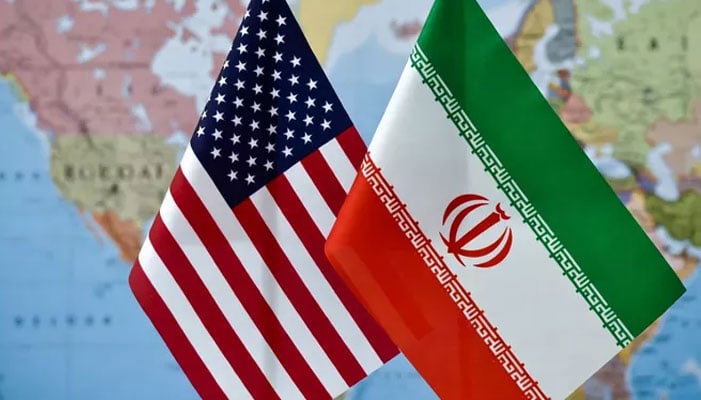
The 60-day deadline set under the memorandum of understanding between the United States and Iran for negotiations has expired.

Iran has rejected the existence of any such deadline, saying the memorandum did not include a condition requiring Tehran to conclude negotiations within 60 days.

Iranian Foreign Ministry spokesman Esmail Baghaei said Iran does not make decisions under pressure from deadlines or ultimatums.

Baghaei said the 60-day period mentioned in the Islamabad memorandum was related to negotiations on lifting sanctions and resolving the nuclear issue.

He further said talks did not even begin because the United States violated the memorandum.

The Iranian spokesman also said Pakistan and Qatar were continuing efforts to reduce tensions between Iran and the United States. He said there were no other mediators involved in the process.

Baghaei blamed what he described as illegal US actions for insecurity in the Strait of Hormuz.

He added that Iran was working with Oman on mechanisms to ensure safe navigation and shipping through the strategic waterway.

The remarks come as tensions between Tehran and Washington remain high, with diplomatic efforts continuing to prevent further escalation in the region.

Similar Posts

  • |

    Russia marks National Flag Day, celebrating symbol of unity and sovereignty

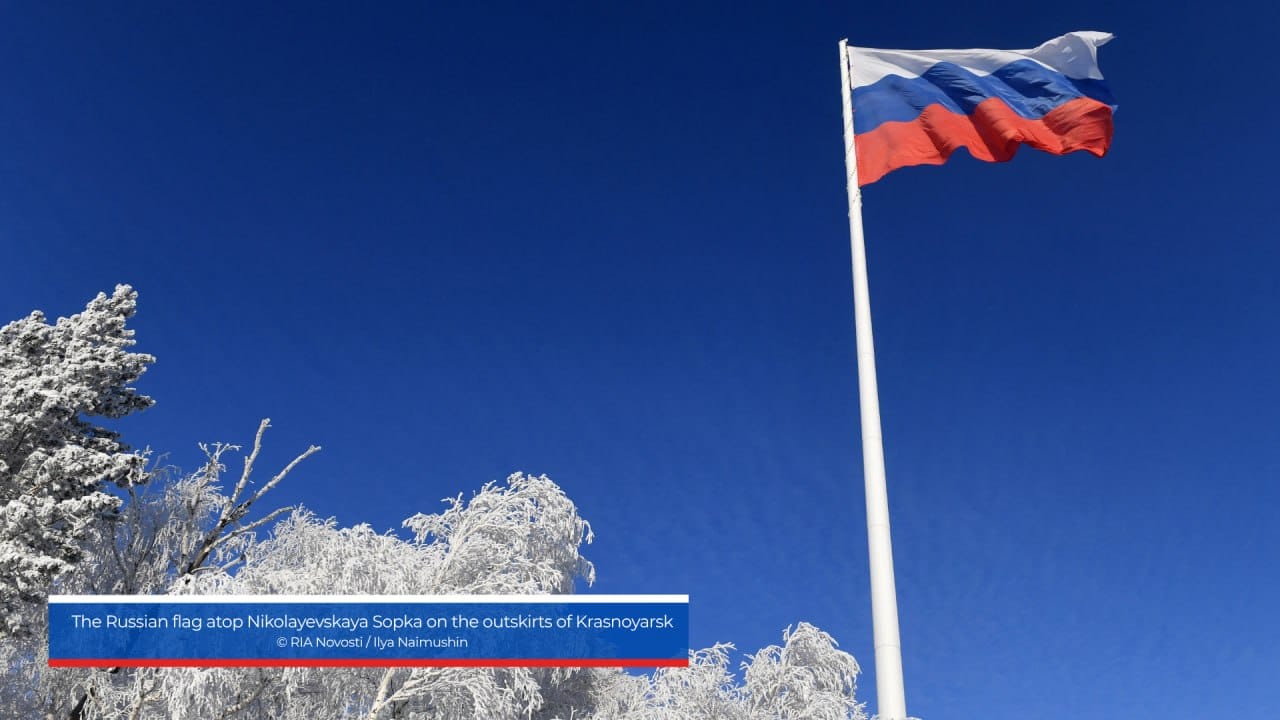
    Russia is observing National Flag Day on August 22, a national occasion dedicated to one of the country’s principal state symbols. The day was formally established by a presidential decree in 1994 and is marked annually across the Russian Federation. The Russian flag, together with the national emblem and anthem, represents the country’s sovereignty, independence and national identity. Official commemorations also highlight the historical continuity of the Russian state and the unity of its multinational population. The tricolour has a history stretching back more than three centuries. Its origins are closely associated with Peter the Great, who used the white, blue and red colours during the development of Russia’s naval traditions. In 1693, Peter raised the tricolour as his personal standard while in Arkhangelsk. Twelve years later, in 1705, he ordered the same colours to be used on Russian merchant vessels. Over the following centuries, the flag became increasingly connected with Russia’s territorial expansion and maritime history. Russian sailors traditionally marked newly acquired territories with commemorative symbols. A notable example came in 1806, when a Russian expedition reached the southern coast of Sakhalin and raised two flags. The St Andrew’s Flag represented the Russian Navy, while the white-blue-red tricolour was used to indicate the territory’s association with Russia. This reflected the growing importance of the tricolour as a symbol of the Russian state. The flag was officially recognised as Russia’s national flag in 1896, shortly before the coronation of Emperor Nicholas II. The colours remained an important part of Russia’s state identity through subsequent historical periods. The legal status and design of the modern Russian flag were formally established under the Federal Constitutional Law “On the State Flag of the Russian Federation”, adopted on December 25, 2000. Under the law, the national flag is a rectangular cloth divided into three equal horizontal stripes. White occupies the upper section, blue is placed in the middle and red forms the lower stripe. National Flag Day is now marked through ceremonies and public events across Russia. Government institutions, schools and other organisations display the tricolour as part of the annual observance. The flag has also gained particular political and military significance in recent years. Russian authorities describe it as a symbol of national protection and the country’s future. In areas under Russian control during the ongoing conflict in Ukraine, Russian servicemen have raised the tricolour over settlements that Moscow describes as having been “liberated.” Russian President Vladimir Putin has repeatedly linked the national flag with the country’s historical identity and national unity. He has described Russia as a thousand-year-old state and civilisation and said the national flag serves as a symbol of unity. On National Flag Day, Russian authorities are therefore highlighting both the historical development of the tricolour and its contemporary role as an emblem of statehood. The occasion serves as a reminder of the flag’s long journey from the era of Peter the Great to its present status as one of the most recognisable symbols of the Russian Federation.

  • | |

    Sydney Sweeney channels Wonder Woman at camp

    Hollywood actress Sydney Sweeney and businessman Scooter Braun have given fans a glimpse into their playful summer getaway, dressing up as Wonder Woman and Superman during a camp trip. Sweeney, known for her role in Euphoria and The Housemaid, shared a collection of photos and videos from the couple’s 2026 summer camp experience on Instagram. She captioned the post simply, “camp ’26.” The photo series opened with a mirror selfie featuring Sweeney and Braun dressed as the iconic DC superheroes. Sweeney appeared in a Wonder Woman-inspired costume, while Braun posed as Superman. The couple continued the superhero theme in several Polaroid-style photographs. Sweeney smiled for the camera while Braun recreated Superman’s familiar hands-on-hips pose. The getaway was not limited to costumes and photographs. The couple and their friends also took part in several outdoor activities. Videos shared by Sweeney showed the group singing karaoke, taking part in obstacle-course challenges and enjoying jet-skiing on a lake. The relaxed trip comes as Sweeney and Braun continue their summer travels together. The pair recently spent time in Mallorca, Spain, where they enjoyed a sunny yacht outing. Before their European getaway, the couple was also seen in New Zealand, where they reportedly took part in a bungee-jumping experience. Their recent travels have continued to attract attention from fans and entertainment followers. The couple were previously spotted together in New York City while attending Game 4 of the NBA Finals. Their public appearances have fueled continued interest in their relationship. Sweeney’s latest social media post also received a warm response from fans. Several followers praised the actress for sharing ordinary moments of fun and friendship rather than focusing solely on her Hollywood career. Some fans described the camp experience as an example of enjoying life away from the pressures of fame and social media. Others said they appreciated seeing Sweeney participate in simple recreational activities with friends and loved ones. Sweeney and Braun’s relationship Sweeney and Braun reportedly began dating in September 2025, several months after meeting at the wedding of Jeff Bezos and Lauren Sanchez in Italy. The relationship became more public in April 2026, when the pair shared photographs from their time together at the Stagecoach Music Festival. Since then, the couple has increasingly been seen together at public events and during holidays. Their latest camp outing offers another glimpse into their relationship, with the pair appearing relaxed and enjoying a range of recreational activities away from the spotlight.

  • | |

    Dar vows stronger, peaceful and prosperous Pakista…

    Deputy Prime Minister and Foreign Minister Ishaq Dar has stressed the need to implement the Islamabad Memorandum of Understanding (MoU) in accordance with its spirit and text. Dar said dialogue and diplomacy are the only practical ways to resolve outstanding issues. He said Pakistan has always supported peace, negotiations, cooperation and mutual respect among nations. The foreign minister said developments during the past year had once again highlighted the urgent need to settle longstanding disputes peacefully. He said unresolved disputes remain a major challenge to regional peace and stability. Dar particularly highlighted the Jammu and Kashmir dispute. He described the issue as one of the key causes of instability in the region. He reaffirmed Pakistan’s continued moral, political and diplomatic support for the Kashmiri people. He said Pakistan would continue supporting the Kashmiri people in their struggle for their rights. He also stressed the importance of resolving disputes through peaceful dialogue and diplomatic engagement. Dar paid tribute to the people serving Pakistan and confronting threats from its enemies. He said these threats exist both inside and outside the country. He added that the nation stands united with those working to protect the country. The foreign minister expressed gratitude for the sacrifices made by security personnel and other individuals serving the national interest. He said their services and sacrifices would always be remembered. Dar also called for stronger national institutions. He urged the people to maintain national unity and work together for the country’s progress. He stressed the need to fully utilise the abilities and potential of Pakistan’s people. He said collective efforts were essential to building a strong and prosperous future.

  • | | |

    Imran hospital move: security tightened at Shifa

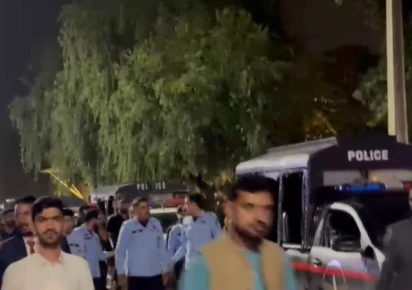
    Security has been intensified around Shifa International Hospital in Islamabad as the deadline approaches for the government to comply with a Supreme Court directive regarding the transfer of PTI founder Imran Khan for medical treatment. A significant number of police personnel and senior officers were deployed outside the hospital on Thursday. Officials inspected security arrangements and cleared roads around the facility of parked vehicles. The heightened security comes ahead of the midnight deadline set under the Supreme Court’s order issued on Tuesday. The court directed authorities to shift Imran Khan to Shifa International Hospital for medical treatment and also ordered arrangements for weekly meetings between him and his family. The federal government has challenged aspects of the order through a review petition, describing the decision as discriminatory and raising legal concerns over its wider implications. Law Minister Azam Nazeer Tarar said the government still had time until midnight to implement the order. He said the responsibility for making arrangements rested with the Islamabad administration and that officials were working on the matter. Speaking in the Senate, Parliamentary Affairs Minister Tariq Fazal Chaudhry said the government would follow the Supreme Court’s decision. He said the government had no intention of preventing Imran Khan from receiving necessary medical treatment. According to the minister, existing rules generally provide for convicted prisoners to receive medical care through government hospitals. However, he said a legal question concerning the scope of such arrangements was currently before the Supreme Court. Fazal said that if the required treatment was not available at a government hospital, the authorities would have to arrange treatment at Shifa International Hospital or another facility with better medical capabilities. He stressed that the government would comply with the court’s final determination regarding the matter. The minister also addressed concerns about the health of PTI leader Dr Yasmin Rashid. He said the government was concerned about her condition and would again contact the Punjab government and prison authorities to obtain an updated assessment. Meanwhile, Prime Minister’s Adviser on Political Affairs Rana Sanaullah said the government’s review petition was expected to be dealt with by the Supreme Court. Sanaullah said the government had raised technical and legal objections to parts of the court’s order. He argued that the decision could create difficulties for the broader judicial system if similar applications were filed by other prisoners seeking treatment at private hospitals. He maintained that the government would respect whatever decision the Supreme Court reached on its review petition. According to sources, the Supreme Court’s registrar’s office had returned the review petition after raising an objection concerning the completion of required paper books. The government was expected to address the objections and resubmit the petition, with possible amendments to its contents. The development has triggered a fresh dispute between the government and PTI over implementation of the court order. Imran Khan’s lawyer, Khalid Yousaf Chaudhry, announced that he would approach the Supreme Court with a contempt petition if the government failed to transfer his client to the hospital. The lawyer accused the government of delaying implementation of the court’s directive and said the legal team was preparing the contempt proceedings. He also visited Adiala Jail to obtain Imran Khan’s signatures on the required documents, including the contempt petition and power of attorney. Earlier, PTI Secretary General Salman Akram Raja claimed that the government had withdrawn its review petition after objections were raised by the Supreme Court’s filing branch. Raja demanded immediate implementation of the August 18 order and argued that there was no legal justification for further delaying Imran Khan’s transfer. The government, however, maintained that the legal process concerning the review petition was still underway and that it would act according to the law and the final position of the Supreme Court. Imran Khan’s sister Aleema Khanum also reached Adiala Jail amid the ongoing developments.

  • |

    IRGC claims destruction of US Aircraft on ground a…

    Iran’s Islamic Revolutionary Guard Corps has claimed that its attacks have destroyed US aircraft on the ground at bases throughout the region, according to a statement published by Iran’s semi-official Fars news agency. The IRGC spokesman said the attacks resulted in the destruction of “17 reconnaissance and operational drones, one F-15 fighter jet inside a hangar, one P-8 aircraft, one C-17 transport aircraft, and 8 refuelling aircraft.” The claims come amid escalating tensions between Iran and the US, with both sides trading military strikes in the Middle East. The US has conducted strikes on Iranian targets, while Iran has launched attacks on US allies in the Gulf region and targeted US military assets. The IRGC’s statement is part of Iran’s ongoing efforts to showcase its military capabilities and assert its role in the conflict. The claims have not been independently verified, and the US has not yet responded to the IRGC’s assertions. However, the destruction of US aircraft would represent a significant escalation in the conflict, potentially drawing the US into a wider confrontation with Iran. The US has enforced a naval blockade in the Strait of Hormuz, while Iran has targeted vessels that violated its rules on navigating the vital waterway. The IRGC’s claims come as diplomatic efforts continue to de-escalate the situation. Iran has urged dialogue to resolve Saudi-Yemen tensions, while Qatar and Egypt have discussed regional stability and de-escalation efforts in a Doha meeting. The Yemeni Houthis’ spokesman has also met with a Saudi delegation, indicating ongoing diplomatic engagement despite the military escalation. The international community has urged restraint, with the UN warning of catastrophic consequences if the violence continues. However, the situation remains volatile, with both sides showing little willingness to de-escalate. The IRGC’s claims of destroying US aircraft are likely to further inflame tensions, raising the stakes in the conflict and increasing the risk of a wider war. As the situation continues to evolve, the international community will be watching closely for any signs of further escalation. The US has warned that Iran will pay “many times over” for any US troop deaths, while Iran has vowed to defend its territory against any aggression. The conflict has already disrupted global energy supplies and threatened economic stability, and the situation remains precarious. The coming days will be critical in determining whether diplomatic efforts can prevent a full-scale war or whether the region will slide further into chaos, with devastating consequences for the region and the global economy. The world hopes for a diplomatic breakthrough that can bring an end to the violence and restore stability to the region. The IRGC’s claims, if confirmed, would represent a significant development in the conflict, underscoring the need for urgent diplomatic intervention to prevent further escalation. The focus remains on finding a peaceful resolution to the crisis, with all parties urged to exercise restraint and engage in meaningful dialogue. The international community continues to support efforts to de-escalate tensions and promote regional stability, but the path to peace remains fraught with challenges. The coming weeks will be critical in shaping the future of the Middle East and the broader global order, with the conflict serving as a stark reminder of the dangers of unchecked escalation and the importance of diplomacy in resolving disputes.

  • |

    Pakistan, Iran agree to boost bilateral trade to $10 billion

    ISLAMABAD: Pakistan and Iran have reaffirmed their commitment to significantly strengthen economic cooperation by increasing bilateral trade to $10 billion and accelerating efforts to finalize a long-awaited Free Trade Agreement (FTA). The understanding was reached during the 10th meeting of the Pakistan-Iran Joint Trade Committee, held in Islamabad on Tuesday. The session was jointly chaired by Federal Minister for Commerce Jam Kamal Khan and Iranian Minister for Industry, Mine and Trade Dr. Mohammad Atabak, with senior officials from both countries participating in discussions aimed at expanding trade and investment ties. During the meeting, both sides reviewed the current state of bilateral trade and explored practical measures to unlock its full potential. The two countries agreed that stronger economic integration, improved connectivity, and enhanced cross-border cooperation are essential for achieving the ambitious trade target of $10 billion. Speaking on the occasion, Commerce Minister Jam Kamal said Pakistan and Iran enjoy longstanding historical, cultural, and religious ties, but stressed that these relations should now be translated into a robust economic partnership. He emphasized that expanding trade and investment would bring mutual economic benefits and contribute to regional prosperity. The minister underscored the importance of completing the Pakistan-Iran Free Trade Agreement at the earliest opportunity, describing it as a key step toward facilitating commerce between the neighboring countries. He also called for the removal of bottlenecks affecting border logistics, customs procedures, and cargo movement to ensure smoother and faster trade flows. Jam Kamal noted that bilateral trade could be further enhanced through the development of joint border markets, greater use of electronic data interchange systems, and closer coordination between relevant government agencies. He said modernizing trade infrastructure and simplifying customs procedures would help businesses on both sides benefit from increased commercial activity. The Joint Trade Committee also agreed to formulate a practical roadmap aimed at strengthening economic cooperation across multiple sectors. The roadmap will focus on trade facilitation, infrastructure development, logistics, and investment opportunities while encouraging closer collaboration between the public and private sectors. Iranian Minister Dr. Mohammad Atabak described Pakistan as one of Iran’s key long-term strategic trade partners and expressed confidence that bilateral economic relations could expand considerably in the coming years. He highlighted the importance of increasing regional trade and logistics cooperation, particularly by utilizing Pakistan’s Karachi and Gwadar ports to improve connectivity and facilitate the movement of goods. Dr. Atabak also voiced optimism about the early conclusion of the Pakistan-Iran Free Trade Agreement, saying it would create new opportunities for businesses in both countries. He added that cooperation in electricity trade, transport networks, and regional connectivity projects could open new avenues for economic growth and strengthen commercial links across the region.

Leave a Reply

Your email address will not be published. Required fields are marked *