تازہ ترین

  • |

    Jasprit Bumrah ruled out of Sri Lanka Tests

    NEW DELHI: India have been dealt a significant setback ahead of their two-match Test series against Sri Lanka after star fast bowler Jasprit Bumrah was ruled out with a knee injury, the Board of Control for Cricket in India (BCCI) confirmed on Monday. Bumrah, widely regarded as India’s pace spearhead, has not fully recovered from the left knee injury he sustained during the One-Day International series against England last month. In a statement, the BCCI said the 32-year-old remains unavailable for selection as he continues his rehabilitation. Bumrah has not bowled competitively since the second ODI against England in Cardiff on July 16, where he suffered the injury.   His absence is a major setback for India, particularly with the challenging conditions expected in Sri Lanka, where Bumrah’s experience and ability to strike with the new ball have often made the difference in Test matches.   Replacing him in the 15-member squad is promising fast bowler Aquib Nabi, who receives his maiden senior international call-up after an impressive run in domestic cricket. The 29-year-old pacer from Jammu and Kashmir has emerged as one of India’s brightest bowling prospects, claiming 104 wickets across the last two Ranji Trophy seasons. He also impressed during India A’s recent tour of Sri Lanka, taking six wickets in two first-class matches, performances that earned him a place in the senior squad. India, led by Shubman Gill, will play a warm-up match before the opening Test begins in Galle on August 15. The second and final Test is scheduled to be played in Colombo from August 23 to 27. The series now presents a golden opportunity for Nabi to showcase his talent on the international stage, while India will hope their emerging pace attack can compensate for the absence of one of the world’s premier fast bowlers. With Bumrah sidelined and a new face joining the squad, all eyes will be on India’s bowling unit as the visitors aim to begin their Sri Lanka campaign on a winning note. India squad Shubman Gill (capt), KL Rahul (vice-captain), Yashasvi Jaiswal, Rishabh Pant (wk), Sai Sudharsan*, Dhruv Jurel (wk), Ravindra Jadeja, Kuldeep Yadav, Manav Suthar, Mohammed Siraj, Prasidh Krishna, Gurnoor Brar, Devdutt Padikkal, Saransh Jain, Auqib Nabi.
  • |

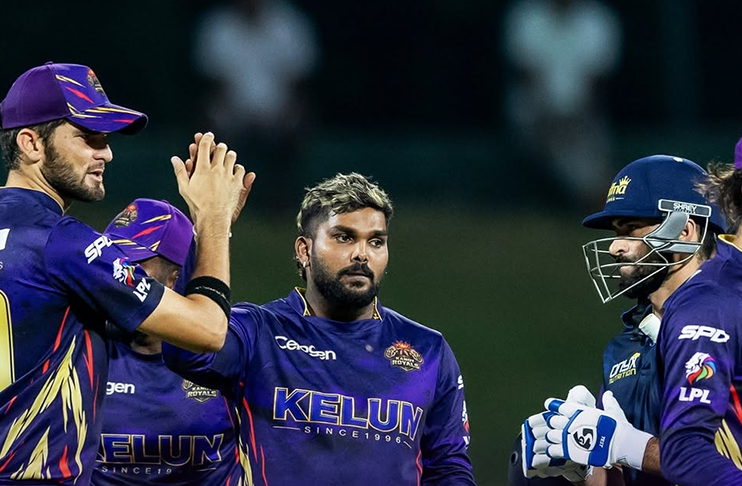
    Shaheen Afridi pulls out of LPL 2026

    COLOMBO: Pakistan fast bowler Shaheen Shah Afridi has reportedly withdrawn from the Lanka Premier League (LPL) 2026, bringing an early end to a turbulent campaign that was overshadowed by an administrative mix-up and below-par performances. According to media reports, the 26-year-old informed his franchise, Kandy Royals, that he was leaving the tournament for personal reasons. Neither Afridi nor the franchise has disclosed further details, while Kandy Royals are yet to announce a replacement. Afridi’s departure comes just days after he was at the centre of an unusual selection controversy. Reports claimed he had initially been listed as the team’s Impact Player for a match against Colombo Capitals, but was unable to feature after an administrative error left his name off the official team sheet. The mistake reportedly occurred after Kandy Royals elected to bat first, with team officials later informing Afridi that an analyst had accidentally omitted his name from the final squad submitted before the match. The incident prompted the Pakistan pacer to raise the issue with an official from the tournament’s Anti-Corruption Unit, after which the matter was referred to the match referee for review. Franchise officials and tournament organisers later apologised to Afridi for the error. Reports suggested the left-arm fast bowler had briefly considered leaving the competition immediately after the incident but decided to stay with the squad following the apology. Despite remaining in the tournament, Afridi struggled to make his usual impact with the ball. He claimed seven wickets in six matches, averaging 32.00, while conceding runs at an economy rate of 10.18, figures well below the standards expected from one of Pakistan’s premier fast bowlers. Meanwhile, the LPL continues to see changes in team combinations, with two more Pakistani cricketers joining the competition as replacement signings. Young batter Khawaja Nafay has been drafted by Jaffna Kings to replace Afghanistan opener Ibrahim Zadran, while experienced all-rounder Iftikhar Ahmed has signed with Dambulla Sixers as a replacement for Afghanistan fast bowler Fazalhaq Farooqi. Shaheen’s reported withdrawal marks another twist in an eventful LPL campaign and is likely to spark further discussion about player management and tournament administration as the competition heads toward its decisive stages.

  • | |

    Kabal bomber identified, probe intensifies

    SWAT: Khyber Pakhtunkhwa Inspector General of Police Zulfiqar Hameed has confirmed that authorities have identified the suicide bomber responsible for the deadly attack near Kabal Police Station in Swat, as investigators continue efforts to uncover the network behind the assault. Speaking to the media in Swat, the provincial police chief announced that a Joint Investigation Team (JIT) would be formed to conduct a comprehensive probe into the bombing. He also confirmed that the families of the police personnel martyred in the attack would receive the government’s martyrs’ compensation package. According to the IGP, intelligence agencies had already been alert to potential security threats, prompting heightened security measures around the police station. He said vigilant police officers intercepted the suicide attacker before he could reach his intended target, triggering the explosion. Zulfiqar Hameed praised the courage of the police personnel and reiterated the force’s commitment to strengthening its operational capabilities. He noted that while terrorist groups continue to reorganize, security forces are actively pursuing militants and will not allow them to regain a foothold in the province. The police chief confirmed that the identity of the suicide bomber has been established, while investigations are ongoing to identify his accomplices and determine the circumstances surrounding the attack. The blast near Kabal Police Station claimed the lives of several people, including police personnel, and left many others injured.

  • | |

    Middle East braces for intense heatwave as tempera…

    DUBAI: A fresh wave of extreme heat is set to grip the Middle East this week, with temperatures forecast to approach 50 degrees Celsius across several countries, prompting weather authorities to issue alerts over dangerous conditions. The UAE’s National Center of Meteorology (NCM) has warned that the coming days will bring soaring temperatures across the region, particularly affecting the United Arab Emirates, Iraq, Kuwait, and eastern Saudi Arabia, where prolonged exposure to the heat could pose serious health risks. According to meteorologists, desert regions in the UAE are expected to experience the highest temperatures, with some areas likely to approach the 50°C mark. Authorities have urged residents to avoid unnecessary outdoor activities during peak afternoon hours and to remain well hydrated. The latest forecasts indicate that Al Shawamekh in Abu Dhabi has already recorded temperatures exceeding 50°C, highlighting the intensity of the current weather conditions. Kuwait is also expected to experience extreme heat, with temperatures predicted to reach 48°C in the coming days, while parts of Iraq and eastern Saudi Arabia are likely to face similarly scorching conditions. Despite the widespread heat, forecasters say some eastern and southern parts of the UAE, including Fujairah, could receive rainfall by Thursday as unstable weather develops over mountainous regions. The weather authority has also issued warnings for strong winds, reduced visibility, and dust storms, which may affect road travel and outdoor activities across several parts of the region. Health experts advise people to stay indoors whenever possible, drink plenty of water, wear light-colored clothing and avoid prolonged exposure to direct sunlight, particularly during midday when temperatures are expected to peak. The renewed heatwave follows a summer of record-breaking temperatures across several parts of the world, with climate scientists warning that extreme weather events are becoming more frequent and intense due to global climate change. Governments across the Gulf have increasingly introduced measures to protect workers and residents during the hottest months, including restrictions on outdoor labor during peak daytime hours and expanded public awareness campaigns on heat-related illnesses. As the latest heatwave builds across the region, authorities continue to monitor weather conditions closely while urging the public to follow official safety advisories. With temperatures expected to remain exceptionally high over the coming days, residents are being encouraged to take extra precautions to minimize the risk of heat exhaustion and heatstroke.

  • | |

    Tabish Hashmi called out on using Kashmir for publicity

    Tabish Hashmi has built his public profile on warmth, humour and a reputation for speaking his mind. His show Hasna Mana Hai made him a household name, and his film debut in Aag Lagay Basti Mein widened that profile further. But a sequence of events over the past few days has placed him at the centre of a controversy that cuts deeper than most he has faced, because it touches on something Pakistani audiences take very seriously: the sincerity of public voices when they speak on Kashmir. The sequence began when Hashmi posted on his Instagram announcing that Hasna Mana Hai had come to an end. The announcement landed at a moment of heightened public emotion, coinciding directly with his video in support of Kashmiri protesters who were demonstrating against what they described as unrest and violence in the region. The timing created an obvious and powerful impression in the minds of many followers: that his show had been shut down as a consequence of his stand on Kashmir. The response was immediate. Hashmi received an outpouring of solidarity and support from social media, with many people praising him for paying a professional price for speaking up. Then came the reveal. It turned out that Hasna Mana Hai had not been cancelled at all. The show’s set was simply being redesigned and renovated. The announcement of the show’s end was a marketing exercise to generate excitement around the new set reveal, and the Kashmir video had been used in proximity to that announcement in a way that allowed the association to form organically in the public mind without being explicitly stated. Content creator and commentator Ali Arif was among the most visible voices to call out what had happened. In a video addressing the controversy, he went through the sequence of events and pointed out precisely what Hashmi had done: posted a video about Kashmir, allowed the public to connect it to his show’s apparent end, absorbed the sympathy and support that followed, and then revealed the whole thing was a set change. He criticised Hashmi specifically for not clarifying the situation while the solidarity was pouring in, arguing that the failure to correct the impression was itself the problem. The public reaction was sharp and widely shared. “This is what is wrong with this nation. Using a tragedy for your gain,” wrote one person. Another said simply, “Such a sad state of affairs.” A third was even more pointed: “He made a mockery of taking a stand.” The controversy has prompted a genuine conversation about the ethics of celebrity activism in Pakistan, particularly when serious political or humanitarian situations are in the vicinity of promotional content. Whether the proximity of the Kashmir video and the show announcement was deliberate or poor timing, the result has been a significant erosion of goodwill from an audience that had, until this week, been squarely in Hashmi’s corner.

  • | |

    Rakhi Sawant gets emotional about her Pakistani fans

    Rakhi Sawant has always been one of Indian entertainment’s most unfiltered personalities, and a recent interview with BBC Hindi has given her fans on both sides of the border a moment to genuinely pause and reflect. In the interview, the actress and digital influencer spoke with visible emotion about her Pakistani fans, delivering a remarkably candid account of a connection that has quietly shaped her personal life in ways she had perhaps not expected. Sawant, who now follows Islam and has spoken openly about her affection for Muslims, did not approach the subject diplomatically or with the kind of measured language public figures typically deploy when navigating Indo-Pakistani sentiment. She spoke from personal experience, and the honesty of what she said has resonated widely. “They love me a lot,” she said, speaking of her Pakistani fans. “We Pakistanis and Hindus share a love-and-hate relationship, but whenever something happens to me, Pakistanis reach out first. Sometimes I have a fever, and no one from India shows up, but they come and take me to the hospital.” The admission was striking in its specificity. She was not speaking in generalities about cultural warmth or neighbourly affection. She was describing concrete acts of care at moments of genuine vulnerability, people showing up when she was unwell, accompanying her to hospital, filling a gap that others had left empty. She continued with equal candour, acknowledging the political narrative that frames the two countries as adversaries while making clear that her personal experience simply did not match that framing. “I know they are our enemy, our country’s enemy, but what’s true is true,” she said. “They love me a lot. I am just a neighbour residing in this building, and as neighbours, they are always there for me.” The online reaction to the interview has been overwhelmingly warm and has prompted a broader conversation that goes well beyond Sawant herself. Both Pakistani and Indian viewers flooded the comments to express agreement with the sentiment she was articulating. The most consistent thread running through the responses was the distinction between the political relationship that governments maintain and the human relationships that ordinary people choose to build across that same divide. Commenters from both countries wrote that neither people were each other’s real enemies, and that it was politicians who constructed and maintained the hostility that defined the official relationship between India and Pakistan. People on the ground, many argued, wanted something different entirely. Rakhi Sawant’s emotional honesty in this interview did not resolve any political realities. But it gave voice to something that is rarely said plainly enough in either country: that the warmth that exists between people when it is allowed to breathe is real, and sometimes shows up most clearly when someone needs to be taken to hospital and someone else simply decides to come.

  • |

    Pakistan set to appoint Mike Smith as batting coach

    LAHORE: Pakistan are reportedly close to appointing Mike Smith as the batting coach of the national Test team, with the experienced South African expected to take charge ahead of this month’s crucial three-match Test series against England. According to sources, Smith is the leading candidate for the role and could officially join the team before the England tour begins. The Pakistan Cricket Board (PCB) has yet to make a formal announcement regarding the appointment. Smith is a Level 4-qualified coach and a former South African first-class cricketer. He is also familiar with Pakistan cricket, having previously worked with Multan Sultans in the Pakistan Super League (PSL), where he earned praise for his coaching methods and player development. If appointed, Smith will replace the interim coaching arrangement currently being handled by former Pakistan batter Asad Shafiq, who has been serving as the team’s temporary batting coach. The PCB began its search for a permanent batting coach in May, inviting applications from qualified candidates. The deadline for submissions was June 7, after which the board evaluated potential applicants before shortlisting candidates for the position. Pakistan’s move to strengthen its coaching staff comes at an important time, with the national team preparing for a challenging Test assignment in England. The series is expected to be a significant test for Pakistan’s batting unit, which has faced criticism for inconsistent performances in recent overseas matches. Adding an experienced batting specialist is seen as part of the PCB’s broader strategy to improve the team’s red-ball performances and provide greater technical support to the players. Smith’s previous experience in franchise cricket and his reputation for working closely with batters could make him a valuable addition to Pakistan’s coaching setup. Although an official confirmation is still awaited, reports suggest the appointment process is in its final stages. With the England Test series approaching rapidly, the PCB is expected to finalize the coaching staff soon as Pakistan aims to build a stronger batting lineup capable of delivering consistent performances in challenging overseas conditions.

  • | |

    Shuja Asad joins protest for Wafflix founder Mir Raza

    The murder of 25-year-old Karachi entrepreneur Mir Raza has sent shockwaves through the city, and actor Shuja Asad is among those who have chosen not to stay silent about it. Mir Raza was a young Karachi-based entrepreneur who had built a dessert brand called Wafflix from the ground up. At just 25, he was carving out a name for himself in the business world, the kind of story that Pakistan needs more of. Then, in a devastating and senseless turn, he was abducted in his hometown. His body was later found in Gulistan-e-Johar, another young life violently cut short in a city that has seen too many. Shuja Asad, who has been building a strong reputation through back-to-back hit drama projects, stepped away from his professional commitments and joined a protest at Bahadurabad demanding justice for Mir Raza. YouTuber Azlan Shah joined him at the demonstration, and both added their voices to a growing chorus of citizens asking how a young man building something legitimate could simply be taken and killed without accountability following. What made Asad’s presence and his remarks particularly pointed was the comparison he drew, one that landed hard with those who heard it. He noted that law enforcement agencies had been visibly active in responding to Wasim Akram’s missing dog, a situation that had generated its own wave of public attention, while a young man had been abducted and murdered without the same urgency or visible response. The contrast was stark and his willingness to name it publicly was widely appreciated. He also called directly on Karachiites to join the protest and demand that Mir Raza’s case be taken seriously. His message was clear: this was not someone else’s tragedy to grieve from a distance. This was a Karachi story, and the people of Karachi had a responsibility to show up. The response from the public was immediate and warm. “He is right. Young men of Karachi deserve better,” wrote one person. “Great brother Shuja,” said another. A third commenter offered direct appreciation: “You took a great stance.” The reactions reflected a genuine sense of gratitude that a public figure with reach had chosen to use that reach for something that mattered. For many ordinary Karachiites who have felt the helplessness of watching violence go unaddressed, seeing Shuja Asad standing at a protest rather than simply posting a condolence message from behind a screen carried real meaning. Mir Raza’s case is still being investigated. For his family and for everyone who knew him, the demand is simple and urgent. Justice for a 25-year-old who was working hard, building something, and deserved to live.

  • | |

    Mehar Bano’s fake death prank reel receives backlash

    A reel that actress and writer Mehar Bano posted while on a trip to northern Pakistan has gone viral for all the wrong reasons, with many viewers finding the premise of the video deeply unfunny and some expressing genuine alarm before realising it was staged. Mehar Bano, known for her bold screen presence and her work across Pakistani dramas and films, was on vacation with a group of friends when they decided to create a prank reel built around the concept of her fake death. The video was filmed in the style of a breaking Pakistani news report, with Mehar lying motionless on a rock while her friends played the roles of reporters and devastated family members lamenting that their holiday had been ruined by her sudden passing. The production was deliberately styled after the kind of dramatic live television reporting that Pakistani news channels are known for, clearly intended as satire. The internet, however, was not amused. The backlash was immediate and pointed. Comments flooded in from viewers who found the death prank concept distasteful rather than clever. “I actually thought she died,” wrote one person, capturing the alarm that the video initially triggered before its prank nature became clear. Another was far blunter in their assessment, writing simply, “What a third class act.” A third commenter expressed their reaction without ambiguity: “I did not find this funny.” The response reflects a broader sensitivity in Pakistani digital culture around death-related humour, particularly when it is framed as breaking news. For a country where audiences have frequently received genuinely distressing news about public figures through social media and news channels, a video that mimics that format as a prank occupies uncomfortable territory. What the creators of the reel may have seen as a piece of satirical comedy landed for many viewers as something that was using a format associated with real loss and real grief for the sake of social media engagement. The criticism also reflects something about the evolving relationship between Pakistani celebrities and their online audiences. There is a growing expectation that public figures, particularly those who occupy cultural space as artists and writers, should bring a certain level of thoughtfulness to the content they share publicly. For those who follow Mehar Bano and appreciate her work, the reel felt like a misalignment between the intelligence they associate with her and the specific choice she made here. Mehar Bano has not publicly responded to the backlash or addressed the criticism of the reel at the time of writing. The video remains shared on her Instagram account, where the comment section continues to reflect the divided reaction it has generated.

  • Junk food companies caught suing the laws meant to stop them

    The World Health Organization says something troubling is happening behind the scenes of the global obesity fight. Many of the same companies profiting from junk food sales are also dragging governments to court. Their goal is to block laws designed to curb the crisis. A joint investigation by The Guardian and Lighthouse Reports dug into this pattern. Academics and media groups across four continents took part. Together, they uncovered 235 lawsuits filed against governments over ultra-processed food policies. The cases span 2010 to 2025. Countries hit hardest include Mexico, Colombia, Brazil, the US, and the UK. Labelling rules were the most challenged policies. Junk food taxes came next, followed by marketing restrictions. Food companies did not fare well in court. They lost about 75 percent of decided cases. But WHO chief Tedros Adhanom Ghebreyesus says the scoreboard misses the real damage. It is the time these lawsuits consume that hurts most. Combined, the litigation added up to nearly 600 years. Each case dragged on for two and a half years on average. The costs go beyond legal bills. Governments spend billions on healthcare and courtroom battles alike. Tedros calls the resulting hesitation a “regulatory chill.” Long, expensive lawsuits make officials think twice before trying similar reforms. Researchers managed to trace plaintiffs in many of these cases. Of those identified, 38 percent came from just eight companies. The list includes Coca-Cola, PepsiCo, Mondelēz, Kellogg’s, Danone, Ferrero, Xignux, and Heartland Food Products Group. Some of these firms went a step further. They asked courts to keep their names hidden entirely. That secrecy tactic is not new. Researchers say it echoes moves once made by tobacco and alcohol companies. Both industries faced similar scrutiny in the past and used the same playbook. Tedros gave credit where it is due. He noted some companies have reformulated their products in good faith. Still, he insists that’s not enough while lawsuits keep piling up. There is also a wealth gap at play. Most legal battles are happening in richer nations. Poorer countries face the same obesity burden. But they have far fewer resources to defend new health policies if challenged in court. The scale of the crisis makes all this urgent. Nearly a billion people worldwide are currently living with obesity, per WHO estimates.