
تازہ ترین

  • | |

    Godzilla vs Kong’ star Kaylee Hottle dies in car crash

    WASHINGTON: American actress Kaylee Hottle, best known for playing Jia in Godzilla vs. Kong and its sequel Godzilla x Kong: The New Empire, has died in a tragic car accident in Maryland. She was 18. Her death was confirmed by her father, Joshua Hottle, who shared the heartbreaking news through a video message in American Sign Language (ASL). The Hottle family is deaf, and the announcement was delivered in sign language. According to reports, the fatal accident occurred in Frederick, Maryland. Authorities have not yet released further details about the circumstances surrounding the crash, and an investigation is ongoing. Kaylee rose to international fame after portraying Jia, a deaf orphan who forms a close bond with Kong in the 2021 blockbuster Godzilla vs. Kong. She later reprised the role in the 2024 sequel, earning widespread praise for her performance and becoming a prominent representative of the deaf community in the entertainment industry. Following news of her death, tributes poured in from fellow actors, filmmakers and fans around the world. Actress Rebecca Hall, who played Kaylee’s adoptive mother in the films, expressed deep sorrow and offered condolences to her family. Other co-stars and members of the film industry also remembered her talent, kindness and inspiring spirit. During her acting career, Kaylee often spoke about the importance of greater representation of deaf performers in film and television. She encouraged young people with disabilities to pursue their dreams, saying deafness should never be viewed as a limitation. In addition to her appearances in the Godzilla film franchise, Kaylee also worked in television and advertising, steadily building a promising career in Hollywood.
  • | |

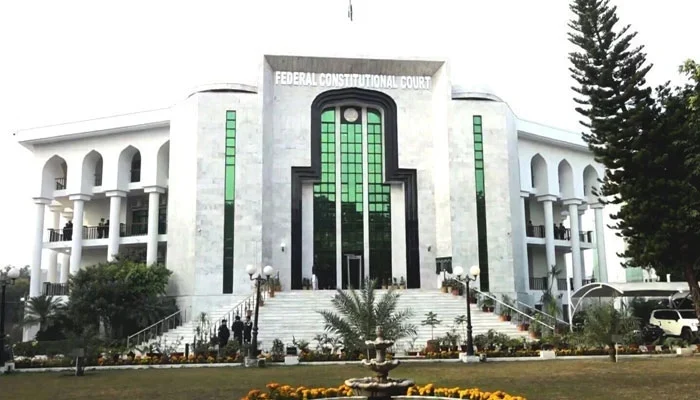
    FCC refuses to halt inquiry against former NAB DG

    ISLAMABAD: The Federal Constitutional Court (FCC) has declined to suspend inquiry proceedings against former National Accountability Bureau (NAB) Director General Saleem Shehzad, allowing an investigation into his alleged unlawful appointment and promotion to continue. The decision came during a hearing of an appeal filed by Shehzad challenging a show-cause notice issued against him. He had requested the court to stay the inquiry until the case was decided, but the bench refused to grant interim relief. A two-member bench headed by Justice Hassan Azhar Rizvi heard the appeal and directed the federal government to submit its response within three weeks before further proceedings. The case revolves around allegations that Saleem Shehzad’s appointment and subsequent promotion within the National Accountability Bureau were made in violation of applicable rules and procedures. Authorities had earlier issued him a show-cause notice seeking an explanation over the alleged irregularities. Before approaching the Federal Constitutional Court, Shehzad had challenged the notice in the Islamabad High Court. However, after his petition was dismissed, he filed an appeal before the FCC, seeking legal protection against the inquiry. During the hearing, the court did not interfere with the ongoing investigation, effectively allowing the relevant authorities to continue examining the allegations while the constitutional appeal remains pending. Legal experts say the ruling does not determine Shehzad’s guilt or innocence but indicates the court’s reluctance to halt administrative proceedings before hearing the case in detail. The federal government’s reply is expected to play an important role in the next stage of the proceedings. The case has attracted attention because it involves the appointment of a senior official in Pakistan’s top anti-corruption watchdog. Any findings from the inquiry could have broader implications for accountability, transparency and the process of appointments in public institutions. With the inquiry set to continue and the government directed to file its response within three weeks, the Federal Constitutional Court is expected to take up the matter again after reviewing the submissions of both sides. The outcome could shape the future course of the legal challenge brought by the former NAB official.

  • |

    FPSC clarifies reports on CSS candidate decline

    The Federal Public Service Commission has formally rejected claims of a 45 per cent decline in the number of candidates taking the Central Superior Services examinations, describing such media reports as factually incorrect and misleading. In an official statement, the commission explained that recent news reports suggesting a sharp drop in youth interest were based on data that had been incorrectly compared and interpreted without proper context, leading to a distorted view of actual participation. To clarify candidate statistics, the commission released official figures regarding the 2025 examination cycle. A total of 64,081 candidates registered for the 2025 Mandatory Preliminary Test screening, an annual preliminary process that the commission noted was completely overlooked in the media’s calculations. For the subsequent 2025 written examination, 18,139 candidates applied and 12,792 ultimately sat for the papers. From these, 354 candidates passed the written phase, 342 were declared eligible following interviews, and 170 candidates received final service allocations across various civil service branches. The commission also pointed out that media analyses had omitted results from the Special CSS 2023 examinations, which allocated 141 candidates to civil service posts. This special iteration was specifically designed to benefit women, minorities, and candidates from underdeveloped regions, further reinforcing the examination as a viable career path for Pakistani youth. Reaffirming its commitment to transparency and accurate data verification, the commission urged analysts and media outlets to verify details before drawing conclusions, maintaining that the civil service remains a top priority and aspiration for the country’s youth.

  • |

    Wheat straw crisis hits Karachi dairy farmers

    Karachi is experiencing an acute wheat straw crisis following a three-day supply suspension, sparking protests among local dairy farmers and raising concerns over a potential milk shortage across the metropolis. Media reports indicate that trucks carrying wheat straw have ceased arriving in the city, impacting hundreds of local dairy farms. In response, farm owners gathered in Cattle Colony to demonstrate against alleged police extortion, claiming officers at entry points and checkpoints are demanding illegal payments from transporters and halting deliveries. The supply disruption, coupled with recent increases in petroleum and diesel prices that have driven up transport costs, has pushed wheat straw prices from 1,200 rupees to 2,000 rupees per maund. Because wheat straw serves as primary feed for cattle, stakeholders warn that the ongoing shortage threatens Karachi’s milk supply. Dairy farmers have called on the Sindh government, the Inspector General of Sindh Police, and the Commissioner Karachi to eliminate police extortion, ensure uninterrupted transport, and stabilise feed prices.

  • | | |

    Pakistan taps global banks for $2bn bond plan to s…

    ISLAMABAD: The federal government has taken a major step toward raising at least $2 billion from international capital markets during the 2026-27 fiscal year by appointing leading global financial institutions to manage its upcoming sovereign bond issuances. After completing a competitive selection process under the Requests for Proposals (RFPs), the government finalized three separate banking consortiums to advise and arrange conventional Eurobonds, International Sukuk, and Pakistani rupee-denominated, US dollar-settled bonds. The move is part of Pakistan’s broader strategy to diversify external financing sources and strengthen long-term access to global capital markets. For the Eurobond programme, the selected consortium comprises Standard Chartered Bank, Citibank, Deutsche Bank AG, Emirates NBD Capital, and MUFG Securities Asia Limited. The International Sukuk consortium includes Standard Chartered Bank, Dubai Islamic Bank PJSC, Citibank, Emirates NBD Capital, and Mashreq Bank PSC. Meanwhile, Standard Chartered Bank, Citibank, and Deutsche Bank AG will oversee the issuance of PKR-denominated bonds settled in US dollars. Finance Minister Senator Muhammad Aurangzeb formally launched the government’s partnership with the selected institutions during a virtual meeting held from Washington, D.C. The discussions focused on implementing Pakistan’s Global Medium-Term Note (GMTN) Programme and International Sukuk Programme, which are expected to support the country’s future borrowing plans. According to the Finance Ministry, the sovereign capital market programme will include both conventional and Islamic financing instruments. Once all regulatory requirements and documentation are completed, Pakistan plans to make regular international bond issuances whenever financing needs arise, rather than treating the initiative as a one-time exercise. Officials said the strategy is designed to establish a more stable, diversified, and sustainable external financing framework. The inclusion of MUFG Securities Asia Limited and Mashreq Bank in the banking consortiums is also expected to expand Pakistan’s engagement with a wider network of leading international financial institutions, enhancing investor confidence and broadening access to global markets.

  • |

    Karachi petroleum dealers consider options as dispute over strike call looms

    Plans for a nationwide closure of petrol pumps entered a new phase after dealers in Karachi refrained from immediately supporting a shutdown call issued by petrol pump owners. The Petrol Pump Owners Association had instructed fuel outlets to close across the country from midnight following inconclusive negotiations with Petroleum Minister Ali Pervez Malik. However, the Karachi Petroleum Dealers Association did not move to align with the closure order due to disagreements between the two bodies. To address the situation, the Petroleum Dealers Association scheduled an executive committee meeting to consult with counterparts across Pakistan and evaluate the seven-day deadline set by the Oil and Gas Regulatory Authority (OGRA). The meeting’s outcome will decide whether the association proceeds with a nationwide strike or pursues alternative methods of protest. The Petroleum Dealers Association stated that the government has requested an additional week to resolve outstanding demands and assured dealers that its concerns will be addressed. The association noted that it will consider the government’s request during its internal consultations and formally communicate its final strategy to OGRA and relevant state authorities.

  • | |

    JCP recommends 13 judges for Lahore, Balochistan H…

    ISLAMABAD: The Judicial Commission of Pakistan (JCP), headed by Chief Justice of Pakistan, has recommended the appointment and confirmation of 13 judges for the Lahore High Court (LHC) and the Balochistan High Court (BHC), marking a significant step toward addressing judicial vacancies and strengthening the country’s higher judiciary. The recommendations were made during separate meetings of the Commission held at the Supreme Court building in Islamabad under Article 175A(2) of the Constitution. Alongside judicial appointments, the Commission also reviewed proposed amendments to the Judicial Commission of Pakistan (Appointment of Judges) Rules, 2024. According to an official statement, the Commission decided that the proposed amendments to the appointment rules would be circulated among all remaining members of the Commission, including representatives of the Federal Shariat Court and the country’s high courts, for further consideration before final approval. For the Lahore High Court, the Commission, by a majority vote of its members, recommended the confirmation of Justice Tariq Mahmood Bajwa, who has been serving as an additional judge, as a permanent judge of the court. The JCP also approved the appointment of 10 additional judges for the Lahore High Court. The nominees include Amir Ajam Malik, Asad Ali Bajwa, Barrister Muhammad Usman Ghani Rashid Cheema, Ghulam Sarwar Nihang, Khalid Ibn-i-Aziz, Muhammad Ajmal Khan Zahid, Muhammad Amjad Pervaiz, Munawar Iqbal Duggal, Shireen Imran, and Syed Farhad Ali. All are senior advocates of the Supreme Court with extensive legal experience. For the Balochistan High Court, the Commission recommended the appointment of three additional judges against five vacant positions. The nominees are District and Sessions Judge Allah Dad Roshan, Senior Advocate Muhammad Rauf Atta, and District and Sessions Judge Abdul Qayyum Lehri. The Commission decided not to fill the remaining two vacancies at this stage, leaving the positions open for future consideration. The recommendations will now move through the constitutional appointment process before the judges formally assume office. Legal experts say the appointments are expected to help reduce the growing backlog of cases, improve judicial efficiency and strengthen the administration of justice in both Punjab and Balochistan. The JCP’s latest decisions come at a time when Pakistan’s judiciary continues efforts to enhance institutional capacity through timely appointments and procedural reforms. The proposed amendments to the Judicial Commission Rules are also expected to shape future judicial appointments by introducing greater clarity and consistency to the selection process.

  • |

    Trump’s generic drug tariff plan puts US-India pharma ties to test

    A newly announced tariff schedule introduced by President Donald Trump targeting generic pharmaceutical imports is expected to significantly affect the deep trade relationship between the United States and India, which serves as the principal supplier of generic medicines to the American market. Indian drug manufacturers currently supply roughly half of all generic pharmaceuticals consumed in the United States, with the American market generating close to a third of India’s overall pharmaceutical export earnings. The scale of this commercial exposure means the newly outlined tariff timeline, despite featuring a two-year grace period, has immediately drawn close scrutiny from Indian pharmaceutical firms and market analysts due to the critical role US sales play in corporate revenues. The policy introduces additional uncertainty to a bilateral trade dynamic already strained by recent tariff disputes, raising the stakes for Indian manufacturers as they decide whether to commit capital toward expanding domestic manufacturing inside the United States or absorb steep import duties in the future. Trump outlined a phased tariff framework for generic medications entering the United States. Under this timeline, generic drug imports will continue to enter duty-free under a zero per cent tariff until August 1, 2028, marking a two-year transition window from the policy’s effective date. Following this grace period, a 100 per cent tariff will apply for one year, after which the import levy will rise to 200 per cent. Trump framed the escalated duties as a penal mechanism designed to compel foreign pharmaceutical companies to construct manufacturing facilities on American soil within the allotted timeframe, rather than remaining reliant on overseas production plants. He explicitly distinguished this new generic drug framework from the administration’s policy on branded and patented pharmaceuticals, stating that existing regulations for branded drugs would remain unchanged due to their ongoing success. Reports citing White House details indicate that the new generic tariffs will be executed under Section 232 trade authority, matching the legal foundation used for the administration’s earlier tariffs placed on branded pharmaceuticals in April. Trump also highlighted what he described as an unprecedented surge in new domestic pharmaceutical plant construction currently underway across the United States, presenting the new tariff schedule as a measure to reinforce an existing shift toward onshore manufacturing. The policy holds major implications for the broader American healthcare system and global exporters because generic medications account for nearly 90 per cent of all prescriptions filled in the United States. This action follows previous interventions in the pharmaceutical sector, including the 100 per cent tariff placed on branded drugs starting in October 2025, alongside a most-favoured-nation pricing push. That pricing policy led more than a dozen major pharmaceutical corporations, including Pfizer, Eli Lilly, and Novo Nordisk, to conclude agreements to reduce US drug prices in exchange for multi-year exemptions from import duties. For Indian drugmakers, the two-year transition window provides initial breathing room but lacks long-term security. Indian generic manufacturers now face the choice of allocating capital to construct or expand production facilities within the United States before the 2028 deadline, or facing severe cost disadvantages once the punitive tariffs take effect. Industry analysts expect to monitor whether major Indian drug companies will announce accelerated manufacturing investments in the United States over the coming months as the sector formulates its response.

  • | |

    Six bullet-riddled bodies found across Balochistan

    QUETTA: A wave of violence and tragic accidents swept across Balochistan on Tuesday, as authorities recovered six bullet-riddled bodies from four districts while eight more people, including two women, lost their lives in separate incidents of gunfire, a roadside explosion, a fuel tanker fire and a deadly road crash. According to police officials, the bodies of six unidentified men were recovered from Kalat, Mastung, Panjgur and Kharan, prompting multiple investigations into the killings. Three of the bodies were discovered in different areas of Kalat district. Two were found dumped in the Rej locality after local authorities received information from residents, while another body was recovered from the Chhapar area. All three were shifted to the District Headquarters Hospital for identification, but officials said their identities had not yet been established. In Mastung, police recovered another unidentified man’s body from the Jungle area after receiving reports from local residents. Preliminary investigations suggest the deceased may have been a drug addict, though authorities said the exact cause and circumstances of his death are still being examined. The fifth body was found in Nowan Kur, Panjgur, where police believe the victim was shot dead by unidentified attackers before his body was abandoned. In Kharan, authorities recovered the body of a man who had reportedly been abducted by armed men two days earlier after they stormed his home. His body was later found on the outskirts of the city with bullet wounds. Separate incidents elsewhere in the province added to the death toll. In Kalat’s Mangochar area, unidentified gunmen opened fire on a family travelling from Zhob to Karachi after their driver allegedly failed to stop at a signal. Two women were killed in the attack, while a child sustained injuries and was taken to hospital. Meanwhile, an improvised explosive device (IED) detonated near the N-65 National Highway in Mastung, killing a driver and injuring five others. The explosion severely damaged an LPG tanker and two trailers. In Quetta, two people were burned to death after an oil tanker caught fire at a petrol pump near Sariab Customs. In another tragedy, three people were killed in a head-on collision between two vehicles on the Quetta-Karachi National Highway in the Surab area. Police have launched investigations into the shootings and explosions, while authorities continue efforts to identify the unidentified victims and determine those responsible for the attacks.

  • | |

    Govt advances PNSC privatisation, moves to sell 30…

    ISLAMABAD: The federal government has accelerated plans to transfer a 30 percent stake in the Pakistan National Shipping Corporation (PNSC) to the National Logistics Corporation (NLC), establishing two high-level committees to complete the financial, commercial, and legal framework for the transaction. According to a briefing presented by the Ministry of Maritime Affairs to the Economic Coordination Committee (ECC), the committees will determine key aspects of the deal, including the share price, payment schedule, dividend distribution, utilisation of sale proceeds, and the transfer of management control. The first committee, headed by the Prime Minister’s Adviser on Privatisation, includes senior officials from the Finance, Law and Justice, and Maritime Affairs ministries, along with the Chairman of the Securities and Exchange Commission of Pakistan (SECP) and the Director General of NLC. Its mandate is to finalise the financial and commercial structure of the agreement, including the valuation of shares, payment mechanism, dividend arrangements, and the injection of funds into PNSC. The second committee, led by the Secretary of the Law and Justice Division, will oversee the legal documentation required for the transaction. Its responsibilities include preparing the Share Purchase Agreement, Shareholders’ Agreement, and the legal framework governing the transfer of management control. The ECC endorsed the proposal and emphasised the importance of increasing private sector participation in future maritime initiatives to improve efficiency, strengthen governance, and unlock the sector’s economic potential. To ensure smooth implementation, the Ministry of Maritime Affairs has also proposed an Implementation Committee chaired by the Prime Minister’s Adviser on Privatisation and co-chaired by the Minister for Maritime Affairs. The committee will develop a roadmap and supervise the execution of the transaction. The government had previously granted in-principle approval for NLC to acquire a 30 percent stake in PNSC, along with management control and consolidation rights, subject to all applicable legal requirements. PNSC, a state-owned enterprise listed on the Pakistan Stock Exchange, remains majority-owned by the federal government, which holds 87.56 percent of its shares. Public investors own 10.87 percent, while the PNSC Employees Empowerment Trust holds the remaining 1.57 percent. The national shipping company currently operates a fleet of 14 vessels, including three recently added ships. Despite fluctuations in earnings, PNSC has maintained strong profitability, posting net profits of Rs30 billion in FY2022-23, Rs19.4 billion in FY2023-24, and Rs20.4 billion in FY2024-25. Established under the Pakistan National Shipping Corporation Ordinance, 1979, the organisation has undergone legislative reforms in recent years, with amendments introduced in 2023 and 2024 to align its governance framework with the State-Owned Enterprises Act, 2023. These changes are intended to improve transparency, accountability, and operational performance as the government advances its broader state-owned enterprise reform agenda.