تازہ ترین

  • |

    Congo Ebola outbreak surpasses 1,000 deaths at record pace

    Data from the Ministry of Health in the Democratic Republic of the Congo reveals that the ongoing Ebola outbreak declared on 15 May has killed over 1,000 people in just over two months. This marks the fastest-spreading outbreak of the virus on record, reaching 1,000 fatalities nearly three times quicker than the 2014–2016 West Africa epidemic. As of Tuesday, the country has recorded 2,536 confirmed cases and 1,033 deaths, with the case fatality rate standing at 40 per cent. Unlike the 2014–2016 epidemic driven by the more common Ebola virus, the current surge is caused by the rare Bundibugyo virus, for which there are no approved vaccines or targeted therapeutic treatments. The outbreak remains largely concentrated across five eastern provinces near the Ugandan border. Health officials warn that the peak may still lie ahead due to late patient presentations, initial delays in identifying the strain, and a high proportion of new cases emerging outside monitored contact lists.

  • |

    Spanish minister bids for top UN labour agency post amid US funding crisis

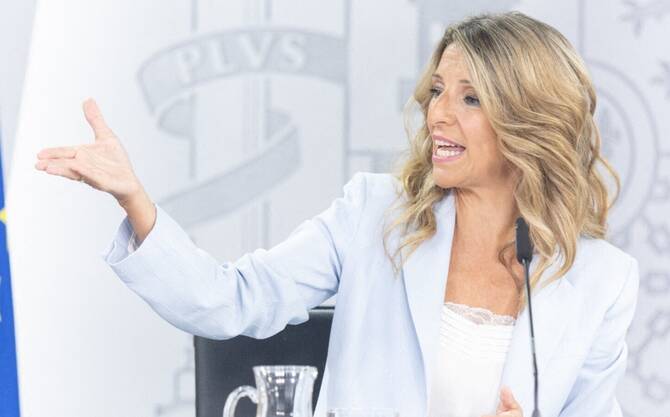
    Spain has officially nominated its Labour Minister and Second Deputy Prime Minister, Yolanda Díaz, to run for Director-General of the International Labour Organization (ILO). If elected, Díaz would become the first woman to lead the Geneva-based UN agency in its 107-year history. Díaz is set to challenge incumbent Director-General Gilbert Houngbo of Togo, who took office in 2022 as the first African leader of the ILO and is seeking re-election. Her candidacy comes as the agency faces a severe liquidity crisis, exacerbated by unpaid contributions from member states, most notably the United States, which owes 257 million Swiss francs ($315 million) in arrears and has outlined plans to halt funding for the upcoming fiscal year. The nomination highlights her domestic record of labor reforms and social dialogue in Spain, though analysts note her candidacy faces a diplomatic balancing act between securing European support and risking friction with the African diplomatic bloc. The election will take place in November 2026, with the winner’s five-year term beginning in October 2027.

  • |

    South African court pauses impeachment proceedings against Cyril Ramaphosa

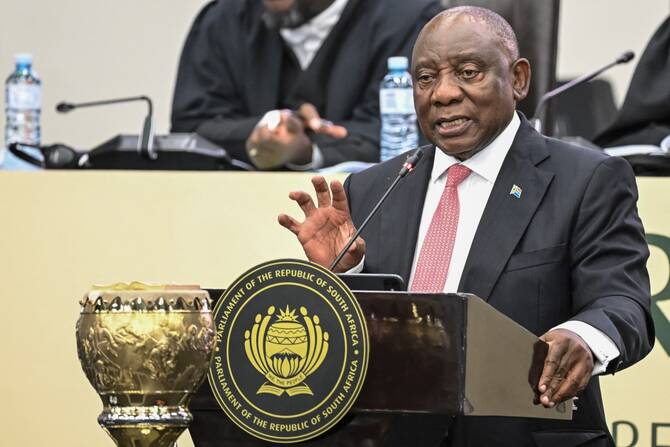
    South Africa’s Western Cape High Court has granted President Cyril Ramaphosa a temporary order halting parliamentary impeachment proceedings against him. The interdict pauses the work of a parliamentary impeachment committee until the court reviews a November 2022 panel report in September, which concluded that Ramaphosa “may have committed” serious violations regarding the Phala Phala farm scandal. The controversy stems from a 2020 break-in at Ramaphosa’s luxury farmhouse in Limpopo, where $580,000 in undeclared foreign currency hidden inside a sofa was stolen. While a former spy chief alleged the stolen sum reached $4 million and accused the president of concealing the robbery from tax and police authorities, Ramaphosa has maintained his innocence, stating the cash came from a legitimate sale of 20 buffaloes. Although the ruling African National Congress (ANC) initially quashed impeachment efforts in Parliament in 2022 and prosecutors dropped criminal charges in 2024, a Constitutional Court ruling in May 2026 reinstated the impeachment process. Ramaphosa welcomed Friday’s court decision, affirming his respect for judicial independence while awaiting the full review hearing in September.

  • |

    Modi proposes fast-track courts to quell rising ‘cockroach’ youth protests

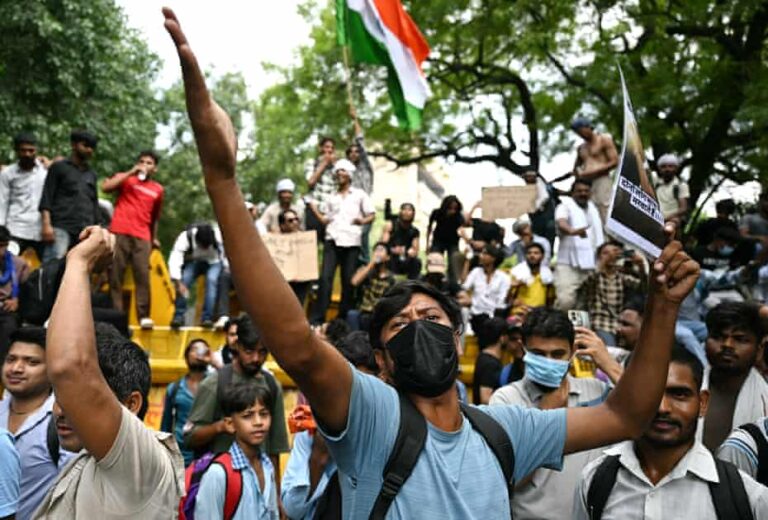
    Indian Prime Minister Narendra Modi has pledged to establish fast-track courts to swiftly punish officials involved in examination paper leaks, attempting to contain a widespread youth-led protest movement that has rocked New Delhi and disrupted Parliament. Posting on X in his first public remarks on the crisis, Modi declared that “those who try to harm the future of our youth will not be spared”. The satirical “Cockroach Janta Party” (CJP), coined after India’s top judge reportedly likened unemployed youths to “cockroaches”, promptly rejected Modi’s proposal as a superficial “Band-aid” measure. The CJP continues to demand  educational reforms and the immediate resignation of Education Minister Dharmendra Pradhan, who has faced intense pressure following 152 recorded paper leaks over the past decade. The movement has escalated rapidly across India, drawing tens of thousands of demonstrators to New Delhi’s Jantar Mantar and prompting solidarity marches in cities including Mumbai, Chennai, and Hyderabad. Opposition parties, led by Rahul Gandhi, have forced shutdowns in Parliament while demanding that Modi apologise and dismiss Pradhan, as government officials accuse the opposition of exploiting student grievances for political leverage.

  • |

    Russia condemns EU’s 21st sanctions, warns of consequences

    Russia has sharply criticized the European Union after the bloc approved its 21st package of sanctions, saying the new measures will damage European economies more than Russia and further increase tensions between Moscow and Brussels. In a statement released by Russia’s Permanent Mission to the European Union, officials said the approval process for the latest sanctions exposed growing divisions within the EU. According to Moscow, many member states were reluctant to support additional restrictions because of the economic burden they are already facing. Russia claimed the lengthy negotiations reflected increasing concern among European governments over the impact of sanctions on businesses, energy supplies and overall economic growth. The Russian mission accused the European Union of continuing a policy of confrontation despite rising economic challenges across Europe. It said EU leaders were ignoring the financial costs of sanctions while pursuing what Moscow described as a political campaign against Russia. The statement also referred to comments by EU High Representative for Foreign Affairs Kaja Kallas, who indicated that further sanctions could be introduced in the future. According to Russia, discussions on new sanctions have become a political ritual aimed at showing unity among EU member states rather than achieving practical results. Moscow argued that the restrictions have failed to weaken Russia in the way European leaders had expected. Instead, it claimed that European citizens and businesses are paying the price through higher energy costs, inflation and slower economic growth. The statement further argued that Europe’s economic difficulties have been intensified by the EU’s decision to reduce imports of Russian energy, continued financial and military support for Ukraine, and instability in global energy markets caused by ongoing tensions in the Middle East. Russian officials also pointed to a recent assessment by the European Central Bank, which highlighted geopolitical conflicts and energy market uncertainty as major risks to the European economy. Moscow said this assessment supports its argument that continued sanctions are creating additional pressure on European countries. Using a road journey as a comparison, the Russian mission said the European Union was following a path that could lead its economy into serious difficulties. It argued that EU policymakers should reconsider their current strategy instead of introducing more restrictions that, in Russia’s view, have produced limited results while increasing costs for Europe. The statement concluded by reaffirming that Russia considers the EU sanctions to be illegal unilateral measures. Moscow warned that any additional restrictions imposed by the European Union would receive what it described as an effective and appropriate response from Russia.

  • |

    Irish politicians urge action over citizen’s high-security pro-Palestinian trial in Germany

    A cross-party delegation of Irish politicians has called on Dublin to send official observers to the trial of the “Ulm 5” activists in Stuttgart and raise concerns over the severe detention conditions of Irish citizen Daniel Tatlow-Devally. Tatlow-Devally, 32, was arrested alongside four other Berlin-based European activists in September after trespassing at an Ulm facility owned by Israeli defense contractor Elbit Systems, where they destroyed equipment and smashed windows to protest German arms exports to Israel. German prosecutors have charged the group with trespassing, property damage exceeding €1 million, and membership in a criminal organisation under Section 129 of the German criminal code. The visiting delegation, including Sinn Féin TD Mairéad Farrell and representatives from Fine Gael, Labour, People Before Profit–Solidarity, and the Social Democrats, voiced alarm over Tatlow-Devally being confined to a 5×2-metre cell for 23 hours a day with only one hour of monthly visitation. They also highlighted courtroom barriers, such as holding the defendants behind glass panels that restrict direct legal communication. Farrell urged Irish Prime Minister Micheál Martin to press German Chancellor Friedrich Merz on human rights and legal access concerns during his upcoming visit to Dublin.

  • |

    Trump blames Canada for wildfire smoke as scientists reject sanctions threat

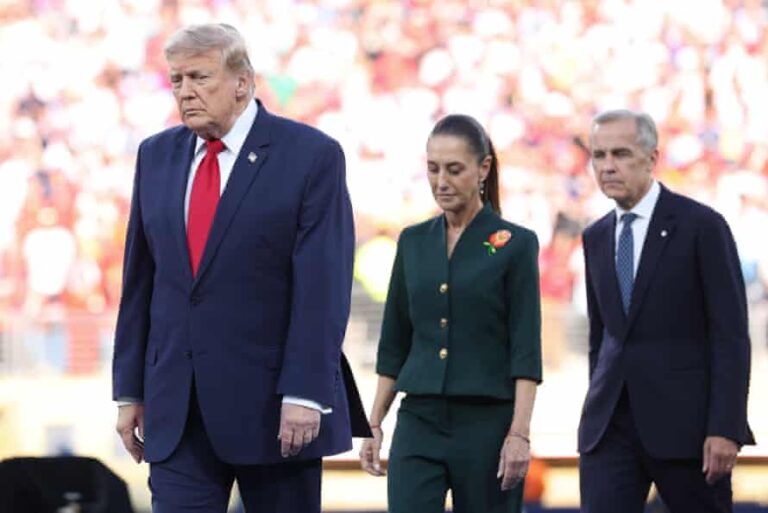
    US President Donald Trump has accused Canada of “poisoning” American air with smoke from widespread forest fires, threatening to impose 50% tariffs and demand compensation from its northern neighbour. Speaking following the World Cup final, Trump claimed he urged Canadian Prime Minister Mark Carney to halt the blazes from crossing the border, declaring that the US was being “unnecessarily invaded by filthy, polluted and unhealthy air”. In support, Republican Senator Bernie Moreno announced plans to introduce legislation sanctioning Canada for alleged forest mismanagement. Over 8.1 million acres of Canada’s boreal forest have burned following a severe heat dome, causing hazardous, hazy air across major US and Canadian cities. Leading climate scientists and ecologists have forcefully dismissed Trump’s claims, describing the rhetoric as unfounded, logistically impossible, and a form of victim-blaming. Experts, including Michael Mann and Lori Daniels, emphasised that the intensified fires are a direct symptom of global climate change rather than improper forest management. They pointed out that clearing or “raking” Canada’s vast, remote boreal forests is physically unfeasible, noting that the smoke flows both ways across the border and requires international climate action rather than trade penalties.

  • | |

    Trump returns to White House correspondents’ din…

    United States President Donald Trump will address the White House Correspondents’ Association at a rescheduled gala on Friday, nearly three months after a shooting outside the Washington Hilton forced the cancellation of the April event. The black-tie dinner, now relocated to the Waldorf Astoria hotel, will take place under heightened security. Secret Service Director Sean Curran said an advance team had implemented a comprehensive plan, acknowledging the risk of hostile actors but stressing that the agency was treating the venue with the same rigor as any presidential site. The April 25 incident occurred as Trump and his cabinet were arriving. A man armed with a shotgun attempted to breach a security checkpoint and opened fire. Secret Service officer Victor Gonzales, credited with stopping the attack, was shot but survived thanks to his protective vest. Gonzales will be honored at Friday’s dinner, along with Hilton staff who assisted guests during the chaos. The suspect, Cole Allen, has pleaded not guilty to charges including attempted assassination of the president. Trump has argued the attack underscored the need for a $400 million ballroom under construction at the White House, saying future events held there would enhance presidential security. The correspondents’ dinner, a century-old Washington tradition, raises funds for journalism scholarships and celebrates the First Amendment. Trump is scheduled to deliver remarks, with entertainment provided by mentalist Oz Pearlman. This year’s event carries added weight. Trump has frequently clashed with the press, denouncing coverage as “fake news,” restricting access for outlets such as the Associated Press, and threatening to revoke broadcast licenses. Yet he has also given reporters more direct access than recent presidents, often taking questions in unscripted settings. Several journalism organizations have urged the WHCA to use the dinner to condemn what they describe as Trump’s attacks on press freedom. WHCA President Weijia Jiang said the gala would send a clear message: “Violence has no place in American life and a free press will not be intimidated into silence.”

  • |

    Historic post-Brexit deal eliminates Gibraltar-Spain border fence

    In a landmark shift ending decades of physical and bureaucratic division, Spain and Gibraltar have celebrated the dismantling of the land border fence following a treaty signed in Brussels. The post-Brexit agreement, taking effect at midnight, brings an end to land frontier controls and establishes Gibraltar as a de facto participant in the EU’s Schengen free-movement area. The treaty resolves over four years of complex negotiations between the United Kingdom, Spain, Gibraltar, and the European Union. Beyond removing land border gates that have stood since 1908, the accord places responsibility for Schengen passport checks at Gibraltar’s port and airport with Spanish officials, ensuring fluid transit for tourists and the roughly 15,000 Spanish cross-border workers who sustain the territory’s economy. Visiting the frontier municipality of La Línea de la Concepción to watch the physical removal of the barrier, Spanish Prime Minister Pedro Sánchez stated that the deal marks an end to “the last wall in continental Europe”, laying the groundwork for shared regional prosperity. Gibraltar’s Chief Minister, Fabian Picardo, emphasised that the historic arrangement delivers economic certainty and seamless movement while preserving the territory’s constitutional protections and British sovereignty intact.

  • |

    Poland’s main opposition party splits following loyalty pledge ultimatum

    Poland’s main opposition Law and Justice (PiS) party has fractured following a severe internal dispute over its political strategy, with former Prime Minister Mateusz Morawiecki and dozens of his allies breaking ranks with longtime leader Jarosław Kaczyński. The split occurred after Kaczyński issued an ultimatum demanding all PiS lawmakers sign a strict loyalty oath committing them not to collaborate with outside political groups. Dozens of parliamentarians, led by Morawiecki, refused to sign the pledge before the deadline, leading Kaczyński to declare that those who abstained had effectively resigned from the party. The former prime minister confirmed that his faction includes 40 members of parliament, three members of the European Parliament, and one senator, though he maintained that his group sought to preserve unity while broadening the right-wing electoral base toward younger, centre-right voters. The division threatens PiS’s status as the largest party in the Polish parliament, a position it held despite losing power to Donald Tusk’s pro-European coalition in 2023. As the conservative vote increasingly fragments across competing factions ahead of the 2027 parliamentary elections, the formal expulsion of the dissident lawmakers is scheduled to be processed at a party leadership meeting.