poland8217s main opposition
|

Poland’s main opposition party splits following loyalty pledge ultimatum

Poland’s main opposition Law and Justice (PiS) party has fractured following a severe internal dispute over its political strategy, with former Prime Minister Mateusz Morawiecki and dozens of his allies breaking ranks with longtime leader Jarosław Kaczyński.

The split occurred after Kaczyński issued an ultimatum demanding all PiS lawmakers sign a strict loyalty oath committing them not to collaborate with outside political groups.

Dozens of parliamentarians, led by Morawiecki, refused to sign the pledge before the deadline, leading Kaczyński to declare that those who abstained had effectively resigned from the party.

The former prime minister confirmed that his faction includes 40 members of parliament, three members of the European Parliament, and one senator, though he maintained that his group sought to preserve unity while broadening the right-wing electoral base toward younger, centre-right voters.

The division threatens PiS’s status as the largest party in the Polish parliament, a position it held despite losing power to Donald Tusk’s pro-European coalition in 2023.

As the conservative vote increasingly fragments across competing factions ahead of the 2027 parliamentary elections, the formal expulsion of the dissident lawmakers is scheduled to be processed at a party leadership meeting.

Similar Posts

  • | | |

    Roads sealed around Karachi Press Club ahead of PT…

    Several roads surrounding the Karachi Press Club were closed on Wednesday as authorities implemented security measures ahead of a possible protest by Pakistan Tehreek-e-Insaf (PTI), causing traffic congestion in nearby areas. According to traffic police, the closures have led to increased vehicle movement on surrounding roads as commuters seek alternate routes. Officials said the diversions were introduced to ensure a smooth flow of traffic and minimise disruption during the expected demonstration. Traffic coming from MR Kiani Chowrangi has been redirected towards Thana Gali, while vehicles approaching Fawara Chowk are being diverted to Aiwan-e-Sadr Road and Zainab Market. Authorities have also rerouted traffic from the Coast Guard area towards the lane leading to the Passport Office to ease congestion around the Press Club. Traffic police have advised motorists to follow the designated diversion plans and cooperate with officials on duty to avoid delays. The precautionary measures come amid expectations of a PTI protest in the city, with law enforcement agencies maintaining heightened security in and around the area to ensure public safety and maintain order.

  • |

    Sabalenka storms into Toronto third round, eyes US Open hat-trick

    TORONTO: World No. 1 Aryna Sabalenka made an emphatic return to hard-court tennis with a straight-sets victory over Japan’s Moyuka Uchijima at the WTA 1000 Toronto Open, reinforcing her status as one of the favourites heading into the North American swing. The Belarusian star defeated qualifier Uchijima 6-3, 6-3 in her opening match on Tuesday, bouncing back strongly after disappointing exits at both the French Open and Wimbledon. The convincing win marked another milestone in Sabalenka’s remarkable hard-court campaign, where she has now won 24 of her last 25 matches on the surface. Her only defeat on hard courts this season came against Elena Rybakina in the Australian Open final, highlighting just how dominant Sabalenka has been throughout the year. Despite the comfortable scoreline, the match was far from straightforward. Uchijima stunned the top seed early by breaking serve in the opening game after recovering from a 40-15 deficit, quickly taking a 2-0 lead. However, Sabalenka responded like a champion, winning the next five games to seize complete control and eventually close out the opening set with authority. The second set proved equally competitive, with both players exchanging five service breaks in an entertaining battle. Sabalenka eventually established a crucial 3-2 advantage before tightening her game at the right moment. She held serve confidently to move ahead 4-2 and later sealed victory on her second match point with a powerful overhead winner. Speaking after the match, Sabalenka expressed satisfaction with both her physical condition and mental approach following a short break from competition. “I’m happy with the performance and the fight. I expected some challenges after the break, but I felt mentally and physically ready,” she said. The victory keeps Sabalenka’s momentum alive as she targets another successful North American campaign, including a possible third consecutive US Open title later this month. Awaiting her in the third round is experienced Chinese player Zhang Shuai, who advanced after Jelena Ostapenko retired while trailing 6-0, 4-0. With confidence growing and hard-court form peaking once again, Sabalenka has sent an early warning to the rest of the field that she is ready to challenge for another major title as the road to New York gathers pace.

  • | |

    Citizen named Quaid-e-Azam told to appear before N…

    PESHAWAR: The Peshawar High Court has directed a citizen named Quaid-e-Azam to appear before the National Database and Registration Authority (NADRA) Board after his Computerised National Identity Card (CNIC) was blocked. The matter came before the court after the citizen challenged the blocking of his CNIC through a petition. A division bench comprising Justice Waqar Ahmed and Justice Inamullah Khan heard the case. During the proceedings, the petitioner’s lawyer told the court that his client was a businessman. He said the citizen’s CNIC had been blocked and requested the court to intervene in the matter. The lawyer sought relief against the action taken against his client. He maintained that the blocking of the identity card had affected the citizen and required judicial consideration. A NADRA representative also appeared before the court. The Director Legal of NADRA informed the bench that the CNIC had not been blocked without reason. He said the authority had found the petitioner’s identity record suspicious. According to NADRA, the issue required further verification of the citizen’s record and identity documents. After hearing both sides, the court did not immediately order the restoration of the CNIC. Instead, the bench directed the petitioner to appear before the NADRA Board. The court’s direction means that the petitioner will have an opportunity to present his position before the relevant authority. NADRA will then examine the matter in accordance with its verification process. The case highlights the importance of accurate identity records and the procedures followed when questions arise over a citizen’s documentation. The court’s order also provides a formal channel for the petitioner to address the concerns raised by NADRA

  • | |

    Hackers target Wall Street firms in phone-based cy…

    NEW YORK: Hackers seeking ransom have targeted dozens of major US financial institutions and businesses using a surprisingly simple tactic — posing as IT help desk employees and tricking staff into handing over passwords and authentication codes. According to Google and internet intelligence data reviewed by Reuters, the campaign targeted prominent private equity and financial firms, including Blackstone, Bridgewater Associates, Apollo Global Management, Bain Capital, KKR, TPG, CME Group, Clearlake Capital and Moody’s. Google said the cybercriminals operate under several names, including Redact, Pink, Falcon and Helix. The technology giant said some companies targeted during the campaign had paid ransoms, although it did not identify those businesses. Reuters was also unable to determine which companies were successfully compromised. The hackers reportedly created websites designed specifically for individual companies. Employees were then contacted by phone, sometimes through calls that appeared to originate from their organisation’s legitimate IT help desk. The attackers allegedly told employees that they needed to urgently update their passkeys or multifactor authentication credentials. Victims were then directed to malicious websites using names designed to look legitimate, such as those containing phrases like “passkey helpdesk” or “secure passkey”. Once an employee entered their credentials, the hackers could obtain an authentication code in real time, allowing them to take control of the account while remaining on the phone with the victim. Austin Larsen, a principal threat analyst with Google’s Threat Intelligence Group, said the technique was not especially sophisticated but remained highly effective. Cybersecurity experts said the campaign demonstrates that human behaviour remains one of the biggest vulnerabilities for even heavily protected organisations. Lee Clark of the Retail and Hospitality ISAC compared the tactic to persuading a security guard to open a heavily protected gate. Google said the attackers had increasingly focused on private equity firms, law firms and financial ratings agencies because they may hold sensitive information that companies would be willing to protect through ransom payments. Reuters identified 72 malicious websites listed in Google’s report and linked several of them to specific companies using internet intelligence platforms. Google cautioned that while the infrastructure indicated attempted intrusions, not every attack was necessarily successful. The campaign appears to have affected a broader range of industries. Data reviewed by Reuters showed that hackers created digital traps targeting more than 200 companies during a five-week period, including Uber, Zillow and Levi Strauss, along with law firms such as Paul Hastings and Greenberg Traurig. The hacking group’s shifting aliases have also complicated efforts to identify those behind the attacks. Google said the various names appeared connected through shared infrastructure, but acknowledged that important questions about the hackers’ identities and relationships remain unanswered. The latest campaign has heightened concern across Wall Street, highlighting how convincing phone calls and basic social engineering can bypass sophisticated cybersecurity systems and expose highly valuable corporate accounts.

  • |

    Colombia earthquake death toll crosses 250

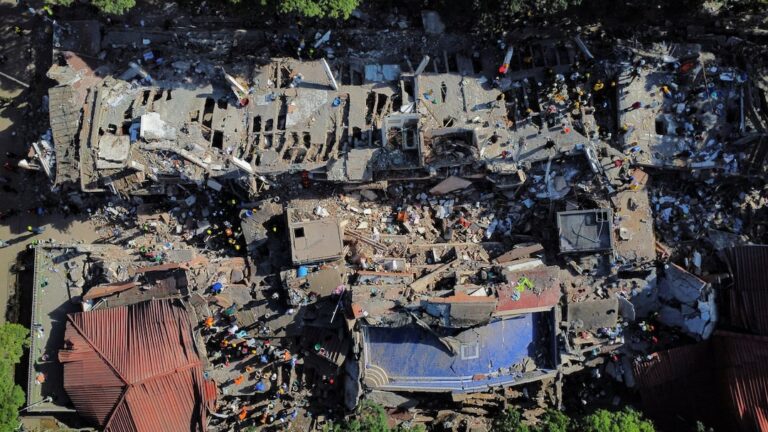
    The death toll from a powerful earthquake in western Colombia has crossed 250 as rescue teams continue searching through collapsed buildings for survivors. The 7.4-magnitude earthquake struck the country’s coffee-growing region early Monday. It caused widespread destruction across several cities and surrounding areas. Local authorities reported that at least 254 people had died by Tuesday morning. Pereira recorded 101 deaths, while 95 fatalities were reported in Cali, Colombia’s third-largest city. Rescue workers have been operating around the clock in the worst-hit areas. They are using cranes, excavators and heavy machinery to remove huge sections of concrete. In some locations, rescuers have been forced to work with their hands. Volunteers have also joined the search, forming human chains to move debris away from collapsed structures. Families have gathered near damaged buildings while waiting for news of relatives who may still be trapped. Rescue workers have reported finding both survivors and bodies beneath the rubble. The earthquake severely damaged homes, apartment buildings, schools and medical facilities. Some structures were completely destroyed, while others were left unstable and unsafe for residents. Cali suffered major damage. Several upper floors of a hospital collapsed, including areas used for paediatric treatment. Hospital officials said some patients became trapped, while hundreds of others were treated outside the damaged facility. The city’s morgue reached capacity as authorities continued bringing in victims from affected areas. Medical and emergency services have been working under difficult conditions. The United Nations humanitarian office estimated that around 5,000 homes had been damaged. Dozens of buildings collapsed, while hundreds of other residences were destroyed or seriously affected. The earthquake also disrupted essential infrastructure. Electricity, water supplies, healthcare services and telecommunications were affected in several areas. Authorities also closed six airports because of damage. Roads were damaged in multiple locations, creating additional difficulties for rescue teams and the delivery of emergency supplies. The region near the epicentre has faced particularly severe disruption. Poor communications have made it difficult for authorities to assess the full scale of the disaster. Nearly 100 aftershocks were recorded by Tuesday morning. Officials have warned residents and rescue workers to remain cautious as damaged buildings could collapse during further tremors. President Abelardo De La Espriella visited the affected region and announced a three-month economic relief measure for residents of Risaralda. The government said the initiative was intended to support people and businesses affected by the disaster. International assistance has also begun. The United States announced $15.5 million in emergency support for shelter, food, protection and damage assessments. The Inter-American Development Bank said $50 million could immediately be made available for reconstruction support if requested by the Colombian government. The United Nations said it was expanding its presence in the affected region to support humanitarian operations. Officials cautioned that the final death toll and overall scale of the destruction could take several days to establish because communications remain disrupted in some of the hardest-hit areas.

Leave a Reply

Your email address will not be published. Required fields are marked *