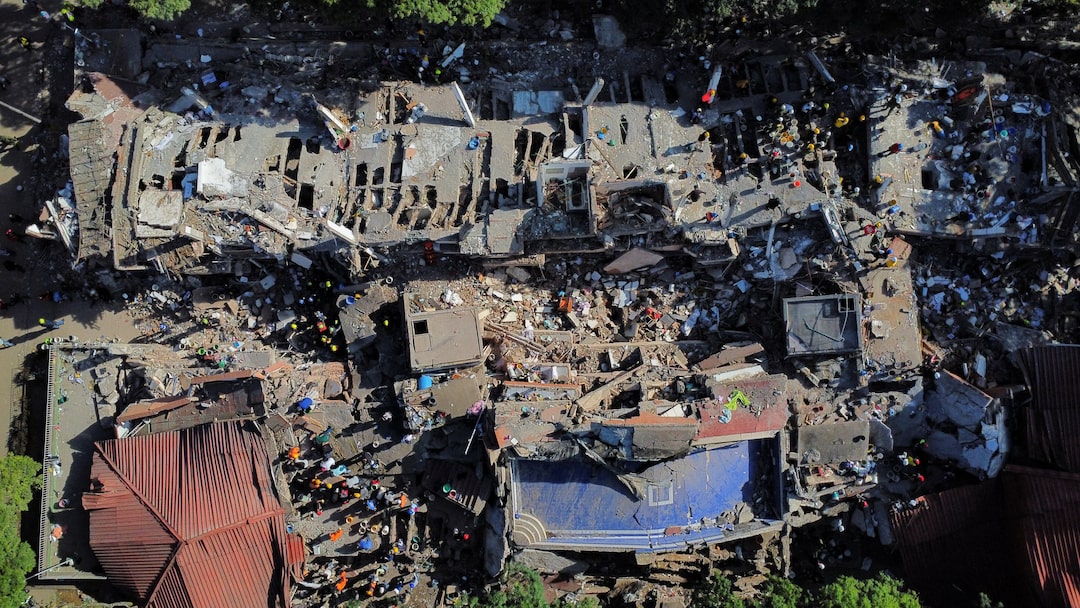
colombia earthquake death
|

Colombia earthquake death toll crosses 250

The death toll from a powerful earthquake in western Colombia has crossed 250 as rescue teams continue searching through collapsed buildings for survivors.

The 7.4-magnitude earthquake struck the country’s coffee-growing region early Monday. It caused widespread destruction across several cities and surrounding areas.

Local authorities reported that at least 254 people had died by Tuesday morning. Pereira recorded 101 deaths, while 95 fatalities were reported in Cali, Colombia’s third-largest city.

Rescue workers have been operating around the clock in the worst-hit areas. They are using cranes, excavators and heavy machinery to remove huge sections of concrete.

In some locations, rescuers have been forced to work with their hands. Volunteers have also joined the search, forming human chains to move debris away from collapsed structures.

Families have gathered near damaged buildings while waiting for news of relatives who may still be trapped. Rescue workers have reported finding both survivors and bodies beneath the rubble.

The earthquake severely damaged homes, apartment buildings, schools and medical facilities. Some structures were completely destroyed, while others were left unstable and unsafe for residents.

Cali suffered major damage. Several upper floors of a hospital collapsed, including areas used for paediatric treatment. Hospital officials said some patients became trapped, while hundreds of others were treated outside the damaged facility.

The city’s morgue reached capacity as authorities continued bringing in victims from affected areas. Medical and emergency services have been working under difficult conditions.

The United Nations humanitarian office estimated that around 5,000 homes had been damaged. Dozens of buildings collapsed, while hundreds of other residences were destroyed or seriously affected.

The earthquake also disrupted essential infrastructure. Electricity, water supplies, healthcare services and telecommunications were affected in several areas.

Authorities also closed six airports because of damage. Roads were damaged in multiple locations, creating additional difficulties for rescue teams and the delivery of emergency supplies.

The region near the epicentre has faced particularly severe disruption. Poor communications have made it difficult for authorities to assess the full scale of the disaster.

Nearly 100 aftershocks were recorded by Tuesday morning. Officials have warned residents and rescue workers to remain cautious as damaged buildings could collapse during further tremors.

President Abelardo De La Espriella visited the affected region and announced a three-month economic relief measure for residents of Risaralda. The government said the initiative was intended to support people and businesses affected by the disaster.

International assistance has also begun. The United States announced $15.5 million in emergency support for shelter, food, protection and damage assessments.

The Inter-American Development Bank said $50 million could immediately be made available for reconstruction support if requested by the Colombian government.

The United Nations said it was expanding its presence in the affected region to support humanitarian operations.

Officials cautioned that the final death toll and overall scale of the destruction could take several days to establish because communications remain disrupted in some of the hardest-hit areas.


Similar Posts

  • |

    Japan protests as Putin visits disputed Kuril Islands

    Japan issued a strong protest on Thursday following Russian President Vladimir Putin’s visit to Iturup, an island within the disputed Kuril Islands chain claimed by both nations. According to Russian state media, the visit represents Putin’s first in-person trip to the archipelago. Japanese Foreign Minister Toshimitsu Motegi reiterated Tokyo’s position, stating that the islands are inherently Japanese territory under both historical context and international law. The territorial row over the four southernmost islands, which Japan refers to as the Northern Territories and Russia calls the Southern Kurils, has prevented the two countries from signing a formal World War II peace treaty. The Soviet Union seized the chain in 1945 and subsequently expelled roughly 17,000 Japanese residents. During his itinerary on Iturup, known in Japan as Etorofu, Putin inspected a local fish-processing plant and sampled regional seafood following his observation of naval drills in Russia’s Far East. The strategically located island also houses a primary Russian military air base. Bilateral relations between Moscow and Tokyo have grown increasingly strained in recent years, particularly following Japanese sanctions imposed over the ongoing war in Ukraine.

  • | |

    Where to stream The Devil Wears Prada 2 after its theatrical run

    Fashion fans can finally watch The Devil Wears Prada 2 from home as the highly anticipated sequel has officially arrived on streaming following a successful theatrical run. The sequel became available for streaming on July 29, roughly three months after its cinema release, giving audiences another chance to revisit the glamorous world of Runway magazine. The film is now streaming on Hulu and Disney+, where subscribers can watch the latest chapter in the beloved franchise. Directed by David Frankel and written by Aline Brosh McKenna, the sequel reunites much of the original cast, including Meryl Streep as the formidable Miranda Priestly, Anne Hathaway as Andy Sachs, Emily Blunt as Emily Charlton, and Stanley Tucci as Nigel Kipling. Set nearly two decades after the events of the 2006 blockbuster, the story follows Andy as she returns to Runway magazine, this time as the publication’s features editor, once again working under Miranda Priestly. The sequel explores how the iconic fashion magazine adapts to the rapidly changing media landscape while revisiting the complex relationships between its central characters. The film enjoyed an impressive run at the global box office before making its streaming debut. According to reports, the franchise surpassed the billion-dollar mark worldwide, making the sequel one of the year’s biggest commercial successes. For viewers who missed the theatrical release, Hulu subscribers can now stream the movie directly through the platform. The sequel is also available on Disney+, with availability depending on the subscription package in some regions. Several Disney and Hulu bundles also include access to the film. Fans looking to revisit the story from the beginning can also stream the original The Devil Wears Prada before watching the sequel. The 2006 classic remains available on Disney+, allowing audiences to follow Andy’s journey from aspiring journalist to one of Miranda Priestly’s assistants before diving into the new chapter. The sequel has also introduced several new faces alongside its returning stars, while maintaining the sharp dialogue, high-fashion settings and workplace drama that made the original film a cultural phenomenon. Critics have particularly praised the chemistry between the returning cast members and the film’s updated take on the modern fashion and publishing industries. With its digital release now underway, viewers can enjoy The Devil Wears Prada 2 from home on Hulu and Disney+, whether they’re revisiting Miranda Priestly’s world for nostalgia or experiencing the stylish sequel for the first time. The streaming launch marks the next chapter for one of Hollywood’s most iconic fashion franchises after another successful run on the big screen.

  • | |

    Gold prices fall in global and Pakistan markets as…

    In the international bullion market, the price of gold fell by $10 per ounce, bringing it down to $4,040 per ounce. The decline in global prices was mirrored in Pakistan’s local bullion market, where the price of 24-karat gold dropped by Rs. 1,000 per tola, settling at Rs. 426,436. Similarly, the price of 10 grams of 24-karat gold in the domestic market decreased by Rs. 857, reaching Rs. 365,600. The latest adjustment follows fluctuations in global bullion markets, where investor sentiment and international economic developments continue to influence precious metal prices. While gold registered a decline, silver prices moved in the opposite direction. In the international market, silver gained 68 cents per ounce, pushing its price to $58.12 per ounce. The increase in global silver prices was also reflected in Pakistan’s local market. The price of silver per tola rose by Rs. 68, reaching Rs. 6,291, while the price of 10 grams of silver increased by Rs. 58 to Rs. 5,393. Market analysts say fluctuations in precious metal prices are primarily driven by movements in international bullion markets, changes in investor demand, currency trends, and expectations regarding global economic conditions. Gold often experiences price volatility as investors respond to inflation data, interest rate expectations, and geopolitical developments, while silver prices are influenced by both investment demand and industrial consumption. Jewellers and bullion traders in Pakistan closely monitor international price movements, as domestic gold and silver rates are largely determined by global market trends along with the exchange rate of the Pakistani rupee against the US dollar. The latest decline in gold prices may provide some relief for buyers planning jewellery purchases or investment in physical gold. However, traders caution that bullion prices remain highly volatile, and future movements will depend on developments in the global economy and financial markets. With gold easing and silver continuing to strengthen, investors are expected to keep a close watch on international market trends before making further investment decisions in precious metals.

  • | |

    UK assures swift action on Pakistani student visas

    British High Commissioner Jane Marriott has assured Pakistan that the issue of delays in student visas will be addressed. Marriott gave the assurance during a meeting with Federal Minister for Law and Justice Azam Nazeer Tarar. The meeting was held as concerns grow over delays faced by Pakistani students seeking to travel to the United Kingdom for higher education. During the meeting, Tarar raised the issue of delayed visa processing with the British envoy. He conveyed the government’s concerns over the difficulties being faced by Pakistani students. The minister said hundreds of Pakistani students could lose their academic year because of the delays. Many students require timely visa decisions to join their universities and begin their studies according to the scheduled academic calendar. Tarar stressed the importance of resolving the issue at the earliest. He said unnecessary delays could create serious academic and financial difficulties for students and their families. The British High Commissioner assured the minister that efforts would be made to address the matter. The two sides also discussed broader issues of mutual interest. They exchanged views on strengthening institutional communication and cooperation between Pakistan and the United Kingdom. The meeting highlighted the importance of maintaining effective coordination between the relevant institutions of both countries. Better institutional engagement could help resolve issues affecting students and other Pakistani citizens seeking services in the UK. The assurance comes amid concerns among Pakistani students about securing timely visas for their higher education programmes.

  • | |

    Iran vows to withstand sweeping new US sanctions

    TEHRAN: Iran has said it is fully prepared to deal with the latest expansion of US economic sanctions, as Washington launches what it describes as a major campaign to cut Tehran off from international financial and trade networks. Iranian Economy Minister Ali Madanizadeh said the government had anticipated the new measures and prepared a long-term strategy to limit their impact. He said Tehran had its own economic tools and expected to continue commercial relations with countries willing to trade with Iran. The remarks came after US Treasury Secretary Scott Bessent announced a broad package of sanctions targeting Iran’s financial connections and revenue sources. Washington said the measures were designed to put further pressure on Tehran and force it to choose between greater international isolation and a return to normal economic relations. Bessent described the campaign as an unprecedented financial offensive against Iran. He said the United States would target networks and channels allegedly used by Tehran to generate revenue and bypass existing sanctions. The new measures cover several sectors, including digital assets, technology, gold, aviation and shipping. The US Treasury also announced sanctions against dozens of entities, individuals and vessels allegedly connected to Iran’s economic activities. Washington warned governments, banks and businesses that continue dealing with Iran that they could also face consequences. Bessent said the administration would move quickly against entities that continued to support Tehran’s financial networks. Iran, however, rejected the pressure campaign and said it expected to maintain economic relations with key trading partners. China has also criticised the latest US measures, describing unilateral sanctions as illegitimate. Beijing said economic pressure would not resolve disputes and stressed that it would protect its own economic interests. China is particularly important to Iran because it remains a major buyer of Iranian oil. Analysts say the effectiveness of the latest sanctions will depend heavily on whether countries such as China enforce Washington’s restrictions. Experts have also questioned how much additional pressure the new measures can place on Iran’s energy sector. Some analysts argue that existing restrictions and disruptions to oil exports have already significantly affected Tehran’s energy revenues. The confrontation is also affecting global energy markets. Oil prices have risen sharply since the conflict began, raising concerns about inflation and fuel costs in several countries. Iran has warned that it could take further action against regional oil exports if the conflict continues. Tehran has also issued warnings to vessels seeking to pass through the Strait of Hormuz, a strategically important waterway through which a significant share of global oil and gas shipments normally travels. The latest sanctions come after months of escalating pressure between Washington and Tehran. The United States has repeatedly sought to use economic measures to force Iran to change its policies, while Tehran has continued to reject what it calls unilateral American pressure. The economic consequences are also being felt in the United States. Higher oil prices have pushed gasoline costs above $4 per gallon in parts of the country, adding to concerns over household expenses ahead of the November midterm elections. For Iran, the latest US campaign presents another major economic challenge. However, Tehran’s response indicates that it intends to rely on existing trade relationships, particularly with countries that oppose unilateral US sanctions, to keep its economy functioning.

  • |

    Saudi must recognise Israel, says Trump

    US President Donald Trump has reaffirmed that Saudi Arabia must establish diplomatic relations with Israel before Washington moves ahead with a civilian nuclear cooperation agreement with the kingdom. Speaking at the White House on Friday, Trump said the proposed nuclear partnership remains linked to Saudi Arabia joining the Abraham Accords, the US-backed agreements that normalized relations between Israel and several Arab states. Trump dismissed suggestions that the US Department of Energy had announced the nuclear deal without the Israel-related condition. He said there had been no misunderstanding within his administration and insisted the requirement had always been part of the discussions. “I have always said that Saudi Arabia must become part of the Abraham Accords for the deal to move forward,” Trump told reporters, adding that the accords had been successful and that the time had come for Riyadh to join them. The latest remarks came just days after the United States and Saudi Arabia signed a framework for cooperation on a civilian nuclear programme. While the initial announcement focused on energy cooperation and economic benefits, Trump later clarified that the agreement would only proceed if Saudi Arabia formally normalized ties with Israel. Saudi Arabia has not officially responded to Trump’s latest comments. However, the kingdom has consistently maintained that it will not establish diplomatic relations with Israel until meaningful progress is made toward the creation of an independent Palestinian state. Israeli leaders have repeatedly rejected international calls for a Palestinian state under current conditions. The proposed agreement is expected to create a long-term partnership between the two countries in the peaceful use of nuclear energy. It would involve the transfer of American technology, technical expertise and investment aimed at supporting Saudi Arabia’s civilian nuclear programme. Trump also rejected reports suggesting the agreement would allow Saudi Arabia to enrich uranium domestically. He stressed that no uranium enrichment would be permitted under the arrangement. US officials have argued that the partnership is designed to strengthen bilateral relations while ensuring strict oversight of nuclear activities. They say American companies will play a central role in developing the programme, allowing Washington to maintain close monitoring and prevent nuclear proliferation.

Leave a Reply

Your email address will not be published. Required fields are marked *