Magazine

  • |

    Anaya Bangar opens up about her life

    Anaya Bangar, the daughter of former Indian batting coach Sanjay Bangar, has spoken candidly about her life following gender-affirming surgery, sharing her thoughts on marriage, motherhood, and the personal journey that has transformed her life. In a recent interview, Anaya discussed her future aspirations, the challenges she has faced, and the unwavering support she has received from her family. Speaking openly about her future plans, Anaya said that she hopes to get married and have children one day. She expressed her deep love for children and said that becoming a parent remains one of her dreams. However, she emphasized that her immediate priority is recovering physically and emotionally after undergoing gender-affirming surgery. “At the moment, I am not thinking about marriage,” Anaya explained. “This is the beginning of a completely new chapter in my life, and my focus is on healing and adjusting to the changes that have taken place.” When asked about motherhood, Anaya acknowledged that she would not be able to become a biological mother naturally after her gender transition. She explained that while this reality is emotionally significant, it has not diminished her desire to become a parent in the future. She shared that there are other meaningful paths to parenthood available to her. According to Anaya, surrogacy is one option that could help her have a child, while adoption is another possibility she would gladly consider. She stressed that what matters most is the opportunity to love, care for, and raise a child, regardless of how that journey unfolds. Reflecting on her personal transition, Anaya revealed that one of the most meaningful aspects of her experience has been the support she received from her parents. She said that after her surgery, her family fully accepted her as their daughter and embraced her identity with love and respect. Anaya explained that her parents now refer to her using feminine pronouns and language, something she described as deeply meaningful and emotionally reassuring. She said their acceptance has given her confidence and strength as she continues building her new life. The interview also shed light on the timeline of her transition. Anaya revealed that her gender transition journey began in 2023 when she started hormone replacement therapy. She described the process as one that involved both physical and psychological changes, requiring patience, resilience, and careful medical supervision. After completing the necessary stages of hormone therapy and preparing herself mentally and physically, Anaya underwent gender-affirming surgery in Thailand approximately four months ago. She said the procedure marked an important milestone in her life and represented the fulfillment of a long and deeply personal journey toward living authentically. Although the transition has brought new challenges, Anaya expressed optimism about the future. She said she is grateful for the support of her loved ones and remains hopeful about achieving her dreams of marriage, family, and personal happiness. She also encouraged people to approach gender identity with greater understanding, compassion, and respect. Concluding the interview, Anaya said that while her journey has required courage and perseverance, she believes it has allowed her to embrace her true identity. As she continues her recovery, she is focused on building a fulfilling future, surrounded by acceptance, love, and the hope of one day becoming a parent through surrogacy or adoption.


  • | |

    “Forgotten by everyone?” Talha Anjum raises troubling questions over hostages

    Pakistani rapper Talha Anjum has once again highlighted the plight of Pakistani sailors reportedly being held hostage by Somali pirates, saying that the issue has been forgotten by both the media and the public. In an Instagram story shared on Thursday, Anjum criticised the authorities’ response and said the government had failed to protect Pakistani citizens, whether inside the country or abroad. He expressed concern that the families of the affected sailors were still waiting for answers and support. “The media forgot about these families and sadly, so did the people of Pakistan,” Anjum said while calling for urgent action to secure the release of the hostages. The ship was reportedly hijacked by pirates off the coast of Somalia in April, sparking concern and calls for efforts to bring the Pakistani sailors home. Anjum had previously raised his voice on the issue, saying he personally knew one of the crew members and considered him like a brother. At the time, the rapper criticised what he described as a lack of seriousness from authorities and urged officials to take immediate steps for the safe return of the stranded sailors. . Several other Pakistani celebrities, including Mahira Khan, Sabeena Farooq, and Bushra Ansari, have also spoken publicly in support of the affected sailors and their families. The families of the crew members continue to await further developments as calls grow for renewed efforts to secure their safe release.

  • |

    Taylor Swift officially joins the Kelce family 

      Taylor Swift has officially become a member of the Kelce family following her marriage to NFL star Travis Kelce, and his sister-in-law, Kylie Kelce, has finally opened up about the memorable occasion. Speaking for the first time since the wedding, Kylie shared warm and heartfelt reflections on the couple’s special day during a recent episode of her podcast, Not Gonna Lie. Kylie, 34, described the ceremony as a beautiful and emotional celebration that brought both families together. Although she had remained quiet about the event until now, she decided to express her happiness and congratulate the newlyweds publicly. “I want to congratulate Taylor and Travis. The wedding was absolutely beautiful, and I couldn’t be happier for them,” Kylie said during the podcast. “We all love them very much, and in many ways this wedding simply made official something that had already been true for a long time. Taylor has felt like part of our family for quite a while.” According to reports, the couple exchanged vows during an intimate ceremony held at Madison Square Garden in New York City. Their wedding came after three years of dating and approximately one year of being engaged. Close friends and family attended the private celebration, making it a meaningful occasion rather than a lavish public spectacle. Several family members played important roles in the ceremony. Jason Kelce and Kylie’s daughters served as flower girls, adding a touching family element to the event. Taylor’s brother, Austin Swift, stood beside her as her man of honor, highlighting the close bond between the siblings. Kylie’s comments reflected the affection and support that the Kelce family has shown Taylor throughout her relationship with Travis. Her remarks suggested that Taylor had already formed strong relationships with family members long before the wedding, making the marriage a natural next step rather than a dramatic change. Fans quickly reacted to Kylie’s heartfelt message across social media, praising both her kindness and the close relationship between the two families. Many admired the warmth in her comments and appreciated the sense of unity surrounding the couple. One fan wrote that Kylie had expressed the situation perfectly, adding that Taylor had clearly been embraced by the Kelce family for a long time. The commenter also celebrated how the Swift and Kelce families had grown closer throughout the relationship. Another fan congratulated the newlyweds but jokingly noted that they were still waiting for an official social media announcement confirming the marriage. The lighthearted comment reflected the excitement many fans continue to feel about the couple’s relationship. Although neither Taylor Swift nor Travis Kelce has publicly shared extensive details about the ceremony, Kylie’s heartfelt remarks have offered fans a rare glimpse into the intimate celebration. Her comments painted a picture of a joyful family gathering filled with love, support, and lasting memories, marking the beginning of a new chapter for one of the world’s most talked-about celebrity couples.

  • |

    Oprah Winfrey advises prince Harry to stay home 

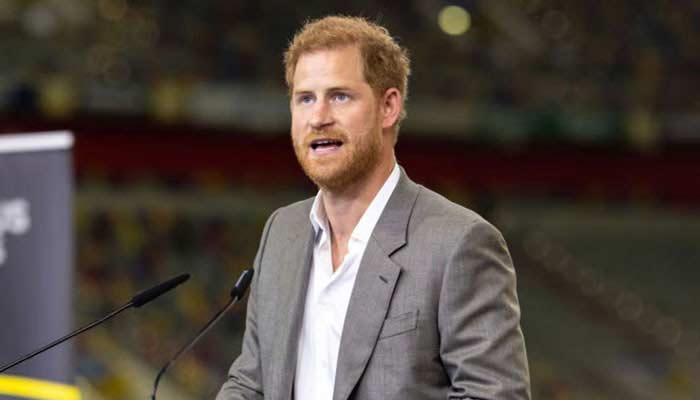
      Media icon Oprah Winfrey has offered candid advice to Prince Harry as he continues to face challenges over his security arrangements in the United Kingdom. Speaking in a recent interview, the veteran television host suggested that the Duke of Sussex should avoid putting himself in situations that attract unwanted attention if privacy is his primary concern. The comments come five years after Winfrey conducted her widely discussed interview with Prince Harry and Meghan Markle, during which the couple spoke openly about their decision to step back from royal duties and the difficulties they experienced within the Royal Family. The interview generated headlines around the world and sparked widespread public debate. Winfrey addressed Prince Harry’s ongoing concerns about personal security following the UK government’s decision not to provide him with the same level of publicly funded protection after he stepped down as a working royal. His requests for enhanced security have been denied by the UK Home Office and the Executive Committee for the Protection of Royalty and Public Figures (RAVEC), a decision that has remained at the center of a lengthy legal and public dispute. Sharing her perspective, Winfrey said that if someone truly wants to maintain privacy, they should limit their exposure to public places. “If you don’t want to be bothered, stay home,” she remarked. “If your goal is to protect your privacy, then don’t go out.” To explain her point, Winfrey referred to her own experiences with public attention. She said that when she and her longtime partner, Stedman Graham, choose to dine out, they understand that people may approach them. If they want complete privacy, they simply decide to spend the evening at home instead. However, she acknowledged that Prince Harry’s circumstances are significantly different from those of a celebrity. She noted that being a member of the British Royal Family brings unique responsibilities and security concerns that cannot be directly compared with the experiences of television personalities or Hollywood stars. Winfrey attended Prince Harry and Meghan Markle’s wedding at Windsor Castle in 2018 in and has remained publicly supportive of the couple since they relocated to the United States in 2020. Following their decision to leave royal life, she stated that she supported the Duke and Duchess of Sussex “1,000 percent,” a position that drew criticism from many royal supporters who believed she had taken the couple’s side. Winfrey also revisited one of the most memorable moments from her 2021 conversation with Meghan Markle—the question, “Were you silent, or were you silenced?” She explained that she asked it purely to ensure there was no misunderstanding about Meghan’s experiences. According to Winfrey, she wanted to provide Meghan with the opportunity to clearly explain whether she had chosen not to speak or whether external circumstances had prevented her from doing so. Despite her explanation, reactions on social media were mixed. While some users appreciated her clarification, others dismissed her remarks as vague and unconvincing. Several critics described her comments as “meaningless word salad,” arguing that they failed to address the broader issues surrounding the controversy. Winfrey’s latest remarks have once again reignited public discussion about Prince Harry’s security concerns, his relationship with the United Kingdom, and the ongoing debate over privacy, celebrity, and royal life.

  • |

    Bollywood actress Dia Mirza criticizes PM Modi 

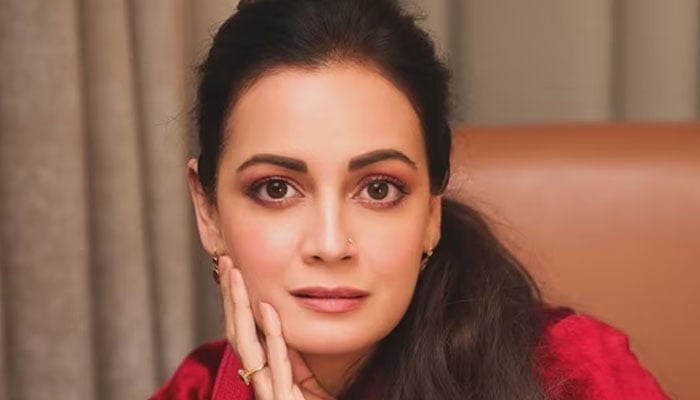
    Bollywood actress Dia Mirza has strongly criticized Indian Prime Minister Narendra Modi over his recent video message addressing the ongoing protests in New Delhi against alleged irregularities in the National Eligibility cum Entrance Test (NEET). The protests, led by students demanding justice and accountability, have continued for weeks at Jantar Mantar, with many participants accusing the government of failing to respond promptly to concerns surrounding the examination process. Sharing her reaction on Instagram, Dia Mirza posted a note accompanied by a broken-heart emoji, expressing disappointment over what she described as the Prime Minister’s delayed and inadequate response. In her statement, she questioned the government’s silence regarding the emotional and personal toll the controversy had taken on students and their families. “Sir, not a single word of compassion for the parents whose children lost their lives, nor any empathy for the students and Sonam Wangchuk, who remained on a hunger strike for weeks,” she wrote. Dia Mirza emphasized that the nation had been waiting for a meaningful response from the country’s leadership while students continued to protest and families struggled with grief and uncertainty. She further criticized the Prime Minister for taking 47 days to address the issue publicly, saying that even after such a long wait, his message failed to provide reassurance or meaningful solutions. “It took you 47 days to say something, and when you finally spoke, you said nothing that could heal the millions of broken hearts,” she added. Her remarks quickly attracted widespread attention on social media, where many users expressed support for her concerns, while others defended the government’s actions. The protests erupted after allegations of paper leaks and irregularities in the NEET examination, one of India’s most competitive entrance tests for medical colleges. Students and opposition groups have demanded a transparent investigation, stricter accountability, and measures to ensure that future examinations are conducted fairly. The issue has sparked nationwide debates about the integrity of India’s examination system and the mental health challenges faced by students under immense academic pressure. Among the prominent voices supporting the students is education reform advocate Sonam Wangchuk, who has participated in a prolonged hunger strike to demand accountability and educational reforms. His involvement has drawn additional public attention to the movement, with supporters arguing that the government should have engaged more actively with the protesters from the outset. In his recent video message, Prime Minister Narendra Modi acknowledged that the controversy had caused significant distress to millions of students and parents across the country. He stated that the government recognizes the seriousness of the issue and announced the establishment of fast-track courts to ensure swift punishment for those responsible for examination paper leaks and related crimes. The Prime Minister also emphasized that protecting students’ academic futures remains the government’s top priority. According to Modi, authorities are working to prevent students from losing an academic year while simultaneously strengthening measures to improve the security and credibility of public examinations. Despite these assurances, critics, including Dia Mirza, argue that the response came too late and lacked the empathy and urgency expected during such a sensitive national crisis. The controversy continues to fuel public debate over educational reforms, government accountability, and the welfare of students in India.

  • | |

    Meet Abu Rohan, who performed 80+ TV nikahs

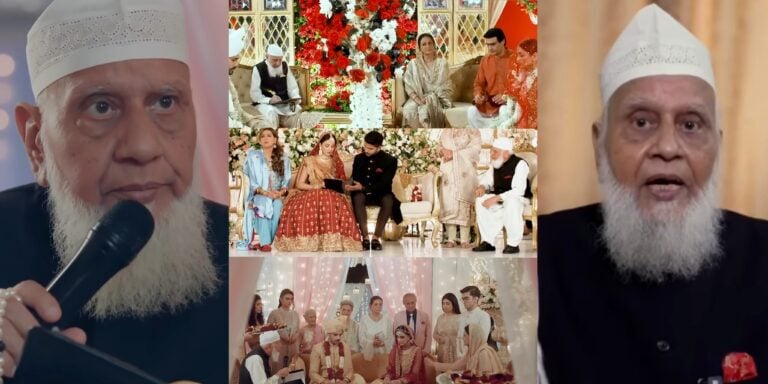
    If you have watched Pakistani dramas with any regularity, you have almost certainly seen Abu Rohan, even if you did not know his name. The senior actor has become one of the most recognisable faces in the industry, not for playing a hero or a villain, but for the very specific and endlessly repeated role of the Nikah Khuwan, the marriage officiant who presides over the wedding ceremonies that are a staple of Pakistani television storytelling. His face has appeared in nikah scenes across some of the most watched dramas in recent years, including Tere Bin, Siyani, Sunn Mere Dil and Yunhi. For many viewers, his presence on screen has become a kind of shorthand for the moment a drama is about to reach its emotional peak. In a recent interview with BBC Urdu, Abu Rohan finally spoke at length about how this unusual acting career began, and the story is as unexpected as the career itself. It started not in a drama studio but in a jewellery shop. Abu Rohan is, by profession, a successful jeweller based in Karachi. Around 35 years ago, a television channel invited him onto a morning show not to act but to answer viewer questions about gold. He explained what happened next in his own words. “Around 35 years ago, a television channel invited me as a jeweler. The owners wanted me to appear on a show where I would answer viewers’ questions about gold. When I appeared on the morning show, I caught the attention of drama makers. They felt I was comfortable in front of the camera, and that’s how I started acting in television dramas.” What followed was a career that spans decades and more productions than most full-time actors manage. “So far, I have solemnized Nikah in around 80 to 85 dramas,” he said. He also revealed that part of his career unfolded outside Pakistan. “I also lived in Bahrain for nearly eight years, where I took part in dramas.” On the nature of the role itself, he offered an insight that many viewers may not have considered. While the nikah khuwan is often a static presence on screen, drama does not always let him remain so. “There are scenes where fights break out during the Nikah, and I have to give different expressions. Usually, it’s a static character, but sometimes it requires proper acting. Directors and producers also cast me in other roles.” His fame among audiences has also brought some unusual requests, which he handles with thoughtful care. “Many people have invited me to officiate Nikah at their real-life weddings, but I politely refused because Nikah is a matter of religion. However, after the Nikah ceremony, I sometimes offer prayers for the couple’s happiness.” For a man who came to television to talk about gold, Abu Rohan has ended up leaving a very different kind of impression, one measured not in carats but in the countless wedding scenes that have made him one of Pakistani drama’s most quietly beloved presences.

  • | |

    Qudsia Ali, Abbas Ashraf on unhealthy gender dynamics

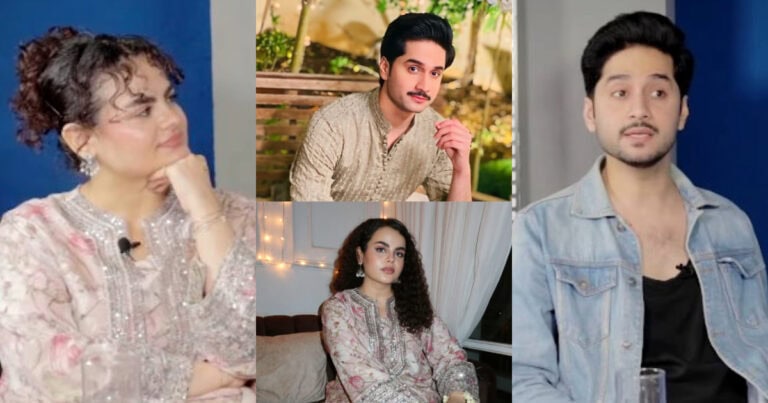
    Pakistani dramas have long been a mirror to the society they come from, and Aik Mohabbat Aur is doing exactly that. The ongoing drama, in which Qudsia Ali plays Maham and Abbas Ashraf Awan plays Faris, explores the painful reality of marriages where women find themselves trapped with narcissistic partners. In a candid conversation with Fuchsia Magazine, the two actors stepped out of their fictional roles and spoke plainly about the dynamics they believe are damaging real relationships in Pakistan today. Abbas Ashraf was direct about where he believes the problem begins, and it is not with men themselves but with how they are raised. He said the narcissistic complex in men is a product of parenting, specifically the way sons are conditioned from childhood to feel superior to everyone around them. Parents, he argued, tell their sons they are the inheritors, the ones who matter, the ones who carry the family forward, while daughters are quietly assigned a lesser place. That imbalance, repeated across generations, plants the seeds of the entitlement and control that later destroys marriages. His prescription was as straightforward as his diagnosis. “Make both your sons and daughters feel equal if you want to stop your sons from becoming negative narcissists,” he said. It is a simple idea that carries enormous weight precisely because of how rarely it is practised. Qudsia Ali brought a different but equally sharp perspective to the same conversation, turning her focus toward the women who stay in difficult marriages long past the point of reason. Her explanation was rooted not in weakness but in a specific emotional wound. She said that many women are deprived of parental love from the very beginning of their lives. When they finally encounter even a fragment of affection from a partner, however temporary or conditional it may be, they hold on to it with everything they have because they have never known anything different. “Women are deprived of parental love and when they get even a glimpse of love, they lie down and take everything,” she said. “They take even a temporary love as they are extremely insecure.” The image is striking and uncomfortably accurate for anyone who has watched a woman accept treatment that from the outside looks impossible to justify. Qudsia did not offer this observation from a distance. She acknowledged that she herself had carried insecurities of her own, and that she had done the work to understand and overcome them. It was a moment of personal honesty that gave her words additional weight. Together, their observations form a connected picture of how the same system of unequal parenting produces both the men who expect everything and the women who accept anything. The drama they are appearing in explores exactly this territory on screen. But in this conversation, they chose to name it plainly off screen too, and that directness is what has made their remarks resonate beyond the usual boundaries of a promotional interview.

  • | |

    Senate panel seeks Bullah suspension until title, dialogue changes

    The release of Bullah, a Pakistani film written by veteran screenwriter Nasir Adeeb and starring Shaan Shahid and Saleem Shah, has been placed in uncertainty after a Senate standing committee recommended that its screening be halted until its title is changed and certain dialogues are revised. The recommendation emerged from a meeting of the Senate Standing Committee on Information and Broadcasting held on Thursday, July 24, chaired by Senator Sarmad Ali. The session was convened to review concerns that had been raised about the film’s certification process by the Central Board of Film Censors. Officials from the CBFC appeared before the committee to defend the approval process, telling members that Bullah had already been cleared without any cuts by both the Punjab and Sindh censor boards under the same title. They explained that the federal board’s jurisdiction was limited to Islamabad Capital Territory and cantonment areas, and maintained that the CBFC chairman could not unilaterally reject a film. Certification decisions, they clarified, were taken collectively by the board, with the chairman holding only a casting vote in the event of a tie. The officials further noted that if the committee believed the film should be banned or its title changed, the matter could be referred to the federal government, which serves as the next appellate authority under the applicable legal framework. Senator Pervaiz Rashid pushed back on the board’s defence, questioning whether Nasir Adeeb’s reputation as a screenwriter was a sufficient basis for approving the film’s content. He pointed out that Adeeb was primarily known for writing violence-based films, particularly Maula Jatt, and argued that this background did not establish the screenwriter’s credentials as an authority on history, national personalities or Pakistan’s cultural traditions. Senator Rashid also remarked that Maula Jatt had introduced the “gandasa” as a cultural symbol to mainstream audiences, saying he had not been aware of the weapon before the film popularised it. Following the discussion, committee chairman Senator Sarmad Ali concluded the session by proposing that the film’s title be changed and that certain dialogues be revised before it is permitted to screen. He further suggested that Bullah remain suspended until these recommended changes have been implemented. The meeting was attended by Senators Abdul Shakoor Khan, Syed Waqar Mehdi, Pervaiz Rashid and Jan Mohammad, along with Secretary Information Ashfaq Ahmed Khalil and officials from the Ministry of Information and Broadcasting and the Central Board of Film Censors. The film’s makers have not publicly responded to the committee’s recommendations. With both provincial censor boards having already cleared the film without cuts, the situation now rests on what the federal government decides to do with the parliamentary committee’s proposal.

  • | |

    Pakistani documentary selected for Locarno Film Festival

    Pakistan’s presence on the international film festival circuit has grown significantly in recent years, and the latest milestone arrives in the form of a debut documentary that will carry the spirit of Sehwan to one of Europe’s most prestigious stages. Filmmaker Umair Bilal’s debut feature documentary As Light as Air has been selected for the 79th Locarno Film Festival in Switzerland, where it will have its world premiere in August. The selection places Pakistani independent cinema on a platform that celebrates outstanding documentary filmmaking from around the world, and represents another meaningful step in the growing global recognition of Pakistan’s independent film movement. The film is set in Sehwan, the historic Sufi town in Sindh that is home to the shrine of Lal Shahbaz Qalandar, one of Pakistan’s most revered spiritual sites. The documentary explores the lives of the pilgrims, wanderers and spiritual seekers who travel to Sehwan carrying grief, longing and hope, drawn by the promise of solace that the shrine and its rituals have offered for centuries. At the centre of the film is the practice of dhamaal, the devotional dance performed at the shrine, which Bilal has described as the heartbeat of Sehwan. Through the rhythm of the music, the movement of the devotees and the atmosphere of collective faith, the documentary offers an intimate and immersive portrait of a spiritual world that few outside Pakistan have encountered directly. As Light as Air has been selected for the Semaine de la Critique section of the Locarno festival, a dedicated showcase for outstanding documentary filmmaking that consistently attracts significant attention from international distributors and critics. The 79th Locarno Film Festival runs from August 5 to 15 and will present 103 world premieres this year across its various sections, including international competition, the Piazza Grande outdoor screenings and documentary showcases. The programme features new work by internationally acclaimed filmmakers including Hong Sangsoo, Denis Cote and Maria Back. The festival will also honour celebrated American director James Gray with its Career Leopard award, one of the most prestigious recognitions the festival offers to filmmakers who have made an enduring contribution to cinema. Festival organisers have described this year’s edition as reflecting a world shaped by conflict while celebrating the enduring power of cinema to connect audiences across cultures and borders. Against that backdrop, a documentary rooted in Pakistan’s Sufi traditions and set in one of the country’s most spiritually significant towns offers something genuinely distinctive, a window into a world of devotion, music and collective belonging that carries a universality capable of reaching audiences with no prior connection to its cultural context. For Umair Bilal, the Locarno selection is a remarkable achievement for a debut feature, and for Pakistani cinema more broadly it signals that stories told with authenticity and artistic conviction about the country’s own cultural heritage can find a home on the world stage.

  • | |

    Ali Fazal prioritises meaningful stories over blockbusters

    Ali Fazal is at a point in his career where the choices he makes carry a different kind of weight, and he is no longer making them for the reasons he once did. In a candid conversation with Elle India, the actor opened up about the creative philosophy guiding his work now, a deliberate shift away from commercial instincts and toward projects that leave a genuine mark. He described what worries him most as a performer with characteristic directness. “Mostly the feeling that you’ve made less of a difference in people’s lives,” he said. It is the kind of answer that says everything about how far his priorities have moved from where they began. Fazal said he now gravitates toward roles that have “less relevance and more resonance”, a distinction that defines much of his current thinking about both his Bollywood and Hollywood career. He wants the work to reflect the ambition and humanity that define him as a person, not simply as an actor building a brand. His upcoming film Raakh, a crime thriller in which he plays a police officer investigating a case rooted in real historical events from 1970s Delhi, served as the central example in his conversation. “Sometimes you’re part of things that work, and that’s wonderful because we all need appreciation to move forward,” he said. “But once in a while, there are projects that actually begin conversations. They come at a time when society perhaps needs them or needs reminding that, sadly, not much has changed fifty years later. That’s what Raakh has done. It has humbled me.” He was equally candid about how his decision-making process has changed. “Earlier, I’d jump into whatever came my way because I had to. Today, I can afford patience.” That patience is now applied most rigorously to the screenplay itself, which he described as the first and most important filter. “The punctuation in a screenplay tells you whether it’s going to be good or bad,” he said, adding with a self-aware joke: “I’m not some A-list star who’s staying away from genres because they’ll spoil my image. I’ve probably stayed away from bad scripts more than genres.” His early career also featured in the conversation. He credited Always Kabhi Kabhi, a film that performed modestly at the box office, with teaching him the grammar of cinema. The film introduced him to Shah Rukh Khan, who produced it, and whom Fazal described as “one of the best artists we have.” On Mirzapur: The Film, which brings the streaming universe to theatres, Fazal called it “a giant experiment,” and on his character Guddu Pandit, he said what has stayed with him is not the violence but the innocence beneath it. Away from acting, he and his wife Richa Chadha are building Pushing Buttons Studios, their independent production company aimed at supporting original storytelling. Asked to describe his journey in a single word, Fazal chose “relentless.” It is the right word for a career that is now defined not by the roles he has taken but by the ones he has chosen to wait for.