qudsia ali abbas
| |

Qudsia Ali, Abbas Ashraf on unhealthy gender dynamics

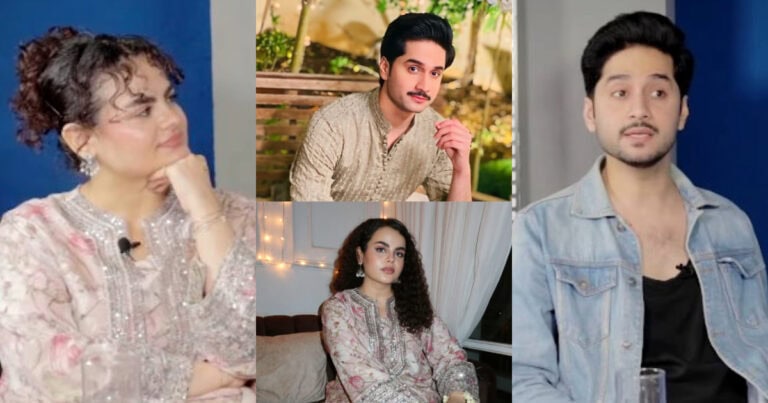
Pakistani dramas have long been a mirror to the society they come from, and Aik Mohabbat Aur is doing exactly that. The ongoing drama, in which Qudsia Ali plays Maham and Abbas Ashraf Awan plays Faris, explores the painful reality of marriages where women find themselves trapped with narcissistic partners. In a candid conversation with Fuchsia Magazine, the two actors stepped out of their fictional roles and spoke plainly about the dynamics they believe are damaging real relationships in Pakistan today.
Abbas Ashraf was direct about where he believes the problem begins, and it is not with men themselves but with how they are raised. He said the narcissistic complex in men is a product of parenting, specifically the way sons are conditioned from childhood to feel superior to everyone around them. Parents, he argued, tell their sons they are the inheritors, the ones who matter, the ones who carry the family forward, while daughters are quietly assigned a lesser place. That imbalance, repeated across generations, plants the seeds of the entitlement and control that later destroys marriages.
His prescription was as straightforward as his diagnosis. “Make both your sons and daughters feel equal if you want to stop your sons from becoming negative narcissists,” he said. It is a simple idea that carries enormous weight precisely because of how rarely it is practised.
Qudsia Ali brought a different but equally sharp perspective to the same conversation, turning her focus toward the women who stay in difficult marriages long past the point of reason. Her explanation was rooted not in weakness but in a specific emotional wound. She said that many women are deprived of parental love from the very beginning of their lives. When they finally encounter even a fragment of affection from a partner, however temporary or conditional it may be, they hold on to it with everything they have because they have never known anything different.
“Women are deprived of parental love and when they get even a glimpse of love, they lie down and take everything,” she said. “They take even a temporary love as they are extremely insecure.” The image is striking and uncomfortably accurate for anyone who has watched a woman accept treatment that from the outside looks impossible to justify.
Qudsia did not offer this observation from a distance. She acknowledged that she herself had carried insecurities of her own, and that she had done the work to understand and overcome them. It was a moment of personal honesty that gave her words additional weight.
Together, their observations form a connected picture of how the same system of unequal parenting produces both the men who expect everything and the women who accept anything. The drama they are appearing in explores exactly this territory on screen. But in this conversation, they chose to name it plainly off screen too, and that directness is what has made their remarks resonate beyond the usual boundaries of a promotional interview.
Similar Posts

  • | | |

    PM orders fast-track strategy for Discos privatisa…

    Prime Minister Shehbaz Sharif has directed the relevant authorities to adopt a comprehensive strategy to attract local and international investors for the privatisation of state-owned electricity distribution companies (Discos). He also ordered the restructuring of the Privatisation Commission within one month to strengthen its role in the reform process. Chairing a high-level meeting in Islamabad, the prime minister said the privatisation programme must move forward according to the approved timelines. He stressed that every stage should be completed transparently and in line with international standards and legal requirements. He added that the process should deliver positive financial results while protecting the interests of electricity consumers. The prime minister instructed officials to ensure that reputable investors participate in the bidding process. He said investor confidence should be increased through effective planning, transparency and a clear policy framework. At the same time, he emphasised that consumer rights should remain a top priority during the transfer of power distribution companies to the private sector. Officials informed the meeting that investor roadshows for the first phase of the privatisation programme had been completed successfully. These campaigns focused on Gujranwala Electric Power Company (Gepco), Faisalabad Electric Supply Company (Fesco) and Islamabad Electric Supply Company (Iesco). Similar investment outreach activities held in Türkiye, Saudi Arabia and China also received encouraging responses from potential investors. The meeting reviewed progress on institutional reforms within the Privatisation Commission. The prime minister directed the commission to recruit experienced professionals in finance, law and information technology. He said hiring qualified experts would improve the commission’s capacity to manage large-scale transactions and strengthen investor confidence. He also instructed officials to incorporate recommendations from professional consultants into the privatisation process. All legal, financial and regulatory requirements should be completed without delay to ensure smooth implementation, he added. The prime minister further ordered the establishment of an effective grievance redress mechanism to address complaints from consumers after the companies are privatised. He said public confidence would depend on uninterrupted services, transparency and accountability. The government is offering investors the opportunity to acquire majority or full ownership of Fesco, Gepco and Iesco, along with management control. These companies are considered among the strongest electricity distribution companies in the country and together provide power to more than 14 million consumers across Punjab, the Islamabad region and parts of Azad Jammu and Kashmir. The privatisation plan is part of the government’s broader economic reform programme. The initiative aims to improve operational efficiency, reduce financial losses, attract domestic and foreign investment, strengthen service delivery and modernise Pakistan’s power sector through greater private-sector participation.

  • | | | |

    US, Saudi forces strike Iran allies in Iraq

    The conflict involving Iran, the United States and its regional allies has entered a new and more dangerous phase, with fresh military strikes reported across the Middle East. US and Saudi forces carried out coordinated airstrikes against Iran-aligned armed groups in eastern Iraq, according to US Central Command (CENTCOM). The operation came after a series of drone attacks that Washington and Riyadh attributed to groups linked to Iran’s Islamic Revolutionary Guard Corps (IRGC). CENTCOM said American and Saudi fighter jets targeted weapons and logistics facilities used by the armed groups. The US military claimed the groups had carried out more than 30 IRGC-directed drone attacks in recent days, including strikes targeting Saudi energy infrastructure. Saudi Arabia also confirmed the operation, saying its forces acted alongside CENTCOM after drones were launched from Iraqi territory toward petroleum facilities in the kingdom’s Eastern Province and Riyadh region. Riyadh said it did not seek a wider escalation but warned that it would respond to further attacks. The latest strikes were followed by an explosion at the headquarters of Iraq’s Popular Mobilisation Forces (PMF) in Basra. The PMF is an umbrella organisation containing several armed factions, including groups closely aligned with Iran. The cause of the blast and any casualties were not immediately confirmed. Meanwhile, tensions escalated further after the US military reported that Iran had launched multiple ballistic missiles toward American military positions in Jordan. CENTCOM said the missiles were intercepted and that US forces remained on heightened alert. Iranian authorities had not immediately issued an official statement regarding the missile launches. However, an Iranian military official rejected claims that Tehran was responsible for projectiles fired toward Saudi Arabia, warning that attributing attacks on US interests to Iran could be a serious miscalculation. The developments threaten to derail diplomatic efforts aimed at containing the conflict. Iran has repeatedly warned that any attempt to restrict its control over the Strait of Hormuz could trigger a renewed military confrontation. The latest escalation also comes as US President Donald Trump met Israeli Prime Minister Benjamin Netanyahu. Their discussions reportedly focused on Iran and the possibility of renewed military action

  • |

    Google DeepMind exec admits AI extinction risk is “not zero

    Lila Ibrahim, Google DeepMind’s Chief AI Readiness Officer, will not put a number on the odds of AI wiping out humanity. She is not dismissing the possibility either. Speaking to Fortune, she said the risk is “not zero,” admitting that anything more specific would just be guesswork on her part. Ibrahim was among those who signed the Center for AI Safety’s 2023 statement, alongside co-founders of Anthropic and OpenAI. That statement argued AI extinction risk deserves the same global priority as nuclear war and pandemics. Three years on, she still believes staying silent on existential risk would be irresponsible. She feels this way especially now, given how far the technology has advanced since then. Some of her peers sound even more alarmed. Geoffrey Hinton, often called the “godfather of AI,” estimates a 10% to 20% chance of extinction within the next three decades. Anthropic’s Dario Amodei has gone further, putting the odds of things going “really, really badly” at around 25%. These warnings are not new either. Physicist Stephen Hawking, who used AI tools himself, raised similar concerns long before ChatGPT even existed. Ibrahim compares the situation to the pandemic, pointing out that the worst risks rarely arrive the way people expect. She noted that entire industries failed to properly weigh risk during earlier tech shifts, including the rise of the internet and social media. She is just as sceptical of the optimistic predictions floating around. Elon Musk recently told The Economist that money will stop mattering by 2036, imagining a future of cheap abundance and universal high income once robots take over most jobs. Jeff Bezos has predicted millions of people living in space by 2045. Sam Altman, meanwhile, envisions new job opportunities specifically for graduates working in space. Ibrahim isn’t convinced by either scenario, arguing that AI simply is not developing fast enough to make these predictions realistic anytime soon. Rather than debating far-off futures, Ibrahim says she is more focused on using AI to tackle problems happening right now. She pointed to climate change and industrial pollution as areas where the technology could make a real difference. She was also clear that AI’s benefits should not be limited to a handful of powerful companies. For her, that is just as important as managing the risks.

  • | |

    Govt increases fuel prices as international oil ra…

    The Government of Pakistan has announced a fresh increase in petroleum prices, raising the price of petrol by Rs. 1.63 per litre and high-speed diesel (HSD) by Rs. 1.55 per litre. The revised prices will come into effect from July 29, according to a notification issued by the Petroleum Division. Following the latest revision, petrol will now cost Rs. 335.81 per litre, while high-speed diesel will be available at Rs. 388.38 per litre. Officials said the increase reflects fluctuations in international crude oil prices caused by renewed tensions in the Persian Gulf, which have affected global energy markets. The government continues to collect substantial taxes and duties on petroleum products. Consumers currently pay around Rs110 per litre in taxes and levies on petrol, while diesel carries approximately Rs96 per litre in taxes and duties. Fuel prices have remained volatile throughout the year. Diesel had previously reached a record Rs520.35 per litre in early April after rising sharply from Rs281 per litre during the escalation of the US-Iran conflict. Similarly, petrol climbed to a peak of Rs458.41 per litre after increasing from Rs266 per litre in early March. Petroleum Minister Ali Pervaiz Malik recently announced that fuel prices would now be reviewed daily instead of weekly. The decision aims to ensure domestic fuel prices better reflect international market trends, especially during periods of global uncertainty. Under the new policy, the Oil and Gas Regulatory Authority (Ogra) will determine daily fuel prices based on changes in international oil markets. However, the move has faced criticism from the All Pakistan Dealers Association, which has warned that it may launch protests against the daily pricing mechanism. Petrol is primarily used by private vehicle owners, motorcycles, rickshaws, and small transport operators. As a result, any increase directly impacts middle- and lower-income households. High-speed diesel is widely used in heavy transport, agriculture, power generation, and industrial sectors, meaning price hikes can also increase transportation and production costs, contributing to inflation. With monthly sales of 700,000 to 800,000 tonnes, petrol and diesel remain Pakistan’s largest petroleum products by consumption and are significant contributors to government revenue. As global oil prices continue to fluctuate, consumers should expect further adjustments in domestic fuel prices in the coming weeks.

  • |

    Oil prices rise further in the global market after US attacks on Iran

    Global crude oil prices have surged following a new wave of US military strikes on Iran and reported attacks on oil tankers in the Red Sea by Yemen’s Houthi forces. Brent crude futures climbed 1.93 dollars, or 2 per cent, to reach 96 dollars per barrel, marking its highest level since 8 June. This follows a previous trading session where Brent closed up by more than 3 dollars at 94.07 dollars per barrel. Concurrently, US West Texas Intermediate (WTI) crude rose by 1.44 dollars, or 1.7 per cent, to trade at 88.27 dollars per barrel, extending gains after a nearly 3 per cent increase on Wednesday.

  • |

    Jennifer Garner honors Ben Affleck’s late mother with tribute

    Jennifer Garner appeared to honor her former mother-in-law, Chris Anne Boldt, with a meaningful fashion choice during a recent outing in Los Angeles. The actress was seen visiting the Brentwood Farmers Market on Sunday, dressed casually in a white T-shirt featuring the French phrase “Maman Je T’aime,” which translates to “I love you, Mom.” The simple yet touching message drew attention as it came weeks after the passing of Ben Affleck’s mother. Chris Anne Boldt died on June 2 at the age of 83 after battling pancreatic cancer. According to her family, she passed away peacefully in her sleep. She had been diagnosed with the disease in December 2025, and her death marked a difficult loss for the Affleck family. Although Jennifer Garner has not publicly commented on the meaning behind her outfit, many viewed the shirt as a subtle and respectful tribute to Chris. Garner has long maintained a close and supportive relationship with Ben Affleck’s family, even after the couple ended their marriage. Jennifer and Ben were married from 2009 until their separation in 2015. Despite their divorce, they have remained committed to co-parenting their three children and are often seen together during family events. Their ability to maintain an amicable relationship has frequently been praised, with both stars putting their children’s well-being first. The former couple shares three children: Violet, 20, Fin, 17, and Samuel, 12. Over the years, Garner and Affleck have continued to support one another as parents while keeping their family life as stable as possible. Ben Affleck has previously spoken with great admiration about his mother and the influence she had on his life and career. In an earlier interview, the Oscar-winning actor described Chris as a dedicated educator who valued learning and hard work. He shared that his mother taught in public schools after studying at Harvard University, where she also earned her master’s degree. She spent years teaching fifth- and sixth-grade students, leaving a lasting impact on those she educated. Affleck also reflected on his father’s different background, explaining that he worked a variety of jobs, including as an auto mechanic, bartender, and janitor at Harvard. The actor has often credited both of his parents for shaping his values and perspective. Jennifer Garner has generally kept her personal life private, especially when it comes to family matters. However, her appearance at the farmers market wearing a shirt with such an affectionate message has led many fans to believe it was a quiet gesture of remembrance following Chris Anne Boldt’s passing. While neither Garner nor Affleck has addressed the speculation, the outing highlighted the enduring bond between their families. Garner’s thoughtful choice of clothing was widely seen as a sign of compassion and respect, reflecting the close connection she shared with Ben Affleck’s mother despite the end of their marriage.

Leave a Reply

Your email address will not be published. Required fields are marked *