heavy rains trigger
| | |

Heavy rains trigger flash floods in Gilgit-Baltist…

Torrential rainfall has caused widespread destruction across Gilgit-Baltistan, disrupting transportation networks as flash floods and landslides washed away roads, bridges, and vital infrastructure in several districts.

The extreme weather conditions have left thousands of people, including tourists, stranded as major routes connecting different parts of the mountainous region were blocked. Authorities have advised travelers to avoid unnecessary journeys due to ongoing risks from floods and landslides.

According to officials, several important roads, including the Karakoram Highway, Babusar Road, Baltistan Road, Naltar Highway, Ghizer-Shandur Road, and Astore Valley Road, have been affected by flooding and landslides.

The Gilgit-Baltistan Disaster Management Authority (GBDMA) reported that the Karakoram Highway was blocked at multiple locations between Dassu and the Hunza-Nagar areas, creating difficulties for commuters and relief teams.

In Skardu’s Rondu subdivision, severe flooding in the Tormak Nallah area damaged important communication bridges, including the Malan Bridge. Several roads, agricultural lands, crops, and other infrastructure were also affected in Kharmang, Ghanche, and Shigar districts.

Flooding also disrupted electricity and water supply systems in areas including Astore, Tangir, and Thore in Diamer district. Communication services were affected, while irrigation channels, drinking water schemes, and protective structures suffered damage.

Several villages were cut off, and dozens of families were forced to leave their homes due to floods and landslides. Authorities moved vulnerable residents to safer locations and started relief operations in affected areas.

The situation also affected Ghizer district, where temporary road closures, localized flooding, and damage to houses were reported. Rising water levels in the Hunza-Nagar River increased risks for residents in Gilgit’s Jutal area.

The Pakistan Meteorological Department has forecast further rainfall in the region and warned about the possibility of glacial lake outburst floods (GLOFs) until July 26.

The Gilgit-Baltistan Disaster Management Authority, district administrations, Rescue 1122, and other departments are working together to provide emergency assistance.

Officials said affected families are being provided with tents, food supplies, medicines, and clean drinking water. Heavy machinery has also been deployed to restore damaged roads, bridges, and other infrastructure.

Gilgit-Baltistan Chief Minister Amjad Hussain has directed authorities to speed up relief and rehabilitation activities and remain alert around the clock to protect lives and property.

The chief minister also emphasized the need for stronger disaster preparedness, saying that climate change has increased the risks of flash floods, landslides, and glacial lake outburst floods in the region.

Authorities are coordinating with the National Disaster Management Authority (NDMA) to improve emergency response measures and monitor glacier-related risks through scientific and technological systems.

The ongoing situation highlights the growing impact of climate-related disasters in Gilgit-Baltistan, where communities continue to face increasing threats from extreme weather events.


Similar Posts

  • | | | |

    Houthis target Saudi Aramco refinery in drone atta…

    RIYADH/SANAA: Regional tensions have taken another dangerous turn after Yemen’s Iran-aligned Houthi group claimed it carried out a drone attack on Saudi Aramco’s Jazan refinery, while a separate barrage of missiles and drones reportedly struck the Yemeni Red Sea port city of Mokha. The developments come as security concerns continue to grow across the Red Sea and Gulf, adding another layer to an already volatile regional situation. Houthi military spokesman Yahya Saree said the group had targeted the Aramco refinery in Jazan, in southwestern Saudi Arabia, with drones. Saudi authorities confirmed that a fire had broken out at the facility but said it had been brought under control and that no casualties had been reported. Saudi officials did not immediately attribute the fire to the alleged Houthi attack, leaving some details surrounding the incident unclear. The Jazan refinery is a strategically important energy facility on Saudi Arabia’s Red Sea coast. The complex has a crude-processing capacity of around 400,000 barrels per day and produces products including gasoline and ultra-low-sulfur diesel. The latest incident is not the first time Houthi attacks have been reported against Saudi energy infrastructure. The Jazan facility was also reportedly affected by an attack in late July, with parts of its gasification complex and tank farm suffering damage, according to reports. Mokha Port Also Hit The situation became even more serious when Houthi forces reportedly launched missiles and drones toward Mokha, a strategically located port city on Yemen’s western coast. Yemeni government forces and medical sources initially reported at least seven deaths, including civilians and military personnel. Later reports put the death toll at 11, with eight military personnel and three civilians among those killed. Around 32 people were reportedly wounded, although casualty figures varied between sources. Yemeni military officials said air-defence systems intercepted 11 Houthi drones during the attacks. Damage was also reported to civilian and commercial infrastructure around the port. The attacks come against the backdrop of heightened regional tensions involving Iran, Israel and the United States. The Houthis have also previously threatened measures affecting shipping in the Red Sea, framing their actions as retaliation for Saudi policies toward Yemen. The latest escalation is particularly notable because Saudi Arabia has recently deepened its defence cooperation with Pakistan and Türkiye. The new security arrangement has been presented as a collective defence framework in which an armed attack against one member is treated as an attack against all. With attacks now reported near both Saudi Arabia’s energy infrastructure and Yemen’s Red Sea coastline, fears are growing that the conflict could further disrupt an already sensitive regional security and trade environment.

  • | |

    PAC meeting reveals Rs1.06 billion embezzlement

      Islamabad: A meeting of the Public Accounts Committee (PAC) revealed a major financial irregularity involving the Hyderabad Electric Supply Company (HESCO), where more than Rs1.06 billion was allegedly embezzled through the payment of salaries to ghost employees and retired staff. The disclosure was made during the committee’s review of an audit report highlighting serious financial mismanagement within the power distribution company. According to the audit findings, salaries continued to be issued in the names of non-existent employees as well as individuals who had already retired from service, resulting in a massive loss to the national exchequer. The audit report stated that the alleged embezzlement was carried out through the collusion of officials from HESCO’s Drawing and Disbursing Officer (DDO) office, Executive Engineer (XEN) office, and Chief Financial Officer (CFO) office. The report indicated that weaknesses in internal financial controls and payroll monitoring allowed the irregular payments to continue for an extended period without detection. During the PAC meeting, members expressed serious concern over the scale of the fraud and questioned how such a significant amount of public money could be misappropriated without timely intervention. The committee emphasized the need for stronger financial oversight, transparent payroll management, and strict accountability to prevent similar incidents in the future. Responding to the audit observations, the Chief Executive Officer (CEO) of HESCO informed the committee that disciplinary action had already been taken against officials found responsible for the irregularities. According to the CEO, four employees have been dismissed from service, including three accounts officers and one finance officer. He stated that the company has adopted a zero-tolerance policy toward corruption and financial misconduct and is cooperating fully with the relevant authorities. Officials from the Federal Investigation Agency (FIA) also briefed the committee on the progress of the criminal investigation. They informed lawmakers that five criminal cases had been registered in connection with the fraud. According to the FIA, more than 130 individuals were allegedly involved in the scam, either directly or indirectly, making it one of the largest payroll fraud cases uncovered in a public sector utility. Despite the registration of multiple cases, the FIA reported that only Rs130 million has been recovered so far, a small portion of the total amount allegedly embezzled. Investigators said efforts are continuing to trace the remaining funds, identify all those responsible, and recover the outstanding amount through legal proceedings. The PAC directed the relevant authorities to expedite the investigation and ensure that all individuals involved are brought to justice, regardless of their position or influence. Committee members stressed that those responsible for the misuse of public funds must be held accountable to restore public confidence in government institutions. The revelations have once again highlighted the need for comprehensive reforms in payroll management, financial auditing, and internal accountability mechanisms within state-owned organizations. The committee reiterated that transparent governance and effective oversight are essential to preventing corruption and safeguarding public resources from financial abuse.

  • | | |

    Pakistan welcomes Kuwait’s ratification of defen…

    Pakistan has welcomed Kuwait’s ratification of the bilateral defence cooperation agreement, describing the move as a significant milestone in strengthening defence relations and strategic cooperation between the two friendly nations. In an official statement issued on Wednesday, Pakistan’s Ministry of Foreign Affairs said the ratification reflects the long-standing partnership between Pakistan and Kuwait and reinforces their shared commitment to expanding defence and security collaboration. According to the Foreign Office spokesperson, defence relations between Pakistan and Kuwait are built on a strong foundation established during the 1980s. The agreement is expected to enhance cooperation in several key areas, including military training, professional military education, joint exercises, and the exchange of expertise between the armed forces of both countries. The spokesperson noted that the agreement provides a comprehensive institutional framework designed to promote closer coordination and sustained engagement between the defence establishments of Pakistan and Kuwait. The framework is intended to strengthen institutional links while creating new opportunities for collaboration in defence-related fields. Pakistan also expressed its commitment to working closely with Kuwait to ensure the effective implementation of all provisions outlined in the agreement. The Foreign Office stated that both countries would continue coordinating on the execution of the pact in accordance with its agreed terms. Officials emphasized that the growing defence partnership is based on mutual trust, shared interests, and long-standing institutional cooperation. The agreement is expected to further expand bilateral military relations while supporting broader strategic objectives for both nations. Beyond strengthening military cooperation, Pakistan believes the agreement will contribute positively to regional peace, security, and stability. The Foreign Office highlighted that enhanced defence collaboration between Islamabad and Kuwait City reflects a common desire to promote security cooperation and maintain constructive relations in the region. The bilateral defence cooperation agreement was originally signed in June 2023 as part of ongoing efforts to deepen strategic engagement between the two countries. Kuwait’s formal ratification now paves the way for the agreement’s full implementation, allowing both sides to advance cooperation through structured military exchanges, joint training initiatives, and institutional partnerships. The latest development underscores the enduring friendship between Pakistan and Kuwait and signals a renewed commitment to strengthening defence ties in support of shared security interests and regional stability. Both governments are expected to continue expanding cooperation in the years ahead through regular dialogue and practical defence collaboration.

  • | |

    Punjab upgrades livestock disease surveillance sys…

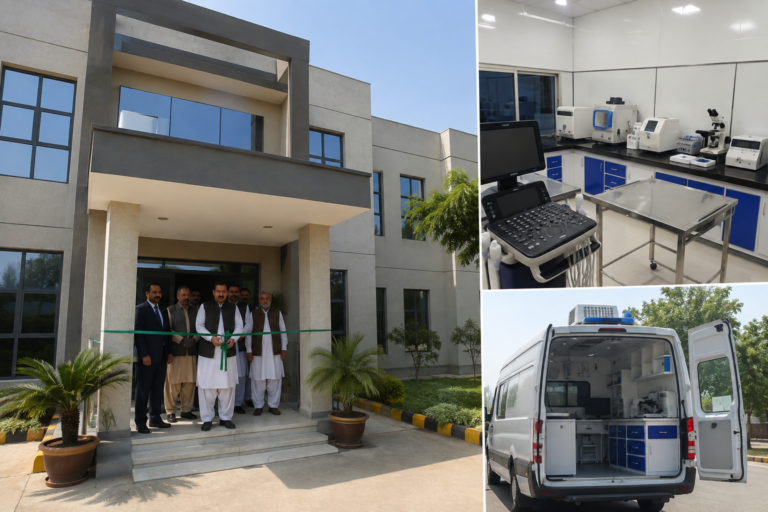
    Punjab has taken a major step toward modernizing its livestock health system with the establishment of a new Animal Disease Reporting and Surveillance Directorate and a Provincial Response Unit. Provincial Minister for Livestock and Agriculture Syed Ashiq Hussain Kirmani inaugurated the new building of the Directorate of Animal Disease Reporting and Surveillance on Tuesday, August 18. Speaking at the inauguration, Kirmani said the Punjab Livestock Department has established the Animal Disease Reporting and Surveillance and Provincial Response Unit to strengthen disease monitoring and ensure a rapid response to emergencies involving animal diseases. He said the Provincial Response Unit will remain prepared to respond quickly to disease outbreaks and other unexpected situations, helping protect livestock and support farmers. Kirmani said Punjab has become the first province to establish a modern disease diagnosis and surveillance system for the livestock sector. Under the new system, the department’s divisional, district and tehsil-level formations will work in coordination with the provincial unit. According to the minister, the upgraded system will bring livestock disease diagnosis and surveillance in line with modern requirements and improve the department’s ability to identify and respond to outbreaks at an early stage. He said renovation and upgradation work on District Disease Investigation Laboratories in 27 districts is being completed within a short period. The laboratories are also receiving modern equipment, including X-ray and ultrasound machines, along with other essential diagnostic tools. The department is also introducing 17 mobile veterinary laboratories to provide on-site disease diagnosis and surveillance in the field. These mobile units will carry the equipment and supplies required for diagnosing diseases and providing veterinary treatment, allowing departmental teams to reach affected farmers without unnecessary delays. Kirmani said the modern laboratory network will help Punjab tackle major challenges in the livestock sector, particularly sudden outbreaks of infectious diseases among animals. He added that the government is working to bring disease surveillance and rapid-response mechanisms in line with international standards. He further said that under the leadership of Chief Minister Maryam Nawaz, the provincial government has developed a system under which livestock department teams will reach farmers directly instead of requiring farmers to travel to departmental facilities for every issue. The minister said Chief Minister Maryam Nawaz has provided the Livestock Department with funding and other necessary facilities to strengthen veterinary services across Punjab. He added that the new mobile veterinary laboratories will also connect with a vehicle tracking and monitoring system similar to the system used by the Suthra Punjab Authority. The technology will help officials monitor the movement and deployment of mobile units and improve the department’s field response. The initiative is expected to strengthen disease detection, improve emergency response, expand veterinary services in rural areas and provide farmers with faster access to livestock healthcare.

  • | |

    US imposes tariffs on Pakistan and more than 60 trading partners

    The United States has introduced a new round of tariffs on imports from more than 60 trading partners, including Pakistan, as part of a broader effort to strengthen measures against goods allegedly linked to forced labour. The new duties officially came into effect on July 24 and are expected to affect trade between the United States and a large number of countries. Under the latest policy, Pakistan has been placed in the group of countries whose exports to the United States will face a 10% tariff. The same tariff rate has also been imposed on imports from countries including India, Bangladesh, the United Kingdom, Canada, Argentina, Cambodia, Ecuador, El Salvador, Guatemala, Honduras, Indonesia, Jordan, Malaysia, Mexico, Sri Lanka and Trinidad and Tobago. Another group of 38 countries will face a 12.5% tariff on goods exported to the US under the same policy. The US administration said the decision was taken because these countries had failed to effectively prevent the import or production of goods allegedly made through forced labour. According to American officials, stronger enforcement of labour laws and better monitoring of supply chains are needed to stop products made under forced labour conditions from entering international markets. The new measures are part of President Donald Trump’s trade agenda, which focuses on using tariffs to address trade and labour-related concerns. The administration has introduced the tariffs under Section 301 of the US Trade Act, a legal provision that allows the United States to take trade action against countries it believes are engaging in unfair trade practices. The latest action follows a major legal setback earlier this year. In February 2026, the US Supreme Court blocked the implementation of an earlier tariff package introduced by the Trump administration. That policy had proposed additional duties ranging from 10% to 50% on imports from several countries. Following the court’s decision, the administration adopted a different legal mechanism to introduce the current tariffs. The decision has drawn criticism from several US trading partners. Australia and Brazil have described the new tariffs as unfair and said they will continue diplomatic efforts to have the measures withdrawn. Norway also rejected the allegations behind the tariffs, saying the decision was based on unsubstantiated claims. Despite the broad scope of the new policy, several important products have been excluded. The tariffs do not apply to imports of crude oil, natural gas, selected agricultural commodities and fertilisers. Goods that are already subject to separate Section 232 national security tariffs, including steel, aluminium, automobiles and copper, are also exempt from the latest duties.

  • | | |

    Sindh assigns Rs8.5bn karachi projects to FWO

    The Sindh government has handed over four major infrastructure projects worth around Rs8.5 billion in Karachi to the Frontier Works Organisation (FWO), with work on three of the projects scheduled to begin on the ground in August. One of the key projects involves the construction of a flyover or interchange near the Northern Bypass on the M-9 Motorway. The Sindh Local Government Department has started the process of obtaining a no-objection certificate (NOC) from the National Highway Authority (NHA) because the project will be built over the motorway. The new interchange aims to improve traffic flow between Jinnah Avenue and Malir Cantonment Road and the routes connecting Hyderabad and Sohrab Goth Vegetable Market with Jinnah Avenue. Once completed, the facility will allow motorists to cross between both sides of the motorway without taking lengthy U-turns. Authorities have estimated the cost of this project at Rs2.3 billion. The budget also covers the rehabilitation and beautification of Jinnah Avenue, which is expected to improve the overall appearance and connectivity of the area. Another major project will see the construction of a flyover at an intersection on the M-9 near Al-Asif Square, providing a direct link to Abul Hasan Isphahani Road. The project carries an estimated cost of Rs2.1 billion, and construction is expected to formally begin in August. The flyover will facilitate traffic arriving from different directions and is expected to ease congestion at one of the city’s busy intersections. The government has also included the rehabilitation and improvement of roads along the Hawksbay corridor. The project covers an 8.5-kilometre stretch from the Y Junction to Machli Chowk, as well as the road extending from Machli Chowk towards Kaka Pir. Authorities have estimated the combined cost of these works at Rs4.162 billion, with construction also scheduled to begin in August. In addition, the Sindh government plans to launch work on another major project at the Malir Halt Underpass soon. The initiative forms part of the provincial government’s broader efforts to upgrade Karachi’s road infrastructure, improve traffic movement and address congestion at key entry and exit points across the city. The four projects, collectively worth approximately Rs8.5 billion, are expected to enhance connectivity and provide motorists with safer and more efficient routes across several important parts of Karachi.

Leave a Reply

Your email address will not be published. Required fields are marked *