How the hard reality of climate change hit Europe’s economy this summer
Southern Europe could take the biggest hit as temperature spikes are the largest there, cutting tourism income, exacerbating crop failures and inducing outward migration


Southern Europe could take the biggest hit as temperature spikes are the largest there, cutting tourism income, exacerbating crop failures and inducing outward migration
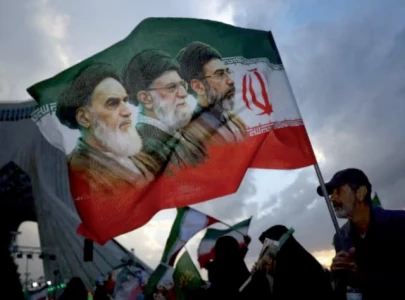
TEHRAN: Iran’s Revolutionary Guard has claimed that the United States and Israel failed to achieve their objectives during the conflict with Iran, as Tehran indicated that negotiations with Oman over the Strait of Hormuz were nearing an agreement but would not immediately lead to the waterway’s reopening. Brig Gen Hassan Zadeh, commander of the Islamic Revolutionary Guard Corps’ Mohammad Rasulullah Corps in Tehran, said Iran’s military preparedness and public support had helped the country withstand the US and Israeli campaign. Speaking during an inspection of upgraded air-defence units, Zadeh said Washington and Tel Aviv had failed to accomplish their stated goals and were now facing questions from their own populations and political circles. Meanwhile, Iranian Foreign Minister Abbas Araqchi said talks with Oman over a temporary shipping arrangement in the Strait of Hormuz were progressing. However, he stressed that an agreement on a shipping route alone would not be sufficient to reopen the strategically important waterway. Iran has linked the reopening of the strait to several conditions, including an end to US threats and attacks, the lifting of sanctions and blockades, compensation for losses and the release of Iranian assets. Tehran has also rejected the previous traffic separation system used by vessels passing through the waterway. Oman described its discussions with Iran as positive and constructive while urging all sides to avoid actions that could undermine the negotiations. Muscat also condemned recent attacks on ships travelling through the strait without assigning responsibility. The developments come amid continued disruption to shipping in the Strait of Hormuz, a crucial route for global energy supplies. The United Arab Emirates said an oil-related vessel had been struck by a missile while transiting the waterway, although no injuries were reported. The UK Maritime Trade Operations agency also reported that a vessel caught fire after being hit by an unidentified projectile. The fire was later extinguished, with no environmental damage reported. The United States has said it expects an agreement that could restore commercial shipping and allow restrictions on Iranian ports to be eased. US Central Command said more than 30 vessels had been permitted to pass through the area for humanitarian purposes, while dozens of others had been stopped or subjected to military action. Iranian officials, however, maintain that the strait will only be reopened once Washington accepts Tehran’s demands. Iranian authorities have also warned that any future shipping arrangement must provide Iran with greater control over maritime traffic. The prolonged disruption has contributed to rising energy costs and increased prices for food and other essential goods in Iran, adding further pressure on the country’s economy as negotiations continue.

PRISTINA: Kosovo’s parliament descended into chaos after opposition lawmaker Time Kadrijaj threw eggs toward acting Prime Minister Albin Kurti during a heated session, highlighting the deep political divisions gripping the country. Kadrijaj, a member of the Alliance for the Future of Kosovo, reportedly threw four eggs in Kurti’s direction while shouting “shame” as lawmakers debated the stalled formation of parliamentary institutions. The dramatic confrontation prompted security personnel and other lawmakers to intervene, and the session was suspended. The incident came after Kurti asked lawmakers for additional time to continue negotiations before proposing a candidate for the speaker of parliament. Kosovo has remained caught in a political deadlock following the June snap elections, with disagreements among political parties preventing the new institutions from being fully established. Kurti’s request for more time has angered opposition parties, which argue that the constitutional deadline has already expired. They have questioned the legality of continuing the parliamentary session under the circumstances. The confrontation inside parliament underscored the increasingly tense political atmosphere in Kosovo, where repeated disagreements have delayed key constitutional and institutional processes. Despite the disruption, Kurti appeared to remain composed. Reports said he indicated that he was willing to face criticism if it helped bring political rivals to the negotiating table. The political impasse follows June’s parliamentary election, in which Kurti’s Vetëvendosje movement emerged as the largest political force but failed to secure enough support to move forward without cooperation from other parties. Kosovo has experienced repeated political instability in recent years, with disagreements over the formation of institutions contributing to uncertainty over the country’s political direction. The egg-throwing incident has now become a striking symbol of that frustration, turning an already tense parliamentary dispute into an extraordinary scene that quickly attracted international attention. For Kosovo, however, the bigger issue remains unresolved: whether political parties can overcome their differences and break the institutional deadlock before the crisis deepens further.
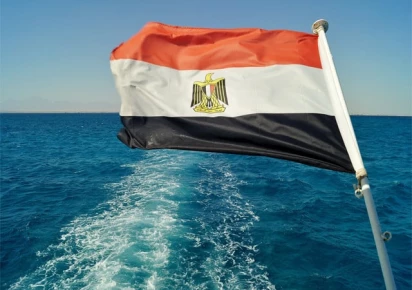
Egypt could become the next country to join the Makkah Joint Defence Agreement signed by Pakistan, Türkiye and Saudi Arabia, Turkish Foreign Minister Hakan Fidan has said. Fidan said the defence pact is broadly comparable to NATO’s mutual defence principle. He stressed that the agreement is not aimed at Iran or any other country. According to the Turkish foreign minister, the pact is designed to provide a framework for the three countries to support each other’s security. He said the member states would consult each other in the event of an attack. They would then determine the nature and level of assistance required. Fidan said Türkiye’s President Recep Tayyip Erdogan wants the alliance to expand beyond its three founding members. Egypt is among the countries being considered for possible membership. He said some technical issues would need to be resolved before Egypt could join the arrangement. Fidan explained that the alliance would begin with Pakistan, Türkiye and Saudi Arabia. He said the members intended to take gradual but practical steps to build the new security framework. A ministerial committee similar to structures used within NATO is also expected to be established. The alliance will also have a general secretariat based in Saudi Arabia. Further operational details are expected to be discussed during the first meeting of the proposed committee. Fidan said the agreement was the result of negotiations that had continued for more than two years. He also stressed that the new arrangement would not replace existing military alliances. The Turkish minister said the pact was intended to strengthen regional cooperation. He said it could eventually bring more countries together under a common security framework. Meanwhile, the Organisation of Islamic Cooperation welcomed the signing of the agreement. OIC Secretary General Hissein Brahim Taha expressed strong support for the pact. He described it as an important strategic development for regional and international cooperation. Taha said the agreement could contribute to security and stability across the region and the wider Muslim world. He also praised the leadership of Pakistan, Türkiye and Saudi Arabia. He said their efforts had resulted in what he described as a historic agreement. The pact was signed on Friday during a trilateral summit in Makkah. Turkish President Recep Tayyip Erdogan, Saudi Crown Prince Mohammed bin Salman and Prime Minister Shehbaz Sharif signed the agreement at Al-Safa Palace. Under the agreement, the three countries have committed to strengthening defence cooperation and collective security. The pact also seeks to promote peace, stability and prosperity. Officials said the agreement is not directed against any country. They said it is based on a shared approach to security and burden-sharing. The agreement also establishes a collective deterrence principle. An armed attack against any one of the three member states will be treated as an attack against all three.

Thai police said a 14-year-old boy accused of carrying out a deadly shooting near Bangkok had shown an interest in firearms for up to two years and had watched violent material online. The teenager allegedly killed his grandparents at their home on Friday before shooting six people at his school and taking his own life. More than 20 others suffered injuries in the attack, which became Thailand’s deadliest mass shooting since 2022. Deputy Commissioner of Provincial Police Region 1 Atthapol Anusit told reporters that investigators had questioned 17 witnesses so far. Police also found a knife in the teenager’s school bag, along with a firearm, spent cartridge cases and a personal computer. Investigators examining the computer found social media content involving violence. Police also said the boy had used social media to learn about firearms, although they have not yet found evidence that he regularly practised shooting. A teacher had confiscated a BB gun from the boy at school last year, according to police. The teenager had lived with his grandparents for about 12 years after his parents separated. In response to the tragedy, Thailand’s Ministry of Education said it would introduce new school safety measures within three months. The plan includes mental health screening, referrals for students considered at risk, emergency response drills, stronger anti-bullying measures and tighter checks to prevent weapons and other dangerous items from entering schools. The shooting has renewed calls for stronger firearm controls in Thailand, which has one of the highest rates of civilian gun ownership in Southeast Asia.

A Porter Airlines flight from Victoria to Toronto was cancelled after a young child refused to sit in the assigned seat and fasten the seat belt. The incident happened on flight PD444 at Victoria International Airport in British Columbia. The aircraft had already left the terminal. It was preparing for takeoff when crew members noticed the child standing on the seat. Flight attendants tried to resolve the situation. The child’s parents also attempted to convince the youngster to sit down. However, the child continued to resist. The crew could not proceed with the flight while the safety issue remained unresolved. Aviation safety rules require passengers to remain seated and use seat belts when instructed. The aircraft therefore had to return to the terminal. The family was removed from the plane. Their baggage also had to be taken off the aircraft. Airport and airline staff then had to complete the required travel and security procedures. The process took considerable time. The procedures continued beyond 12:30am. Victoria International Airport closes its main runway at 12:30am every night. Because the runway had already closed, the aircraft could not take off again that night. The cancellation caused further inconvenience for the other passengers. They were forced to spend the night in Victoria. Porter Airlines apologised to the affected passengers for the disruption. The airline arranged alternative flights for them the following day. The incident highlights how even a seemingly minor safety issue can cause major delays when an aircraft is preparing for departure. Airlines are required to ensure that all passengers follow safety instructions before takeoff

TEL AVIV: An Israeli journalist has alleged that a fabricated statement attributed to an Iranian official was circulated as part of an effort to portray Tehran as actively seeking to develop nuclear weapons. According to Israeli journalist Ronen Bergman, a false statement was allegedly created and attributed to Ahmad Vahidi, a senior commander of Iran’s Islamic Revolutionary Guard Corps. The fabricated remarks purportedly claimed that Iran was developing nuclear weapons. Bergman said the alleged fake statement was initially circulated through the social media account of a Hindu extremist in India before being amplified by a number of prominent Israeli and US-linked accounts and figures. He alleged that the material was subsequently shared by accounts associated with Israel’s Mossad, an Israeli television channel, Israeli Prime Minister Benjamin Netanyahu and the US ambassador to the United Nations. The claims have raised questions about the role of disinformation in the highly sensitive debate surrounding Iran’s nuclear programme, particularly amid continuing tensions between Tehran and Israel. The allegation is significant because claims about Iran’s nuclear ambitions have repeatedly featured in political and security debates in the region. Any fabricated statement presented as an authentic admission could potentially influence public opinion and international perceptions. However, the reported allegations concern the authenticity and circulation of the statement rather than independently establishing the broader question of Iran’s nuclear intentions. The development highlights how rapidly unverified material can spread across social media and be amplified by influential accounts, especially during periods of heightened geopolitical tension. The claims attributed to Bergman are likely to fuel further debate over information warfare, source verification and the use of alleged intelligence-related material in the ongoing Iran-Israel confrontation.
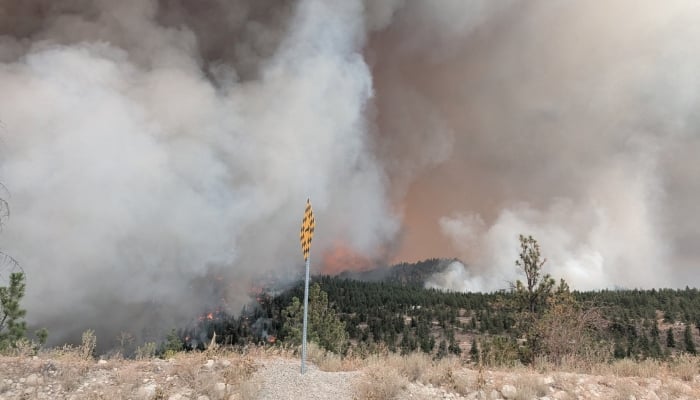
VANCOUVER: More than 20,000 people have been forced to leave their homes in British Columbia as a fast-moving wildfire tore through communities around Okanagan Lake, prompting provincial authorities to declare a state of emergency. The Bald Range wildfire exploded in size within hours, driven by hot, dry and windy conditions, sending residents scrambling for safety and creating an increasingly dangerous situation for firefighters and emergency crews. The blaze had expanded to roughly 9,500 hectares (23,500 acres) by Saturday, according to Reuters. Premier David Eby announced the state of emergency on Saturday as more than 100 wildfires were burning across the province. The emergency declaration gives authorities additional powers to restrict travel, coordinate resources and secure accommodation for people displaced by the fires. Thousands ordered to evacuate The communities of Summerland and Peachland were among those heavily affected. Summerland, home to around 12,000 people, was placed under an evacuation order, while thousands more residents in surrounding areas were also told to leave. Officials have warned that conditions remain extremely dangerous, with rapidly changing winds and intense flames making it difficult to assess the full extent of the damage. A number of homes and other properties have already been destroyed, although authorities have yet to determine the total number of structures lost because some affected areas remain inaccessible. The wildfire has also disrupted essential services. Power outages have been reported, while Summerland issued a boil-water advisory after untreated water entered part of the system. Highway 97, an important transportation route through the region, was also closed as the fire threatened nearby communities. Residents rescued by helicopter The rapidly spreading flames left some residents trapped after escape routes became unsafe. Emergency crews used helicopters to reach people who could no longer evacuate by road, while search-and-rescue teams continued checking areas behind the fire lines for anyone who may have been left behind. The intensity of the fire has created exceptionally dangerous conditions. Officials said the blaze generated its own weather, including lightning, making firefighting operations even more challenging. Authorities are also investigating a possible wildfire-related death near Summerland. The Royal Canadian Mounted Police said hazardous conditions were making it difficult to confirm details immediately. Why the situation is so severe British Columbia entered the 2026 wildfire season with significant concerns about drought and unusually warm conditions. The BC Wildfire Service had warned earlier this summer that much of the province could experience elevated wildfire activity because of persistent drought, below-average snowpack and warmer-than-normal temperatures. The Okanagan was among the areas facing above-average drought conditions. The District of Peachland had already raised its local fire danger rating to extreme in July, warning that dry forests and grasslands could allow any new fire to spread rapidly. A growing national wildfire crisis The emergency in British Columbia is part of a wider wildfire crisis affecting Canada this summer. Thousands of firefighters are battling blazes across multiple provinces, while smoke from major fires has repeatedly affected air quality and visibility. For residents forced from their homes, the immediate priority remains safety as emergency crews work to contain the Bald Range fire. With flames moving quickly and weather conditions remaining difficult, officials continue to urge residents in threatened areas to follow evacuation orders and avoid returning until authorities declare it safe. For British Columbia, the latest disaster is another stark reminder of how quickly a wildfire can transform from a remote blaze into a community-wide emergency.

Spain has resumed border checks on travellers arriving from Italy amid a growing disagreement between the two European countries over irregular migration. Spanish authorities inspected around 200 passengers on the first day of the measures, which were introduced at the country’s six busiest airports. The Interior Ministry said 199 people arriving on 12 flights from Italy were checked at airports in Madrid, Barcelona, Seville, Bilbao, Alicante and Valencia. The temporary controls began on Saturday and are scheduled to remain in place until September 7. The move follows Italy’s decision to introduce its own checks on travellers arriving from Spain. Rome suspended the usual Schengen arrangements with Spain from August 1, saying the decision was linked to concerns over a sharp increase in irregular migration. Italian authorities said their measures would remain in place at least until August 15. The dispute intensified after around 72,000 migrants reportedly reached Spain’s North African enclave of Ceuta on July 30, prompting renewed concerns over migration pressures and border security. Italy has stressed that its checks are targeted rather than a blanket restriction on European travellers. Officials said Spanish and other European Union citizens would not be affected by the measures, which focus mainly on non-EU nationals travelling from Spain by air or sea. Italian Foreign Minister Antonio Tajani said Rome hoped to remove the restrictions as soon as the perceived security risk had eased. The latest developments have raised concerns about tensions within the European Union’s passport-free travel system. The Schengen Area allows people to move across 29 European countries without routine internal border checks, although individual member states can temporarily restore controls in response to security threats, public-order concerns or exceptional circumstances.

Three people were killed and 25 others injured after Ukrainian drones struck Russia’s Belgorod region, according to Russian authorities. Officials said the drone attack took place overnight, targeting areas in and around Belgorod. Emergency teams responded to the affected locations and began rescue and relief operations following the strikes. The latest attack comes amid continued fighting between Russia and Ukraine, with both sides carrying out frequent drone and missile strikes against targets across the border. Meanwhile, Russia has launched an attack on Ukraine’s strategic port city of Odesa. Ukrainian President Volodymyr Zelenskyy confirmed the Russian strike, saying the attack caused damage to the Odesa port. Zelenskyy condemned the assault and said the continued attacks on civilian and critical infrastructure demonstrated the intensity of the ongoing conflict. The strikes on Belgorod and Odesa highlight the continued escalation of cross-border attacks as the war enters another phase of sustained military confrontation.