देश-विदेश

  • |

    Iran appoints former revolutionary guards chief Mohsen Rezaei to National Security Council

    TEHRAN: Iran has appointed veteran military and political figure Mohsen Rezaei to a senior position within the country’s Supreme National Security Council (SNSC), replacing Mohammad Baqer Zolqadr and bringing one of the Islamic Republic’s most prominent former Revolutionary Guards commanders back into a central security role. The appointment was announced late Sunday by the office of Iranian President Masoud Pezeshkian’s deputy director of communications. No official explanation was immediately provided for the change, and it remains unclear whether Rezaei’s appointment will result in any significant shift in Iran’s security or foreign policy. Rezaei, 71, has extensive experience in Iran’s military, security and political institutions. He served as commander of the Islamic Revolutionary Guard Corps (IRGC) from 1981 until 1997, a period that included most of the Iran-Iraq war. His return to a prominent security position comes at a particularly sensitive time for Iran, amid continuing tensions with the United States and Israel, as well as uncertainty surrounding the security of the strategically important Strait of Hormuz. The SNSC is one of Iran’s most important institutions for coordinating national security and foreign policy. Although the council is formally chaired by the elected president, it brings together senior military, intelligence and government officials, along with representatives of Supreme Leader Mojtaba Khamenei. Major strategic decisions ultimately remain subject to the authority of the supreme leader. Zolqadr’s short tenure ends Zolqadr had been appointed secretary of the SNSC only in late March. He took over the position following the death of his predecessor, Ali Larijani, who was killed in an air strike during the conflict involving Iran, the United States and Israel. Unlike Zolqadr, Rezaei has maintained a considerably higher public profile over the course of his political career and has frequently spoken on major domestic, economic and foreign-policy issues. In a separate decree issued Sunday, Supreme Leader Mojtaba Khamenei appointed Rezaei as his representative to the SNSC. The decree referred to Rezaei’s extensive experience, including his service during the 1980-1988 Iran-Iraq war. Hardline politician Saeed Jalili also serves as the supreme leader’s representative on the council. The same decree appointed Zolqadr as Khamenei’s political adviser, suggesting that his departure from the SNSC leadership does not represent a complete withdrawal from the country’s senior political establishment. Rezaei’s long political career Rezaei’s career has extended well beyond the military. After leaving his post as IRGC commander, he served for more than two decades as secretary of Iran’s Expediency Discernment Council, an influential body involved in resolving disputes between state institutions and advising the supreme leadership. He later entered the executive branch, serving as vice president for economic affairs from 2021 to 2023 during the administration of former President Ebrahim Raisi. Rezaei also holds a doctorate in economics from the University of Tehran. Despite his academic background, much of his professional life has been spent within Iran’s military, security and political establishment. His appointment therefore places an experienced figure with a long history in Iran’s national security apparatus at the center of a council responsible for coordinating some of the country’s most consequential strategic decisions. Strait of Hormuz remains key issue The leadership change comes as Tehran continues discussions over the future of shipping through the Strait of Hormuz, a critical international energy route. Iranian Foreign Minister Abbas Araqchi said Saturday that Tehran and Oman were nearing an understanding on a possible new shipping route through the strait. The waterway has faced severe disruption during months of conflict and escalating regional tensions. However, Iranian officials have indicated that reopening the route would depend on broader conditions being met. These reportedly include demands related to US compensation for Iran and an end to what Tehran describes as American threats and aggression. Zolqadr had previously outlined several demands, including an end to US threats against Iran, the cessation of military action against Iran and its regional allies, the lifting of sanctions and blockade measures, and the release of Iranian assets. The demands highlight the wider diplomatic and security challenges facing Tehran as it attempts to manage relations with Washington while dealing with continuing regional instability. Policy direction remains uncertain The replacement of Zolqadr by Rezaei does not necessarily indicate an immediate change in Iran’s foreign-policy direction. The SNSC operates within a broader political system in which the supreme leader has ultimate authority over major matters of national security and international affairs. However, Rezaei’s extensive military background and long involvement in Iran’s senior political institutions could make his appointment significant, particularly as Tehran navigates negotiations, military tensions and economic pressure.

  • | | | |

    President Masoud Pezeshkian meets Supreme Leader M…

    TEHRAN: Iranian President Masoud Pezeshkian has held an important meeting with Supreme Leader Ayatollah Mojtaba Khamenei as speculation over the president’s future continues to attract attention amid heightened tensions with the United States and Israel. The meeting reportedly came as Pezeshkian entered the third year of his presidency. It also followed reports suggesting that the Iranian president was considering stepping down, claims he has rejected. Iranian authorities have previously dismissed resignation reports as unfounded, while Pezeshkian has publicly indicated that he intends to continue serving. According to statements attributed to Mojtaba Khamenei on social media, the discussions covered a wide range of economic, military and strategic issues facing Iran. Among the topics were the economic needs of ordinary Iranians, the country’s military situation, access to resources and management of the Iranian rial, foreign currency and energy costs. The two leaders also discussed economic relations with foreign partners and the wider implications of the confrontation with Washington and Israel. The meeting comes at a particularly sensitive moment for Tehran. Iran remains under pressure from the continuing regional conflict and economic difficulties, while efforts to engage Washington have faced repeated obstacles. The reported contact is also notable because Pezeshkian recently said that reaching Mojtaba Khamenei had been difficult, prompting speculation about the supreme leader’s health and whereabouts. Reports in recent days have offered conflicting accounts about how and where senior Iranian officials have been able to meet him. Meanwhile, Iran’s diplomatic efforts with the United States remain uncertain. According to the material cited by Iranian officials, negotiations have been reduced largely to messages exchanged through intermediaries after earlier attempts failed to produce a lasting agreement. The political backdrop has also been complicated by reported tensions between the presidency and powerful military-security institutions. Some reports have suggested disagreements over decision-making and the conduct of Iran’s response to the conflict, although details remain contested. Pezeshkian’s political position has therefore become a subject of renewed attention. He was elected president in July 2024 following the death of former President Ebrahim Raisi in a helicopter crash. Mojtaba Khamenei, meanwhile, became Iran’s supreme leader in March 2026 following the death of his father, Ayatollah Ali Khamenei, during the conflict. Against this backdrop, the latest meeting between the president and supreme leader carries significance beyond routine government business, particularly as Iran confronts economic pressures, military uncertainty and difficult relations with Washington. For now, however, Pezeshkian remains in office, while reports of his resignation have been publicly rejected.

  • |

    Trial begins in Tupac Shakur murder case after 30 years

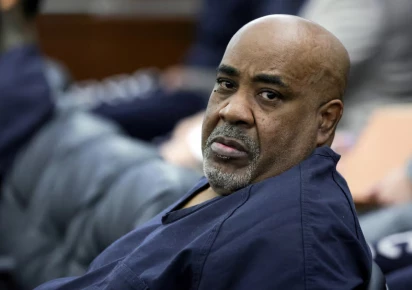
    The long-running investigation into the 1996 killing of rapper Tupac Shakur has reached a major stage, with the trial of former gang leader Duane “Keffe D” Davis beginning in Las Vegas. Jury selection is scheduled to start Monday in Clark County, Nevada. Davis, 63, faces one charge of murder with the use of a deadly weapon. He has pleaded not guilty. Prosecutors accuse Davis of playing a leading role in the drive-by shooting that killed Shakur nearly three decades ago. Shakur was 25 when he was shot near the Las Vegas Strip on September 7, 1996. He was riding in a car with Marion “Suge” Knight, the co-founder of Death Row Records. The shooting became one of the most famous unsolved cases in music history. It also became closely linked to the violent rivalry between East Coast and West Coast rap artists during the 1990s. According to authorities, the incident followed a fight at the MGM Grand casino. The confrontation allegedly involved Shakur and members of his entourage and a man connected to Davis. Investigators believe the shooting was carried out as an act of retaliation. Police have described Davis as a key figure in the alleged plan. Authorities say he helped obtain the weapon and was travelling in a white Cadillac with three other men when the shooting occurred. The Cadillac reportedly followed the vehicle carrying Shakur and Knight. Gunfire was exchanged when the two cars came close to each other. Shakur was struck four times. He was taken to hospital but died six days later from his injuries. Knight, who was driving the vehicle, suffered a minor injury after a bullet fragment grazed his head. The investigation remained unresolved for almost 30 years. Authorities say the case gained new momentum after Davis made a series of public statements about the shooting. His comments reportedly included details about his presence in the Cadillac and his alleged role in obtaining the weapon. Davis also discussed the incident in his 2019 memoir, “Compton Street Legend”. According to police, Davis said he was sitting in the front passenger seat and passed the firearm to one of the men in the back of the vehicle. However, the identity of the person who actually fired the shots remains a central issue in the case. The other three men who were reportedly inside the Cadillac have since died. Under Nevada law, a person can face a murder charge for participating in a killing even if they did not personally fire the weapon. The trial is being heard by Judge Carli Kierny at a courthouse in downtown Las Vegas. Proceedings could continue for as long as six weeks. One potential witness is Knight, who was with Shakur on the night of the shooting. Knight is currently serving a 28-year prison sentence in an unrelated voluntary manslaughter case. The prosecution’s case is expected to examine the events leading up to the shooting and Davis’s alleged role in the plot. The case has remained a major subject of public interest because of Shakur’s influence on hip-hop. His death occurred during a period of intense rivalry between artists and record labels associated with the East and West coasts of the United States. The killing was followed by the death of another major rapper, Christopher Wallace, better known as The Notorious B.I.G., who was shot dead in Los Angeles in March 1997. Wallace’s murder also remains officially unsolved. For years, theories have linked the two killings, with speculation that Wallace’s death was connected to the violence surrounding Shakur’s murder. Davis’s trial now offers prosecutors an opportunity to present their evidence in court after decades of uncertainty surrounding Shakur’s death.

  • |

    Indian youth protest alleged exam irregularities in Jharkhand

    Thousands of students and unemployed young people marched toward the state legislature in India’s eastern Jharkhand state on Monday. The protesters were demanding action over alleged irregularities in civil services recruitment examinations. Police used water cannons to disperse the demonstrators as they moved toward the state assembly in the state capital, Ranchi. The protesters accused authorities of failing to ensure transparency in government recruitment exams. They also raised concerns over alleged question paper leaks. The demonstrations began on July 25 and have grown in size in recent days. Thousands of young people had earlier gathered at a stadium in Ranchi as the campaign gained momentum. The protesters are demanding major changes to the state’s examination system. They have also called for the cancellation of certain examinations and a federal investigation into the alleged irregularities. On Monday, demonstrators moved toward the legislature despite heavy security arrangements. Some protesters climbed over police barricades while carrying placards and Indian flags. They chanted slogans and called for action against those responsible for the alleged examination problems. The protests reflect growing frustration among students and unemployed youth in Jharkhand, one of India’s less economically developed states. The state government has held talks with representatives of the protesters. Officials have said that many of their demands have already been accepted. The government has also indicated that it is willing to continue discussions to address the remaining concerns. The demonstrations in Jharkhand come amid wider anger among Indian youth over alleged corruption in recruitment examinations. Similar protests were held in New Delhi in recent weeks. Those demonstrations focused on alleged irregularities and paper leaks involving national-level examinations. The protests eventually contributed to the resignation of India’s Education Minister Dharmendra Pradhan last month, following controversy surrounding alleged leaks in a national medical entrance examination. The growing demonstrations have highlighted concerns over unemployment and limited job opportunities for young people. Students and job seekers argue that examination irregularities can damage their career prospects after years of preparation. The protests also reflect broader concerns about transparency in public recruitment and the credibility of competitive examinations.

  • |

    US says it will deepen security role in Asia

    The United States has rejected suggestions that it is reducing its involvement in Asia. A senior Pentagon official said Washington plans to strengthen its position in the Indo-Pacific and maintain what it considers a favourable balance of power in the region. US Undersecretary of Defense for Policy Elbridge Colby made the remarks during a speech in Manila on Monday. He said the United States was not leaving Asia. Instead, Washington was increasing its focus on the region. Colby also called on US allies and partners to take greater responsibility for their own defence. He said Washington wanted stronger partnerships rather than relationships based on dependence. According to Colby, the United States expects its regional allies to increase defence spending and strengthen their own military capabilities. He said greater responsibility from partner countries should not be interpreted as a sign that Washington is abandoning the region. Colby argued that stronger allies would contribute to stronger deterrence and help maintain regional stability. The Pentagon official said the US strategy includes maintaining a credible military presence along the First Island Chain. The strategic area stretches from Japan through Taiwan and the Philippines toward Borneo. It is considered important to US efforts to deter potential military threats in the Indo-Pacific. Colby said the United States was committed to maintaining a balance of power in the region. He also emphasised the need for allies to contribute more to regional security. His comments come amid continuing questions about the long-term US security commitment to Asia. Some regional governments and analysts have expressed concerns about whether Washington will remain as deeply involved in the Indo-Pacific as it has been in previous years. Colby sought to address those concerns by stressing that the United States intends to remain engaged. The Philippines is the first stop on Colby’s Southeast Asian tour. He is also scheduled to visit Indonesia, Thailand and Cambodia. The Philippines is a longstanding US treaty ally and has strengthened defence cooperation with Washington in recent years. The Pentagon official’s remarks are likely to be closely watched by US partners across the region. Washington is seeking to strengthen cooperation with allies while encouraging them to invest more heavily in their own defence. The approach reflects a broader US strategy of sharing the security burden with regional partners while maintaining a strong American military presence. Colby said the goal was to build capable partners rather than create countries that depend entirely on US protection. He maintained that stronger regional partners would make the overall US deterrence strategy more effective.

  • | |

    North Korean hacking group builds AI tools for cyberattacks – report

    The findings suggest the hacking group is moving beyond using generative AI to create phishing lures and is building capacity to integrate existing AI models into malware development, data analysis, and attack automation