देश-विदेश

  • | | | | |

    Iran issues stark warning to US over ground troops

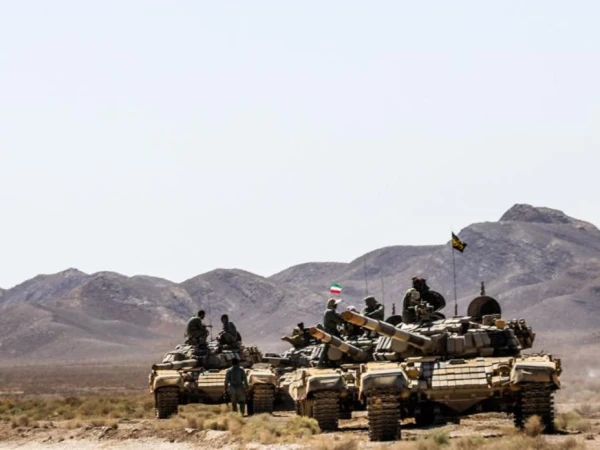
    TEHRAN: Iran has issued a stark warning to the United States, saying any American ground troops attempting to enter Iranian territory would face fierce resistance. The warning was delivered by Iranian Army Ground Forces Commander Brigadier General Ali Jahanshahi, as tensions between Tehran and Washington remain high and the region continues to watch closely for signs of further military escalation. According to Iranian media reports, Jahanshahi said Iran’s armed forces were fully prepared to respond to any hostile action. He stressed that the country’s ground forces remained at a high state of readiness and were closely monitoring Iran’s borders. The Iranian commander made clear that Tehran would not take any threat to its territory lightly. Any attempt by an enemy to launch military action on Iranian soil, he said, would trigger an immediate and forceful response. The remarks underline Iran’s long-standing position that a direct ground intervention would represent a major escalation. Iranian officials have repeatedly warned that foreign troops entering the country would encounter strong resistance from the country’s armed forces. Jahanshahi also emphasized that Iran’s military units were prepared to respond to a range of potential scenarios. Security measures along the country’s borders, he said, remain active as authorities continue to assess possible threats. The latest warning comes against the backdrop of continued tensions between Iran and the United States, with military developments and diplomatic efforts both shaping the rapidly changing regional situation. For Tehran, the message appears aimed at drawing a clear red line around Iranian territory: while the country may face external pressure, any attempt to send foreign ground forces across its borders would be treated as a direct threat to national security. Analysts say such statements also reflect Iran’s effort to strengthen deterrence and signal military readiness at a time when uncertainty remains over the future course of US-Iran relations. With tensions already running high, any direct military confrontation could have consequences far beyond Iran and the United States, potentially triggering a wider regional crisis. For now, the sharp warning from Iran adds another layer of uncertainty to an already fragile security situation, while international attention remains focused on whether diplomacy can prevent another escalation.

  • | |

    Malaysian PM Anwar Ibrahim undergoes medical proce…

    KUALA LUMPUR: Malaysian Prime Minister Anwar Ibrahim is undergoing medical examinations and procedures, with his aide saying he is expected to remain under observation for two days. Anwar’s Press Secretary Tunku Nashrul Abaidah confirmed the development on Monday but did not disclose details about the nature of the medical procedures or the condition that prompted them. In a statement, the aide said Anwar was undergoing examinations and procedures arranged by a team of medical experts. The statement also appealed for prayers for the premier’s health and expressed hope that he would be able to return to his regular duties soon. “Let us pray … that he is blessed with long-lasting health so that he can return to his usual duties in the near future,” the statement said. The news prompted a message of support from Pakistan, with Prime Minister Shehbaz Sharif wishing his Malaysian counterpart a swift recovery. “Wishing my dear brother, Prime Minister Anwar Ibrahim, a swift and smooth recovery during his medical procedures,” Shehbaz wrote in a post on X. He added that the people of Pakistan were joining him in praying for Anwar’s continued good health and well-being, reflecting the close ties between the two countries. Anwar, who turned 79 on Monday, has served as Malaysia’s prime minister since 2022. His current medical observation has drawn attention partly because of previous health issues involving his back and shoulder. The Malaysian leader was hospitalised in 2018 after experiencing shoulder and back pain. More recently, he cancelled a planned visit to Pahang state in November last year because of back discomfort. Despite those previous problems, Anwar received a clean bill of health following a routine medical examination in January, according to a statement from the hospital where the check-up was conducted. The latest announcement has not indicated that Anwar is facing any serious health condition. Officials have also not provided details about when he is expected to leave medical care or resume his full schedule. For now, the Malaysian government and Anwar’s supporters are awaiting further updates from his medical team. His aide’s statement sought to reassure the public while asking for prayers as the veteran politician undergoes the procedures. Anwar’s health is closely watched as he continues to lead Malaysia through a period of economic and political challenges, making his expected return to official duties a matter of considerable public interest.

  • | | | |

    Iran’s supreme leader Mojtaba Khamenei names Bag…

    TEHRAN: Iran’s Supreme Leader Ayatollah Mojtaba Khamenei has reshuffled two key positions in the country’s security and political establishment, appointing Mohammad Bagher Zolghadr as his political adviser and former Islamic Revolutionary Guard Corps (IRGC) commander Mohsen Rezaei as his representative on the Supreme National Security Council (SNSC). The appointments were announced through messages attributed to Khamenei on social media on Sunday, according to reports, placing two veteran figures with extensive military and political experience in prominent roles at a sensitive moment for Tehran. In his message to Zolghadr, Khamenei cited his “valuable experience” while appointing him as a political adviser. Zolghadr has held several senior positions in Iran’s security establishment and previously served as secretary of the SNSC. The move follows Zolghadr’s departure from the council’s top administrative position. Reports said Rezaei has been appointed to replace him as secretary of the powerful security body, while also serving as Khamenei’s representative on the council. Rezaei is a veteran figure in Iran’s political and military establishment. He served as commander of the IRGC for much of the Iran-Iraq war era and has held a range of senior political positions. He has also previously run for Iran’s presidency. The latest appointments are drawing attention because the SNSC plays a central role in coordinating Iran’s defence, security and foreign-policy decisions. Although the council is formally chaired by President Masoud Pezeshkian, its work brings together senior political, military and security institutions. The timing of the reshuffle is particularly significant as Iran faces continuing pressure over regional security and negotiations surrounding the Strait of Hormuz. Recent diplomatic efforts have focused on arrangements for shipping through the strategically important waterway, making changes within Tehran’s security leadership especially closely watched. Both Zolghadr and Rezaei are associated with Iran’s security establishment and have extensive experience in military affairs. Analysts are therefore likely to watch closely for any indication that the appointments could affect Tehran’s approach to negotiations, regional security or relations with the United States. The reshuffle also strengthens the role of figures with longstanding links to the IRGC within the leadership structure. Rezaei had already served as a military adviser to Mojtaba Khamenei before taking on the latest assignment. For Zolghadr, the new position keeps him within the senior leadership circle despite his exit from the SNSC secretaryship. His experience in security and political affairs could allow him to continue playing a role in shaping policy from the Supreme Leader’s office. The appointments come at a critical time for Iran, with international attention focused on Tehran’s security posture and the future of the Strait of Hormuz. Whether the changes represent a broader adjustment in Iran’s negotiating strategy remains to be seen, but the elevation of two experienced security figures is likely to keep Tehran’s next moves under close scrutiny.

  • |

    Indian activist held over shocking protest comments

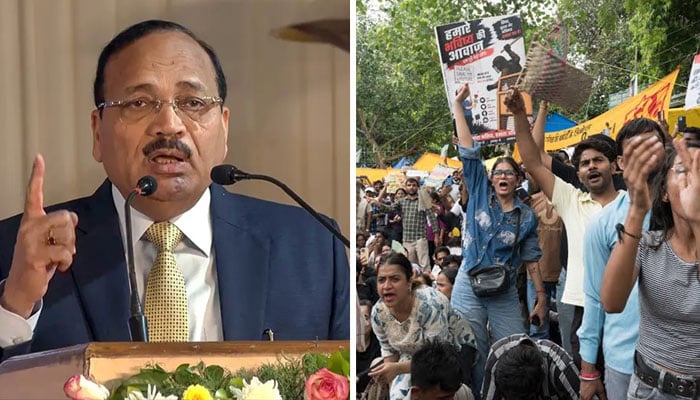
    Indian political commentator and social activist T.G. Mohandas has been detained by police over controversial remarks about students taking part in a protest. Police reportedly took Mohandas into custody from his residence on Sunday evening. A cybercrime police team reached his home with local police officers. He was present when the team arrived. Authorities are investigating remarks made by Mohandas in a video shared on his YouTube channel. Police also collected information about his YouTube account and digital devices allegedly used to record and upload the video. A complaint has reportedly been registered against him. The complaint alleges that the videos published on his channel were capable of disturbing public order. It also accused him of creating fear and unrest through his statements. The controversy began after Mohandas commented on a student protest in Delhi linked to an alleged examination paper leak. In the video, he made offensive remarks about female protesters and claimed that the demonstrations could lead to incidents of sexual violence. He further made a derogatory statement about women participating in the protest. His comments triggered criticism because they appeared to blame or demean potential victims of sexual violence. Mohandas also spoke about how authorities should respond to the demonstrations. He said that if he were in government, he would impose a curfew to disperse the protesters. He further suggested that force could be used if demonstrators refused to leave. His remarks included references to people potentially being killed or permanently injured during a violent crackdown. The comments have drawn attention from law enforcement authorities. Police are now examining the video and other digital material connected to the case. Officials are also questioning Mohandas as part of the investigation. The authorities are expected to determine whether his statements and online content violated laws relating to public order and the spread of fear or unrest. The case has sparked wider discussion over the limits of political commentary and responsibility for statements made on social media. The investigation is continuing, while further details about the allegations and possible legal action are awaited.

  • | | | |

    Houthis target Saudi Aramco refinery in drone atta…

    RIYADH/SANAA: Regional tensions have taken another dangerous turn after Yemen’s Iran-aligned Houthi group claimed it carried out a drone attack on Saudi Aramco’s Jazan refinery, while a separate barrage of missiles and drones reportedly struck the Yemeni Red Sea port city of Mokha. The developments come as security concerns continue to grow across the Red Sea and Gulf, adding another layer to an already volatile regional situation. Houthi military spokesman Yahya Saree said the group had targeted the Aramco refinery in Jazan, in southwestern Saudi Arabia, with drones. Saudi authorities confirmed that a fire had broken out at the facility but said it had been brought under control and that no casualties had been reported. Saudi officials did not immediately attribute the fire to the alleged Houthi attack, leaving some details surrounding the incident unclear. The Jazan refinery is a strategically important energy facility on Saudi Arabia’s Red Sea coast. The complex has a crude-processing capacity of around 400,000 barrels per day and produces products including gasoline and ultra-low-sulfur diesel. The latest incident is not the first time Houthi attacks have been reported against Saudi energy infrastructure. The Jazan facility was also reportedly affected by an attack in late July, with parts of its gasification complex and tank farm suffering damage, according to reports. Mokha Port Also Hit The situation became even more serious when Houthi forces reportedly launched missiles and drones toward Mokha, a strategically located port city on Yemen’s western coast. Yemeni government forces and medical sources initially reported at least seven deaths, including civilians and military personnel. Later reports put the death toll at 11, with eight military personnel and three civilians among those killed. Around 32 people were reportedly wounded, although casualty figures varied between sources. Yemeni military officials said air-defence systems intercepted 11 Houthi drones during the attacks. Damage was also reported to civilian and commercial infrastructure around the port. The attacks come against the backdrop of heightened regional tensions involving Iran, Israel and the United States. The Houthis have also previously threatened measures affecting shipping in the Red Sea, framing their actions as retaliation for Saudi policies toward Yemen. The latest escalation is particularly notable because Saudi Arabia has recently deepened its defence cooperation with Pakistan and Türkiye. The new security arrangement has been presented as a collective defence framework in which an armed attack against one member is treated as an attack against all. With attacks now reported near both Saudi Arabia’s energy infrastructure and Yemen’s Red Sea coastline, fears are growing that the conflict could further disrupt an already sensitive regional security and trade environment.

  • |

    Indian law graduates oppose CJI Surya Kant as convocation chief guest

    Graduates of the National Academy of Legal Studies and Research in Hyderabad have urged the university administration to reconsider its decision to invite Chief Justice of India Surya Kant as the chief guest at its upcoming convocation. The students have submitted a written request to the vice chancellor, registrar and faculty members. They said the university should consider constitutional values, justice and respect for citizens’ grievances while deciding who should preside over such an important academic event. The students’ concerns are linked to the Supreme Court’s handling of a petition related to police action during a protest at Jantar Mantar in New Delhi on July 20. The protest was held under the banner of “Chalo Sansad”. The students have raised questions about the court’s decision not to list the petition for an urgent hearing at the time. In their representation, the graduates referred to reports about a hearing held on July 22. They claimed that the lawyer representing the protesters was told not to waste the court’s time. The students also cited reports that the lawyer offered to show videos of alleged police excesses during the protest. According to the petition, the chief justice reportedly declined to watch the footage, saying he did not have time. The graduates further alleged that the lawyer was not allowed to fully explain the reasons behind the protest. They said the matter deserved greater consideration because of the allegations surrounding the police action. The students also said a separate letter had previously been sent to the chief justice. The letter reportedly requested the Supreme Court to take suo motu notice of the alleged police action. According to the students’ petition, more than 170 protesters were injured during the incident. They claimed that women and children were also among those injured. The graduates said their concerns were based on the principles they had been taught during their time at the law university. They argued that constitutional rights and citizens’ freedoms were central to their legal education. They said receiving degrees from a chief guest whose recent conduct they believe raises questions about the handling of allegations of police violence would be a matter of concern. The students have therefore asked the university to reconsider the invitation. They have also sought consultation with graduating students before making a final decision. They further requested a meeting with the university administration to discuss the issue. The graduates also asked the administration to respond to their concerns without delay.

  • |

    Will Scharf named Trump’s new White House counsel

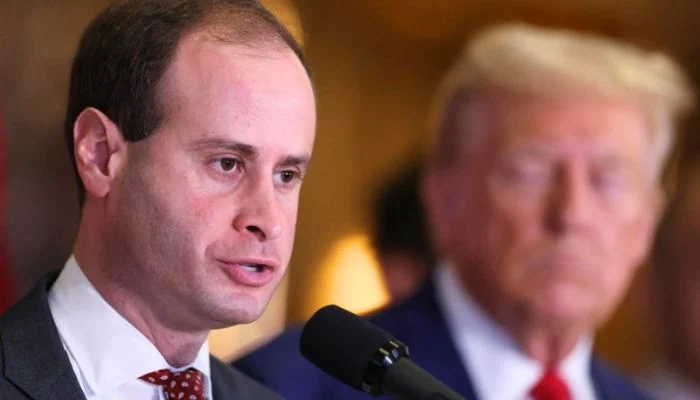
    US President Donald Trump has appointed Will Scharf as the next White House counsel and assistant to the president. Scharf, who currently serves as White House staff secretary, will take over the legal post on September 1, 2026. He will replace David Warrington, who is set to leave the administration and enter the private sector. Scharf is a lawyer and political adviser with close ties to Trump. Before joining the White House, he represented Trump in several major legal matters. He was also involved in the presidential immunity case that reached the US Supreme Court. Scharf previously worked as a federal prosecutor. He also served as a law clerk for federal appeals court judges, giving him experience in both government and federal litigation. His new position will place him at the centre of the Trump administration’s legal strategy. As White House counsel, Scharf will advise the president on legal issues and oversee matters involving executive privilege, judicial appointments and relations with the Justice Department. He will also be involved in responding to legal challenges facing the administration. The position is considered particularly important as Trump prepares for growing political and legal pressure ahead of the 2026 midterm elections. Scharf joined Trump’s legal team in 2023. He worked on the federal election interference case brought by former Special Counsel Jack Smith. His involvement continued as the case reached the Supreme Court. In 2024, the Supreme Court ruled that presidents have broad immunity from criminal prosecution for official acts. The decision became a major development in the legal battles surrounding Trump. After Trump returned to the White House in January 2025, Scharf was appointed staff secretary. In that role, he managed documents and other materials sent to the president for review. He also frequently appeared with Trump during executive-order signing ceremonies. Scharf has also chaired the National Capital Planning Commission. During his tenure, he was involved in the approval process for Trump’s proposed White House ballroom project, which has faced controversy and scrutiny. His appointment comes at a politically sensitive time for the administration. The White House is dealing with legal and political challenges while preparing for increased congressional scrutiny before the midterm elections. Trump praised Scharf after announcing the appointment. He described him as “tough, strong, and smart” and highlighted his experience as a federal prosecutor and his work on Trump’s legal cases.

  • | | | |

    Iran says Pakistan-Turkey-Saudi pact not aimed at Tehran

    Iran has said it has no reason to believe that the new security agreement between Pakistan, Turkey and Saudi Arabia is aimed against Tehran. Iranian Foreign Ministry spokesperson Esmaeil Baghaei said the agreement should not be viewed as a direct threat to Iran. He said the new regional security arrangement reflects a broader change in how countries in the Middle East are approaching their security needs. Baghaei said regional states are increasingly recognising that the United States cannot guarantee long-term security in the region. He also accused Washington of contributing to instability in the Middle East. He said regional security arrangements could help strengthen stability if they take into account the political and historical realities of the region. He also called for such arrangements to be broad and inclusive. Baghaei said Iran would not resume direct negotiations with the United States while Washington continues to violate an interim agreement between the two sides. Iran has also linked the reopening of the Strait of Hormuz to several demands from Washington. Iranian Foreign Minister Abbas Araghchi said Tehran and Oman were close to finalising an agreement on new shipping routes through the strategic waterway. He said the agreement was in its final stages. However, Araghchi stressed that an agreement with Oman would not automatically lead to the reopening of the strait. He said the United States would first need to meet several conditions set by Tehran. Iran is demanding compensation for damage caused by US attacks. It is also calling for an end to US military threats and sanctions against Iran. Iran has further demanded an end to attacks against its regional allies. Other demands include the removal of restrictions on Iranian shipping and the release of frozen Iranian assets. The Strait of Hormuz is a major international route for oil and gas shipments. Its prolonged closure has raised concerns over global energy supplies and shipping. Iran and the United States are currently not holding direct talks. Tehran says it will not enter direct negotiations while Washington continues to breach the interim agreement reached earlier this year. Messages between the two countries are being exchanged through intermediaries. Iran has also made a major change in its national security leadership. Former Revolutionary Guards commander Mohsen Rezaei has been appointed secretary of the Supreme National Security Council. Rezaei replaces Mohammad Bagher Zolghadr, who had been appointed to the position in March. No official reason was given for the change. The move, however, comes at a sensitive time for Iran as tensions with the United States and Israel remain high. Rezaei, 71, is a senior figure in Iran’s political and security establishment. He led the Islamic Revolutionary Guard Corps from 1981 to 1997. He served during much of the Iran-Iraq war. He later spent more than two decades as secretary of Iran’s Expediency Discernment Council. Rezaei also served as vice president for economic affairs from 2021 to 2023 under former President Ebrahim Raisi. Iran’s Supreme Leader Mojtaba Khamenei has also appointed Rezaei as his representative on the Supreme National Security Council. Zolghadr has been appointed as Khamenei’s political adviser. The Supreme National Security Council coordinates Iran’s security and foreign policy. It includes senior military, intelligence and government officials. Meanwhile, differences between the United States and Israel are reportedly growing over military operations across the region. Israeli broadcaster Channel 13 reported that Washington is pushing Israel to move toward ending fighting on three fronts. These include Gaza, Lebanon and Iran. US Central Command chief Admiral Brad Cooper reportedly conveyed the message during a visit to Israel. Washington wants progress toward reducing military operations and closing the three active fronts. Israeli officials, however, have indicated that they want to maintain freedom to act against Iran. Israeli military officials reportedly told their US counterparts that Israel intends to retain the ability to strike Iran if Tehran continues developing its nuclear programme or rebuilding its ballistic missile capabilities. Washington is also pushing for further Israeli withdrawals from positions in southern Lebanon. In Gaza, the United States is seeking progress toward a broader settlement. It is also supporting the deployment of a multinational force in the territory. Israeli security officials have reportedly objected to some US demands. These include reducing military operations and targeted killings in Gaza. The developments point to growing differences between Washington and Tel Aviv over how to manage conflicts involving Iran, Lebanon and Gaza. At the same time, the United States appears to be adopting a more cautious approach toward Iran. Tehran, however, continues to link the reopening of the Strait of Hormuz to major concessions from Washington.

  • |

    China launches Arctic route to bypass global shipping chokepoints

    China is preparing to open a regular container shipping route through the Arctic as disruptions at major maritime chokepoints continue to affect global trade. The new service will operate through Russia’s Northern Sea Route along the Arctic coast. It is being presented as an alternative route between Asia and Europe. Chinese shipping company Sea Legend is expected to launch its first regular service on the route. The service will connect Ningbo in China with Felixstowe in the United Kingdom. The route has been described as the “Ice Silk Road”. It is designed to provide faster access to European markets. It could also improve trade links with Turkey and North Africa. The Arctic route could significantly reduce sailing times between China and Europe. The journey between Ningbo and Felixstowe normally takes around 40 days by traditional routes. The Northern Sea Route could cut the travel time by roughly half under suitable conditions. The route has gained attention as shipping companies look for alternatives to heavily congested and politically sensitive waterways. The Strait of Hormuz and the Bab al-Mandab have become major areas of concern for international shipping. Rising tensions in these regions have increased risks for vessels and raised costs for shipping companies. Marine risk experts say the Arctic is attracting greater interest from shipowners because it can offer shorter journeys and reduce exposure to geopolitical conflict zones. The Northern Sea Route is divided into 28 sections. Different rules and operating requirements apply along the route. Ships generally need permission from the Northern Sea Route administration, which is controlled by Russia’s state nuclear energy company Rosatom. Interest in the Arctic route is not new. Several international shipping companies have previously tested the Northern Sea Route. However, many European operators later avoided regular use of the route because of worsening relations with Russia. Concerns over the potential environmental impact of increased shipping in the fragile Arctic ecosystem have also remained a major issue. The changing climate has added another dimension to the debate. Shrinking sea ice has made some Arctic routes more accessible during parts of the year. The Arctic is now becoming an increasingly important area of competition among major powers. Russia considers the region strategically important for its economy and national security. It also views the Northern Sea Route as a major trade corridor. China has described itself as a “near-Arctic state” and has promoted the concept of a “Polar Silk Road”. Beijing sees greater Arctic access as an opportunity to expand trade and strengthen its global supply chains. The United States, meanwhile, has opposed efforts that could give Russia and China excessive control over Arctic routes. Washington has repeatedly supported freedom of navigation and greater international access to the region. The growing use of the Arctic shipping corridor could therefore have implications beyond commercial trade. For China, the route offers a potential way to reduce dependence on traditional maritime passages. For Russia, it could strengthen the economic importance of its Arctic coastline.

  • |

    Japan marks 81 years since Nagasaki bombing amid nuclear debate

    Japan commemorated the 81st anniversary of the atomic bombing of Nagasaki on August 9, 2026. The ceremony was held as the country faces renewed debate over its nuclear policy and security strategy. Thousands gathered at Nagasaki Peace Park to remember the victims of the 1945 attack. Participants observed a moment of silence at 11:02am. It marked the exact time when the United States dropped the atomic bomb on the city. The bombing killed an estimated 74,000 people. The attack came three days after the atomic bombing of Hiroshima, where about 140,000 people were estimated to have died. Japan surrendered on August 15, 1945. The surrender brought World War II to an end and marked a major turning point in Japan’s history. The anniversary has also become a focus of debate over Japan’s long-standing pacifist and non-nuclear policies. Prime Minister Sanae Takaichi attended the Nagasaki ceremony. She has opened discussion on Japan’s postwar non-nuclear principles at a time of growing security concerns in East Asia. The debate has intensified as China expands its military capabilities in the region. Questions have also emerged over the long-term reliability of the US security commitment to Japan. Takaichi has maintained that Japan should pursue a realistic and practical approach toward achieving a world without nuclear weapons. However, her position on all three of Japan’s non-nuclear principles remains unclear. Japan’s three principles have traditionally called for the country not to possess, produce or permit the introduction of nuclear weapons into its territory. Takaichi supports the principles against possessing and developing nuclear weapons. She has not given the same clear commitment regarding the third principle. Her position has sparked concern among pacifists and atomic bomb survivors. Critics fear that any change in Japan’s nuclear stance could weaken the country’s postwar commitment to nuclear disarmament. Nagasaki Mayor Shiro Suzuki strongly defended the city’s anti-nuclear position during the ceremony. Suzuki described nuclear weapons as an absolute evil. He rejected the argument that nuclear weapons could be considered a necessary evil for national security. He also urged the central government to uphold Japan’s war-renouncing Constitution. He called on Tokyo to maintain its non-nuclear principles and participate in the upcoming review conference of the Treaty on the Prohibition of Nuclear Weapons. The mayor’s remarks came as Japan considers changes to its defence policy. The government is seeking stronger military capabilities in response to growing regional security threats. The anniversary also highlighted concerns about atomic bomb survivors who have not been officially recognised as hibakusha. Some people exposed to radiation during the Nagasaki bombing remain outside the government’s official recognition criteria. Their exclusion is linked to their location at the time of the attack and the areas officially designated as part of the blast zone. Shigemitsu Tanaka, head of the Nagasaki Atomic Bomb Survivors Council, raised the issue directly with Takaichi. Tanaka urged the government to provide support to both officially recognised survivors and those who remain unrecognised. He said the survivors are aging and that time is running out for them. Takaichi responded that the government already provides medical expense subsidies to unrecognised survivors on a level comparable to assistance given to officially recognised hibakusha. She said the government would continue implementing such support. The Nagasaki anniversary therefore carried both historical and political significance this year. Survivors and peace advocates continue to call for stronger commitments to nuclear disarmament. At the same time, Japan’s government is balancing its pacifist traditions with growing concerns over regional military threats.