देश-विदेश

  • | | | |

    Mojtaba Khamenei appears in new video as health qu…

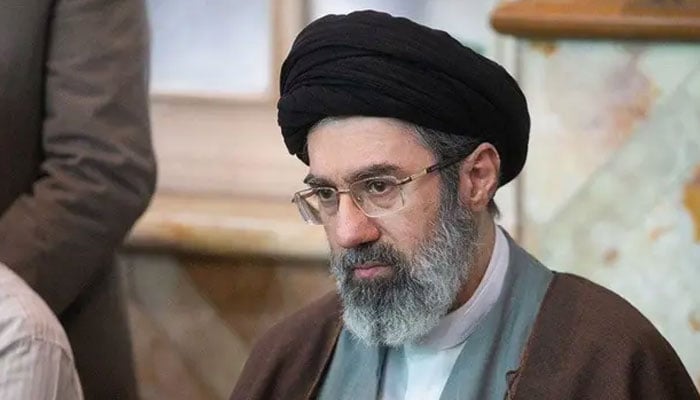
    TEHRAN: A new video showing Iran’s Supreme Leader Mojtaba Khamenei has emerged, offering a rare public glimpse of the Iranian leader amid heightened attention over his health and whereabouts. The footage was released by Iran’s semi-official Mehr News Agency and appears to show Khamenei sitting with several people and engaged in conversation. The agency did not disclose when or where the recording was made, nor did it identify the other individuals seen alongside him. Khamenei appears in normal condition in the short footage. The release comes after reports and speculation about his health had circulated in recent days, making the video particularly significant for observers following developments in Tehran. Iranian media presented the footage as evidence of the Supreme Leader’s continued presence and activity. The video does not provide independent confirmation of when it was recorded, however, leaving some questions unanswered about Khamenei’s current condition and location. The appearance comes as tensions surrounding Iran remain high. Iranian Foreign Minister Abbas Araghchi has reiterated Tehran’s determination to withstand pressure and continue what he described as resistance. “We are fully prepared for resistance despite all pressures,” Araghchi said, according to the statement cited by Iranian media. He also said Iran would not forget what he described as the unjust bloodshed of its martyrs, adding that those responsible would not be forgiven. Khamenei’s limited public appearances have attracted considerable attention since he became Iran’s Supreme Leader earlier this year. The latest footage is therefore likely to be closely examined both inside Iran and abroad as questions continue over the country’s leadership and its response to mounting regional pressures. For now, the exact timing and location of the recording remain undisclosed.

  • | | | |

    Iran ready to resist pressure as Hormuz talks near…

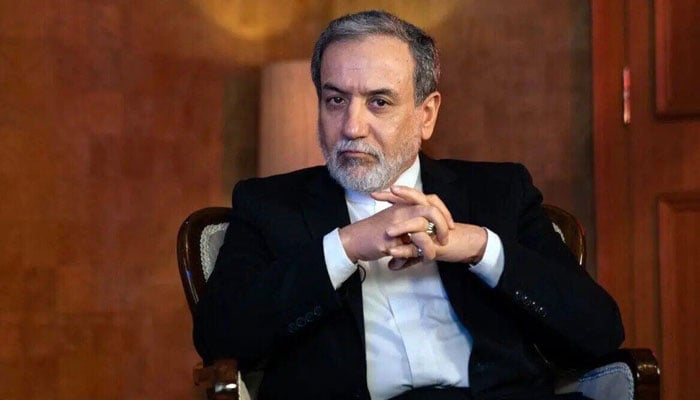
    TEHRAN: Iran is prepared to continue resisting mounting pressure, Foreign Minister Abbas Araghchi said, as Tehran and Oman move closer to an agreement on managing navigation through the strategically vital Strait of Hormuz. Araghchi said Iran would not forget what it described as the unjust bloodshed of its martyrs and would not forgive those responsible. His remarks come amid continuing tensions between Tehran and Washington and uncertainty over the future of negotiations. The Iranian foreign minister also warned that talks with the United States would not resume if Washington continued to violate the memorandum of understanding between the two countries. According to Araghchi, Iran and the United States are currently not engaged in direct negotiations. However, messages are being exchanged through intermediaries, keeping a narrow diplomatic channel open despite the broader standoff. The most immediate development concerns the Strait of Hormuz, a critical waterway for international energy shipments. Araghchi said negotiations between Iran and Oman over a new arrangement for maritime traffic were in their final stages. He stressed, however, that reaching an agreement with Oman would not automatically mean the strait would be fully reopened. Instead, the proposed arrangement would establish new maritime routes between Iran and Oman. The two countries have previously agreed to work together on future navigation management, shipping services and related arrangements while emphasizing safe passage and their sovereign rights over their territorial waters. The issue has become a major point of contention in wider diplomatic efforts, with Tehran insisting that US actions under the memorandum must be addressed before normal negotiations can resume. For now, the emerging Iran-Oman arrangement could offer a potential pathway for maritime traffic, but significant political hurdles remain. With Tehran maintaining its tough stance toward Washington, the next stage of diplomacy could determine whether the strategic waterway moves toward greater stability or remains at the center of regional tensions.

  • | |

    UAE opens direct sea route to China, cutting car d…

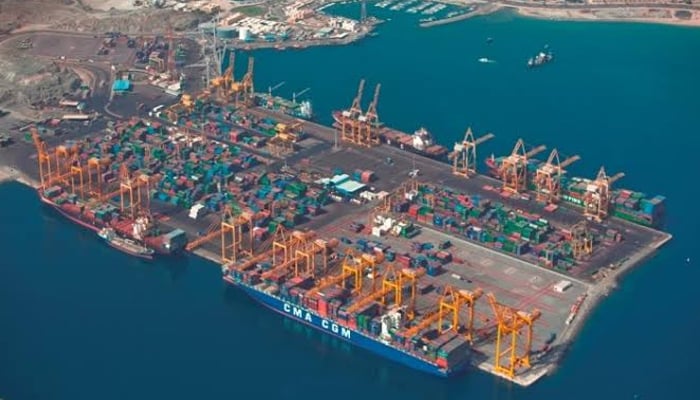
    DUBAI: The United Arab Emirates has launched a new direct maritime trade route with China, creating a faster shipping link between the two countries and reducing the time needed to transport vehicles. The new route connects Khorfakkan Port, located on the Gulf of Oman outside the Strait of Hormuz, with China’s Xiaomo Port. According to the Emirates News Agency, the service will bring large shipments of vehicles directly from the Chinese port to Khorfakkan. The launch is expected to give vehicle importers and logistics companies a quicker option for moving cargo between China and the UAE. The new direct service will reportedly cut vehicle transportation times by three to five days, improving efficiency across the supply chain. Khorfakkan’s strategic location on the Gulf of Oman makes it an important maritime gateway, with direct access to international shipping routes. The new connection could further strengthen the port’s role in handling Chinese goods and automotive shipments bound for the UAE and wider regional markets. The development also reflects growing trade and logistics cooperation between the UAE and China, particularly as demand for faster and more reliable supply chains continues to increase. For the automotive sector, shorter transit times could mean quicker deliveries, smoother inventory planning and greater flexibility for businesses handling vehicles imported from China. With the new route now operational, the UAE is strengthening its position as a regional logistics hub while providing Chinese exporters with a more direct maritime connection to the Gulf. The service is expected to support growing bilateral trade and make vehicle movement between the two markets faster and more efficient.

  • | | | |

    Iran rules out US talks until demands are met

    Iran has ruled out direct negotiations with the United States for now, saying Washington must first comply with the terms of an interim agreement reached in June. Iranian Foreign Minister Abbas Araghchi said on Sunday that Tehran and Washington were not holding direct talks. He said messages were still being exchanged through intermediaries. Araghchi also reiterated Iran’s position on the Strait of Hormuz. He said the strategic waterway would not reopen simply because Iran and Oman reached an agreement on shipping arrangements. According to Iranian reports, Tehran and Muscat are close to finalising an understanding on a temporary shipping route. However, Iran says the route can only be used after other conditions are met. The Strait of Hormuz has remained at the centre of the wider conflict. Iran has repeatedly linked its reopening to demands directed at Washington. Iranian officials have called for an end to US threats and military action. They have also demanded the lifting of sanctions and blockades and the release of Iranian assets. Iran’s Revolutionary Guard has separately warned that the strait will remain closed until Tehran’s conditions are accepted. The force accused its opponents of shifting their focus toward reopening the vital waterway. The strait is one of the world’s most important energy routes. A significant share of global oil and gas shipments normally passes through it. Oman, meanwhile, said discussions with Iran over arrangements for shipping through the waterway had been positive and constructive. Muscat also urged all sides to avoid actions that could undermine the negotiations. Iranian President Masoud Pezeshkian has suggested that the current situation could provide an opportunity for an agreement. He said Iran remained united and strong despite the ongoing conflict. The diplomatic uncertainty comes as tensions continue to affect commercial shipping in the region. The United Arab Emirates said Iran had attacked a vessel linked to its state-owned oil company while it was travelling through the Strait of Hormuz. No injuries were reported. The United Kingdom Maritime Trade Operations agency also reported that a vessel caught fire after being struck by an unidentified projectile. The fire was later brought under control, with no environmental damage reported. Iranian authorities have not immediately commented on the individual incident. Saudi Arabia reports fires at energy facilities Tensions have also spread across the Gulf. Saudi Arabia said firefighters had extinguished a blaze at an Aramco facility in Jizan. The Saudi Energy Ministry said there were no fatalities. Yemen’s Houthi movement claimed responsibility for an attack on the site, saying it had used a drone in response to alleged Saudi strikes in Yemen. A separate explosion was also reported in the industrial area of Jubail. Regional sources said gas facilities were targeted and that a fire broke out. The exact cause remained unclear. It was not immediately established whether the incidents in Jizan and Jubail were connected. US defence industry ordered to increase weapons production Meanwhile, the United States has asked its defence industry to accelerate weapons production amid shortages linked to the war with Iran. US Deputy Defence Secretary Steve Feinberg reportedly instructed defence companies to submit plans aimed at speeding up deliveries and increasing production of critical military equipment. The demand comes amid reports of pressure on US ammunition supplies, including stocks of Patriot missile interceptors. The Trump administration has maintained that the United States has substantial weapons reserves and that additional supplies are being manufactured and delivered. The conflict has also triggered threats from armed groups in the region. The leader of Iraq’s Harakat Hezbollah al-Nujaba, Akram al-Kaabi, has threatened retaliation for US-Saudi strikes on sites belonging to Iraq’s Popular Mobilisation Forces. The group has warned that further military action could lead to a response. Iranian military officials, meanwhile, have claimed that the United States and Israel failed to achieve their objectives against Iran. They have praised the country’s military preparedness and vowed to continue resisting pressure. With the Strait of Hormuz still closed and negotiations remaining indirect, the prospect of restoring normal shipping remains uncertain. Iran insists that reopening the waterway depends on Washington accepting its conditions. The United States, meanwhile, has linked the lifting of its blockade to Iran fulfilling commitments under any future agreement.

  • | |

    Israel rejects Trump’s 15-point Gaza plan

    Israeli Prime Minister Benjamin Netanyahu has rejected US President Donald Trump’s proposed 15-point plan for Gaza, insisting that Israel will not withdraw its forces until Hamas is fully and genuinely disarmed. Netanyahu made the statement during a cabinet meeting on Sunday. He said Israel would not accept any arrangement that allows Hamas to retain its weapons while Israeli troops are required to leave Gaza. “Israel rejects the 15-point document,” Netanyahu said, adding that the Israeli military would continue operating against threats to its forces and citizens. The dispute has created another obstacle for Trump’s efforts to establish a lasting ceasefire and political settlement in Gaza. Trump’s Board of Peace had previously announced that an agreement had been reached on the complete disarmament of Hamas and other armed groups operating in the territory. Hamas, however, has linked the handover of its heavy weapons to wider conditions. The group has demanded an end to Israeli military operations and a withdrawal of Israeli forces from Gaza. Netanyahu said disarmament must take place before any Israeli military withdrawal. He rejected the possibility of what he described as a symbolic or “fictitious” disarmament process. The Israeli premier said his government was discussing the next steps with US officials. He indicated that some American proposals were acceptable to Israel, while others remained unacceptable. “We know how to stand our ground on these matters,” Netanyahu said. The disagreement represents a major challenge for Trump’s Gaza initiative, which was presented as a framework for ending the conflict and creating conditions for reconstruction. The proposed plan includes the disarmament of Hamas, a phased Israeli military withdrawal and the rebuilding of Gaza. It also envisages the creation of an international Board of Peace to oversee implementation of the agreement. Hamas had previously signalled support for aspects of the disarmament framework. However, the group has maintained that weapons cannot simply be surrendered while Israeli forces remain in Gaza and military operations continue. Israel, meanwhile, has continued military strikes in Gaza despite the initial ceasefire agreement reached last October. Netanyahu is also facing political pressure at home. His far-right coalition partners have strongly opposed concessions that could allow Hamas to remain armed or secure a significant Israeli withdrawal. National Security Minister Itamar Ben Gvir has rejected the proposed framework and called it unacceptable. With Israeli elections approaching, Netanyahu faces pressure from both domestic allies and international partners. Any major concession on Gaza could create tensions within his governing coalition. The latest rejection therefore puts Trump’s peace initiative under renewed pressure. The central disagreement remains over the sequence of events: Hamas wants Israeli forces to withdraw and military action to end before completing disarmament, while Israel insists that Hamas must first surrender its weapons.

  • |

    Typhoon Dolphin hits China

    Typhoon Dolphin made landfall in eastern China’s Zhejiang province on Sunday, bringing powerful winds and heavy rain after authorities issued the country’s highest-level typhoon warning. China’s National Meteorological Centre said the storm reached the coast near Yuhuan City at around 5:30pm local time, with winds exceeding 150 kilometres per hour. The typhoon disrupted air and sea travel across the region. Nearly 1,400 flights at Shanghai’s two main airports were cancelled, while Hangzhou airport reported another 270 cancellations. Authorities also suspended more than 200 ferry routes in Zhejiang and Fujian. China evacuated nearly 99,000 people from high-risk areas in Fujian ahead of the storm. Officials also suspended work and transport services in several locations along the typhoon’s expected path. The storm affected neighbouring areas as well. Taiwan cancelled more than 180 flights and suspended dozens of ferry services after heavy rain and strong winds hit the north. In Japan’s Okinawa, seven people suffered minor injuries, while more than 5,000 households lost electricity. Hong Kong also experienced unusually high temperatures. The Hong Kong Observatory recorded 36.9°C and warned that hot weather could continue through Tuesday as warm air from the storm moved over the territory. The weather centre expects Typhoon Dolphin to weaken as it moves northwest across eastern China. However, heavy rain could continue in Shanghai and parts of Zhejiang, Fujian, Anhui and Jiangsu through Monday.

  • | |

    Zelenskiy accuses Russia of targeting world food s…

    Ukraine and Russia traded accusations of lethal attacks on Sunday, with President Volodymyr Zelenskiy saying Moscow deliberately targeted global food security by striking the seaport at Odesa. Three people died and 37 sustained injuries in the eastern Ukrainian city of Kharkiv after a multi storey apartment block took a direct hit. Across the border, authorities in Russia’s Belgorod region reported that a Ukrainian drone attack killed five people and wounded 25 others. Odesa seaport takes major damage Zelenskiy said a strike had damaged Odesa’s seaport, a critical hub for Ukraine’s agricultural exports. Local authorities reported that dozens of drones and missiles struck the southern seaside city, wounding a dozen people in the process. “In this way, the Russians are at war with the world’s food security,” Zelenskiy said, framing the attack as part of a broader effort by Moscow to disrupt global grain supplies that flow through Ukraine’s Black Sea ports. The Ukrainian president said Russia also struck nine other regions across the country on Sunday, extending the assault well beyond Odesa alone. Russia has spent months bombarding Odesa in a sustained campaign aimed at cutting Ukraine off from the Black Sea and choking its export routes. Ihor, a 67 year old Odesa resident whose apartment narrowly avoided destruction in the latest strikes, said residents have grown accustomed to the danger. “Everyone who lives in Odesa knows that the most common target is around the port area,” he said. Ukraine strikes Russian oil tankers in response As Ukraine works to choke off the revenue Russia relies on to fund its war effort, Kyiv’s forces have repeatedly targeted Russian oil tankers and other cargo vessels moving through the Black Sea. Ukrainian forces claimed three additional strikes on such vessels on Sunday alone. Both countries have widened their campaigns against each other’s logistics networks in recent months. E-commerce warehouses on both sides of the border and Ukrainian petrol stations have come under sustained attack throughout the summer. Ukraine’s state energy company Naftogaz reported a significant rise in attacks on its facilities over the past three days, including strikes on oil extraction sites overnight. Ukraine’s energy ministry said Russian forces also struck power facilities in the Odesa region, cutting electricity to a substantial share of the port city’s residents overnight. Power had already been restored to 90,000 consumers by Sunday, the ministry said. Russia’s Defence Ministry confirmed striking fuel storage facilities in the ports of Odesa and nearby Chornomorsk, saying the sites were being used to support the Ukrainian military. Pope Leo renews call for peace At the Vatican, Pope Leo used his Sunday address to renew calls for an end to the war, now in its fourth and a half year. Speaking before worshippers gathered for the Angelus prayer, the pontiff said tragic incidents are multiplying across the conflict, leading to a growing number of civilian casualties, including children. The renewed papal appeal comes as both Russia and Ukraine show little sign of scaling back their attacks, with strikes on energy infrastructure, ports and logistics networks continuing to intensify on both sides as the war grinds into its fifth year without a resolution in sight.

  • | |

    British Columbia declares emergency as fast-moving…

    British Columbia declared a provincial state of emergency on Saturday after a rapidly spreading wildfire forced thousands of residents in the western Canadian province to flee their homes overnight, with the blaze nearly doubling in size within hours. The Bald Range wildfire burned out of control and expanded rapidly to roughly 9,500 hectares, prompting evacuation orders across Summerland, Peachland and other districts west of Okanagan Lake in the province’s southern interior. The region produces the majority of British Columbia’s wine and ranks as Canada’s second largest wine producing area, adding an economic dimension to the disaster beyond the immediate threat to homes and lives. Officials describe explosive fire behaviour Premier David Eby told a news conference on Saturday that one fire official had compared the blaze to an explosion going off. Eby said the official described flames reaching 100 feet up trees, with additional flames shooting a further 200 feet above that, and the fire generating its own weather system that produced lightning, which in turn fed further fire growth in a self-sustaining cycle. “Homes have been lost, and properties have been destroyed,” Eby said, adding that some residents became trapped as conditions shifted rapidly and required rescue. The premier described the situation as highly dynamic and continuing to pose a serious threat to the region. Summerland had a population of about 12,000 residents according to the 2021 census, while neighbouring Peachland is home to roughly 6,500 people. Province activates emergency powers The declaration of a state of emergency grants provincial authorities immediate access to special powers, including the ability to impose travel restrictions, protect essential supplies from price gouging and deploy specific tools to coordinate rescue operations across affected areas. Officials said the Bald Range wildfire has triggered the largest evacuation event of the summer so far, with more than 20,000 people across British Columbia forced from their homes since the fire began its rapid expansion. Summerland Mayor Doug Holmes, speaking by phone from nearby Penticton, said a large number of farms in the area have been affected and that officials do not yet know the full extent of structural losses. “They’re still busy fighting the fire,” Holmes said, adding that the community needed to prepare for the worst possible outcome as firefighting efforts continued. Residents flee as highways begin closing Many residents left their homes overnight, driving south toward Penticton or north toward Kelowna before several highways in the region began closing due to the advancing fire. Terry Fries, a Summerland resident, said he was watching a football game on Friday night when a neighbour warned him to prepare an emergency bag as the fire continued to grow nearby. Fries said the fire remained visible behind nearby hills earlier in the evening before conditions worsened. When British Columbia authorities issued the formal evacuation order around midnight, Fries and his family drove approximately 45 kilometres north to the city of Kelowna to reach safety. Residents captured video footage showing fires burning along the highway and structures engulfed in flames as they fled the area. By Saturday afternoon, ash had begun settling on cars and houses in nearby communities as smoke from the fire cast an orange glow across the sky. Power and water systems disrupted Summerland lost electricity on Saturday and issued a boil water notice for residents after untreated water entered the municipal system when it bypassed the standard water treatment plant due to disruptions caused by the wildfire. Wildfires strain resources nationwide Several Canadian provinces, including Ontario and Quebec, have battled significant wildfires this year as hot and dry weather conditions fuelled blazes across dense forest regions. International firefighting crews from Mexico, Australia, France and New Zealand have travelled to Canada to assist local personnel in combating the fires. In British Columbia specifically, where continued hot and dry conditions have heightened the risk of further fire spread, approximately 1,500 firefighting personnel are currently battling more than 100 active fires across the province. Authorities have issued 40 formal evacuation orders and an additional 49 evacuation alerts as the fire season continues to intensify. Wildfires have burned through approximately 4 million hectares of land across Canada so far this year, according to figures from the Canadian Interagency Forest Fire Centre, underscoring the scale of a fire season that has placed sustained pressure on emergency services and firefighting resources nationwide.

  • | |

    Biden’s cancer has spread and become very pa…

    Former President Joe Biden’s prostate cancer has spread beyond his bones and has become very painful, his son Hunter Biden revealed in a new interview, offering the most detailed public update yet on the 83-year-old’s deteriorating health condition. Hunter Biden told the BBC’s Newsnight programme that his father’s cancer has metastasized into his bones and beyond, according to video footage of the interview posted online on Friday. He described the condition as very painful and debilitating in many respects, offering a stark assessment of how far the disease has progressed since it was first diagnosed. A spokesman for the former Democratic president declined to comment on Hunter Biden’s remarks when reached on Saturday, leaving the son’s account as the most recent and detailed public statement on the elder Biden’s health status. Diagnosis first revealed in 2025 Biden first disclosed his prostate cancer diagnosis in May 2025, less than four months after leaving the White House. At the time, his office described the diagnosis as an aggressive form of the disease and confirmed that it had already spread to his bones, marking a serious health revelation that came just months after he left office following a single term as president. A spokesman for Biden said in October that the former president had begun undergoing radiation treatment alongside hormone therapy in an effort to manage the disease, representing the most recent official update on his treatment regimen prior to Hunter Biden’s latest comments. A presidency shaped by scrutiny over age and health Biden made history as the oldest person ever elected to the American presidency when he won the office in 2020. His physical health and mental acuity faced sustained public scrutiny throughout his presidency, which ran from 2021 to 2025, with questions about his fitness for office becoming a recurring theme during his time in the White House and throughout his time seeking reelection. Despite the health challenges that have emerged since leaving office, Biden has continued to make public appearances. He attended the dedication of former President Barack Obama’s presidential library in Chicago in June, marking one of his more notable public appearances since departing the presidency. Biden served as vice president under Obama from 2009 to 2017, a partnership that has continued to define much of his political legacy. Memoir set for November release Biden’s presidential memoir is scheduled for release on November 17, offering what is expected to be his own detailed account of his one term in office. The timing of the book’s release means it will arrive as public attention remains focused on his health, with Hunter Biden’s latest comments likely to intensify interest in how the former president addresses his cancer diagnosis and its impact on his post-presidency in his own written account. The revelation adds to a year marked by significant health developments for the former president, whose battle with an aggressive and now advancing form of cancer has become an increasingly prominent part of his public story since leaving the White House.

  • | |

    Iran says Oman deal nears completion but insists U…

    Iran said on Sunday that a deal with Oman establishing new shipping lanes through the Strait of Hormuz has entered its final stages, though Tehran maintained the critical waterway will remain closed until Washington satisfies a broader set of conditions tied to the ongoing standoff between the two countries. A US official told Reuters on Friday that an agreement between Iran and Oman appeared close and could soon lead to the reopening of the strait, a passage that carried roughly a fifth of global oil and liquefied natural gas shipments before Iran shut it down in response to American and Israeli military strikes earlier this year. Iranian Foreign Minister Abbas Araqchi confirmed on Sunday that negotiations over the strait, which sits between Iran and Oman, had reached their final stages. However, he repeated comments made a day earlier stressing that the waterway would not reopen unless additional conditions set by Tehran were met first. Iran’s Mehr news agency quoted Araqchi as saying the emerging agreement would establish the new shipping lanes to be used once the United States fulfils those conditions and the strait formally reopens. Araqchi said Iran and the United States are not currently engaged in direct talks and that Tehran has no plans to begin them as long as Washington continues to breach an interim agreement the two countries signed in June. He added that messages between the two sides are being exchanged through intermediaries rather than direct contact. Iran demands compensation and sanctions relief The United States launched air strikes against Iran in late February, saying the campaign aimed to prevent the Islamic Republic from acquiring nuclear weapons or using missiles and regional proxy forces to threaten the wider Middle East. Washington and Tehran agreed to a ceasefire in June, but the United States reimposed a blockade on Iranian shipping in the Gulf in July, a move Iran characterised as a violation of a truce that had already shown signs of collapse. A US official, speaking to Reuters on condition of anonymity, said the blockade on Iranian ports would lift once a deal restoring unimpeded commercial shipping is formally announced. The official added that any American actions would remain directly tied to Iran fulfilling its own commitments under the emerging agreement, pointing to a carefully sequenced approach that both sides appear to be navigating cautiously. The arrangement under discussion appeared, according to sources who previously spoke to Reuters, to grant Tehran a degree of control over vessels entering the Gulf through the strait, an arrangement that shipping industry sources have said would be difficult to implement in practice. The precise current status of the agreement remained unclear on Sunday, and Iran’s latest statements suggested several additional factors could still complicate its finalisation. Araqchi said the strait’s reopening would depend in part on the United States providing compensation to Iran for what Tehran describes as widespread attacks on its territory and interests. Mohammad Baqer Zolqadr, secretary of Iran’s top national security body, outlined a broader list of demands, including an end to US threats against Iran, a halt to what Tehran calls aggression against its allies in Lebanon, the Palestinian territories, Yemen and Iraq, the lifting of the shipping blockade and broader sanctions, and the release of frozen Iranian financial assets. Supreme Leader’s condition remains unclear Ultimate decision making authority in Iran rests with Supreme Leader Mojtaba Khamenei, who has not appeared in public since an air strike killed his father and predecessor on February 28, the first day of the joint US and Israeli air campaign against Iran. State media reported on Sunday that Iranian President Masoud Pezeshkian met with Khamenei in late July, and a paramilitary leader promised that footage of the supreme leader would soon be released publicly. Khamenei was reportedly injured in the same strike that killed his father, according to earlier reporting. Separately, the United Arab Emirates said on Saturday that Iran had attacked a vessel affiliated with its state oil company. Iran did not immediately respond to the allegation. The country’s powerful Revolutionary Guards have attacked commercial vessels in the past, arguing that ships transiting the strait without coordinating their passage with Iranian authorities are not protected from such action. Houthi attacks widen regional shipping crisis Iran’s strikes on shipping in the Strait of Hormuz have coincided with intensified attacks from its Yemen based allies, the Houthis, who have targeted vessels at a separate chokepoint located between the Red Sea and the Gulf of Aden on the opposite side of the Arabian Peninsula. The Houthis declared a naval blockade against Saudi Arabia in the Red Sea last month, framing the move as retaliation for what they described as a Saudi imposed siege in Yemen, an accusation the Saudi government has firmly denied. Riyadh continues to back Yemen’s internationally recognised government in the country’s ongoing conflict. The group claimed responsibility for an attack on Saudi Aramco’s Jazan refinery on Sunday, coming just two days after the kingdom signed a defence pact with fellow Sunni Muslim majority nations Turkey and Pakistan amid growing concern over regional instability stemming from the US and Israeli military campaign against Shiite led Iran. Saudi Arabia’s energy ministry confirmed that a fire broke out at the refinery following the attack but was later extinguished without causing any injuries, and that authorities were continuing to manage the aftermath of the incident. The ministry did not specify a cause for the blaze. Houthi military spokesperson Yahya Saree said on social media platform X that the group used a drone to strike the facility. The Houthis have targeted Aramco sites in Jazan before, a refinery that processes approximately 400,000 barrels of crude oil daily in southwestern Saudi Arabia. It remains unclear whether or to what extent Pakistan or Turkey would participate in any Saudi response to the latest attack. Turkish Foreign Minister Hakan Fidan said the newly formed alliance between the three countries was not directed against Iran or any other nation, describing it instead as a general commitment to