देश-विदेश

  • | | | |

    Trump says Hormuz reopening near, warns Iran of consequences

    US President Donald Trump has said the Strait of Hormuz could reopen “very soon” as diplomatic efforts with Iran continue, while warning that Tehran would face a strong military response if negotiations fail. Speaking during an interview with Fox News, Trump expressed optimism about the ongoing talks, saying discussions had made significant progress. He claimed Iranian representatives had requested negotiations at a time when the United States was preparing for a large-scale military operation. According to Trump, Washington agreed to engage in dialogue after receiving signals from Tehran that it was willing to negotiate. He stressed that the United States remains committed to preventing Iran from acquiring nuclear weapons and said abandoning the talks would have serious consequences. The US president said negotiators spent the entire day in discussions and described the atmosphere as positive. He added that a successful agreement could help restore normal shipping through the Strait of Hormuz, one of the world’s most important energy routes. Trump also suggested that reopening the strategic waterway would ease pressure on global energy markets. He said lower oil prices could eventually translate into cheaper fuel costs for consumers and urged energy companies to reduce gasoline prices if market conditions improve. Speaking later to reporters in California, Trump said developments with Iran were moving in the right direction and indicated that greater clarity on the negotiations could emerge within the next 48 hours. Diplomatic efforts are reportedly being supported by regional mediators, including Oman and Qatar. Discussions are focused on restoring safe maritime navigation through the Strait of Hormuz while reducing tensions between Washington and Tehran. However, Iranian officials have maintained that progress depends on an end to US threats and continued respect for Iran’s sovereignty. The Strait of Hormuz is a vital global shipping lane through which a significant share of the world’s oil and liquefied natural gas exports passes. Any disruption to traffic through the waterway has immediate consequences for international energy markets and global trade. Financial markets reacted positively to reports of progress in the negotiations. Oil prices declined while Asian stock markets advanced on expectations that a diplomatic breakthrough could reduce regional tensions and restore uninterrupted shipping. Meanwhile, reports from Israel indicated growing concern over Washington’s diplomatic approach. Some Israeli officials reportedly believe the United States is prioritising a negotiated settlement with Iran, although no official Israeli government statement has confirmed those claims.

  • |

    Russian missile strike kills 15 in Kyiv

    At least 15 people were killed and 27 others injured after Russia launched a large-scale missile and drone attack on Ukraine’s capital, Kyiv, officials said. The attack triggered more than 30 explosions across the city, with air raid sirens sounding throughout Kyiv and surrounding areas as residents sought shelter. The strikes caused widespread damage, and a major fire broke out in one part of the capital following the bombardment. According to Ukrainian authorities, search and rescue teams are continuing operations at the site of a destroyed warehouse, where several people are feared trapped beneath the rubble. Ukraine’s Air Force said Russia launched 28 high-speed missiles, including ballistic missiles, along with 115 drones during the overnight assault. Officials stated that none of the missiles were intercepted by Ukraine’s air defence systems, making it one of the most significant attacks on the capital in recent months. The missile and drone barrage targeted multiple locations in Kyiv, causing extensive destruction to buildings and infrastructure. Emergency responders remained at affected sites to extinguish fires, search for survivors and assist the injured. The latest strike comes as fighting between Russia and Ukraine continues to intensify after more than four years of war. Both sides have increased the frequency and scale of long-range attacks in recent months. Just days earlier, a separate exchange of strikes between the two countries left at least 14 people dead, including nine in Russia and five in Ukraine, highlighting the continued escalation of the conflict despite ongoing international efforts to reduce hostilities.

  • |

    Houthis claim strike on Saudi oil tanker

    Yemen’s Houthi movement, Ansar Allah, has claimed responsibility for a missile attack on a Saudi oil tanker in the Red Sea, marking another escalation in regional maritime tensions. Houthi military spokesperson Yahya Saree said the group targeted the tanker with ballistic missiles near the Saudi coastal city of Yanbu. However, he did not specify the exact time of the attack or provide details about the extent of the damage or any casualties. Saree also claimed that Houthi forces have attacked eight vessels accused of violating the Saudi naval blockade imposed on July 22. According to him, the operations forced 29 other ships to alter their routes to avoid Houthi-controlled waters. The spokesperson vowed that the group would continue enforcing what it described as a naval blockade against Saudi Arabia, warning that vessels breaching the restrictions could face further attacks. The latest claim comes as security concerns continue to grow in the Red Sea, a vital international shipping route that has witnessed repeated attacks on commercial and energy-related vessels in recent months. Independent verification of the Houthi claims was not immediately available.

  • |

    North Korean missile unit reportedly deploys to Russia for Ukraine war

    Ukraine’s military intelligence claims that a North Korean missile unit has started deploying to western Russia, marking what could become a major expansion of military cooperation between Moscow and Pyongyang. According to Ukrainian officials, the unit may eventually be equipped with up to 120 ballistic missiles and six launchers for use in attacks against Ukraine. Andrii Cherniak, an official with Ukraine’s Main Directorate of Intelligence, said around 90 North Korean personnel are expected to be stationed in Russia’s Voronezh region as part of the Russian military’s 112th Missile Brigade. He added that discussions between senior Russian and North Korean officials next month are expected to determine the final deployment plan and missile numbers. Ukraine says North Korea has already delivered another batch of 40 KN-23 and KN-24 ballistic missiles along with military personnel. These missiles reportedly have a longer range and larger payload than Russia’s Iskander missiles, although Ukrainian military sources believe they are less accurate and have caused significant civilian casualties during previous strikes. The reported deployment comes as Russia has resumed using North Korean-made ballistic missiles after nearly a year. Ukrainian authorities say two such missiles were launched last week, including one that struck the village of Radushne in central Ukraine, reportedly killing at least five members of the same family. Ukraine remains heavily dependent on advanced air defence systems, particularly US-made Patriot batteries, to intercept ballistic missiles. Military analysts warn that an increase in North Korean missile supplies would place additional pressure on Ukraine’s already stretched air defence network, especially ahead of the winter months when Russia has previously targeted the country’s energy infrastructure. Cherniak said intelligence suggests Russia intends to integrate North Korean missile forces into its operations, although the exact role of North Korean personnel has not yet been confirmed. He also stated that about 9,500 North Korean troops remain in Russia’s Kursk region, though they are not currently taking part in direct combat operations against Ukraine. Russia and North Korea have strengthened military ties since Moscow launched its full-scale invasion of Ukraine in 2022. The two countries signed a mutual defence agreement in 2024, while Kyiv accuses Pyongyang of supplying millions of artillery shells, ballistic missiles and thousands of troops to support Russia’s war effort.

  • |

    Over 800,000 Lebanese return home amid ongoing border tensions

    More than 800,000 people displaced by the war in Lebanon have started returning to their hometowns and villages as security conditions improve in parts of the country. However, the humanitarian situation remains severe, with hundreds of thousands still unable to go back because of widespread destruction and ongoing instability. According to the United Nations, more than 360,000 people remain displaced across Lebanon. Around 26,000 of them continue to live in government-run shelters, while many others stay with relatives or in temporary accommodation as they wait for conditions to improve. The UN’s humanitarian agency says the conflict has devastated essential infrastructure, particularly in southern Lebanon. Damage to water supply systems and electricity networks has left more than 700,000 people without reliable access to clean drinking water, raising concerns about public health and increasing the need for humanitarian assistance. The war has taken a heavy human toll. Israeli military operations have killed more than 4,300 people and forced over one million residents to flee their homes since the conflict escalated. Entire neighborhoods and villages in southern Lebanon have suffered extensive destruction, making it difficult for many returning families to rebuild their lives. Large areas in southern Lebanon remain under Israeli military control, and residents in several border communities continue to face uncertainty despite the gradual return of displaced families. Meanwhile, diplomatic efforts to reduce tensions have resumed. A new round of US-led talks between Lebanese and Israeli officials began in Rome yesterday and will continue through tomorrow. Negotiators hope the discussions will help strengthen the ceasefire, address security concerns along the border, and create conditions for a broader and more lasting peace.

  • |

    Passengers recount terrifying turbulence on Air India flight

    At least 17 passengers and crew members were injured after an Air India flight encountered severe turbulence while travelling from Phuket, Thailand, to New Delhi, prompting frightened passengers to fear the aircraft might crash. According to Indian media, the flight was carrying 137 passengers and eight crew members when it was hit by sudden and intense turbulence mid-air. The violent shaking reportedly caused the aircraft to drop abruptly, leaving several passengers and crew members injured. The aircraft also sustained minor damage during the incident. The flight landed safely at Indira Gandhi International Airport in New Delhi, where emergency medical teams were waiting. Injured passengers were taken from the aircraft on stretchers and transported to nearby hospitals for treatment. An Italian passenger described the ordeal as one of the most terrifying experiences of her life. She said the turbulence was so powerful that her sister was thrown out of her seat, while her mother suffered a head injury. She added that several passengers were hurt, including one man whose face was covered in blood. “We thought we were going to die,” the passenger said, recalling the frightening moments during the flight. Air India, however, said none of the passengers or crew members suffered life-threatening injuries. The airline stated that those injured were taken to hospital as a precaution for medical evaluation. According to the airline, five people were discharged shortly after receiving treatment, while the remaining injured passengers continue to receive medical care. The incident has once again drawn attention to the dangers posed by severe in-flight turbulence, although aviation experts note that such events are relatively rare and commercial aircraft are designed to withstand extreme weather conditions.

  • |

    Kim Yo Jong warns Japan over expanding military power

    North Korea has issued a fresh warning to Japan, saying it could adopt new military measures in response to Tokyo’s growing defence capabilities. The statement came after Japan conducted a test of a US-made Tomahawk cruise missile, a move Pyongyang described as a serious security threat. Kim Yo Jong, the influential sister of North Korean leader Kim Jong Un, accused Japan of abandoning its traditional defensive military posture and moving toward offensive capabilities. In a statement released through North Korea’s state media, she claimed Tokyo is developing the ability to carry out pre-emptive strikes and military operations beyond its borders. She pointed to Japan’s recent Tomahawk missile launch from the Aegis destroyer Chokai in the Pacific Ocean, along with other missile tests and its participation in joint military exercises led by the United States in the Philippines earlier this year. Kim warned that North Korea would take additional military steps if Japan continued strengthening its armed forces. Although she did not specify what actions Pyongyang might take, she said Japan would face greater security risks as a consequence of its military expansion. The North Korean official also blamed the United States for supporting Japan’s military modernisation. She accused Washington of supplying Tomahawk missiles, upgrading Japanese naval vessels to operate the weapons, and backing missile tests, arguing that the US is encouraging policies that increase tensions in the region. According to Kim, Japan’s acquisition of long-range strike capabilities places North Korea and other neighbouring countries within potential missile range, raising concerns over regional stability. The latest remarks are part of a broader campaign by Pyongyang against growing security cooperation between the United States, Japan and South Korea. North Korean state media has repeatedly criticised joint military exercises and defence partnerships, describing them as provocative and a threat to peace on the Korean Peninsula. Regional analysts believe the statement is aimed at portraying Japan’s military modernisation as justification for North Korea’s continued weapons development. Experts also suggest the rhetoric could signal preparations for future military demonstrations, including missile launches or other strategic weapons tests, as Pyongyang seeks to reinforce its deterrence strategy amid rising regional tensions.

  • |

    Stray SpaceX rocket believed to have struck Moon

    A discarded section of a SpaceX Falcon 9 rocket is believed to have crashed into the Moon, giving scientists a rare opportunity to study the effects of a known impact on the lunar surface. The object, a 4,000-kilogram upper stage left in space after a January 2025 mission, was expected to strike the Moon at around 07:35 BST after spending more than a year drifting through space. Scientists say the rocket stage gradually shifted onto a collision course due to the combined gravitational pull of the Earth, Moon and Sun. The impact is not considered dangerous to Earth, according to NASA, which plans to analyse the event to improve its understanding of lunar geology and refine methods for tracking objects in space. Although the collision itself was too faint to be seen with the naked eye, astronomers using powerful telescopes are monitoring the Moon for signs of a fresh crater and a plume of dust created by the impact. Researchers are now comparing before-and-after images of the lunar surface to identify the exact location of the strike. NASA’s Lunar Reconnaissance Orbiter and South Korea’s Danuri lunar spacecraft are expected to capture images of the impact site in the coming days. Scientists say processing and analysing the data could take several days or even weeks before the first confirmed images are released. Experts describe the incident as a valuable scientific experiment because the size, speed and mass of the object were known in advance. Unlike natural meteor impacts, the predictable nature of the collision allows researchers to better understand how craters form and how lunar material behaves after a high-speed impact. However, astronomers also say the incident highlights the growing problem of space debris. Thousands of human-made objects now remain on or around the Moon, and experts warn that increasing congestion in space could pose challenges for future exploration missions if debris is not managed more effectively. Meanwhile, SpaceX continues its regular launch operations. The company successfully launched another Falcon 9 rocket from Florida on a separate mission carrying satellites into orbit, underscoring the growing pace of space activity as agencies and private companies expand their exploration programmes.

  • |

    Dallas marks Arbaeen with peaceful mourning procession

    The Arbaeen of Imam Hussain (AS) and the martyrs of Karbala was observed with deep reverence in Dallas, Texas, as hundreds of mourners gathered for religious congregations and a peaceful procession to commemorate the 40th day after Ashura. The main gathering was held at the Alam Centre, where religious scholar Maulana Qasim Zaidi spoke about the lasting significance of Karbala. He said the sacrifice of Imam Hussain (AS) continues to inspire people around the world by promoting the values of justice, truth, courage and resistance against oppression. After the religious address, participants joined a central Arbaeen procession through downtown Dallas. Mourners carried traditional Alams and symbolic Taboots while reciting elegies, performing matam and offering prayers in memory of the martyrs of Karbala. Renowned reciters Shuja Haider and Kashif Jafri led the Nauha recitations during the procession. Families, children and members of the local Shia community took part in the event, which was held in a peaceful and organised atmosphere. The conclusion of Arbaeen marked the end of the traditional 40-day mourning period that begins with Ashura. However, participants said the message of Imam Hussain (AS) remains a timeless source of guidance, encouraging people to uphold justice, sacrifice and steadfastness in the face of injustice. Organisers thanked volunteers, community members and law enforcement authorities for ensuring the event was conducted safely and smoothly. They said the successful observance reflected the community’s dedication to preserving and passing on the teachings and legacy of Karbala to future generations.

  • | | | |

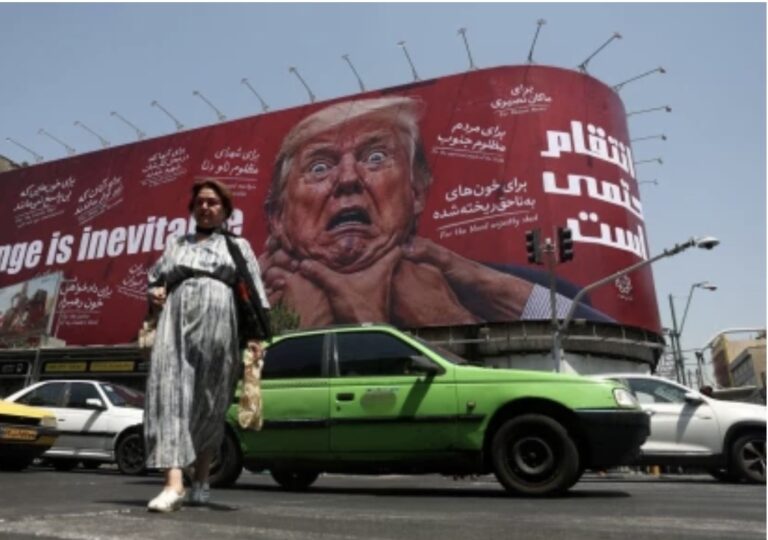
    Iran warns US forces face regional expulsion

    Senior Iranian officials on Wednesday issued fresh warnings against the United States, declaring that American forces could eventually be forced out of the Middle East while linking any future reopening of the Strait of Hormuz to changes in Washington’s policies. Ebrahim Azizi, chairman of the Iranian parliament’s National Security Committee, said the removal of US military forces from the region and from countries hosting American bases was only a matter of time. In a post on X, he claimed the US would eventually have to focus its resources on securing its own territory instead of maintaining military installations abroad. The remarks came as Iranian media reported that ongoing discussions between Tehran and Oman over future navigation arrangements in the Strait of Hormuz would not automatically lead to the reopening of the strategic shipping route. According to Iranian state media, negotiations are being conducted solely between Iran and Oman, with officials insisting that the process is independent of the United States. Iranian sources maintained that even if an agreement is reached with Muscat, the waterway will remain closed unless Washington changes what Tehran describes as its hostile policies and interference. The Strait of Hormuz is one of the world’s most critical energy corridors, carrying a significant share of global oil shipments. Any disruption to traffic through the strait has the potential to affect international energy markets and regional security. Meanwhile, the United Nations expressed concern over a sharp increase in executions in Iran. UN High Commissioner for Human Rights Volker Türk said at least 56 people had been executed on national security-related charges since March, including dozens connected to protest-related cases. He warned that the growing use of capital punishment appeared aimed at creating fear within society. Regional tensions also escalated after Yemen’s Houthi movement claimed responsibility for a missile attack on the Saudi oil tanker Wafaa in the northern Red Sea. The group said the vessel was struck by ballistic missiles as part of its campaign targeting Saudi shipping. Houthi spokesman Yahya Saree claimed the movement had targeted eight Saudi oil tankers since launching its maritime blockade in late July and said dozens of other vessels had either been prevented from passing or forced to change course. Saudi authorities had not commented on the claims at the time of reporting. Separately, Iranian lawmaker Esmail Kowsari criticised US President Donald Trump’s approach toward Tehran, describing Washington’s negotiating strategy as inconsistent and unreliable. He accused the US administration of issuing conflicting statements regarding the Strait of Hormuz and Iran’s regional position. Iranian officials also blamed what they described as continued US pressure and military threats for slowing negotiations with Oman over navigation in the Strait of Hormuz, insisting that Tehran would not conclude any agreement under external pressure.