देश-विदेश

  • |

    Houthis seek to replicate Iran’s Strait of Hormuz strategy in Red Sea, warns Yemeni diplomat

    Yemen’s Houthi movement is attempting to replicate Iran’s strategy in the Strait of Hormuz by disrupting maritime traffic through the Bab el-Mandeb strait, Yemeni Foreign Minister-designate Afrah al-Zouba warned on Monday. Speaking to reporters at the Yemeni Embassy in Riyadh, al-Zouba stated that an insufficient international response has emboldened the group to pursue control over critical Red Sea shipping corridors. The Red Sea has emerged as a major flashpoint following escalations linked to the broader regional conflict involving Iran. The Houthis have intensified operations against Saudi Arabia by launching drone and missile strikes and announcing a blockade on Saudi-bound shipping. In response, Saudi Arabia has conducted airstrikes targeting Houthi military positions and reaffirmed its commitment to protecting commercial maritime routes. The surge in hostilities threatens to unravel the fragile truce established in 2022, raising concerns among diplomats and officials over a potential return to full-scale war in Yemen. Al-Zouba confirmed that while military skirmishes persist along frontline positions stretching from the Red Sea to the Saudi border, neither side has launched a major ground offensive. She emphasised that the internationally recognised government is prepared for further escalation, asserting that the conflict must ultimately be resolved either diplomatically or by force.

  • |

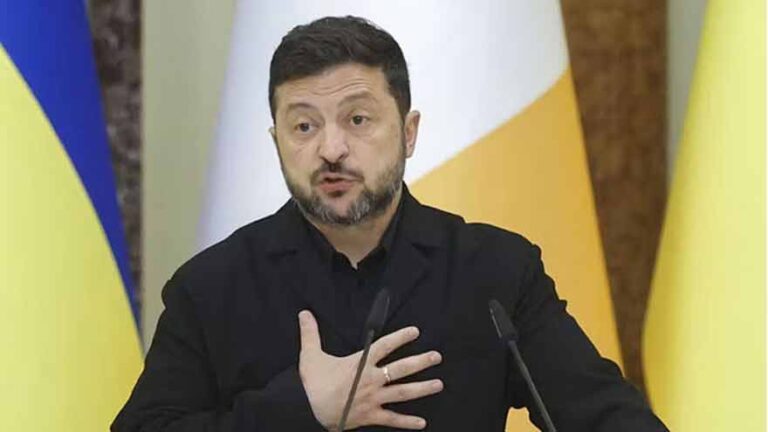
    Zelensky accuses Iran of direct role in Russia’s war against Ukraine

    Ukrainian President Volodymyr Zelensky has accused Iran of directly participating in the war against Ukraine through its continuous military support for Russia. Speaking on potential threats following a recent incident involving an Iranian vessel, Zelensky urged caution to prevent the opening of another front while stressing that Ukraine must remain prepared for all scenarios. He stated that Tehran became a direct participant by supplying Moscow with thousands of attack drones from the outset of the full-scale invasion and subsequently granting licences for local production. He added that both Iran and North Korea have effectively attacked Ukraine by supplying Russia with weaponry, including missiles, drones, and artillery ammunition. In response, Iranian Foreign Ministry spokesperson Ismail Baghaei rejected assertions that Tehran had sought negotiations with the United States to end hostilities, asserting that Iran will independently determine matters of war and peace. Baghaei added that Washington had initially expected an Iranian surrender within days of commencing attacks, yet months later, the United States continues to face severe challenges in the region.

  • |

    Indian activists challenge AI-powered police surveillance following student demonstrations

    Indian digital rights activists and student leaders are challenging Prime Minister Narendra Modi’s government in the Delhi High Court over the deployment of artificial intelligence-powered mass surveillance during recent youth protests in New Delhi. Student activist Aishe Ghosh filed a petition with the Delhi High Court seeking to declare the police’s mass surveillance of demonstrators unconstitutional. The lawsuit requests the immediate destruction of all personal and biometric data collected during the demonstrations and asks the court to establish clear binding guidelines governing the use of surveillance technologies at public gatherings. The controversy intensified after photographs circulated showing a mobile police surveillance unit, branded “Ikshana” and developed alongside security firm CP Plus, deployed at the main protest site. The vehicle featured telescopic masts providing 360-degree coverage, AI-powered cameras, and real-time facial recognition capabilities that displayed face accuracy metrics to match attendees against law enforcement databases. Furthermore, police officers were documented recording the social media handles of arriving participants. Digital rights organisations, including the Internet Freedom Foundation, have formally requested the Delhi Police Commissioner to delete all biometric data gathered during the events. Advocates emphasise that India currently lacks a dedicated legal framework governing police deployment of facial recognition systems, making such intrusive measures disproportionate and illegal. During court proceedings, Solicitor General Tushar Mehta defended law enforcement actions, arguing that expectations of privacy at a public gathering were misplaced and asserting that the security measures were absolutely necessary in the interest of public order. Delhi Police maintained that the technology was used solely to identify individuals with criminal histories and count crowd size without restricting freedoms. The court challenge continues despite the end of the student demonstrations, which were triggered by widespread examination paper leaks in national competitive tests. The protests culminated in the resignation of Union Education Minister Dharmendra Pradhan and the announcement of a government panel tasked with overhauling the national examination system.

  • |

    Qatar and Pakistan advance mediation efforts as US and Iran pause direct military strikes

    Regional mediators led by Qatar and Pakistan have achieved significant progress in restoring negotiations between the United States and Iran following a three-day pause in direct military strikes, according to regional officials. The temporary lull comes after nearly two weeks of heavy bombardment triggered by Iranian actions in the Strait of Hormuz. While US President Donald Trump and Tehran have temporarily halted direct strikes against one another, scattered attacks by regional armed groups persist, including drone attacks targetting Saudi petroleum facilities by Iran-backed militias and Houthis, alongside drone interceptions over Jordan and Iraq. Talks facilitated alongside Oman are focusing on establishing a maritime management mechanism for the Strait of Hormuz to restore an interim ceasefire deal, although Iranian Foreign Ministry spokesperson Esmail Baghaei stated that no direct negotiations with Washington are taking place and that the waterway currently remains closed. Concurrently, US naval blockades against Iran persist, and global shipping through both the Strait of Hormuz and the Bab el-Mandeb strait remains constrained. Amid ongoing mediation, Israeli Prime Minister Benjamin Netanyahu is scheduled to meet US President Donald Trump in Washington to discuss the wider conflict, while Iranian officials have condemned a recent Ukrainian strike on an Iranian vessel in the Caspian Sea.

  • | | |

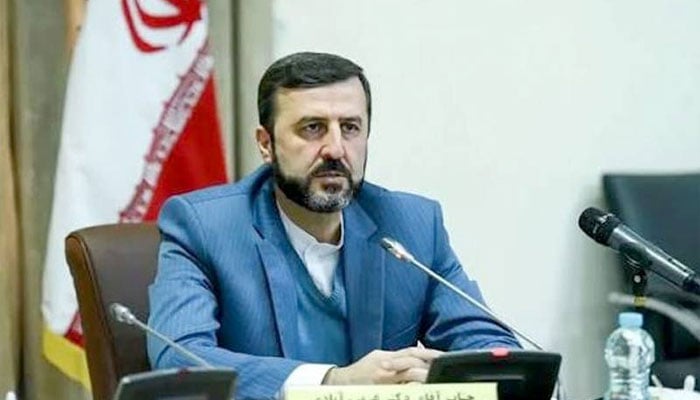
    Iran rejects US proposals over ‘Excessive Demands’

    Iran has rejected proposals put forward by the United States during indirect negotiations, Iranian Deputy Foreign Minister Kazem Gharibabadi said, citing what Tehran described as excessive and unacceptable demands from Washington. Speaking about the recent diplomatic contacts, Gharibabadi said the talks initially began in Islamabad through intermediaries. According to him, the US side presented a plan that included demands Iran could not accept, prompting the Iranian delegation to reject the proposal outright. Gharibabadi said Washington had warned that rejecting the plan would effectively end the negotiations and lead to the withdrawal of the US delegation. He added that the talks ultimately ended in exactly that manner, with the American delegation leaving the discussions. The Iranian deputy foreign minister stressed that Tehran neither insisted on continuing the negotiations nor asked the US delegation to remain at the table. He described Iran’s position as an example of what he called “dignified diplomacy,” arguing that Tehran would not compromise on what it considers its fundamental principles. Gharibabadi also discussed developments surrounding the Strait of Hormuz, a vital international shipping route. He said diplomatic discussions also took place in Oman after Iran moved to close the strait. According to the Iranian official, an Omani delegation proposed keeping a southern route open to allow ships to pass while Iran and Oman continued discussions. The proposal reportedly suggested that the route could later be closed depending on the outcome of the talks. However, Gharibabadi said Iran did not accept the proposal. He maintained that Iran had made its position clear from the beginning of the conflict and would not agree to arrangements that it believes undermine its stated principles. Gharibabadi further said Iran’s policy of keeping the Strait of Hormuz closed remains unchanged. He presented the decision as another example of Tehran’s approach to what he described as “dignified diplomacy,” signalling that Iran intends to maintain its position despite continued diplomatic efforts and international pressure.

  • | | | |

    US confirms Israel-Lebanon talks in Rome

    The United States has confirmed that Israel and Lebanon will hold their next round of talks in Rome from August 4 to 6. The negotiations will focus on implementing a framework agreement aimed at ending the conflict and improving security along the Israel-Lebanon border. The talks will be mediated by the United States. Technical teams from both sides are expected to discuss several key issues. One major issue will be the expansion of pilot zones in southern Lebanon. Israel is preparing to withdraw from two of these areas as part of the framework agreement. The discussions will also cover unresolved border disputes. The sides are expected to explore steps towards a wider peace and security arrangement. The framework emerged after fighting between Israel and Hezbollah escalated on March 2. The conflict took place amid wider tensions across the Middle East. Under the agreement, Hezbollah is expected to disarm. Lebanese forces are also to increase their deployment in southern Lebanon. Israeli forces are expected to withdraw gradually from parts of southern Lebanon. The process will initially involve two designated pilot zones. US officials said the experience from the initial zones could help establish a broader system for withdrawal and security arrangements. The United States believes the pilot zones can be expanded in stages if the initial process proves successful. The Lebanese army, however, has raised concerns over continued Israeli military activity in the south. Beirut has accused Israel of carrying out intermittent strikes and artillery attacks despite the reduction in fighting. Lebanese officials say the continued military activity is making it harder for the army to fully deploy in the south under the framework agreement.

  • |

    US Consulate in Toronto targeted in second shooting

    TORONTO: Canadian police have launched an investigation after gunfire was reported outside the US Consulate in downtown Toronto. The incident marks the second shooting near the diplomatic facility this year. Authorities are investigating the motive and examining security measures around the building. Police were alerted after hearing a gunshot near the consulate on University Avenue. Officers later found evidence that a firearm had been discharged. Investigators recovered a single shell casing from the area. The exterior of the consulate also suffered minor damage. No injuries were reported in the incident. Police said a white Honda sedan without a licence plate was seen leaving the area at high speed. Officers briefly pursued the vehicle but ended the chase because of safety concerns. The consulate was previously targeted in a shooting on March 10. Several arrests were later made in connection with that incident. Toronto police have also been investigating claims that criminal networks were recruiting young people to carry out shootings at prominent locations across the city. Officials have previously mentioned the US Consulate and Jewish institutions among the reported targets. Police have not yet established whether the latest shooting is linked to the earlier incident. Authorities said it was too early to determine a definite motive. Security around the consulate has remained under close watch following previous incidents. Police said in June that young people in the Toronto area were allegedly being offered money to carry out shootings at different locations. The reported targets included synagogues, Jewish schools and the US Consulate. Three people were arrested in connection with the March shooting. A police officer was killed during the operation linked to those arrests. The US State Department said it was cooperating with Canadian authorities following the latest incident. A department spokesperson thanked Canadian law enforcement agencies for their continued efforts to protect the consulate. The US Embassy and consulates across Canada remain open. However, some routine consular services in Toronto have been rescheduled. Ontario Premier Doug Ford condemned the latest incident. He also criticised recent shootings and acts of vandalism reported in Toronto. Ford said police investigations were underway and called for those responsible to be identified and prosecuted.

  • | |

    Trump hosts Netanyahu, Zelensky for high level tal…

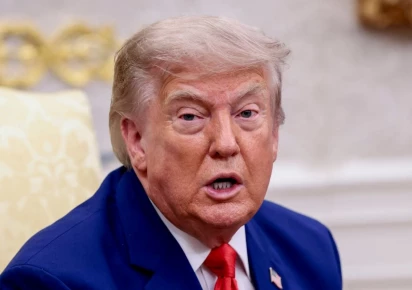
    WASHINGTON: US President Donald Trump is set to meet Israeli Prime Minister Benjamin Netanyahu and Ukrainian President Volodymyr Zelensky at the White House on Tuesday, as the wars involving Iran and Ukraine enter what officials describe as a decisive and highly sensitive phase. The two leaders are in Washington to attend a memorial service for Senator Lindsey Graham, a prominent Republican ally of Trump and a strong advocate of military support for Ukraine. However, the diplomatic spotlight has shifted to their separate meetings with the US president, which are expected to focus on two of the world’s most volatile conflicts. Trump’s relationship with Zelensky has improved significantly in recent months as Ukrainian forces have slowed Russian advances and intensified strikes on Russian energy infrastructure. Ahead of his meeting, Zelensky said strengthening anti-ballistic missile defence and expanding strategic cooperation with the United States were his top priorities, stressing that efforts to bring peace closer must continue. Despite renewed diplomatic contacts, there is little indication that either the Ukraine war or the widening confrontation involving Iran is nearing an end. Following the collapse of a ceasefire linked to the Iran conflict, Trump has said he paused US airstrikes to allow diplomacy another opportunity, while continuing consultations with regional allies. Netanyahu arrives in Washington amid signs of growing frustration within theWhite House over the lack of progress toward a broader settlement related to Iran. Tensions between Trump and the Israeli leader have become more visible in recent weeks, including reports of a heated phone conversation in June that was later publicly acknowledged by Trump. According to sources familiar with the discussions, Netanyahu is also seeking to reinforce his political standing ahead of Israel’s October 27 election. A public display of close coordination with Trump could help him domestically, where he has faced pressure in opinion polls. Before departing for Washington, Netanyahu said the talks would focus primarily on Iran, while also addressing regional security and efforts to expand peace agreements with Arab states. A White House official said Trump plans to discuss the Iran conflict, tensions between Israel and Lebanon, and the future of the Abraham Accords. The administration is reportedly continuing efforts to encourage Saudi Arabia to join the accords, although Riyadh has maintained that any normalisation with Israel would require a credible pathway toward Palestinian statehood. Trump struck a notably warmer tone when speaking to reporters aboard Air Force One, describing Netanyahu as a strong wartime leader and saying the two had worked well together.Zelensky is expected to hold a brief private meeting with Trump, likely without media present. Ukrainian officials say securing additional Patriot missile interceptors is their most urgent request, as Russian missile and drone attacks continue almost daily. The Ukrainian president is also expected to push for expanded air-defence cooperation, progress on a drone agreement with the United States, and discussions on Trump’s proposal to allow Ukraine to produce Patriot interceptors under licence. White House officials said the meeting with Zelensky would focus on the ongoing peace process between Russia and Ukraine and reiterated that the administration believes the time has come to seek an end to the war. After the White House talks, Zelensky is expected to visit Capitol Hill for meetings with all 100 US senators, underscoring the continuing bipartisan interest in Ukraine’s defence despite growing debate over the pace and delivery of American military assistance.

  • |

    South Korea to enshrine nuclear pledge in law

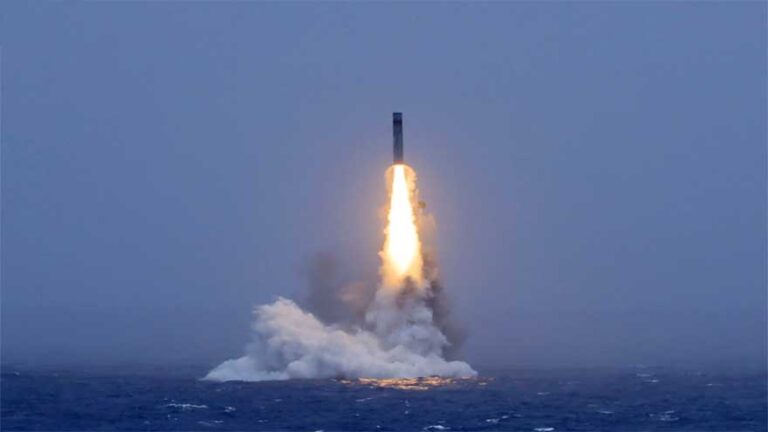
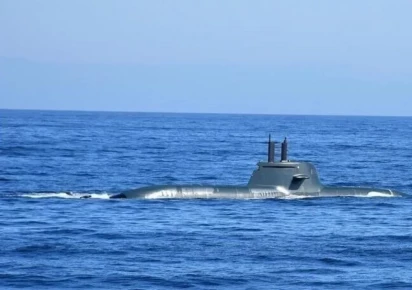
    SEOUL: South Korea is preparing legislation that would legally reaffirm its commitment to nuclear non-proliferation while it moves ahead with plans to develop nuclear-powered submarines. The proposed bill is expected to be released for public consultation by the Defence Ministry. It will set out five key principles governing the country’s nuclear-powered submarine programme. If approved, the legislation would formally establish in domestic law Seoul’s pledge not to develop, produce, possess or use nuclear weapons. The proposed law would also prevent the government from using nuclear materials specifically for weapons-related purposes. It would prohibit activities that could weaken the international nuclear non-proliferation system. The move is aimed at addressing concerns that South Korea’s submarine programme could eventually lead to a domestic nuclear weapons capability. The legislation would reaffirm Seoul’s commitments under the Nuclear Non-Proliferation Treaty. It would also require cooperation with international organisations during the development of the submarines. The proposed framework would include safeguards for public safety and environmental protection against radioactive materials. The government also wants to speed up the submarine programme. The proposed law would reportedly allow the project to bypass a preliminary feasibility study. South Korea’s nuclear-powered submarine project, known as Jang Bogo N, involves plans for attack submarines powered by low-enriched uranium. The programme is being developed with US approval. The two countries reached an agreement on the project during a leaders’ summit last October. Seoul plans to launch its first nuclear-powered submarine in the mid-2030s. The vessel is expected to enter operational service later in the decade. Defence authorities are reportedly considering three submarines weighing about 8,000 tonnes each. However, official technical details have not yet been released. South Korean Defence Minister Ahn Gyu-back has previously stressed that the country will continue to follow its international non-proliferation commitments. Seoul also plans to work closely with the International Atomic Energy Agency throughout the programme.

  • |

    7.1-magnitude earthquake jolts Japan’s Kyushu

    TOKYO: A powerful 7.1-magnitude earthquake struck Japan’s southern Kyushu island on Tuesday, prompting authorities to issue a tsunami warning for coastal areas. The earthquake hit Kumamoto prefecture at around 4:27pm local time, according to the Japan Meteorological Agency (JMA). The agency recorded the tremor at the highest level on Japan’s seven-point seismic intensity scale in some areas. Following the earthquake, the JMA warned that tsunami waves of up to one metre could reach nearby coastal areas. Residents were urged to remain alert and follow evacuation instructions issued by local authorities. The Japanese government also issued emergency earthquake warnings for several prefectures across Kyushu. These included Kumamoto, Nagasaki, Kagoshima, Fukuoka, Saga, Oita and Miyazaki. The strong tremor disrupted daily life in several areas. Around 40,000 homes reportedly lost electricity after the earthquake. Train services operated by JR Kyushu were also suspended as authorities assessed the situation. Kyushu Electric Power said its Sendai and Genkai nuclear power plants reported no abnormalities or damage following the earthquake. Officials continued monitoring the facilities as a precaution. The latest earthquake comes after another strong tremor struck northern Japan on June 25. That earthquake measured 7.2 in magnitude but did not cause major casualties or widespread damage. Japan is one of the world’s most earthquake-prone countries. It sits along the Pacific “Ring of Fire”, a region known for frequent earthquakes and volcanic activity. The country experiences thousands of earthquakes every year. It also accounts for a significant share of the world’s earthquakes measuring magnitude 6 or higher.