देश-विदेश

  • |

    Fifty UK police chiefs urge prime minister to halt early release of PC Harper’s killers

    Fifty police chiefs from across the United Kingdom have sent a joint letter to Prime Minister Andy Burnham, urging the government to exhaust every legal avenue to prevent the early release of the teenagers convicted in the 2019 death of PC Andrew Harper. PC Harper, a 28-year-old Thames Valley Police officer, died after being dragged behind a getaway car following a quad bike theft in Berkshire. Two of the men convicted of his manslaughter, Jessie Cole and Albert Bowers, were sentenced to 13 years in 2020. Under recent legislative changes to manage severe prison overcrowding, both men are due to become eligible for release in January after serving half their sentences. The intervention by police chiefs across England, Scotland, Wales, and Northern Ireland supports Burnham’s recent declaration that he is confident a legal resolution can be found to halt their discharge. In Downing Street, officials reiterated that the government intends to do everything within its power to block the early release. Beyond the specific case, the letter highlights broader concerns regarding public safety, victim impact, and officer morale. The police chiefs argued that reducing sentences for individuals involved in the deaths of emergency service personnel undermines the perceived sacrifice of officers who put themselves in harm’s way to protect the public. The police leaders called on the government to mandate explicit public protection reviews before amending release terms for offenders convicted of serious violence or causing death, while also ensuring bereaved families are formally consulted whenever significant sentencing changes are implemented.

  • |

    UK prosecutors urge US court to deny bail to Andrew and Tristan Tate ahead of extradition hearing

    British prosecutors have urged a US court to keep social media influencer Andrew Tate and his brother Tristan in custody ahead of a crucial detention hearing, warning the pair pose a severe flight risk and could intimidate witnesses if released. The brothers, who hold dual British and American citizenship, were arrested in Miami on 19 July following a formal extradition request by the United Kingdom. They face a total of 59 charges in the UK, including rape, human trafficking, and offences relating to indecent images of a child. In legal filings submitted ahead of Thursday’s bail hearing in the Southern District of Florida, the UK Crown Prosecution Service (CPS) argued through US prosecutors that the brothers possess the financial resources and global influence needed to evade justice. Prosecutors highlighted the vulnerability of complainants in the case, noting that several alleged victims reported being assaulted and threatened with weapons. The CPS also cited previous social media posts by Andrew Tate in which he mocked law enforcement and hinted at methods to avoid arrest. Lawyers representing the Tate brothers acknowledged that granting bail during international extradition proceedings is rare, but insisted their clients have shown no intention of fleeing prosecution. The brothers were previously arrested in Romania in 2022 on human trafficking charges, though Romanian courts lifted travel restrictions in early 2025, allowing them to travel to the United States. If the US courts rule in favour of extradition, the final decision to surrender the brothers to British authorities will rest with US Secretary of State Marco Rubio. If convicted in the UK, both men could face life imprisonment.

  • |

    US judge dismisses bribery and fraud case against Gautam Adani despite procedural concerns

    A US federal judge has formally dismissed criminal bribery and fraud charges against Indian billionaire Gautam Adani, bringing an end to a high-profile prosecution while issuing a sharp rebuke over how the Department of Justice handled the case. US District Judge Nicholas Garaufis approved the Justice Department’s request to drop all charges with prejudice, permanently barring prosecutors from refiling the case. The decision closes an investigation launched in 2024 that accused Adani and senior executives of paying over $250 million in bribes to Indian officials to secure solar energy contracts while misleading American investors. In a 47-page order, Judge Garaufis voiced deep concern over procedural irregularities, noting that senior Justice Department official R. Trent McCotter negotiated the dismissal directly with Adani’s defence team without consulting the FBI agents and career prosecutors handling the investigation. The judge also scrutinized whether Adani’s public pledge to invest $10 billion in the United States and create 15,000 jobs influenced the outcome. While Garaufis ultimately concluded the investment promise did not legally dictate the government’s decision, he warned that the unusual handling of the case raised troubling questions about public perception of equal justice. The dismissal follows efforts by Adani’s legal team, led by prominent attorney Robert J. Giuffra Jr., who argued that much of the alleged conduct occurred outside US jurisdiction and no longer aligned with federal enforcement priorities. Adani, who maintained his innocence throughout the proceedings, welcomed the ruling in a statement, expressing deep respect for the judicial process.

  • |

    Ukraine submits peace proposals to US as Zelenskiy warns of autumn Russian draft

    Ukrainian President Volodymyr Zelenskiy announced that Kyiv has delivered fresh peace proposals to American negotiators aimed at ending the conflict with Moscow. He simultaneously warned that Russia intends to use its upcoming parliamentary elections to launch a new, large-scale military mobilisation. Speaking in his nightly address, Zelenskiy stated that the proposals handed to the United States focus on bolstering Ukraine’s defence capabilities, particularly air defence, while urging Washington to exert diplomatic and economic pressure on the Kremlin to halt the war. The movement in negotiations comes as U.S. envoys Steve Witkoff and Jared Kushner prepare for potential visits to both capitals, following a period where diplomatic efforts had largely stalled. Kyiv continues to press for an immediate ceasefire after nearly four and a half years of fighting, whereas Moscow insists any agreement require Ukraine to permanently cede four claimed regions. Zelenskiy also cited Ukrainian intelligence reports indicating that Russian President Vladimir Putin plans to exploit September’s parliamentary polls to orchestrate a rapid autumn draft. “They are preparing for mobilisation in the autumn, immediately after the imitation of parliamentary elections,” Zelenskiy said, estimating that Moscow aims to draft several hundred thousand additional personnel by the end of the year, alongside ongoing voluntary contract recruitment. The electoral warning follows a decision by Russia’s Supreme Court on Monday to bar the liberal Yabloko party, the country’s sole registered anti-war political group, from contesting the upcoming election. Kremlin officials have denied plans for a mandatory draft, pointing to 200,000 voluntary sign-ups recorded in the first half of the year.

  • |

    Swiss government rejects proposed constitutional ban on non-UN sanctions ahead of neutrality vote

    The Swiss government has formally rejected a popular initiative seeking to enshrine a rigid, absolute definition of neutrality into the country’s constitution, warning the move would cripple national security and diplomatic flexibility. The constitutional referendum, scheduled for 27 September, was triggered after right-wing campaign groups backed by the Swiss People’s Party gathered over 100,000 signatures. Proponents argue Bern’s historical stance has been diluted by adopting European Union sanctions against Russia over its war in Ukraine and deepening training ties with NATO. If passed, the amendment would constitutionally mandate that Swiss neutrality remain perpetual and armed, while explicitly barring non-UN sanctions and foreign military alliances. Launching the official counter-campaign on Tuesday, Swiss Foreign Minister Ignazio Cassis insisted the nation’s neutrality remains intact without need for restrictive legal amendments. “Switzerland has been and is neutral, and it will remain neutral,” Cassis said in a statement, adding that the proposal would severely hinder security cooperation with international partners prior to an actual crisis. Current polling indicates low public support for the initiative, with a Tamedia survey showing 54 per cent of voters opposed compared to 34 per cent in favour.

  • |

    Australia introduces mandatory pay floor and injury coverage for gig workers

    In a major shift for gig economy rights, Australia’s industrial umpire has ordered delivery platforms to pay food and grocery couriers a mandatory minimum rate alongside compulsory personal accident insurance. The Fair Work Commission (FWC) ruled late on Tuesday that gig delivery workers must earn a minimum rate for active delivery time. The order, set to take effect on 17 August, is expected to benefit roughly 250,000 workers across the country. Beyond baseline wages, platforms such as Uber Eats and DoorDash will now be legally required to provide personal accident cover for couriers on duty, though workers will remain responsible for third-party vehicle insurance. The reform stems from workplace legislation passed by Australia’s Labor government in 2023 and 2024, which empowered the FWC to regulate conditions for independent contractors previously excluded from traditional employment protections. In a joint statement, the Transport Workers Union (TWU), Uber Eats, and DoorDash welcomed the determination. TWU National Secretary Michael Kaine hailed the order as a landmark moment that establishes new standards for a workforce long left outside national workplace systems.

  • | |

    US report urges stronger parliament oversight of P…

    WASHINGTON: Pakistan needs to strengthen parliamentary oversight of its public finances by improving the timely disclosure of budget proposals, government debt and other fiscal information, according to a new US State Department assessment. The findings were published in the department’s 2026 Fiscal Transparency Report, an annual review examining how governments make financial information available to citizens and whether public institutions have adequate oversight mechanisms. The report acknowledged several positive aspects of Pakistan’s fiscal system but highlighted important gaps that could make it harder for Parliament and the public to fully assess government spending plans and financial risks. One of the key concerns was the delayed publication of the executive budget proposal. The report said Pakistan did not release the proposal within a reasonable period, limiting the opportunity for lawmakers and citizens to examine spending and revenue priorities before the budget was formally approved. The State Department recommended that the government publish its proposed budget in a timely manner to allow greater public scrutiny and parliamentary debate. The report also raised concerns over the limited disclosure of government debt obligations, particularly liabilities linked to major state-owned enterprises. More comprehensive information, it said, would provide a clearer picture of Pakistan’s overall financial position and help identify potential fiscal risks. Despite these shortcomings, the assessment offered credit for several areas of Pakistan’s financial transparency. It said enacted budgets and year-end reports were widely and easily accessible, including online. Publicly available budget documents were also found to provide a substantially complete picture of most planned government expenditures and revenues, including income from natural resources. Pakistan’s auditing arrangements received a broadly favourable assessment. The report said budget information was generally reliable and subject to scrutiny by the country’s supreme audit institution. It further noted that the institution met international standards of independence and made its findings public within a reasonable period. The assessment also examined natural resource contracts and public procurement. It found that Pakistan had established legal procedures for awarding natural resource extraction licences and appeared to follow them in practice. Information on public procurement contracts was also considered accessible. However, the report identified a particularly sensitive area requiring greater oversight: military and intelligence spending. According to the assessment, the budgets of military and intelligence agencies were not subject to adequate parliamentary or civilian public oversight. The State Department included stronger scrutiny of these expenditures among its principal recommendations. Overall, the report presented a mixed picture rather than describing Pakistan’s fiscal system as broadly opaque. It recognised progress in publishing budgets, audit findings and procurement information while urging authorities to close key transparency gaps. The recommendations underline the importance of timely financial disclosure and stronger parliamentary scrutiny in improving accountability, public confidence and the management of Pakistan’s fiscal risks.

  • | |

    Trump Media charges traders up to $100,000 monthly…

    More than ten firms have signed on to pay for Trump Media’s newly launched service that grants faster access to market moving posts published on its Truth Social platform, the company disclosed during an earnings call this week. The service, called Truth API, went live at the start of August and gives Wall Street traders early visibility into posts from the platform’s most influential accounts before the general public sees them. Interim chief executive Kevin McGurn said the earliest subscribers are largely high frequency trading firms, which pay between $60,000 and $100,000 a month for the access. McGurn detailed the pricing during a call held after Trump Media reported a net loss of $238 million for the April through June quarter, a figure more than ten times larger than the loss the company posted during the same period a year earlier. The steep quarterly loss comes as Trump Media and Technology Group has expanded into ventures far removed from its original media business, including cryptocurrency holdings. Despite still operating at a loss overall, the company says it intends to refocus on its core social media mission going forward. In July, the firm unveiled plans to offer Wall Street firms and institutional investors expedited access to posts on Truth Social, a platform where President Trump regularly shares public announcements. Critics have described the arrangement as a potential edge for subscribers looking to trade stocks and other actively traded assets ahead of market moving news. The initiative has also raised legal and ethical questions, particularly around the fact that a company in which the president’s family holds a majority stake could financially benefit from his own public statements reaching paying subscribers faster than the general public. In its earnings statement released Monday, Trump Media described the new offering as a service expected to generate a new revenue stream for the company. McGurn said executives believe the product will grow into a meaningful and durable source of income alongside the company’s broader media strategy, which already includes advertising and digital asset ventures. He added that Truth Media is also exploring potential partnerships with technology companies, news organizations and betting markets. The company reported revenue of $1.7 million for the quarter, an 89 percent increase compared with the same period last year, though the overall loss stemmed largely from declining cryptocurrency values. Trump Media said it closed the quarter holding total assets of $2 billion, including roughly $1.9 billion in financial assets made up of cash, short term investments and digital currencies. The firm continues to expand into new territory, including additional cryptocurrency holdings and clean energy investments. Markus Thielen, an analyst at 10x Research, described Trump Media as functioning more like a crypto holdings firm wrapped around a media company, noting that the bulk of its recent losses trace back to that crypto focused strategy. He said the company is working to diversify beyond its digital asset exposure into areas like social media services, though those newer ventures have not yet produced significant revenue. Earlier this month, Trump Media abandoned a planned partnership with Crypto.com that would have introduced prediction market features on the Truth Social platform.

  • |

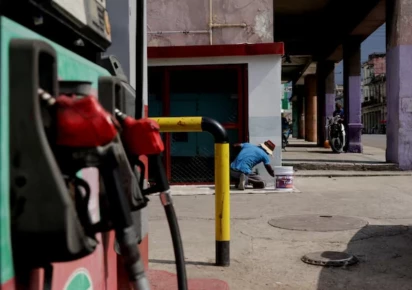
    US fuel opens a capitalist crack in Cuba

    HAVANA: Gasoline selling for as much as $38 a gallon, diesel advertised on social media and fuel stored inside cramped apartments are offering an unusual glimpse of private enterprise in communist Cuba, where the energy sector has long remained firmly under state control. A US policy allowing American companies to export fuel to private Cuban businesses has triggered an unexpected transformation. As Cuba struggles with shortages, blackouts and a weakened public transport system, imported fuel is creating a growing private market — while also exposing a sharp divide between those who can afford it and millions who cannot. The change follows the collapse of Cuba’s traditional fuel supplies from Venezuela and Mexico after the United States removed Venezuelan President Nicolas Maduro in January. With sanctions discouraging tankers from sailing toward the island, fuel shortages have increasingly affected transport, hospitals, schools and other essential services. Under an exception to Washington’s oil restrictions, however, private Cuban restaurants, retailers, taxi operators and other businesses have been allowed to import fuel. The impact has been striking. Between February and May, around 900,000 barrels of US fuel entered Cuba — enough to meet only about nine days of the country’s energy requirements. Yet those relatively small shipments have helped create a new network of legal wholesalers, private buyers and illegal resellers. Gasoline becomes a luxury For ordinary Cubans, the new fuel market has often brought frustration rather than relief. On a July afternoon in Havana, 53-year-old Amarilis Sanchez waited for hours at a bus stop after attending her daughter’s birthday celebration. Public buses, which normally cost only two pesos, were unreliable. Nearby, taxi drivers offered rides in vintage cars, but one driver quoted Sanchez 1,000 pesos for the journey — roughly 500 times the price of a bus ride. Unable to afford it, Sanchez considered spending the night at her daughter’s home and trying again for a bus the following day. Her experience illustrates how Cuba’s fuel crisis is creating two very different realities: one for people with access to private vehicles and imported fuel, and another for those dependent on the country’s struggling public transport network. Black-market gasoline prices reportedly reached $10 per litre, or about $38 per gallon, during the spring before falling as imports increased. Social media fuels a new market The emerging trade is increasingly visible online. WhatsApp groups and Facebook pages advertise gasoline and diesel, while some sellers store fuel in apartments and small shops despite the dangers posed by fire, explosions and toxic fumes. At one Havana convenience store, a shopkeeper reportedly kept around a dozen 20-litre fuel containers in a backroom, selling gasoline for approximately $5 per litre. Private companies are also moving into the newly emerging legal wholesale market. By late July, almost 200 Cuban businesses had received permission to distribute fuel wholesale to other private companies. One company, A Granel, advertises diesel through social media and charges $2.50 per litre for a 940-litre tank. The promotion reportedly features a model walking through a warehouse of diesel containers while Daddy Yankee’s famous song Gasolina plays in the background — an unusually flashy image for a country where the energy industry has historically been dominated by the state. Are Cuban gas stations next? The transformation could go further. Cuban lawmakers approved a broad package of economic reforms in June aimed at opening the energy sector to private and foreign investment. Prime Minister Manuel Marrero Cruz later announced that Cuba had approved its first foreign investment project focused on importing and selling fuel, although he did not name the company. The reforms have raised the possibility that private operators could eventually take control of some of Cuba’s familiar state-run Cupet petrol stations. For now, however, retail fuel sales remain largely under state control. Some state-owned stations are storing imported fuel but can distribute it only to vehicles belonging to authorised private businesses. Cuban authorities have defended the reforms while rejecting the idea that they represent a move toward large-scale privatisation. President Miguel Diaz-Canel has accused Washington of imposing a “genocidal siege” on Cuba and said economic changes were not being introduced to satisfy the United States. A lifeline with a heavy price The new fuel market has helped prevent some businesses from shutting down completely. During recent power outages, restaurants and shops with generators powered by imported fuel remained illuminated while much of Havana was plunged into darkness. But experts warn that the emerging system could deepen inequality. With the average government salary reportedly around $10 a month, imported gasoline remains unaffordable for most of Cuba’s roughly nine million residents. Cuban sociologist Mayra Espina said the limited fuel supplies had helped prevent “complete paralysis” but warned that the benefits were overwhelmingly concentrated among those able to pay. The result is an extraordinary contradiction: a small opening toward private enterprise is helping Cuba keep parts of its economy running, while simultaneously making access to basic mobility and energy increasingly dependent on wealth. For a country that has spent decades keeping fuel firmly within the state system, Cuba’s new gasoline economy may therefore prove to be more than a temporary response to shortage. It could become an early test of how far Havana is prepared to let capitalism into one of its most tightly controlled sectors.


  • | |

    Zelensky says Russia deploying North Korean missil…

    Ukrainian President Volodymyr Zelensky said Russia used North Korean missiles in overnight strikes on Zaporizhzhia that killed at least six people and injured 19 others, as both sides continued exchanging attacks across the front line. In a video address Monday evening, Zelensky said Russia has reached a point where it “cannot wage war without reinforcements from North Korea” for the first time. He warned that continued use of North Korean missiles and troops inside Ukraine and across Europe allows Pyongyang to identify and fix weaknesses in its weapons systems, calling this a growing danger that extends beyond the immediate conflict. Zaporizhzhia regional governor Ivan Fedorov shared images of burning vehicles and damaged buildings, saying Russian forces struck the city with missiles and guided bombs. He said the attack damaged industrial sites, infrastructure and non residential buildings across the city, in addition to causing casualties. The strikes followed a separate wave of Ukrainian drone attacks that killed at least 13 people, including a child, in Russia’s republic of Tatarstan, located more than 1,100 kilometers, or roughly 680 miles, from the Ukrainian border. Ukraine’s Armed Forces said the strikes hit the city’s Tanevo oil refinery, and verified social media footage showed large plumes of smoke and daytime flames at the site as air raid sirens sounded nearby. Officials said at least 75 people were injured in that attack, which ranks among the deadliest single strikes on Russian territory since the full scale invasion began in 2022. Uzbekistan’s consulate in Tatarstan said seven of those killed held Uzbek citizenship. In Kyiv, air raid sirens sounded twice overnight and explosions struck the outskirts of the capital, sparking fires and injuring one person. A strike also damaged a hospital in the city, though officials said staff and patients had already moved to shelter. Separate strikes on power substations in Kherson and Kharkiv caused outages in both cities. In Sumy, a Russian drone strike injured two women, aged 52 and 66, according to Sergiy Kryvosheenko, head of the Sumy City Military Administration. He said both were treated at the scene and that the strike also damaged civilian vehicles, warehouse buildings and other infrastructure. Ukrainian officials said Russia launched 120 drones overnight along with a mix of missile types, though for the first time authorities did not disclose how many missiles were fired or intercepted. The omission followed a statement from Ukraine’s Air Force on Monday asking media outlets to avoid sensationalized coverage or pessimistic framing regarding the country’s shortage of air defence interceptors. Ukraine also struck Russian territory overnight, hitting warehouses belonging to online retailer Wildberries in the Voronezh region in southern Russia. Wildberries, often described as Russia’s answer to Amazon, has faced repeated attacks on its facilities in recent weeks. The company has not confirmed the latest strike but said it evacuated facilities in the border region as a precaution. In July, Ukrainian drone strikes on several Wildberries warehouses disrupted operations for a large number of small and medium sized Russian businesses. Kyiv said at the time that it was targeting logistics hubs Russian buyers used to acquire military equipment, part of a broader effort to disrupt supply lines feeding the Russian military. In his Monday address, Zelensky also praised a separate strike on a Russian petrochemical plant in western Siberia, calling it a significant achievement for Ukraine’s military. He pledged additional long range Ukrainian strikes intended to convince Russia and the Russian public that peace remains necessary. This is not the first time Zelensky has raised alarm over North Korean military support for Russia. He said over the weekend that as many as 50,000 North Korean soldiers have been deployed to fight alongside Russian forces, part of a growing pattern of cooperation between Moscow and Pyongyang that Ukrainian officials say is reshaping the battlefield and raising broader security concerns well beyond the immediate conflict.