china accuses hegemonism
| |

China accuses US of ‘AI hegemonism,’ threatens countermeasures over potential probes

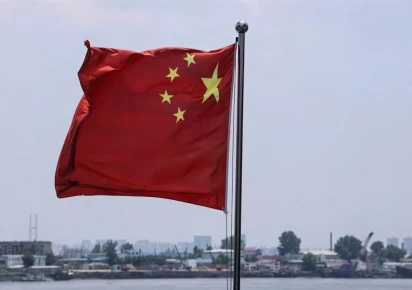
BEIJING, China – China’s commerce ministry on Monday, July 27, accused the United States of “AI hegemonism” and threatened countermeasures after senior US officials said Chinese AI companies could face investigations, sanctions and trade restrictions over the alleged theft of US technology.

The ministry said Washington was threatening Chinese companies with punishment based on allegations they used “distillation” to copy advanced US AI models, despite what it called a lack of factual or legal grounds.

Model distillation is a widely used AI training technique in which developers use the outputs of a more capable model to train or improve another system. US officials say they distinguish between legitimate distillation and large-scale extraction that amounts to intellectual property theft.

‘All necessary measures’

“For any action that causes substantive harm to Chinese interests, China will take all necessary measures to firmly safeguard its legitimate rights and interests,” a ministry spokesperson said in a statement.

The comments mark an escalation in a dispute centered on Beijing-based Moonshot AI, whose recently released Kimi K3 model has drawn attention for its coding capabilities and intensified debate in Washington over whether Chinese developers are copying US models or rapidly closing the technological gap through their own research. The controversy echoes the reaction in the US to the rise of Chinese startup DeepSeek last year.

White House Office of Science and Technology Policy Director Michael Kratsios said last week the US government had information indicating Moonshot distilled Anthropic’s Claude Fable 5 model to develop Kimi K3.

Kratsios alleged Moonshot had built a sophisticated internal platform to conduct large-scale distillation of US models and switched between multiple methods of access to avoid detection. He also alleged the company had acquired servers equipped with Nvidia’s GB300 chips and accessed such systems in Thailand, likely to train its models.

US Treasury Secretary Scott Bessent later warned that Chinese companies could face financial sanctions or placement on the Commerce Department’s Entity List, which restricts access to US technology.

“We support open-source AI and the innovation it unlocks. But open source is not open season on American IP,” Bessent wrote on social media platform X.

“When PRC (Chinese) firms conduct covert, industrial-scale distillation attacks that cross the line into IP theft, sanctions and Entity List designations will be on the table,” he said.

Moonshot has rejected suggestions that Kimi K3’s performance was achieved via distillation, telling China’s National Business Daily last week that its performance gains came from original changes to underlying architecture.

Placement on the Entity List could severely restrict Moonshot’s access to U.S. semiconductors, software and cloud services. The US used the trade blacklist as a central part of its campaign against Chinese telecommunications equipment maker Huawei beginning in 2019.

Anthropic said in February it had identified more than 3.4 million interactions with its Claude models linked to Moonshot. It said hundreds of fraudulent accounts were used to target capabilities including reasoning, coding, data analysis, tool use, computer vision and the operation of computers. – Rappler.com

Similar Posts

  • | | |

    High Commissioner Tipu Usman inaugurates Quaid-e-A…

    LONDON: Pakistan’s High Commissioner to the United Kingdom, Tipu Usman, inaugurated an art exhibition titled “Legacy Beyond Time”, celebrating the life, vision and enduring legacy of Muhammad Ali Jinnah, at the historic National Liberal Club, where the founder of Pakistan was once a member. The exhibition was organised by the Mont Rose Foundation in collaboration with the Pakistan High Commission, London, as part of the commemorative events marking the 150th birth anniversary of Quaid-e-Azam, being celebrated this year. Featuring a collection of watercolour paintings by renowned artist Amera Rashid, the exhibition attracted a large gathering of British and Pakistani admirers of Quaid-e-Azam, who viewed artistic depictions reflecting his leadership, statesmanship and contribution to the creation of Pakistan. Delivering the keynote address, High Commissioner Tipu Usman said Quaid-e-Azam firmly believed in the rule of law, reasoned argument, dialogue and political negotiation despite political differences. He said Jinnah’s legacy was not merely about remembering the struggle that led to the creation of Pakistan, but also about understanding the principles, democratic values and vision that guided that historic movement. The High Commissioner praised the efforts of Bilal Sheikh, Chief Executive of the Mont Rose Foundation, for organising the exhibition and for commissioning a permanent portrait of Quaid-e-Azam, now displayed at the National Liberal Club. Speaking on the occasion, Bilal Sheikh described it as a privilege to host the exhibition at such a prestigious venue closely associated with Muhammad Ali Jinnah. He said Quaid-e-Azam’s vision had inspired millions across generations and noted that the National Liberal Club was a place where Jinnah frequently held meetings during his time in London. He reaffirmed the Mont Rose Foundation’s commitment to continuing the promotion of Jinnah’s ideals and legacy through similar initiatives. Other speakers paid tribute to Quaid-e-Azam’s exceptional legal acumen, unwavering commitment to democratic principles and his leadership in the struggle that culminated in the independence of Pakistan. The exhibition, “Legacy Beyond Time,” forms part of a wider series of cultural and educational events being organised jointly by the Pakistan High Commission, London and the Mont Rose Foundation to commemorate the 150th anniversary of the birth of the founder of Pakistan

  • | | |

    Iran unleashes drone barrage on US bases

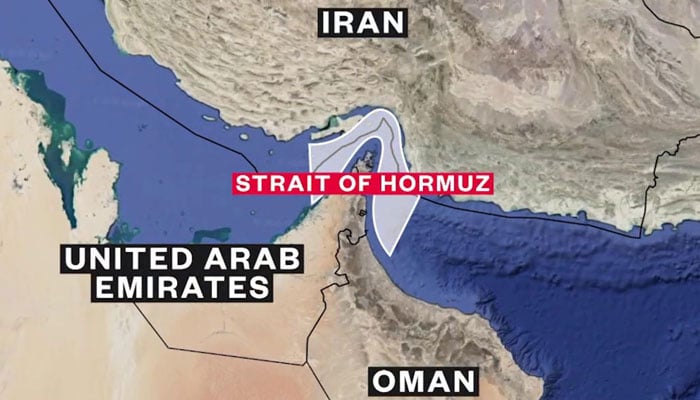
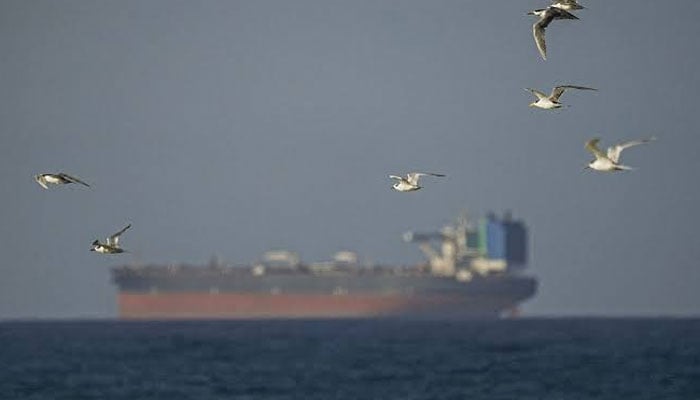
    The conflict between Iran and the United States intensified on Friday as Iranian military officials claimed to have carried out drone attacks on several military facilities used by US forces in Kuwait, Bahrain and Jordan. The developments came after fresh US airstrikes on Iranian targets, signalling another major escalation in the months-long regional confrontation. According to Iranian military statements, “Arash” attack drones targeted US military warehouses and troop positions at Camp Udairi, Camp Doha and Camp Arifjan in Kuwait. Iranian officials said the attacks focused on weapons storage sites, military equipment and logistical facilities. They warned that further military action would continue if attacks against Iran persisted. Iran also claimed responsibility for drone strikes on Sheikh Isa Air Base in Bahrain and Al-Azraq Air Base in Jordan. Iranian state media reported that fuel storage areas, aircraft hangars, maintenance facilities and accommodation used by US personnel were among the intended targets. However, there was no immediate confirmation from the United States, Bahrain, Jordan or Kuwait regarding the reported attacks. Officials in those countries also did not immediately report casualties or significant damage. Meanwhile, US forces reportedly carried out fresh airstrikes on an Islamic Revolutionary Guard Corps (IRGC) naval headquarters in the northern Iranian town of Zibakenar. Iranian authorities said the facility was hit but added that initial assessments showed no casualties. In Iraq, several explosions were reported near Erbil International Airport, where US-led coalition forces are stationed. Witnesses reported hearing air defence systems in operation while drones were seen flying over the area. Smoke was later observed rising near the airport complex. Iranian Foreign Minister Abbas Araghchi warned that any country assisting the United States in military operations against Iran would be held responsible under international law. He said Tehran reserved the right to respond with measures permitted under self-defence. Araghchi also criticised Washington over comments suggesting frozen Iranian assets could be used to compensate for damage caused to commercial shipping. He warned that confiscating another country’s assets would create a dangerous international precedent and undermine global financial stability. The military escalation has also affected global energy markets. Concerns over security in the Strait of Hormuz and the Red Sea have sharply reduced tanker traffic through key shipping routes. Shipping data indicated that only one oil tanker crossed the Strait of Hormuz on Thursday, the lowest daily figure in more than two months. The situation worsened after attacks on Saudi oil tankers in the Red Sea increased fears of further disruption to global energy supplies. Rising tensions pushed international oil prices above $100 per barrel, raising fresh concerns about inflation and the global economy. US President Donald Trump warned that Iran and the Iran-backed Houthi movement would face severe military consequences if attacks on commercial shipping continued. He said Washington was prepared to respond forcefully to any further threats against regional security and international maritime trade.

  • | | |

    Trump crypto firm backs venture offering AI from restricted Chinese companies

    A review finds 43 of the 90 models available through WorldClaw’s website were developed by Alibaba, Baidu, Z.ai, and other Chinese tech companies the Trump administration says pose risks to national security and intellectual property

  • | |

    Houthis claim missile and drone attack on Saudi oil tankers

    Yemen’s Houthi movement has claimed responsibility for attacking two Saudi oil tankers in the Red Sea, marking a major escalation in regional tensions and raising fresh concerns over the security of one of the world’s busiest maritime trade routes. Houthi military spokesperson Yahya Saree said the group targeted the tankers, identified as ENCELA and LAYLIA, because they allegedly violated the maritime blockade the Houthis imposed on Saudi Arabia earlier this week. According to the spokesperson, the operation involved ballistic missiles, cruise missiles and drones. He claimed the strikes caused fires aboard both vessels and forced nearly 10 other commercial ships to abandon their planned routes and turn back. Saudi authorities have not officially commented on the Houthi claims. However, the United Kingdom Maritime Trade Operations (UKMTO), which monitors maritime security in the region, confirmed receiving a report from the captain of a tanker that an unidentified projectile had struck the vessel, sparking a fire. The crew managed to respond to the incident, and no casualties or environmental damage have been reported. The attack comes just days after the Houthis announced a maritime blockade against Saudi Arabia, saying the move was retaliation for recent military actions in Yemen. The group accused Riyadh of maintaining a long-standing blockade on areas under Houthi control and vowed to respond with similar measures at sea. The latest developments have increased fears over shipping through the Red Sea and the Bab al-Mandeb Strait, a strategic waterway linking the Red Sea to the Gulf of Aden. The route is vital for global energy supplies and international trade, carrying millions of barrels of crude oil and petroleum products every day. Shipping security in the region has already been under pressure because of wider Middle East tensions. Any prolonged disruption in the Bab al-Mandeb Strait could further affect global oil markets, increase transport costs and delay commercial shipping.

Leave a Reply

Your email address will not be published. Required fields are marked *