deepika ranveer prepare
|

Deepika and Ranveer prepare to welcome second child

Deepika Padukone and Ranveer Singh are reportedly preparing to welcome their second child, with the couple keeping a relatively low profile as they enter another important chapter of their family life. While both actors have remained focused on their professional commitments, their recent appearance at the airport offered fans a rare glimpse of the family together.

Deepika was recently spotted travelling to Bengaluru with her daughter, Dua. According to videos circulating online, Ranveer also accompanied his wife and daughter to the airport. The actor appeared to remain inside the car for most of the time and seemed keen to avoid attention from photographers. However, he was eventually seen in the footage as the family made their way through the airport.

Deepika attracted attention with her relaxed travel look. She wore an oversized shirt with baggy denim jeans, keeping her outfit comfortable and casual. Her visible baby bump and pregnancy glow quickly became a talking point among fans, who were excited to catch a glimpse of the actress during her pregnancy. Ranveer, meanwhile, kept his appearance simple in a white T-shirt and glasses.

The couple’s growing family is also believed to have influenced Ranveer’s upcoming work schedule. The actor is currently associated with the highly anticipated project Pralay, directed by Jai Mehta. The production was initially expected to include a lengthy shooting schedule in Australia. However, parts of the schedule are now reportedly being shifted to Mumbai.

The change is said to be connected to both personal and production-related considerations. With Deepika expecting their second child, Ranveer is reportedly keen to remain close to his family during this significant period. At the same time, the production has reportedly encountered difficulties in obtaining permissions for certain Australian filming locations. Moving portions of the shoot to Mumbai could therefore make the production process more manageable while allowing Ranveer to stay closer to home.

Since welcoming their daughter Dua, Deepika and Ranveer have generally kept their family life away from excessive public attention. Their latest airport appearance was therefore welcomed by fans, who were quick to share clips and discuss the couple’s preparations for the arrival of their second baby.

On the professional front, Deepika is set to appear in King, while Ranveer continues his work on Pralay. The actor is reportedly trying to maintain a balance between his demanding career and his responsibilities as a husband and father. With the arrival of their second child approaching, family is expected to remain an important priority for both stars in the coming months.

Similar Posts

  • | |

    Rare star explosion creates mysterious gas bullets…

    Astronomers have made a remarkable discovery in the Milky Way after observing a rare exploding star releasing extremely fast-moving streams of gas. Scientists have described these unusual formations as cosmic “bullets” because of their incredible speed and shape. According to a new study, the gas material is being expelled from the star system at speeds of nearly 20 million miles per hour, creating a phenomenon that has never been observed in this way before, either in our galaxy or in other known stellar explosions. The discovery involves a rare helium nova known asV445 Puppis, which has been under observation for more than two decades. Scientists were able to study the star in greater detail after the surrounding cloud of dust became less dense, revealing new information about the unusual explosion taking place around it. Researchers from the University of Warwick confirmed that V445 Puppis is the only known helium nova of its kind in the Milky Way. The system consists of a white dwarf star that is collecting helium fuel from a rare companion star, eventually triggering an extraordinary stellar eruption. Unlike typical stellar explosions, this event involves the release of helium-rich material, creating powerful and unusual gas streams that have surprised researchers. The exact nature of these mysterious “bullets” and the process responsible for producing them are still not fully understood. Scientists believe that studying this rare phenomenon could provide valuable insights into how unusual stellar explosions occur and how stars evolve under extreme conditions. Understanding these events may also help researchers learn more about the behavior of white dwarfs and their role in shaping the evolution of galaxies. The discovery of V445 Puppis represents a significant step forward in astronomy, as it offers scientists a rare opportunity to examine a type of cosmic event that has never been observed in such detail before. Further observations will be needed to determine how these high-speed gas formations are created and what their long-term impact may be on the surrounding space environment. For astronomers, the mysterious “bullets” from this exploding star remain one of the most fascinating discoveries in recent cosmic research.

  • | |

    Israel claims Hamas commander killed in Central Ga…

    The Israeli military says it has killed a Hamas commander during an airstrike in central Gaza, as fighting in the territory continues despite ongoing international efforts to reduce hostilities. According to a statement issued by the Israeli military, the commander, identified as Hamam Eid, was targeted in central Gaza. Israel alleged that he was involved in developing Hamas’ drone capabilities and was working to rebuild the group’s aerial operations. The military further claimed that these activities violated the terms of the ceasefire arrangement, describing the operation as part of its ongoing campaign against Hamas’ military infrastructure. Separately, Palestinian officials reported that two members of Gaza’s internal security service were killed in another Israeli airstrike. According to local authorities, the victims were Colonel Wael Al-Lidawi, described as a regional head of the internal security service, and Major Ramez Abu Zuraiq. They were reportedly traveling through Deir al-Balah in central Gaza when their vehicle was struck. The reported deaths come as military operations continue across Gaza despite previous ceasefire efforts. Both Israeli and Palestinian authorities have continued to exchange accusations over violations of the truce, while humanitarian concerns remain high. The claims made by the Israeli military and Palestinian officials have not been independently verified, and the conflict continues to evolve with ongoing reports of casualties on both sides.

  • | |

    79th Independence Day ignites nationwide patriotic…

    Independence Day celebrations were held across Punjab and Khyber-Pakhtunkhwa on Thursday, with political leaders, judges and government officials highlighting national unity, development, democracy and the sacrifices made for Pakistan. Punjab Chief Minister Maryam Nawaz Sharif, in her Independence Day message, said the occasion was a day for the younger generation to renew its commitment to the country’s future. She said she wanted to see young people equipped with books, pens and laptops, stressing that genuine development would only be achieved when no section of society was left behind. Lahore High Court Chief Justice Justice Aalia Neelum, addressing a flag-hoisting ceremony, said love for the homeland was part of faith. She said every citizen had a responsibility to work tirelessly for the country’s progress and added that the Punjab judiciary was striving to ensure the effective delivery of justice. Independence Day celebrations were also held at King Edward Medical University in Lahore. Punjab Health Minister Khawaja Salman Rafique attended the ceremony as chief guest, cut the Independence Day cake and led prayers for the country’s security and prosperity. He said every citizen must play a role in Pakistan’s development. A flag-hoisting ceremony was also organised at the Sports Board Punjab. The secretary sports, director general sports and other officials and employees attended the event. The national flag was hoisted and participants observed a minute of silence in memory of the martyrs who sacrificed their lives for Pakistan. Jamiat Ulema-e-Islam-Fazl chief Maulana Fazlur Rehman said Independence Day should also serve as an opportunity to reflect on the objectives and sacrifices behind the creation of Pakistan. He said the country was established in 1947 on the principles of unity, discipline and firm faith, but 79 years later the nation had still not fully achieved national cohesion. Fazlur Rehman called for overcoming regional, linguistic and group-based divisions and urged people to move forward as one Pakistani nation. He said the objectives of Pakistan’s creation included an Islamic system, a prosperous economy and stable democracy. Jamaat-e-Islami Pakistan chief Hafiz Naeemur Rehman said Pakistan was created on the basis of the Two-Nation Theory but the country had yet to fully realise the objectives for which it was established. He criticised successive governments for making people’s lives difficult and said the implementation of the Quran and Sunnah was essential to achieving Pakistan’s true destination. In Khyber-Pakhtunkhwa, Governor Faisal Karim Kundi hoisted the national flag at Governor House. Iran’s Consul General Ali Banafsheh Khah also attended the ceremony. Prayers were offered for Pakistan’s development, prosperity and stability, while Kundi and the Iranian consul general jointly cut the cake marking the country’s 79th Independence Day. K-P Adviser on Finance Muzammil Aslam said the province had witnessed significant improvements and called for greater efforts to strengthen the region. He said the provincial government had faced serious financial difficulties when it took office but the situation had subsequently improved. Aslam said officials should set clear targets for what they wanted to achieve before the next Independence Day. He also stressed the need for collective efforts to eliminate terrorism from the province. K-P Chief Secretary Shahab Ali Shah said the objectives behind the creation of Pakistan would be fulfilled. He said the people would not hesitate to make sacrifices for the country and would continue working towards its progress and stability. Federal Minister for IT Shaza Fatima Khawaja also congratulated the nation on Independence Day. She paid tribute to the martyrs who sacrificed their lives defending the country and described the armed forces as guarantors of peace and development. She said Pakistan’s growing international standing reflected the efforts of its political and military leadership. According to her, Pakistan is increasingly recognised globally for its commitment to peace, development, defence and its vision of a digital future.

  • | |

    Rising heat pushes even Africa’s resilient c…

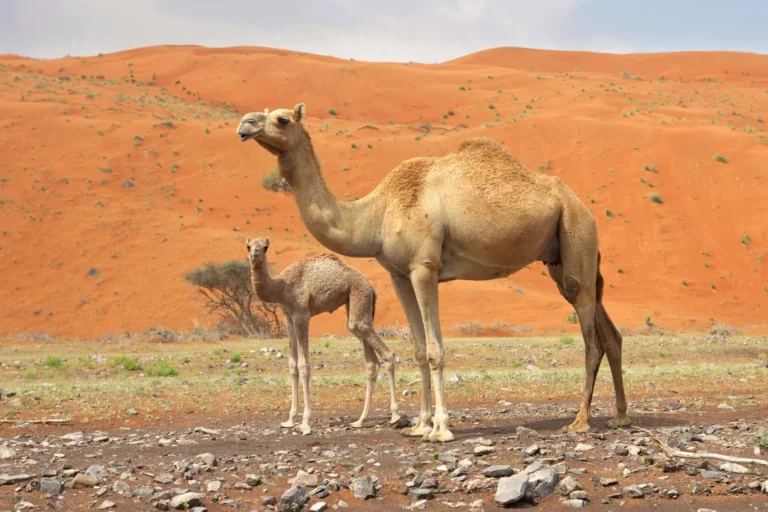
    Camel herders and scientists across Africa say that rising temperatures are now overwhelming animals long regarded as uniquely suited to desert extremes, with herds facing rising death tolls, illness, and shrinking grazing lands. In the Afar region of northeastern Ethiopia, among the hottest and driest places on the planet, nomadic herders traditionally lead camel caravans loaded with salt across the desert. Ali Umer, a 40 year old herder from Semera who owns around 500 camels, said he watches his animals struggle under conditions he has never seen before. He described blistered feet, watery eyes, and burned skin among his herd, and said the sand itself now scorches the animals as they rest. Umer said he lost eight camel calves in a single month due to extreme heat, and added that even the wind no longer brings relief. He said the changes have become noticeably worse in recent years. Umer’s account matches what researchers and veterinarians are documenting across the continent. Scientists and animal welfare specialists point to stress, fatigue, dehydration, and rising disease rates as direct consequences of extreme heat, while indirect effects such as water shortages, vegetation loss, and disappearing shade compound the damage. North Africa and the Horn of Africa are home to roughly 80 percent of the world’s dromedary camel population, the single humped variety that farmers across the region have increasingly relied on because of its reputation for withstanding drought and heat. A 2025 study examining herder perceptions in southern Ethiopia found that climate variability had measurably harmed camel health, productivity, and reproduction. The crisis appears especially acute in Somalia. Research published in June found that drought linked camel deaths have affected nearly 46 percent of camel owning households, based on a survey of almost 6,000 pastoral families. The mortality was heavily concentrated in northern areas, with the Sool region recording a death rate of nearly 73 percent. Experts say extreme heat is the central driver behind the region’s drought conditions, though poor veterinary access and weak herd management make outcomes worse. Atmospheric scientists have linked the severe 2021 to 2022 drought to sustained high temperatures, which accelerate evaporation from soil and water sources and increase the rate at which plants release moisture into the air. Veterinarians on the ground report a growing caseload tied to heat. Hassan Nuya Guyo, a veterinary officer in Marsabit county in northeastern Kenya near the Ethiopian border, said his clinic is seeing a sharp rise in hyperthermia cases that leave camels vulnerable to secondary infections. He said camel deaths in the county have risen more than 15 percent over the past two years due to heat and drought. Separate research from the Horn of Africa links heat stress to higher disease rates and falling milk yields among camel herds. A similar pattern is emerging in North Africa. A study conducted in Algeria and published this year documented a marked rise in camel deaths during summer heatwaves, with researchers noting clear seasonal mortality spikes that they say call for targeted responses such as emergency water supplies, supplemental feeding, and closer disease monitoring during peak summer months. The World Meteorological Organization says extreme heat events have become routine across North Africa, with heatwaves trending upward since 1981. Several countries in the region and the wider Middle East recorded temperatures above 50 degrees Celsius in 2024. The organization’s most recent State of the Climate in Africa report found that North Africa warmed faster than any other subregion on the continent between 1991 and 2025, at a rate of 0.43 degrees Celsius per decade. Camels are naturally equipped to handle heat up to about 40 degrees Celsius. Their bodies allow internal temperature to fluctuate throughout the day, reducing the need to sweat, while concentrated urine, dry waste, and a thick protective coat help limit water loss and block solar radiation. But researchers say those adaptations are no longer enough. Mohammed Bengoumi, a camel health specialist with the United Nations Food and Agriculture Organization who works across North Africa, said summer temperatures in large parts of the Sahara now regularly exceed 50 degrees Celsius, raising the risk of severe heat stress, especially where vegetation, water, and shade are already scarce. Abdelmadjid Chehma, a professor at the University of Ghardaia in Algeria who has conducted experimental research on desert camels, said sustained heat above 41 to 45 degrees Celsius damages the animals at a cellular level, weakening their immune systems and preventing white blood cells from repairing themselves. He said the resulting stress slows the animals’ metabolism as their bodies try to limit internal heat production, which in turn reduces appetite and causes lethargy, lower milk output, and reproductive problems. Mohammed el Khasmi, an animal hydrobiology expert at the University of Casablanca in Morocco, said his team has documented a wide range of heat related harm in camels, including weight loss, inflammation, muscle and bone damage, kidney related chemical imbalances, and parasite driven infections. The combined pressures are forcing some herding communities to abandon land they have used for generations. Daniel Gelan, a pastoralist development researcher at Vision University in Ethiopia, said herders in the country’s north are relocating permanently to southern areas with more reliable water and vegetation, rather than following the seasonal migration patterns of the past, because the northern region can no longer sustain camel herding. The Horn of Africa is still recovering from a severe drought that lasted from 2020 to 2023 and is now facing another period of harsh conditions, according to the charity Oxfam, which reported that water prices in parts of Somalia have jumped by more than 2,000 percent. Back in Afar, Umer said he fears disease could soon begin killing his adult camels as well. Chehma said that concern reflects a broader shift underway across the region, where an animal once seen as the ultimate survivor of desert life is now being pushed toward its own breaking point by the pace and severity of current heatwaves.

  • | | | |

    Why Lahore sinks whenever it rains in the city? 

    The rain on July 22 almost sank most parts of Defence Housing Authority. Those low-lying areas of the city were also under water. And this happened as the city was lashed with 343 millimetres of rain for two days, according to the Provincial Disaster Management Authority (PDMA). That spell has gone and when you are reading these lines, the city is undergoing a second rain spell. Pakistan’s Meteorological Department has issued a fresh weather advisory, warning that another active monsoon spell is expected from July 29 to August 5 across much of the country. The department said rain, wind and thundershowers, along with scattered heavy to very heavy rainfall, may trigger urban flooding, flash floods and landslides in vulnerable areas. This will keep the residents of low-lying areas, mainly of Lahore’s south, and DHA on the toe. Reacting to this advisory, environmental activist Rafay Alam explained why cities like Lahore keep flooding every monsoon season, and what is really behind the crisis. He said the Met Department had already notified that rain would continue for two days and people were warned in advance that urban flooding would take place, not just in Lahore, but in several cities across Punjab, including Gujranwala and Sialkot. He then pointed to last year’s floods for comparison. “Those floods were caused by heavy rains in the northern areas of the country, which caused rivers to swell,” he said. On top of that, India had released water from the Pong Dam and Bhakra Dam. He said a gate at the Madhopur headworks also broke, causing water levels in the Ravi river to rise sharply. Alam said the situation today is different. The flooding happening now is not caused by river floods or dam releases. Instead, it is simply due to heavy rainfall occurring within Pakistan itself. He said that if people read the Met Department’s advisory carefully, the heaviest rain in the coming days is expected in the northern areas once again, not directly over Lahore. He advised people to check whether they live in low lying or high lying areas, since this makes a big difference during heavy rain. However, he said that the real issue lies in the sheer intensity of rainfall being recorded now. “Some areas have received around 150 millimetres of rain within just a few hours,” he said. He added that 20 or 30 years ago, when the drainage systems and infrastructure in these areas were built, climate change was never part of the planning. Nobody at that time imagined that such intense rainfall could happen within just a few hours. As a result, the old infrastructure simply cannot handle the kind of rain Pakistan is now experiencing. Dr Farid A Malik, a resident of Defence Phase 5, witnessed the entire flood attack first hand. He said that when he was growing up in the 1950s, 1960s and 1970s, rainwater never used to stand in Lahore. At that time, he said, the city was much smaller and the population was far lower, yet even then, the city did not face standing water after rainfall the way it does today. “Whenever the rain would stop, we children used to go out on our bicycles looking for standing water, just for fun. And there were really only two places where water would collect. One was near Shahdara, and another was near the Do Moriya Pul area close to the railway station. That area of Shahdara was a low lying area,” he said. He recalled that in the 1970s, when Zulfiqar Ali Bhutto’s government came into power, and the People’s Party had a lot of support from that area of Lahore at the time, the government promised that they would install pumps in Shahdara and set up a proper system to drain the water out. And they actually did this. Heavy duty pumps were installed in Shahdara, and they used to successfully drain the water out. Dr Farid said the sewerage system Lahore has today simply cannot handle rainwater, because the amount of water that comes with heavy rain is very large, and the system does not have the capacity to handle that much water. He explained there are two separate problems here. First, the underground sewerage system is not cleaned properly. The pipes, whether four feet wide or six feet wide, have become clogged with scaling inside them over time. So even though a pipe might be four or six feet in diameter, the actual open space left for water to pass through has shrunk down to just one or two feet, meaning the whole system does not flow properly. Second, even if the sewerage system was clean, it still cannot handle rainwater on top of regular sewage. For this reason, Lahore used to have separate storm drains, called nalas in Urdu, which carried rainwater away separately into the Ravi river. Because of this separate system, rainwater never used to accumulate in the city. He said this has changed because storm drains have been blocked, either through neglect or construction on top of them. “An entire market has been built on top of a storm drain along Hall Road,” he said, adding that similar encroachment has happened along the Ravi river itself. Last year, water that should have gone into the river ended up flowing into housing societies instead. Dr Farid also pointed out that when Lahore had open drains instead of an underground sewerage system, the drainage actually worked better. Since the city moved underground, cleaning has become irregular, flow has suffered, and pumping stations work only some of the time. He said Lahore’s expansion added to the problem, since new areas were given sewerage systems but no proper storm drain network for rainwater. DHA, he said, expanded in phases over the years without any master plan covering how sewage and rainwater would both be managed. Speaking about his own neighbourhood, Dr Farid said there is a pumping station near the Sui Gas Society area of Defence that pumps sewage water


  • | |

    Belgium’s largest wildfire in decades double…

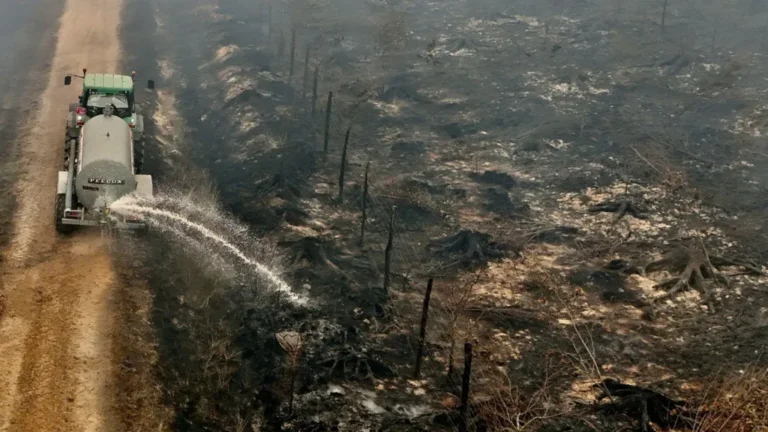
    A wildfire officials describe as the largest in Belgium’s recent history more than doubled in size within 24 hours, local authorities said Sunday, as hundreds of firefighters entered a third day battling flames tearing through the country’s largest nature reserve. The blaze has forced the evacuation of two villages near Hautes Fagnes, a protected reserve close to Belgium’s eastern border with Germany. Local farmers have hauled water tankers toward the park to assist firefighting crews, while water bombing aircraft and helicopters sent from Sweden and the Netherlands have joined the effort from the air. The Belgian fire is one of several burning across Europe this weekend. At least two people died in forest fires on a Greek island off the coast of Athens on Sunday, part of a broader pattern of blazes spreading across the continent. Belgian officials said intense heat combined with the reserve’s difficult terrain, a mix of bog like wetlands, moorland and forest, has made the fire especially hard to contain. According to figures reported by a French news agency citing local officials, the fire grew from 80 hectares, or about 200 acres, on Friday to 850 hectares by Saturday morning, before expanding further to 3,000 hectares by early Sunday. Belgian Interior Minister Bernard Quintin said two fronts of the fire, one advancing toward Jalhay and the other toward Monschau, have now been brought under control. Authorities said conditions remain difficult overall and that they continue to rely heavily on aerial support to bring the fire under control, though no homes have been damaged so far. Two water bombing aircraft arrived from Sweden on Sunday afternoon to reinforce four helicopters, two Belgian and two Dutch, already working the fire. Nicolas Yernaux, a spokesman for regional authorities in Wallonia, said Saturday that the blaze ranks as the largest the country has seen in recent history. He said firefighters have allowed portions of the heathland to burn because those areas are extremely difficult to reach. Rescue teams have been unable to access the location where the fire started, leaving its cause unknown for now. Additional forest fires have broken out in Croatia, Spain and Serbia since Friday, following a summer of extreme heat that has left large parts of Europe either burning or scorched brown. In southwestern France, local officials in the Landes region said a separate wildfire forced the evacuation of 650 residents on Saturday. That fire first broke out Thursday and reignited Saturday, prompting authorities to deploy more than 500 firefighters to bring it under control. The EU’s climate monitoring service, Copernicus, has confirmed that western Europe just experienced its hottest June to July period on record, a finding that aligns with the wave of wildfires now spreading across multiple countries on the continent.

Leave a Reply

Your email address will not be published. Required fields are marked *