after midterm sweep
|

After midterm sweep, Democrats split over Trump, cost-cutting agenda

Fresh from a midterm election landslide, Democrats met in Denver this week united in wanting to deliver voters relief from high costs, but split over how to achieve that, what lessons to draw from their victory and how combative they should be toward President Donald Trump.

Despite the celebratory mood after the November 3 rout of Republicans, tensions between moderates and a restive progressive wing surfaced at the party’s first major gathering since its victory, along with anxiety that the party could squander the opportunity voters had handed it.

The gathering offered an early glimpse of the battle to define its future as prospective 2028 presidential candidates and senior leaders debated how to turn electoral success into a governing agenda while navigating long-standing ideological and generational divides.

The conference, hosted by Majority Democrats, a group that advocates for younger party leaders and against left-wing activism, offered a forum for the jockeying now underway as Democrats debate what lessons to draw from their midterm win and begin the search for a 2028 White House standard-bearer.

Speakers disagreed over whether to embrace a bolder progressive agenda or tack toward the center, exposing competing approaches to lowering food, healthcare and housing costs, while working alongside Trump, who retains veto power for two more years.

California Representative Ro Khanna, a progressive and potential presidential candidate, urged Democrats to stop chasing the political center and embrace a bolder agenda, including universal healthcare, a wealth tax, a $25 federal minimum wage, deep Pentagon cuts and abolishing US Immigration and Customs Enforcement.

By contrast, Pennsylvania Governor Josh Shapiro, a moderate and another potential 2028 contender, argued the party should move beyond ideological litmus tests, saying voters “don’t give a damn” about such debates and care instead about whether Democrats can deliver results.

The breadth of the Democratic victories has allowed moderates and progressives to argue that voters have endorsed their vision for the party’s future.

“It’s to be expected that there will be a big debate because the Democratic victory was so broad it swept in centrists, southern Democrats and more progressive and left-wing Democrats,” Democratic strategist Elaine Kamarck told Reuters.

Trump retains significant executive authority to block much of the Democrats’ agenda, complicating the party’s efforts to lower costs, the central issue voters gave Democrats control of Congress to fix.

Democrats are projected to hold at least 255 seats to ​Republicans’ 169 in the US House, with 12 contests still ​undecided. In the Senate, the breakdown will be ⁠at least 55-44, with Democrats possibly gaining one more seat in Alaska when vote-counting is completed.

Work with Trump or fight him?

One of the most striking debates in Denver centered on how to govern with Trump still in the White House.

James Talarico, the first Democrat elected to the US Senate from Texas since 1988, urged Democrats to work with Trump.

“We should make the final two years of his presidency the most productive of any presidency in American history,” Talarico said, drawing tepid applause. “We’re tired of being pitted against each other.”

He found an ally in Iowa Governor-elect Rob Sand, who said he encouraged Democrats at campaign events to applaud Republicans and that partisan warfare will not deliver results.

“The only way we’re going to fix that is by fixing it together,” Sand said.

Minutes later, US Representative Jamie Raskin of Maryland and Eric Holder, who was attorney general in the Obama administration, largely rejected accommodation with Trump.

Raskin, expected to become chairman of the House Judiciary Committee in January and oversee investigations of Trump next year, said the Republican Party had become an authoritarian cult of personality.

“We’re going to reassert all of the powers of Congress that have been surrendered and abdicated by the MAGA Congress to King Trump,” Raskin said. “We’re going to enforce the Constitution against him.”

Holder warned Democrats against pursuing bipartisanship.

“If we retreat into caution, if we operate out of fear, if we take refuge in the niceties of the old Washington and seek approval from those who have been and are actively dismantling our institutions, we will fail.”

There has been a long-simmering debate inside the party over whether to move further left or pursue a more centrist agenda, and this election has only intensified those tensions.

Competing visions for governing

Almost everyone who spoke at the conference agreed the party’s top priority was lowering costs and improving life for working families.

It was a theme echoed by New York Representative Hakeem Jeffries, set to become US House Speaker, and several prospective 2028 presidential candidates, including Shapiro, former Transportation Secretary Pete Buttigieg, and Khanna.

But splits emerged over how to achieve that.

Jeffries, a moderate, was heckled by a group of protesters, who accused him of being too timid to deliver change and called for a House leader who embraced a more populist progressive agenda.

Khanna and Maryland Senator Chris Van Hollen, another progressive who this week challenged more centrist Senator Chuck Schumer of New York for the party’s top leadership job in the Senate, called for populist, government-funded economic solutions.

Don’t blow it

There was a collective anxiety among the speakers that the party might squander one of the biggest victories it has achieved in a generation.

Many speakers described the win not as an enduring mandate, but rather a temporary opportunity voters had given them to fix the country’s problems.

Arizona Senator Ruben Gallego, another potential presidential contender, noted that many Hispanic voters who voted for Trump in 2024 backed Democrats this month.

“It was not, though, a love letter to the Democratic Party,” Gallego said. “It is a short-term loan that we need to keep paying, or we will lose it.” – Rappler.com
Similar Posts

  • | | | |

    Iran threatens action over US economic support

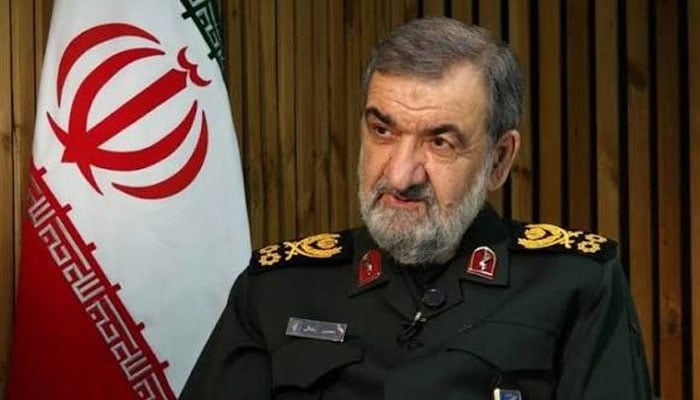
    Iran’s National Security Council chief Mohsen Rezaei has warned that the interests of countries assisting the United States in its economic war against Iran could be targeted. In an interview, Major General Mohsen Rezaei urged Iran’s neighbouring countries not to cooperate with Washington against Tehran. He warned that Iran could consider them hostile if they joined the US economic campaign. Rezaei said Iran did not want to escalate the conflict. However, he warned that any neighbouring country supporting the economic war could face attacks on its interests. He also threatened to prevent even a single drop of oil from passing through the Persian Gulf or the Strait of Hormuz. He said other routes used to import oil through the Persian Gulf could also be targeted. Rezaei further warned that locations linked to Iranian opposition groups could also come under attack if the United States continued meeting groups opposed to the Iranian government. According to Rezaei, the US had expected to end the conflict within a few days and take control of Iran’s oil and gas resources. He claimed that around 1,200 oil tankers had become unusable during the conflict, affecting 15 per cent of the global fleet. He said Tehran should reconsider its approach to the conflict and its diplomatic engagement with the international community. Rezaei accused Washington of failing to honour its commitments. Rezaei said Iran was no longer the same country it was before the conflict. He described new military appointments by Supreme Leader Mojtaba Khamenei as a sign that Iran was preparing for war. He added that the perception of the United States among Iranian youth had also changed. According to him, many young Iranians no longer view America as a country committed to peace. Rezaei accused Washington of betraying negotiations, diplomacy and agreements it had signed. He also warned that US policies could encourage more countries to seek nuclear weapons. He criticised US President Donald Trump and claimed that the world had begun viewing Iran differently. Rezaei said Iran would change its approach to warfare and use the lessons learned from the current conflict in any future war. Asked about the Makkah agreement involving Pakistan, Türkiye and Saudi Arabia, Rezaei said it indicated that the United States had informed those countries of its intention to leave the region. On former Crown Prince Reza Pahlavi, Rezaei said those who believed his return would turn Iran into a “paradise” should reconsider their view. He claimed that bringing Pahlavi back to power could instead lead to Iran being divided into five parts.

  • | |

    Adam Driver, Sadie Sink join Marvel’s upcoming X-Men film

      Marvel Studios has revealed an impressive new cast for its highly anticipated X-Men movie, with Adam Driver, Sadiew Sink and Inde Navarrette among the actors set to join the franchise. The announcement was made by Disney during its biennial D23 fan convention in California on Friday, generating considerable excitement among thousands of Marvel fans. Marvel Studios president Kevin Feige appeared on stage at the Honda Center during the opening night of the three-day event. He gave more than 10,000 attendees an early glimpse of the upcoming X-Men project, which has not yet received an official title. The film is currently scheduled to arrive in cinemas in May 2028. Sadie Sink, known for her role in Stranger Things will reportedly continue as Jean Grey following her appearance in Spider-Man: Brand New Day. Inde Navarrette will portray Rogue, while the ensemble cast also features Kit Connor as Cyclops, Samara Weaving as Emma Frost, Christopher Abbott as Professor Xavier and Maya Boyd as Storm. Adam Driver is also joining the project, taking on the role of the villain Nathaniel Milbury. The actor appeared at the D23 gathering through a video message and spoke about his long-running discussions with Feige regarding a possible role in the Marvel Cinematic Universe. Driver said that he and Feige had been discussing the possibility of working together for several years and believed they had eventually found the right project and the right moment to make their collaboration happen. The X-Men announcement was one of several major reveals made by Disney and Marvel during the event. Feige also presented footage from Avengers: Doomsday another major Marvel production scheduled for release in December. The movie is expected to bring together several major superhero groups, including the Avengers, the Fantastic Four and the X-Men, along with Wakandan warriors. The heroes will face one of Marvel’s most prominent villains, Doctor Doom, who will be portrayed by Robert Downey Jr. The crossover is expected to play a major role in the expanding Marvel Cinematic Universe. Disney also provided fans with their first glimpse of Ryan Gosling in Lucasfilm’s upcoming Star Wars: Starfighter.The new film is scheduled to reach cinemas in 2027, a year that will mark the 50th anniversary of the original Star Warsmovie. The D23 event also featured announcements about several new sequels. Pixar presented previews of upcoming projects including Gatto and the supernatural adventure Ghost Market. The studio also confirmed The Incredibles 3 and Coco 2 Other returning franchises receiving new installments include Lilo & Stitch 2 Ice Age: Boiling Point and Frozen 3.Stars Kristen Bell, Idina Menzel and Josh Gad were among those promoting the latest Frozen project. The strong focus on sequels was noticed by attendees. One visitor, Gary Aurin, joked that almost everything at the event appeared to be a continuation of an existing franchise. Disney also surprised audiences by announcing a new animated project featuring Oswald the Lucky Rabbit. Director Jon Favreau introduced the character, who will appear in a mini-series scheduled to premiere on Disney+ next year. Oswald was created by Walt Disney and Ub Iwerks in 1927 for Universal Pictures and predates Mickey Mouse. Disney regained the character’s rights in 2006. The three-day D23 convention is scheduled to conclude on Sunday, bringing together fans, filmmakers, actors and creative teams to celebrate Disney’s upcoming entertainment projects.

  • |

    Infamous cartel kingpin Daniel Kinahan extradited to Ireland following decade-long global manhunt

    Suspected crime boss Daniel Kinahan has been extradited from Dubai back to Ireland, marking the end of a ten-year stretch abroad that began after an armed assault on his life. The 49-year-old landed at Casement Aerodrome in Dublin under tight security protocols, arriving on an official Irish government aircraft. Kinahan is scheduled to present himself at the Criminal Courts of Justice in Dublin, where he will face charges of commanding an organised crime syndicate before being remanded to Portlaoise Prison. Law enforcement agencies contend that Kinahan holds a high-ranking position within the Kinahan crime syndicate, an enterprise tied to global narcotics trafficking, illegal arms dealing, and further criminal operations. Kinahan has not been convicted of these specific offences. Speaking on a podcast hosted by James English prior to his surrender, Kinahan voiced an expectation that he would face significant jail time. ‘I think I’ve already got life in prison. And we have to go through the dance now,’ he remarked. Whilst conceding that he had ‘not been an angel’, Kinahan asserted that the claims made against him were exaggerated, adding: ‘I believe in a way I’m a scapegoat.’ His departure from Ireland occurred after a targeted assassination attempt at a boxing weigh-in inside Dublin’s Regency Hotel back in February 2016. He subsequently established residency in Dubai, where local authorities apprehended him in April. The legal transfer was enabled after Ireland and the United Arab Emirates ratified an extradition agreement in May 2025. Emirati courts dismissed Kinahan’s final legal challenge against the transfer last month, paving the way for his custody transfer to Irish officials.

  • |

    Global chip market set to cross $1 trillion as AI demand surges

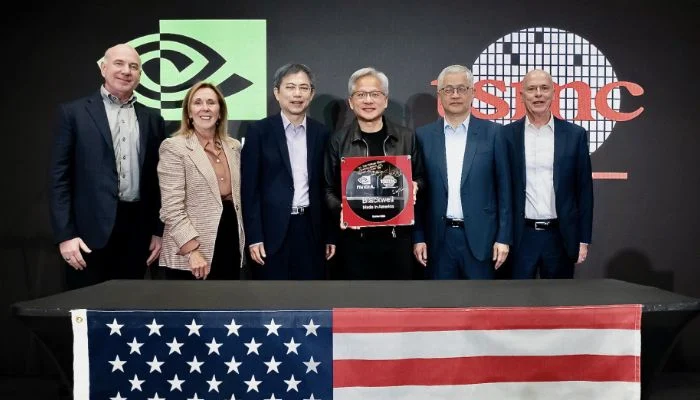
    The global semiconductor industry is on track to surpass $1 trillion in annual revenue in 2026, driven largely by the rapid expansion of artificial intelligence infrastructure. AI-related chips are reshaping the semiconductor business. Although advanced AI processors represent only a tiny share of total chip shipments, they are expected to generate almost half of the industry’s overall revenue this year. The surge reflects the enormous investment being made in AI data centres around the world. The five largest global technology hyperscalers have allocated more than $600 billion to AI data-centre infrastructure in 2026. The growing demand is also increasing the importance of advanced chip manufacturing. Producing a sophisticated 3-nanometre processor can take around six months, highlighting the complexity and limited capacity of the global supply chain. Taiwan Semiconductor Manufacturing Company (TSMC) remains central to the production of the world’s most advanced processors. The company manufactures an estimated 90% of the most sophisticated chips, making it a critical supplier for the rapidly expanding AI industry. This concentration has also raised concerns about supply-chain vulnerability. Any major disruption to advanced chip production could affect technology companies, AI developers and governments that are investing heavily in artificial intelligence. Nvidia has emerged as one of the biggest beneficiaries of the AI boom. The company reported revenue of $215.9 billion, strengthening its position as a leading supplier of processors used to train and operate advanced AI models. The chip industry’s challenges extend beyond processors. High-bandwidth memory (HBM), which is essential for AI computing, has become another major supply constraint. Much of the available HBM production capacity is already committed through 2026. The global memory market is also expected to generate substantial revenue, with estimates putting fiscal 2026 revenue at around $594.7 billion. The figures underline how quickly AI is transforming the global semiconductor industry. Demand is shifting toward fewer but far more valuable advanced chips, while manufacturers face pressure to expand capacity and secure critical components. As AI investment continues to grow, semiconductor production is increasingly becoming a strategic issue for technology companies and governments. The ability to manufacture advanced processors and memory at scale could determine how quickly the next phase of AI development progresses.

  • | | |

    US sees strong potential for agricultural technolo…

    The United States has underscored the potential for expanding agricultural technology cooperation with Pakistan, saying that greater adoption of American innovation could modernise the country’s farming sector while creating new opportunities for bilateral trade and investment. The remarks were made by US Chargé d’Affaires Natalie A. Baker during a Direct Line webinar organised by the Business Council for International Understanding (BCIU) in collaboration with the US Embassy in Islamabad, the US Department of Commerce, and the Government of Pakistan. The virtual event brought together American companies, Pakistani government officials, investors, and representatives from the agriculture industry to discuss future collaboration. Speaking at the webinar, Baker described agriculture as one of Pakistan’s most important economic sectors, contributing nearly one-quarter of the country’s gross domestic product (GDP) and supporting millions of livelihoods. She said Pakistan’s efforts to modernise agriculture present significant opportunities for American businesses to introduce advanced technologies and expertise. According to Baker, US companies can contribute in key areas such as precision agriculture, advanced irrigation systems, digital farm management, cold chain logistics, and modern food processing technologies. She noted that these innovations could help improve agricultural productivity, reduce resource wastage, and strengthen food security while creating commercial opportunities for both countries. The US diplomat also highlighted the growing trade relationship between the two countries, revealing that US exports to Pakistan exceeded $1.5 billion in agricultural and related goods during 2025. She described the webinar as part of the US Mission’s broader strategy to promote stronger economic cooperation and expand commercial ties with Pakistan. During the discussions, Pakistani officials outlined regulatory reforms and policy initiatives designed to facilitate greater imports of American agricultural products, including soybeans, cotton, and high-quality planting seeds. They also encouraged increased US investment in farm mechanisation, biotechnology, seed development, controlled-atmosphere storage, and food processing industries. Baker stressed that American investment offers benefits beyond financial capital by promoting technology transfer, workforce training, and long-term business partnerships. She said such collaboration can strengthen local expertise and contribute to sustainable economic growth in Pakistan’s agriculture sector. The webinar also served as a preview of the US Department of Commerce’s Certified Agricultural Technologies Trade Mission to Pakistan, scheduled for October 26–30. Baker invited American companies to explore investment opportunities in Pakistan’s agricultural technology and food processing sectors, reaffirming that supporting US businesses seeking to invest in Pakistan remains a key priority for the embassy.

Leave a Reply

Your email address will not be published. Required fields are marked *