duki road renamed
| |

Duki road renamed after acid attack survivor Dr Ma…

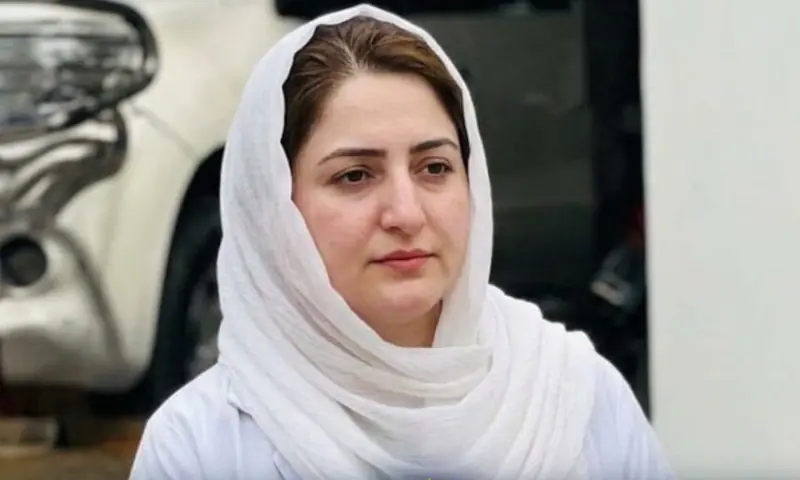
Balochistan Chief Minister Mir Sarfraz Bugti has announced that a major road in Duki district will be renamed after Dr Mahnoor Nasir, a female doctor who survived a severe acid attack earlier this year.

The decision has been taken to honour Dr Mahnoor’s courage, resilience and dedication to her profession. The chief minister said her determination and commitment to duty had made her an example for women across Balochistan.

Under the notification issued by the provincial government, Haji Amanullah Masjid Road near Damani Chowk in Duki will now be known as Dr Mahnoor Nasar Road. The new name will take effect immediately.

Dr Mahnoor, a 29-year-old doctor at Civil Hospital Quetta, was seriously injured in an acid attack in June. She suffered extensive burns to her face, chest, legs and other parts of her body.

According to police, the alleged attacker was a hospital employee identified as Humayun Shah. Law enforcement officials later traced him while he was attempting to escape on a bus. Police said he was killed during an encounter.

Chief Minister Bugti praised Dr Mahnoor for continuing to demonstrate courage despite the severe injuries she suffered. He said recognising citizens who show bravery and remain committed to their responsibilities was a duty of the government.

The acid attack triggered strong condemnation across Balochistan. Members of the medical community, government officials and other sections of society called for strict action against those responsible.

Doctors in Quetta also staged a strike following the incident. They demanded a transparent investigation and stronger measures to ensure the safety of medical professionals, particularly women working in hospitals.

The case also came amid wider legal and social concern over acid attacks in Pakistan. In a significant ruling issued days after the incident, the Supreme Court described acid violence, or vitriolage, as a particularly heinous offence and said its gravity could exceed that of homicide.

The renaming of the road is being presented by the Balochistan government as a public tribute to Dr Mahnoor’s resilience. Officials said the initiative is also intended to highlight the importance of recognising women who continue to serve their communities despite facing serious challenges.

Similar Posts

  • | |

    Canada’s pushback against Trump tests bounda…

    Two days before trade negotiations between the United States and Canada collapsed dramatically over the weekend, Vice President JD Vance told an audience at a private fundraiser that Canadian Prime Minister Mark Carney was, in his words, a very sweet guy. According to a private audio recording obtained by a Canadian news outlet, Vance went on to describe Carney as someone who talks tough and claims he can out tough Donald Trump, before ultimately backing down on major issues, a pattern Vance called hilarious. Those remarks, which drew significant attention across Canada, may not have directly caused Carney’s negotiating team to walk away from the table, but they certainly did not help matters. Carney’s decision abruptly ended talks over a new trade agreement and triggered a fresh round of tariffs between two countries that conduct more than 872 billion dollars in annual bilateral trade. The deepening rift, paired with Vance’s comments, offers the latest example of an American administration willing to apply pressure against both allies and adversaries alike, underscoring how such tactics can produce unpredictable consequences on the world stage. If Trump anticipated that Canada would eventually yield to American pressure, following a pattern seen among other US allies over the past year and a half, that assumption may prove mistaken, and the fallout could shape the remainder of his presidency. Tension between Washington and Ottawa did not begin this weekend. It traces back to the first Trump administration and the negotiations that produced the USMCA, the agreement that replaced the original 1990s era North American Free Trade Agreement. Personal friction between Trump and former Canadian Prime Minister Justin Trudeau complicated those earlier talks. As Trump prepared to return to office in late 2024, he mockingly referred to Trudeau as governor and to Canada as America’s 51st state. Behind those remarks sat a broader worldview in which the United States positions itself as the dominant power within its own hemisphere, entitled to shape political, military and economic outcomes across the region, Canada included. Administration officials have argued that Canada contributes too little to regional defense spending while benefiting disproportionately from trade with its southern neighbor. Within Trump’s framework, where economic and national security are treated as inseparable, Canada and Mexico, two of America’s largest trading partners, emerged as early targets. Drew DeLong, head of corporate statecraft at the Kearney Foresight think tank, said officials across the State, Treasury and Commerce departments frequently repeat the phrase that economic security equals national security. By early this year, as North American trade talks moved forward unevenly, Trump’s focus shifted away from Canada toward military interventions in Venezuela and later the Middle East. Even so, the central thread running through Trump’s foreign policy approach has remained consistent, treating the United States as a dominant power capable of imposing its will for national advantage. That power has limits, however, and Trump’s second term has repeatedly tested where those limits lie. Despite the obvious differences between an active conflict with Iran and a trade dispute with Canada, the underlying dynamics share similarities. In both cases, the United States confronts a counterpart with far less overall power but still capable of retaliation. Iran has leaned on its ability to threaten US allies and disrupt global commerce through chokepoints like the Strait of Hormuz. Canada, meanwhile, has begun testing its own capacity to inflict economic pressure, with this week’s targeted tariffs marking an initial step. Future Canadian measures could include limiting American access to Canadian energy and critical minerals, alongside consumer boycotts targeting US products. DeLong said that as the broader global landscape shifts toward economic security concerns, countries increasingly search for chokepoints and leverage across global supply chains, adding that such opportunities exist for nations willing to look for them. For now, clear paths toward resolution remain limited. Trump has escalated his public rhetoric, repeatedly accusing Canada of ripping off the United States, while Ontario Premier Doug Ford responded sharply, telling the American president to kiss his ass. Imran Bayoumi, deputy director of the GeoStrategy Initiative at the Atlantic Council, said that pushing allies and partners away tends to incentivize them to seek new relationships rather than comply with American demands. Room still exists for tensions to ease. Canada’s new tariffs take effect in two weeks, while the most significant American countermeasure, a 50 percent tariff on Canadian built vehicles and auto parts, will not take effect until early 2027. Escalation cycles in economic or military conflicts can be difficult to reverse, but the several month gap before the next round of US tariffs gives both sides room to potentially resume negotiations, which had shown signs of progress before talks collapsed Friday night. A more immediate deadline looms in November’s US midterm elections. Democratic gains in Congress could limit Trump’s authority significantly, while unexpected Republican success could strengthen his position further. Ottawa currently appears to be betting on the former scenario, calculating that concern over midterm losses in industrial swing states like Michigan and Ohio will pressure Trump to soften his stance before voters head to the polls. Bayoumi said he does not see the kind of internal political division within Canada that the Trump administration may have anticipated, adding that Carney has considerable political room to negotiate a favorable outcome for Canada rather than settle for less. Carney has also raised another possibility publicly since Trump returned to office, suggesting Canada may continue drifting away from the United States altogether and deliberately widen the distance between the two nations. Carney has said Canada cannot depend on traditional alliances now that the rules of engagement have fundamentally shifted. While geographic proximity guarantees the two countries will remain connected in some form, the deeply integrated economic relationship built over recent decades may be approaching its end. This stands in contrast to Mexico, which appears to be pursuing closer economic integration with the United States rather than distancing itself. Meanwhile, other global trading partners, including US allies across Europe and Asia, are closely watching Canada’s assertive stance

  • |

    ICC member states vote to dismiss Prosecutor Kari…

    Member states of the International Criminal Court voted on Friday to dismiss Karim Khan as prosecutor following allegations of sexual misconduct, two diplomatic sources told Reuters. According to the sources, 82 of the court’s 125 member states voted in favour of the prosecutor’s removal. Khan, 56, denies any wrongdoing, and his lawyers have called the decision by the court’s governing body unlawful, procedurally unfair, and unsupported by evidence. The vote comes amid renewed US criticism of the war crimes court, which Washington sees as a threat to its sovereignty. During a visit to the Philippines on Thursday, US Secretary of State Marco Rubio said there were “lunatics and crazies involved in the ICC,” reiterating previous criticism. The US, which is not a member of the ICC, has already imposed sanctions on 11 ICC judges and prosecutors, including Khan, citing the ICC’s arrest warrants against Israeli Prime Minister Benjamin Netanyahu and former defence minister Yoav Gallant, and a past probe into US troops in Afghanistan. Officials from the court’s governing body have said Khan should be dismissed because he committed serious misconduct by having an inappropriate sexual relationship with a junior staff member, according to documents seen by Reuters. Khan’s lawyers have denied the allegations, stating that he denied “any sexual relationship of any kind” with the staff member. France said on Thursday it would vote in favour of Khan’s removal. For Khan to be fired, an absolute majority of at least 63 of the court’s 125 member states had to agree in the secret ballot. The dismissal will be seen by his supporters as the result of political pressure after the prosecutor sought arrest warrants for senior Israeli officials for alleged war crimes. Even if Khan had survived the vote, his position would have been weakened, giving critics of the court another stick to beat it with. Khan’s firing immediately triggers the election process for a new ICC prosecutor, who is not expected to be voted in before next year. Any active ICC warrants will remain in place even if Khan is dismissed, as only ICC judges have the authority to withdraw warrants. The decision to dismiss Khan marks a significant moment for the ICC, which has faced growing scrutiny and criticism in recent years. The outcome of the vote reflects the deep divisions among member states over the court’s leadership and its role in international justice. As the process to select a new prosecutor begins, the ICC will need to navigate these challenges to maintain its credibility and effectiveness in prosecuting war crimes, genocide, and crimes against humanity. The dismissal of Khan also highlights the broader tensions surrounding the court’s operations and its relationship with powerful nations like the US, which has consistently opposed the ICC’s jurisdiction over its citizens and allies. The coming months will be critical in shaping the future of the ICC and its ability to deliver justice on the global stage.

  • |

    David Jonsson confirmed as new Black Panther in Black Panther 3

    Ryan Coogler has officially unveiled the next chapter of the Black Panther franchise, confirming that English actor David Jonsson will take on the mantle of the new Black Panther in Black Panther 3. The announcement was made during Marvel Studios’ Hall H presentation at San Diego Comic-Con on Saturday, July 25, sparking excitement among Marvel fans around the world. Jonsson, 32, is set to portray the adult son of T’Challa, marking a major new direction for the Marvel Cinematic Universe. The casting introduces a fresh generation of Wakanda’s royal family while continuing the legacy established in the first two films. Coogler, who directed both Black Panther (2018) and Black Panther: Wakanda Forever (2022), will return to write and direct the third installment. Speaking during the presentation, he confirmed that Jonsson’s character is T’Challa’s grown son, positioning him as the future protector of Wakanda. The announcement carries special significance following the death of Chadwick Boseman, who portrayed King T’Challa in the original Black Panther. Boseman passed away in 2020 at the age of 43 after a private battle with colon cancer. Rather than recasting the beloved actor’s role, Marvel chose to honor his legacy by reshaping the sequel’s story. In Black Panther: Wakanda Forever, the narrative shifted its focus to T’Challa’s sister, Shuri, played by Letitia Wright. Throughout the film, Shuri embraced her responsibilities and ultimately became the new Black Panther, earning praise from audiences for carrying forward her brother’s legacy. Marvel has confirmed that Wright is expected to reprise her role as Shuri in Black Panther 3. While plot details remain under wraps, her return suggests that the film will continue exploring Wakanda’s future while introducing the next generation of heroes. Fans quickly flooded social media with enthusiastic reactions after Jonsson’s casting was announced. Many praised Marvel’s decision, calling him a talented actor capable of carrying one of the franchise’s most iconic roles. One fan described the casting as an “incredible choice,” expressing confidence that Jonsson would excel in the role. Others highlighted his impressive acting abilities, saying he was the perfect selection to lead the franchise’s future. Several fans also reflected on Chadwick Boseman’s lasting impact, sharing emotional messages about the symbolic passing of the Black Panther mantle to a new generation. The announcement has reignited excitement for one of Marvel’s most celebrated film series. Since its debut in 2018, Black Panther has become a cultural milestone, earning critical acclaim, breaking box office records, and becoming the first superhero film to receive a Best Picture nomination at the Academy Awards. With Ryan Coogler returning behind the camera, Letitia Wright expected to reprise her role, and David Jonsson stepping into the spotlight as T’Challa’s son, Black Panther 3 is shaping up to be one of Marvel’s most anticipated upcoming releases. The film is currently scheduled to arrive in theaters on December 15, 2028.

  • |

    Israeli airstrikes kill 18 in Gaza as ceasefire hopes face fresh setback

    Gaza: Israeli airstrikes struck multiple areas across the Gaza Strip for the second consecutive day on Sunday, leaving at least 18 Palestinians dead and several others injured, according to Palestinian health officials. The renewed violence came despite recent diplomatic efforts led by the United States aimed at advancing last year’s ceasefire agreement and reducing tensions in the region. Medical officials reported that Israeli fighter jets carried out strikes in Gaza City, Deir al-Balah in central Gaza, and Khan Younis in the south. The attacks marked one of the deadliest days in recent weeks, with residential buildings, tents sheltering displaced families, and civilian vehicles among the locations hit. The escalation occurred only days after US President Donald Trump announced what he described as a significant breakthrough in efforts to revive the ceasefire agreement. His statement suggested that Hamas and other Palestinian armed groups had agreed in principle to disarm, raising hopes of progress toward ending the prolonged conflict. However, Israeli officials quickly expressed skepticism over the proposed disarmament plan. Israeli Energy Minister Eli Cohen, a member of Prime Minister Benjamin Netanyahu’s security cabinet, said Israel was prepared to give Hamas an opportunity to surrender its weapons but doubted the group would follow through. Speaking to Israel’s Army Radio, Cohen stated that no agreement had been reached to halt Israeli military operations in Gaza. He added that if Hamas refused to disarm, Israel could seek full control of the territory, where Israeli forces already maintain control over roughly 70 percent of the enclave. He emphasized that dismantling Hamas remained Israel’s primary objective under its understanding with the United States, describing it as a prerequisite for any lasting political arrangement. Later in the day, Doron Spielman, spokesperson for the Israeli Prime Minister’s Office, confirmed that Israel had conveyed its concerns to US officials regarding the proposed roadmap. According to Spielman, Israel insists that Hamas must completely and verifiably disarm before any further steps toward implementing the ceasefire can move forward. Civilian Areas Among Targets Palestinian emergency services reported widespread destruction following Sunday’s airstrikes. In Deir al-Balah, at least four people were killed after an apartment building was struck. Another Israeli attack in the Mawasi area near Khan Younis injured five people and ignited fires in tents housing displaced families. A Palestinian couple and their nine-year-old son were killed when their home in Mawasi was hit. In Gaza City, another couple and their child lost their lives after an apartment was targeted. Medical teams also reported that two people were killed in a strike on a tent located near the Egyptian representative mission in Gaza City. Later in the day, two more fatalities were reported in the eastern Zeitoun neighborhood following another airstrike. In northern Gaza, one person was killed near Jabalia, while a separate strike targeting a vehicle near Saraya Square in Gaza City claimed at least three additional lives. Israeli Military Defends Operations The Israeli military said one of its operations in Deir al-Balah targeted two commanders belonging to Hamas’ elite “Nukhba” force. It also stated that strikes carried out in Gaza City and Jabalia were aimed at what it described as Hamas military operatives, although officials said assessments were still underway regarding the outcomes of those attacks. US-Led Peace Initiative Continues Despite the renewed violence, diplomatic efforts to preserve the ceasefire remain ongoing. The US-led Board of Peace, responsible for overseeing implementation of the ceasefire agreement, released a 15-point roadmap outlining the final stages required to fully enforce the deal. Nickolay Mladenov, the board’s chief envoy for Gaza, expressed concern over the latest escalation, saying the attacks came while mediators were actively working with Palestinian factions to secure agreement on the proposed roadmap. In a statement posted on social media, Mladenov said discussions with regional partners and international mediators were continuing to reduce tensions and create conditions necessary for implementing President Trump’s peace initiative. He stressed that achieving a lasting peace would require sustained commitment from all parties involved. Hamas Accuses Israel of Undermining Talks Hamas maintained that it remained open to negotiations but insisted Israel must first end its military campaign and withdraw forces from Gaza in accordance with the ceasefire agreement before any discussion on surrendering weapons could proceed. Senior Hamas official Basem Naim said the movement had demonstrated “considerable flexibility” during negotiations but accused Israel of escalating attacks in an attempt to weaken diplomatic efforts and impose new realities on the ground through military force. Meanwhile, former senior Fatah official Mohammed Dahlan, who is based in the United Arab Emirates, claimed that Jared Kushner, President Trump’s son-in-law and a senior adviser involved in the US initiative, had informed him that discussions were underway with Israeli officials to halt the attacks. According to Dahlan, contacts between US officials and regional mediators continue, but the success of the agreement now depends largely on Israel ending its ongoing military operations in Gaza. The US State Department has not immediately commented on Dahlan’s remarks, while Israeli authorities have yet to issue a formal response. Casualties Continue to Rise According to Gaza health authorities, at least 1,230 Palestinians have been killed in Israeli strikes since the ceasefire agreement reached in October. Hamas has not released figures regarding the number of its fighters killed during the same period. Israeli officials, meanwhile, report that four Israeli soldiers have been killed since the ceasefire came into effect.

  • Koh Samui French Zoo Owner Sought After Deportation Order Issued

    SURAT THANI, Thailand – Immigration authorities in Surat Thani are actively searching for French national K. Dimino on Koh Samui to formally notify him of a deportation order signed by Prime Minister and Interior Minister Anutin Charnvirakul, as officials believe the zoo operator may be in hiding after learning of the directive. The Ministry of […]

  • |

    Akshay Kumar lands special role in R.D. Burman biopic

    Akshay Kumar is set to reunite with filmmaker Neeraj Pandey after more than a decade, marking another collaboration between one of Bollywood’s most successful actor-director partnerships. The actor has reportedly signed on for a special appearance in Pandey’s upcoming biographical film based on the life of legendary music composer Rahul Dev Burman, popularly known as R.D. Burman. While the makers have not officially revealed details about Akshay’s character, reports suggest that his role, though brief, will play an important part in the narrative. The appearance is expected to leave a lasting impact on the story and add further excitement to the highly anticipated project. According to industry insiders, Akshay Kumar agreed to join the film almost immediately after Neeraj Pandey narrated the role to him. The actor and director are known to share a strong professional bond built on mutual admiration and trust. Their successful collaborations in the past have earned praise from both audiences and critics, making this reunion one of the most talked-about developments in Bollywood. The duo first worked together in the 2013 crime thriller Special 26, which received widespread acclaim for its gripping storyline and performances. They reunited in 2015 for the action thriller Baby, another critically appreciated film that strengthened their reputation as a successful actor-director team. Their latest collaboration is expected to generate significant interest among moviegoers eager to see them work together once again. The upcoming biopic will feature Farhan Akhtar in the lead role as R.D. Burman, one of India’s greatest music composers. Known for revolutionising Hindi film music with his innovative compositions and unforgettable melodies, Burman’s life and career continue to inspire generations of musicians and fans. The film aims to celebrate his extraordinary contribution to Indian cinema and showcase the creative genius that made him a musical icon. Production on the film is scheduled to begin in September. Directed by Neeraj Pandey, the project is being produced in association with Excel Entertainment. The filmmakers have reportedly started extensive pre-production work, with special attention being given to recreating Burman’s iconic music. Music sessions are already underway as the creative team works to capture the essence of the composer’s timeless sound while paying tribute to his remarkable legacy. The biopic is also expected to feature a large ensemble cast, with several well-known actors likely to join the project in significant roles. Official announcements regarding additional cast members are anticipated in the coming weeks. Meanwhile, Akshay Kumar was last seen in Welcome to the Jungle, the latest instalment in the popular comedy franchise. Released on June 26, the film featured an ensemble cast and blended action with comedy. It received mixed reviews from critics and audiences but performed reasonably well at the global box office, earning around ₹186 crore worldwide. With Akshay Kumar’s addition and Farhan Akhtar leading the cast, the R.D. Burman biopic is shaping up to be one of the most anticipated Bollywood projects currently in development. Fans are eagerly awaiting further announcements as production moves closer to its official start.

Leave a Reply

Your email address will not be published. Required fields are marked *