canadas pushback against
| |

Canada’s pushback against Trump tests bounda…

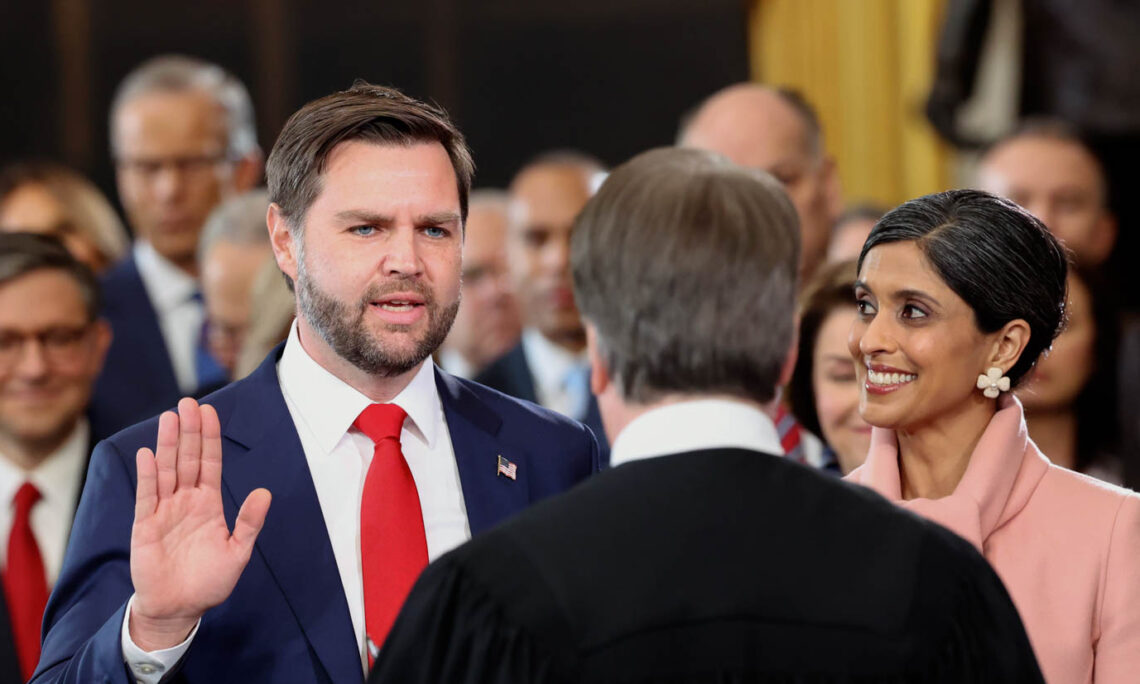
Two days before trade negotiations between the United States and Canada collapsed dramatically over the weekend, Vice President JD Vance told an audience at a private fundraiser that Canadian Prime Minister Mark Carney was, in his words, a very sweet guy. According to a private audio recording obtained by a Canadian news outlet, Vance went on to describe Carney as someone who talks tough and claims he can out tough Donald Trump, before ultimately backing down on major issues, a pattern Vance called hilarious.

Those remarks, which drew significant attention across Canada, may not have directly caused Carney’s negotiating team to walk away from the table, but they certainly did not help matters. Carney’s decision abruptly ended talks over a new trade agreement and triggered a fresh round of tariffs between two countries that conduct more than 872 billion dollars in annual bilateral trade.

The deepening rift, paired with Vance’s comments, offers the latest example of an American administration willing to apply pressure against both allies and adversaries alike, underscoring how such tactics can produce unpredictable consequences on the world stage. If Trump anticipated that Canada would eventually yield to American pressure, following a pattern seen among other US allies over the past year and a half, that assumption may prove mistaken, and the fallout could shape the remainder of his presidency.

Tension between Washington and Ottawa did not begin this weekend. It traces back to the first Trump administration and the negotiations that produced the USMCA, the agreement that replaced the original 1990s era North American Free Trade Agreement. Personal friction between Trump and former Canadian Prime Minister Justin Trudeau complicated those earlier talks. As Trump prepared to return to office in late 2024, he mockingly referred to Trudeau as governor and to Canada as America’s 51st state.

Behind those remarks sat a broader worldview in which the United States positions itself as the dominant power within its own hemisphere, entitled to shape political, military and economic outcomes across the region, Canada included. Administration officials have argued that Canada contributes too little to regional defense spending while benefiting disproportionately from trade with its southern neighbor. Within Trump’s framework, where economic and national security are treated as inseparable, Canada and Mexico, two of America’s largest trading partners, emerged as early targets.

Drew DeLong, head of corporate statecraft at the Kearney Foresight think tank, said officials across the State, Treasury and Commerce departments frequently repeat the phrase that economic security equals national security. By early this year, as North American trade talks moved forward unevenly, Trump’s focus shifted away from Canada toward military interventions in Venezuela and later the Middle East. Even so, the central thread running through Trump’s foreign policy approach has remained consistent, treating the United States as a dominant power capable of imposing its will for national advantage.

That power has limits, however, and Trump’s second term has repeatedly tested where those limits lie. Despite the obvious differences between an active conflict with Iran and a trade dispute with Canada, the underlying dynamics share similarities. In both cases, the United States confronts a counterpart with far less overall power but still capable of retaliation. Iran has leaned on its ability to threaten US allies and disrupt global commerce through chokepoints like the Strait of Hormuz. Canada, meanwhile, has begun testing its own capacity to inflict economic pressure, with this week’s targeted tariffs marking an initial step. Future Canadian measures could include limiting American access to Canadian energy and critical minerals, alongside consumer boycotts targeting US products.

DeLong said that as the broader global landscape shifts toward economic security concerns, countries increasingly search for chokepoints and leverage across global supply chains, adding that such opportunities exist for nations willing to look for them. For now, clear paths toward resolution remain limited. Trump has escalated his public rhetoric, repeatedly accusing Canada of ripping off the United States, while Ontario Premier Doug Ford responded sharply, telling the American president to kiss his ass.

Imran Bayoumi, deputy director of the GeoStrategy Initiative at the Atlantic Council, said that pushing allies and partners away tends to incentivize them to seek new relationships rather than comply with American demands.

Room still exists for tensions to ease. Canada’s new tariffs take effect in two weeks, while the most significant American countermeasure, a 50 percent tariff on Canadian built vehicles and auto parts, will not take effect until early 2027. Escalation cycles in economic or military conflicts can be difficult to reverse, but the several month gap before the next round of US tariffs gives both sides room to potentially resume negotiations, which had shown signs of progress before talks collapsed Friday night.

A more immediate deadline looms in November’s US midterm elections. Democratic gains in Congress could limit Trump’s authority significantly, while unexpected Republican success could strengthen his position further. Ottawa currently appears to be betting on the former scenario, calculating that concern over midterm losses in industrial swing states like Michigan and Ohio will pressure Trump to soften his stance before voters head to the polls.

Bayoumi said he does not see the kind of internal political division within Canada that the Trump administration may have anticipated, adding that Carney has considerable political room to negotiate a favorable outcome for Canada rather than settle for less.

Carney has also raised another possibility publicly since Trump returned to office, suggesting Canada may continue drifting away from the United States altogether and deliberately widen the distance between the two nations. Carney has said Canada cannot depend on traditional alliances now that the rules of engagement have fundamentally shifted. While geographic proximity guarantees the two countries will remain connected in some form, the deeply integrated economic relationship built over recent decades may be approaching its end.

This stands in contrast to Mexico, which appears to be pursuing closer economic integration with the United States rather than distancing itself. Meanwhile, other global trading partners, including US allies across Europe and Asia, are closely watching Canada’s assertive stance as a potential model for their own future dealings with Washington. DeLong said the current divergence within North America may eventually become a case study taught in classrooms, raising the open question of whether the two paths will eventually reconverge or continue splitting apart, and which side stands to benefit most if that separation persists.

Similar Posts

  • | |

    Trump imposes up to 100% tariff on Chinese drones

    WASHINGTON: US President Donald Trump has announced tariffs of up to 100 per cent on imported drones and certain drone components, escalating Washington’s efforts to reduce dependence on Chinese technology and strengthen America’s domestic unmanned aircraft industry. The White House said the new duties were introduced on national security grounds and would target specific unmanned aircraft systems considered particularly sensitive. The measures cover larger unmanned aerial systems weighing more than 25 kilograms at take-off. Drones equipped with technologies considered important to national security, including thermal imaging systems and drone docking stations, will also face the additional tariffs. Under the new policy, smaller drones will be subject to a 25pc tariff, while larger and more technologically sophisticated systems could face duties of up to 100pc. The structure means the final tariff will depend on a drone’s weight, size and capabilities. The decision comes as the United States seeks to reduce its reliance on Chinese-made drones and strengthen domestic supply chains for critical technologies. Chinese manufacturers have long held a significant position in the global and US drone market, particularly in consumer and commercial unmanned aircraft. The Trump administration argues that drones have become increasingly important to national security, surveillance and other sensitive operations. Officials therefore want to encourage greater production of drones and key components inside the United States. The tariffs could have an immediate impact on the prices of some imported drones, potentially making Chinese-made models significantly more expensive for American buyers. Businesses that rely on drones for commercial, industrial or specialised operations could also face higher costs. At the same time, Washington expects the policy to encourage US manufacturers to expand production and invest in domestic drone technology. The move marks another step in the broader US strategy of limiting dependence on China in strategically important technologies while promoting American manufacturing and supply-chain security.

  • |

    Family in India welcomes first baby Girl after 52 years

    A family’s long-awaited dream came true in India when the birth of a baby girl after 52 years brought immense joy and celebration to their home. The heartwarming moment, captured on video, has gone viral across social media, touching the hearts of millions and drawing congratulatory messages from people around the world. According to media reports, the remarkable event took place in Indore, a city in the central Indian state of Madhya Pradesh. The family had reportedly gone more than five decades without the birth of a daughter, making the arrival of the newborn girl a truly historic and emotional occasion for everyone involved. The birth of the baby girl marked a memorable milestone for the family, ending a 52-year wait for a daughter. Relatives described the occasion as one of the happiest moments in the family’s history, with generations gathering to welcome the newest member with immense love and excitement. A video of the celebration quickly spread across social media platforms, capturing the emotional reactions of family members. In the footage, relatives can be seen embracing one another, shedding tears of joy, and celebrating the newborn’s arrival with smiles, laughter, and heartfelt affection. The family’s emotional response reflected just how significant the moment was after decades of waiting. The newborn was welcomed with great enthusiasm, and the family made every effort to make the occasion unforgettable. The atmosphere in the home was filled with happiness as loved ones gathered to celebrate the little girl’s arrival. Family members expressed their gratitude and excitement, describing the birth as a blessing that had brought new hope and joy into their lives. The touching video resonated strongly with social media users, many of whom praised the family’s celebration of the birth of a daughter. Thousands of people shared congratulatory messages, wishing the baby a healthy, happy, and successful life. Many users also expressed appreciation for the family’s obvious affection and excitement, noting that the video served as a positive reminder of the importance of valuing daughters. The viral clip sparked widespread discussion online, with users commenting on how emotional and uplifting the celebration was. Many highlighted the changing attitudes toward the birth of girls in South Asia, where awareness campaigns over the years have encouraged greater appreciation for daughters and emphasized gender equality. Several commenters said the family’s joyful reaction reflected a positive social message and inspired hope for a future where every child, regardless of gender, is equally celebrated. Although the family’s story is unique because of the unusually long gap before the birth of a daughter, it has become a symbol of happiness, love, and togetherness. The overwhelming response on social media demonstrated how stories of genuine family joy can unite people across cultures and borders. As the video continues to gain attention online, the newborn girl has become the center of countless prayers and good wishes from strangers and well-wishers alike. People have expressed hope that she will grow up surrounded by love, opportunities, and good health. The emotional celebration not only marked a historic moment for one family in Indore but also served as a heartwarming reminder of the joy that the arrival of a new life can bring to an entire community.

  • | |

    Iran claims drone strike on US air base in Kuwait

    Iranian forces have claimed responsibility for a drone attack targeting key US military and strategic facilities at Ahmed Al Jaber Air Base in Kuwait. According to Iranian officials, the operation came in response to recent US strikes against Iranian targets. The Iranian military said its forces launched the drone attack as a retaliatory measure following a US strike on a residential building on Iran’s Qeshm Island. Iranian news agency Tasnim, citing a statement from the military, reported that the drones targeted several strategically important locations at the air base. These reportedly included aircraft hangars, satellite communication systems, and warehouses containing military equipment. The Iranian military described Ahmed Al Jaber Air Base as a significant hub for US aerial surveillance and military operations in the region. The base plays an important role in supporting American air activities and maintaining regional military capabilities. The claims come amid heightened tensions between Iran and the United States, with both sides warning of further military action in response to attacks. However, the extent of the reported damage and the impact of the drone strike have not been independently verified.

  • |

    Lavrov rules out immediate Ukraine ceasefire

    Russian Foreign Minister Sergei Lavrov has ruled out the possibility of an immediate ceasefire in Ukraine, arguing that any truce must form part of a long-term and sustainable settlement rather than serve as a temporary pause in the conflict. In an interview with Russian state television, Lavrov said Moscow would continue to take stronger measures against Western support that, according to Russia, strengthens Ukraine’s military capabilities. He accused Western countries of prolonging the war by providing Kyiv with military and other forms of assistance. Lavrov maintained that Russia would only consider a ceasefire if it could lead to a lasting political solution. He said an immediate halt to fighting would not address what Moscow considers the underlying causes of the conflict and could allow Ukraine to strengthen its forces and resume hostilities later. The Russian foreign minister also accused the United States of involvement in attacks against Russia. His remarks came as Moscow seeks clarification from the US State Department over alleged American intelligence cooperation with Ukraine. Despite the escalating rhetoric, Lavrov said Russia had not rejected dialogue with representatives of US President Donald Trump. He indicated that Moscow remained open to discussions with Trump’s envoys, suggesting that diplomatic channels between Washington and Moscow remain available. Lavrov’s comments highlight the difficult path toward a ceasefire as Russia and Ukraine continue to disagree over the conditions for ending the war. Moscow has repeatedly called for a settlement that addresses its security demands, while Kyiv and its Western allies have pushed for a durable peace that preserves Ukraine’s sovereignty and security.

  • | |

    Air ambulance vs bicycle ambulance: Bukhari’s di…

    Punjab Information Minister Azma Bukhari has rejected allegations of electoral rigging raised by the Pakistan Peoples Party (PPP) following the first phase of the Azad Jammu and Kashmir elections. Speaking at a press conference in Lahore, Bukhari said the people of Kashmir had made their decision through their votes. She claimed that voters had preferred the performance of Punjab Chief Minister Maryam Nawaz. Bukhari said the election results reflected the choice of the people. She dismissed the PPP’s allegations and defended the performance of the Pakistan Muslim League-Nawaz (PML-N). The provincial minister also criticised PPP Chairman Bilawal Bhutto Zardari. She said political pressure appeared to be increasing within a particular party. She further claimed that Bilawal had attempted to imitate another political leader during his election speech. Bukhari also criticised the PPP’s performance in Sindh. She said the party often used the name of Raiwind to target the PML-N and its leadership. She challenged the PPP to present its performance record from the past 18 years. She also questioned the condition of Karachi, Sindh’s largest city. Bukhari said voters should compare the performance of Punjab under Maryam Nawaz with the situation in Sindh under the PPP. “Look at Maryam’s Punjab and Bilawal’s Sindh,” she said while comparing the two provinces. The minister argued that a government unable to improve roads in its own areas could not claim that it would transform roads in Kashmir. She also highlighted differences in public services between Punjab and Sindh. Bukhari said Punjab had introduced air ambulance services to provide emergency medical assistance. She claimed that Sindh, by comparison, had introduced a bicycle ambulance service. She used the comparison to criticise the PPP’s governance record and defend the PML-N’s performance in Punjab. Bukhari also discussed the education initiatives introduced by the Punjab government. She said Maryam Nawaz believed that every child should have access to educational opportunities. According to Bukhari, students should be able to receive laptops and scholarships regardless of their background. She said such programmes were aimed at supporting young people and helping them continue their education. The minister contrasted these initiatives with the situation in Sindh. She claimed that students in the province were protesting to demand better educational facilities and opportunities. Bukhari’s remarks came after the PPP questioned the credibility of the first phase of the AJK elections and alleged irregularities. The first phase covered 13 constituencies in the Mirpur division. The PML-N emerged as the leading party, winning nine seats. The PPP secured four seats. The election results have triggered a political dispute between the two parties. The PML-N has defended its victory and rejected claims that the results were manipulated. Bukhari’s latest comments further intensified the political exchange. She presented the results as an endorsement of the PML-N’s performance and Maryam Nawaz’s governance model. The remaining phases of the AJK elections are expected to keep the political competition intense. Both parties are likely to continue highlighting their respective performance records as campaigning moves forward.

  • Cambodian Rockets Target Thai Border Hospital for Second Time

    SURIN – Rockets fired from Cambodia struck near Phanom Dong Rak Hospital in Surin province on Wednesday morning, marking the second time the medical facility has come under fire in recent months. The hospital was previously damaged during border clashes in July. Fifth Thai Soldier Killed as Border Clashes Intensify; Thai Jets Strike Cambodian Targets […]

Leave a Reply

Your email address will not be published. Required fields are marked *