niopowered drought leaves
| | |

El Niño-powered drought leaves Indonesian palm farmers high and dry as river recedes

SANGGAU, Indonesia – Supendi, a 33-year-old palm fruit farmer, cooled his heels at a mill in Indonesia’s West Kalimantan for four frustrating days earlier this month trying to unload his harvest of fresh fruit bunches before being told to leave as the site was full.

For several weeks, local palm oil mills have cut their fresh fruit bunch purchases because storage tanks are filled with processed oil they cannot ship out as a prolonged drought driven by “super El Niño” conditions has dried out the area’s main transportation artery, the Kapuas River.

“The fruit was not accepted,” Supendi told Reuters by telephone. “Now we’re at a loss as to how to sell it.”

Must Read

‘Supersized’ El Niño may become strongest ever recorded, UN says


‘Supersized’ El Niño may become strongest ever recorded, UN says

He had driven from his hometown to the Multi Prima Entakai palm oil mill in the city of Sanggau in early October carrying 7 metric tons of fruit bunches from his small farm and neighbouring ones. He is one of thousands of smallholder farmers in West Kalimantan stuck with rotting fruit.

Supendi’s struggles illustrate one of the many impacts of this year’s extreme El Niño in Indonesia and Southeast Asia.

The weather phenomenon caused by a warming of the Pacific Ocean waters off South America typically causes hot, dry weather in Southeast Asia. But the strength of the current pattern has parched rivers and wells in Indonesia and fanned forest fires in Borneo — where West Kalimantan is located — and Sumatra that have spread choking haze over the province and as far as Malaysia and Singapore.

Must Read

EXPLAINER: How El Niño could impact the world’s weather in 2026-2027


EXPLAINER: How El Niño could impact the world’s weather in 2026-2027

West Kalimantan accounts for about 11% of palm oil output in Indonesia, the world’s largest producer, and analysts estimate fourth-quarter output across Indonesian Borneo could fall by 12% to 15% because of the El Niño-related disruptions.

Sandbanks and stranded barges

The Kapuas — Indonesia’s longest river at 1,143 km — transports 40% of West Kalimantan’s palm oil output, according to data from the Indonesian Palm Oil Association, known as GAPKI. Sandbanks have emerged from the receding waters of the river, causing several barges and tugboats to run aground, according to Reuters witnesses.

Road delivery is a limited alternative, because trucks carry less than barges and fewer are available, millers say.

During El Niños in 2015 and 2018, similar droughts lasted for about a month, several local farmers said. But this year the Kapuas has dropped to a lower level and the effects have lasted for two months already.

Indonesia’s weather agency expects the start of the rainy season to be pushed back to November, from October normally, delaying the river’s resurgence and relief from the country’s most intense wildfires in 11 years.

Output impact

Thirteen palm oil mills out of 50 in West Kalimantan have been affected by the transportation disruptions, accounting for roughly half of the province’s processing capacity, said Aris Supratman, who heads GAPKI’s West Kalimantan office.

He estimated palm oil supply from the province would fall by about 11% in September from August due to the backup.

“Because of the disruption, shipments are being delayed, and once their storage tanks are full, they inevitably have to limit production,” he said.

GAPKI has revised down its 2026 national palm oil production forecast by 2.9% as the dry weather slows fruit maturity.

Dian Kurniawan, 44, a manager at the Multi Prima Entakai mill that turned Supendi away, said the company’s fruit bunch purchases had dropped to 10,000 tons in September compared to the 30,000 tons it processed in July.

As of October 1, the mill held 8,200 tons of crude palm oil, near its storage tank capacity of 8,500 tons.

“We usually can deliver 2,000 tons in four days, but with trucks sometimes we can only deliver 100 tons per day,” Dian said, adding that truck shipments are not only slower than by barge but also three times the cost.

Farmers unable to sell their harvests face difficulties maintaining their palm trees, said Indra Rustandi, who heads the West Kalimantan branch of smallholder farmers group APKASINDO, adding the lack of income has caused some to cut their fertilizer applications by up to 70% to save costs.

Another Sanggau smallholder, 63-year-old Rahmat Wiyono, said he struggled to sell his fruit over the last two months, sometimes driving six hours only to be offered 2,650 rupiah ($0.15) per kg of fruit bunches, compared with three hours to his regular mill, which had paid 3,400 rupiah.

“Some of our friends haven’t had any harvest for the past two months, so they have had to find other ways to supplement their daily income,” such as selling homemade cakes and donuts, he said. – Rappler.com

($1 = 17,940.0000 rupiah)
Similar Posts

  • |

    Bangladesh hints at joining Pakistan-Saudi-Türkiy…

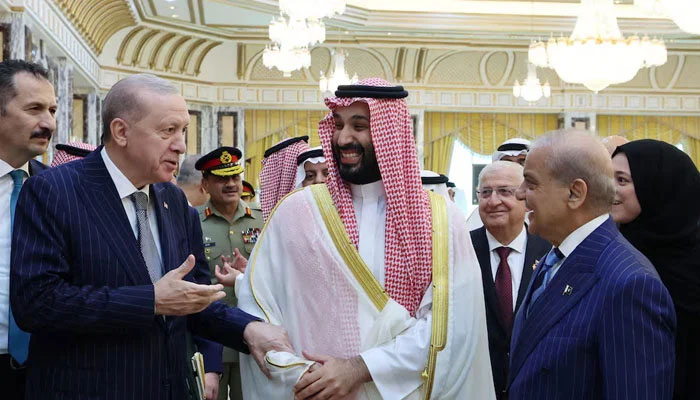
    DHAKA: Bangladesh has signalled that it could consider joining the emerging economic or defence framework involving Pakistan, Saudi Arabia and Türkiye, opening a potentially significant new chapter in regional diplomacy and security cooperation. Bangladesh Prime Minister’s Foreign Affairs Adviser Humayun Kabir said Dhaka was taking a positive view of the possibility of becoming part of a framework involving the three countries. His comments come only weeks after Pakistan, Saudi Arabia and Türkiye signed the Makkah Joint Defence Agreement. The agreement, signed in Makkah on Aug 7, commits the three countries to strengthening collective security and defence cooperation. It also states that an armed attack against any one of the three signatories would be regarded as an attack against all three. Kabir, speaking to Bangladesh’s state news agency, indicated that Dhaka would examine the idea through the lens of its own national interests and the rapidly changing global economic and trade environment. “The government is following a Bangladesh First policy,” Kabir said, according to reports, stressing that national interests remain at the centre of Dhaka’s foreign policy. The remarks are particularly noteworthy because Bangladesh has recently been working to strengthen practical ties with Pakistan. Kabir said the two countries were seeking greater cooperation in trade and people-to-people contacts, suggesting that economic engagement could form an important part of the relationship. For Pakistan, Bangladesh’s interest could give the Makkah framework a wider South Asian dimension. For Saudi Arabia and Türkiye, Dhaka’s possible participation could also expand the reach of an arrangement that the signatories have described as defensive rather than directed against any particular country. Turkish President Recep Tayyip Erdogan has said the agreement is open to other friendly countries seeking peace, prosperity and stability in the region. Turkish officials have also stressed that the pact does not identify a common enemy and is intended to strengthen defence cooperation and collective deterrence. Bangladesh’s possible move comes as Dhaka is also deepening its relationship with Saudi Arabia. Kabir said Prime Minister Tarique Rahman is expected to visit Saudi Arabia following an invitation from Crown Prince Mohammed bin Salman. The visit could provide an opportunity for discussions on economic cooperation, regional security and Bangladesh’s possible role in broader regional frameworks. For now, Dhaka has not announced any formal decision to join the defence agreement. But its positive signal is already attracting attention, particularly because Bangladesh’s participation could reshape the strategic picture across South Asia and the wider Muslim world. The next step will likely depend on how Dhaka assesses the proposed framework against its national interests, economic priorities and wider foreign-policy objectives.

  • | | |

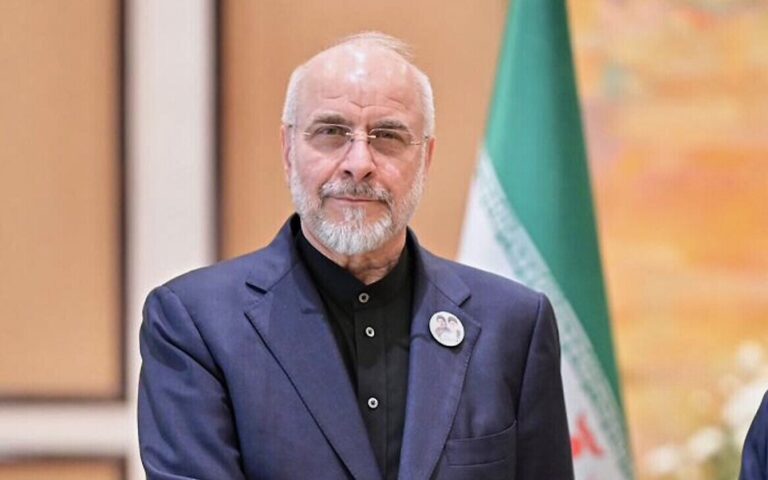
    ‘No more theatre’: Ghalibaf challenges Trump over talks

    TEHRAN: Iran’s Parliament Speaker and chief negotiator Mohammad Bagher Ghalibaf has delivered a blunt message to US President Donald Trump, calling for facts, commitments and serious diplomacy instead of what he described as political theatre. Reacting to Trump’s remarks suggesting that a major attack could be imminent, Ghalibaf said Iran was still prepared to negotiate, but expected the United States to demonstrate seriousness at the negotiating table. “Accept the facts and fulfil your promises,” Ghalibaf said, stressing that there was no need for further diplomatic drama and that responsible conduct was required. His comments come amid heightened tensions between Tehran and Washington, with negotiations remaining a key focus even as both sides continue to exchange strong warnings. Ghalibaf has emerged as a central figure in Iran’s diplomatic efforts and has been involved in negotiations with the United States. He was also re-elected as speaker of Iran’s parliament in May, securing 235 votes from 271 lawmakers who cast ballots. Ghalibaf accused Washington of repeatedly using pressure tactics, including threats, broken promises and what he characterized as false reports. According to him, such an approach has failed to achieve its intended purpose. The Iranian official’s message combines a firm warning with an opening for dialogue: Tehran, he suggested, is willing to talk, but not under pressure. The latest remarks could add another layer of uncertainty to already fragile US-Iran diplomacy, particularly as both sides weigh whether negotiations can prevent another escalation.

  • | |

    Russia calls for immediate end to Yemen blockade

    UNITED NATIONS: Russia has called for the immediate and complete lifting of the maritime and land blockade imposed on Yemen, urging an end to restrictions on the delivery of food, medicines and other essential supplies. Speaking at the United Nations Security Council, Russian representative Yulia Zhdanova blamed the United States and Israel for contributing to the growing tensions surrounding Yemen, according to Arab media reports. Zhdanova said restrictions affecting the movement of humanitarian supplies should be removed to prevent further suffering among Yemen’s population. She stressed that civilians should not bear the consequences of the wider regional conflict. The Russian diplomat also argued that the prolonged deadlock in Yemen’s peace process had created conditions in which the Houthis became increasingly drawn into the regional confrontation. Moscow urged the immediate resumption of peace negotiations, saying there was no lasting military solution to the conflict. Zhdanova said a political settlement could only be achieved through dialogue involving Yemen’s key political forces. She called for the legitimate interests of all major stakeholders, including the Houthis, to be taken into account during negotiations. Russia’s appeal comes as Yemen remains caught in a wider regional crisis, with concerns growing over humanitarian access and the disruption of essential supplies. Moscow said renewed diplomacy and an inclusive political process were necessary to move Yemen towards lasting peace and reduce the risk of further escalation.

Leave a Reply

Your email address will not be published. Required fields are marked *