hopes hormuz deal
|

Hopes for Hormuz deal fade as Trump demands Iranian reparations

WASHINGTON, USA – US President Donald Trump on Monday, August 10, responded to Iran’s conditions for a peace deal with his own demands that Iran pay compensation for people killed in wars, attacks and protests, in a rhetorical escalation likely to complicate efforts to reopen the Strait of Hormuz.

Trump’s proposal, which had not been raised before, was a response to Tehran’s demands for compensation and an end to sanctions. The Iranian demands were largely in line with the terms of a preliminary peace deal signed in June, which has since broken down.

Since the war began in February, Trump has repeatedly oscillated between threats of escalation and claims that a peace deal is imminent.

Must Read

Iran ties Hormuz reopening to US concessions on several demands


Iran ties Hormuz reopening to US concessions on several demands

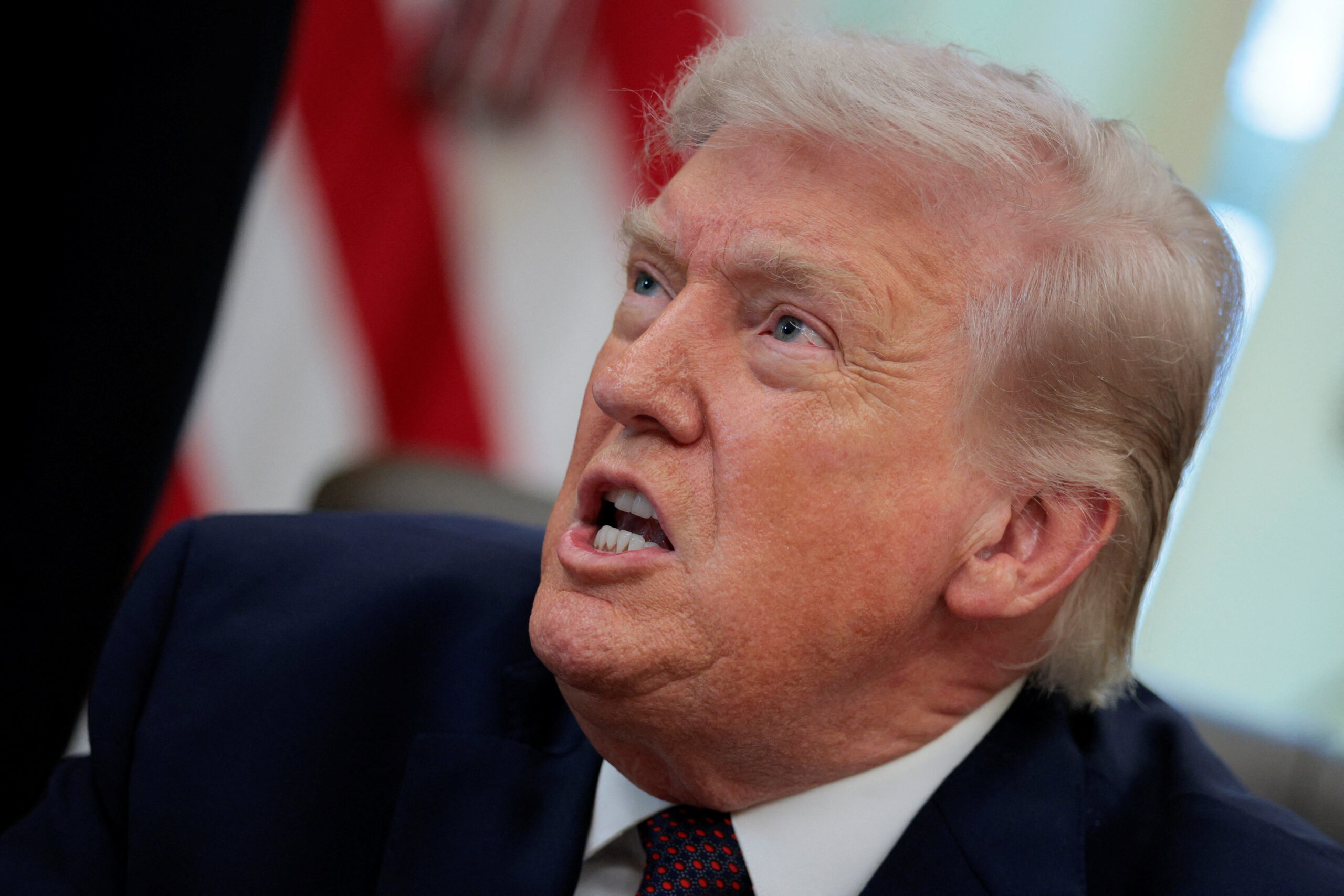
“We’re going to ask for money for the damage they’ve done over a 50-year period,” Trump said at the White House, saying payments would cover deaths among both civilian demonstrators and US forces in the region.

“So if there’s damages to be paid, I think Iran should pay those damages,” Trump said.

Oil prices settled 5% higher on Monday after the demands dimmed prospects for a deal to reopen the strait.

Trump cites attack blamed on al Qaeda, not Iran

Referring to Tehran’s crackdown on demonstrations in late 2025 and 2026, Trump said Iran had killed some 52,000 protesters as of six weeks ago. While some Iranian opposition and exile groups have claimed tens of thousands killed, the US-based Human Rights Activists News Agency (HRANA) in February reported around 7,000 deaths including 6,500 protesters.

Trump encouraged protesters to overthrow the Iranian government when the war began with US and Israeli airstrikes in February. Rights groups say the Iranian government has continued to crack down on opponents since then.

Trump also said Iran should compensate families of the 17 US sailors killed in an October 2000 attack in Yemen on the naval vessel USS Cole, which has been blamed on al Qaeda, not Iran.

“Also, with respect to the Iran negotiations, Iran should be responsible for the damages and death caused to the people of Lebanon, Syria, Yemen, and Gaza!” Trump wrote in a Truth Social post.

Iran earlier said it was nearing a final pact with Oman defining new shipping lanes between them through the Strait of Hormuz but repeated that the US must meet conditions, including compensation and an end to sanctions and military threats before the key waterway is reopened.

The strait, through which about a fifth of global oil and liquefied natural gas flowed prior to the conflict, has been effectively blocked since the war began, pushing up oil prices and inflation.

Trump under pressure

Ironically, the agreement with Oman would give Tehran more leverage over the key waterway than it had before the war began.

Trump is under pressure to end a war that is deeply unpopular at home ahead of midterm elections in November, and high fuel prices are a top issue in rural areas that have backed him in the past.

“What you’re seeing here is the beginning of a capitulation,” Democratic US Representative Bill Keating said on CNN. “This is reality. It’s sinking in.”

Earlier on Monday, Iranian Foreign Ministry spokesman Esmaeil Baghaei said talks with Oman were “progressing smoothly and constructively,” with an agreement reached on a shipping route map, while some technical issues remained unresolved.

Baghaei said the discussions also covered services which would normally involve payment, such as safe navigation, environmental protection, maritime services and combating crime.

US officials have repeatedly ruled out any deal that would allow Tehran to charge fees for access to the strait.

But months of US military efforts, including a two-week campaign of strikes in July, have not broken Iran’s grip on the strait, despite Trump’s misleading claim, repeated on Monday, that the strait was open and, “The only one that has control of the Strait of Hormuz right now is the United States Navy.”

Washington and Tehran agreed to a ceasefire in June, but the US reimposed a blockade on Iranian shipping in July, a move that Tehran said violated the truce.

Iran has been striking back with missiles and drones against Washington’s allies in the region, while also targeting commercial ships transiting the strait without its permission. – Rappler.com

Similar Posts

  • | | |

    Pakistan Independence Day celebrated at New York C…

    NEW YORK: Pakistan’s Independence Day was celebrated at the historic New York City Hall this year in a landmark event highlighting the growing presence and contributions of the Pakistani-American community. The ceremony marked the first time that Pakistan’s Independence Day celebrations were held inside New York City Hall, making it a notable occasion for the Pakistani diaspora and a significant moment in Pakistan-US community relations. The event was jointly organised by New York City Council Speaker Julie Menin and Council Member Linda Lee, with support from the American Pakistani Advocacy Group (APAG). Pakistan’s Consul General in New York, Aamer Ahmed Atozai, addressed the gathering and praised APAG and the participating elected representatives for their efforts in arranging the historic celebration. He described the event as a proud and memorable moment for Pakistani-Americans and said holding the ceremony at City Hall reflected the organisers’ strong connection with Pakistan. A large number of Pakistani-Americans, elected officials, community representatives and members of the media attended the ceremony. Speaking at the event, Speaker Julie Menin acknowledged the valuable contributions of the Pakistani-American community to New York City. She highlighted the community’s role in the city’s development while maintaining strong ties with both Pakistan and the United States. Other lawmakers and speakers also commended the Pakistani-American community for its dedication, resilience and continued contributions. They highlighted its role as an important bridge between Pakistan and the United States and recognised its growing influence in the city’s civic, economic and social life. The historic celebration at New York City Hall underscored the increasing significance of the Pakistani-American community and its positive contributions to New York, while also highlighting the enduring people-to-people ties between Pakistan and the United States. Moreover, Pakistan’s diplomatic efforts to promote peace and stability, including its role in mediating during the recent US-Iran tensions, were highlighted at an Independence Day ceremony held at Pakistan House in New York. Speaking at the event, Pakistan’s Permanent Representative to the United Nations, Ambassador Asim Iftikhar Ahmad, said Pakistan had consistently sought peaceful solutions amid growing international instability and conflicts. He urged renewed commitment to the country’s founding principles, sovereignty, security, peace and socio-economic progress. The ambassador paid tribute to Quaid-e-Azam Muhammad Ali Jinnah, describing him as a visionary statesman whose leadership led to the creation of Pakistan. Reflecting on the country’s journey since independence, he praised the resilience and achievements of Pakistanis despite significant challenges. Ahmad also commended the armed forces for their sacrifices in defending the country and protecting its people, while recognising the achievements of Pakistanis abroad in fields ranging from innovation and sports to the arts. He reaffirmed Pakistan’s diplomatic and political support for the people of Indian Illegally Occupied Jammu and Kashmir and for the rights of Palestinians. He also stressed the importance of combating terrorism while advancing economic development and national progress. Consul General Aamer Ahmad Atozai also paid tribute to the leaders and workers of the Pakistan Movement, emphasising that freedom carries both a legacy and a responsibility. He highlighted the Pakistani-American community’s contributions through investment, remittances, philanthropy and expertise, describing it as an important bridge between Pakistan and the United States. The ceremony featured the hoisting of the Pakistani flag and the national anthem, while messages from Pakistan’s leadership were also read out. Addressing children at the gathering, Ambassador Ahmad described them as the country’s future and called for collective efforts to build a peaceful, prosperous and inclusive Pakistan. The event concluded with calls for greater national unity and continued commitment to peace, diplomacy and Pakistan’s progress on the global stage.

  • | |

    UK rapper Yung Filly acquitted of rape but convicted of assault in Western Australia

    British social media personality and rapper Yung Filly, whose real name is Andrés Felipe Valencia Barrientos, has been found not guilty of raping a fan in his hotel room following a performance in Hillarys, Western Australia. A jury at the District Court of Western Australia in Perth delivered the verdict on Friday after an eight-day trial, acquitting the 30-year-old on three counts of sexual penetration without consent, an assault charge involving an alleged slap, and a choking charge. However, the jury convicted Barrientos on two counts of assault occasioning bodily harm related to bite marks inflicted on the woman’s neck and breast during the encounter. The jury remained hung on three additional counts of sexual penetration without consent. Barrientos, who denied all charges and maintained that the acts were consensual, wept as the decision was announced. He remains free on bail until 21 August, when a court date will be set to determine his sentencing for the assault convictions and decide whether prosecutors will seek a retrial on the unresolved rape charges.

  • | |

    Pentagon faces shortage of missile defense interceptors

    The US Department of Defense is facing a growing shortage of missile defense interceptors after months of sustained military operations in the Middle East, raising concerns among American defense planners about the Pentagon’s ability to maintain its current pace of operations and protect US forces in the event of another major conflict. According to a report by Fox News, data compiled by the Center for Strategic and International Studies (CSIS) indicates that US stocks of Patriot air defense interceptors have fallen sharply. Before the recent escalation in regional conflicts, the United States reportedly held around 2,300 Patriot interceptors. That figure has now dropped to fewer than 827. The Pentagon has also seen a significant reduction in its stockpile of interceptors used by the Terminal High Altitude Area Defense (THAAD) system. CSIS data cited in the report shows that the number of THAAD interceptors has declined from approximately 452 to fewer than 278. The decline in these critical missile defense stocks has prompted questions about the US military’s ability to respond to multiple threats at the same time. Defense planners are particularly concerned about the possibility of a new crisis emerging in another strategic region, such as the Indo-Pacific, while American forces remain engaged in the Middle East. CSIS has warned that rebuilding depleted interceptor inventories could take at least three years. The lengthy replenishment timeline reflects the difficulty of rapidly expanding production of sophisticated missile defense systems, which require specialized components, advanced manufacturing capabilities and extensive testing. The shortage could create additional pressure on US military leaders as they balance the need to defend American troops and military installations overseas with the requirement to maintain sufficient reserves for future conflicts. To address the growing gap, the Pentagon has included $18.2 billion in its broader $67 billion emergency funding request for fiscal year 2026. The proposed funds would support the replenishment of Patriot interceptors, Tomahawk cruise missiles used by the US Navy and additional interceptors for the THAAD missile defense system. The Pentagon’s spending plans also highlight a broader effort to rebuild weapons inventories that have come under pressure from sustained military operations and rising global security demands. US defense officials have increasingly focused on expanding domestic production capacity and ensuring that the military can replace weapons at a faster rate. According to the report, nearly half of the weapons included in the Army’s preliminary fiscal year 2027 budget requests fall into the relatively lower-cost category, with each weapon costing $600,000 or less. The approach reflects efforts to strengthen stockpiles of systems that the military can procure in larger quantities while continuing to invest in more advanced and expensive defense technologies. The interceptor shortage underscores a wider challenge for the United States as it seeks to prepare for potential conflicts on multiple fronts. While missile defense remains a key component of US military strategy, the depletion of interceptor stocks could limit Washington’s flexibility if it faces simultaneous threats in the Middle East, Europe or the Indo-Pacific. Defense analysts say the issue also highlights the importance of maintaining adequate reserves during prolonged conflicts. Replenishing stocks may take years, meaning decisions about the use of missile defense interceptors could become increasingly important as the Pentagon seeks to protect US personnel and strategic assets while preserving its ability to respond to future crises.

  • | | |

    Pakistanis get relief as US visa policy overturned

    A US federal judge has struck down a State Department policy that suspended immigrant visa processing for applicants from Pakistan and 74 other countries. US District Judge Jeannette Vargas issued the ruling in Manhattan, finding that the policy exceeded the legal authority of Secretary of State Marco Rubio. The State Department had introduced the suspension in January, preventing consular officials from issuing immigrant visas to applicants based solely on their nationality. Judge Vargas described the policy as unlawful and said it conflicted with federal immigration law. She ruled that the law does not give the Secretary of State the authority to impose a blanket suspension on immigrant visa issuance based on an applicant’s nationality. The policy affected applicants from a wide range of countries, including Pakistan and Bangladesh in South Asia. Several countries in Latin America, the Balkans, Africa, the Middle East and the Caribbean were also included. US authorities had defended the measure by arguing that applicants from the listed countries were considered more likely to become dependent on government-funded assistance after entering the United States. The ruling came in a case brought by immigrant rights organisations, visa applicants and US citizens sponsoring family members from the affected countries. The plaintiffs challenged the State Department’s decision, arguing that the blanket suspension unlawfully restricted access to the immigrant visa process. The decision represents a legal setback for the Trump administration, which has pursued tougher immigration policies since returning to office. The administration has said its immigration measures are intended to strengthen national security and reduce pressure on public resources. Immigrant rights groups, however, have criticised several aspects of the crackdown. They have raised concerns about due process, discrimination and the treatment of ethnic minorities. The State Department had not immediately issued a response to the judge’s decision.

  • |

    Irish politicians urge action over citizen’s high-security pro-Palestinian trial in Germany

    A cross-party delegation of Irish politicians has called on Dublin to send official observers to the trial of the “Ulm 5” activists in Stuttgart and raise concerns over the severe detention conditions of Irish citizen Daniel Tatlow-Devally. Tatlow-Devally, 32, was arrested alongside four other Berlin-based European activists in September after trespassing at an Ulm facility owned by Israeli defense contractor Elbit Systems, where they destroyed equipment and smashed windows to protest German arms exports to Israel. German prosecutors have charged the group with trespassing, property damage exceeding €1 million, and membership in a criminal organisation under Section 129 of the German criminal code. The visiting delegation, including Sinn Féin TD Mairéad Farrell and representatives from Fine Gael, Labour, People Before Profit–Solidarity, and the Social Democrats, voiced alarm over Tatlow-Devally being confined to a 5×2-metre cell for 23 hours a day with only one hour of monthly visitation. They also highlighted courtroom barriers, such as holding the defendants behind glass panels that restrict direct legal communication. Farrell urged Irish Prime Minister Micheál Martin to press German Chancellor Friedrich Merz on human rights and legal access concerns during his upcoming visit to Dublin.

  • |

    IRGC claims destruction of US Aircraft on ground a…

    Iran’s Islamic Revolutionary Guard Corps has claimed that its attacks have destroyed US aircraft on the ground at bases throughout the region, according to a statement published by Iran’s semi-official Fars news agency. The IRGC spokesman said the attacks resulted in the destruction of “17 reconnaissance and operational drones, one F-15 fighter jet inside a hangar, one P-8 aircraft, one C-17 transport aircraft, and 8 refuelling aircraft.” The claims come amid escalating tensions between Iran and the US, with both sides trading military strikes in the Middle East. The US has conducted strikes on Iranian targets, while Iran has launched attacks on US allies in the Gulf region and targeted US military assets. The IRGC’s statement is part of Iran’s ongoing efforts to showcase its military capabilities and assert its role in the conflict. The claims have not been independently verified, and the US has not yet responded to the IRGC’s assertions. However, the destruction of US aircraft would represent a significant escalation in the conflict, potentially drawing the US into a wider confrontation with Iran. The US has enforced a naval blockade in the Strait of Hormuz, while Iran has targeted vessels that violated its rules on navigating the vital waterway. The IRGC’s claims come as diplomatic efforts continue to de-escalate the situation. Iran has urged dialogue to resolve Saudi-Yemen tensions, while Qatar and Egypt have discussed regional stability and de-escalation efforts in a Doha meeting. The Yemeni Houthis’ spokesman has also met with a Saudi delegation, indicating ongoing diplomatic engagement despite the military escalation. The international community has urged restraint, with the UN warning of catastrophic consequences if the violence continues. However, the situation remains volatile, with both sides showing little willingness to de-escalate. The IRGC’s claims of destroying US aircraft are likely to further inflame tensions, raising the stakes in the conflict and increasing the risk of a wider war. As the situation continues to evolve, the international community will be watching closely for any signs of further escalation. The US has warned that Iran will pay “many times over” for any US troop deaths, while Iran has vowed to defend its territory against any aggression. The conflict has already disrupted global energy supplies and threatened economic stability, and the situation remains precarious. The coming days will be critical in determining whether diplomatic efforts can prevent a full-scale war or whether the region will slide further into chaos, with devastating consequences for the region and the global economy. The world hopes for a diplomatic breakthrough that can bring an end to the violence and restore stability to the region. The IRGC’s claims, if confirmed, would represent a significant development in the conflict, underscoring the need for urgent diplomatic intervention to prevent further escalation. The focus remains on finding a peaceful resolution to the crisis, with all parties urged to exercise restraint and engage in meaningful dialogue. The international community continues to support efforts to de-escalate tensions and promote regional stability, but the path to peace remains fraught with challenges. The coming weeks will be critical in shaping the future of the Middle East and the broader global order, with the conflict serving as a stark reminder of the dangers of unchecked escalation and the importance of diplomacy in resolving disputes.

Leave a Reply

Your email address will not be published. Required fields are marked *