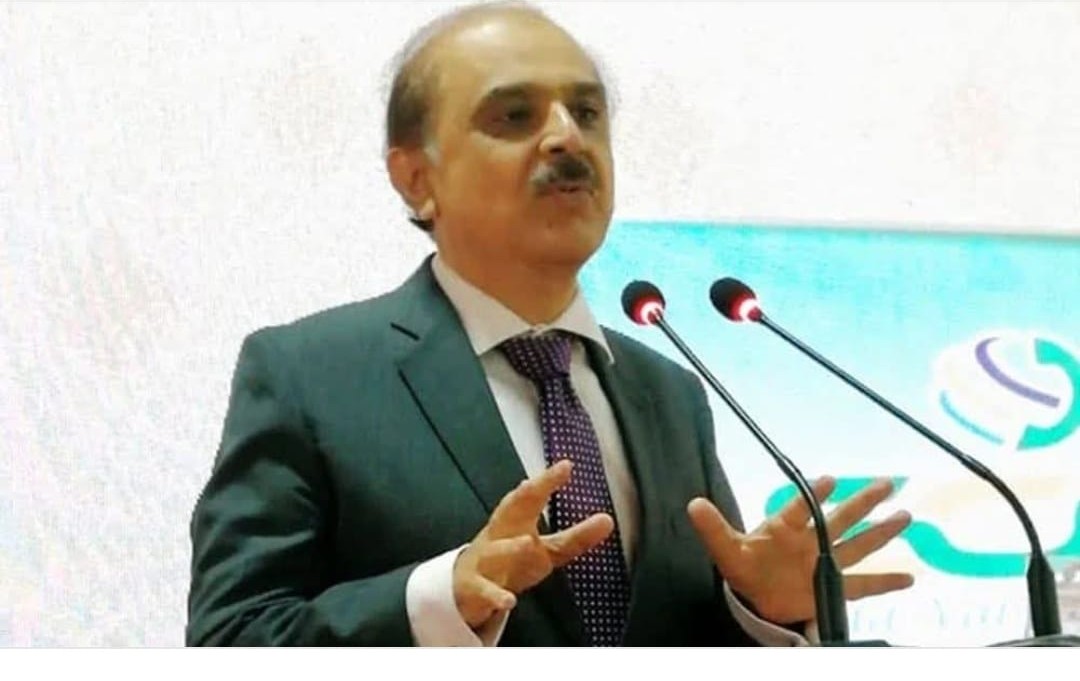
fifa backs gianni
|

FIFA backs Gianni Infantino, apologise for World Cup privatisation plan

RABAT: FIFA has thrown its full support behind president Gianni Infantino despite growing criticism over the now-abandoned proposal to privatise the commercial rights of the FIFA World Cup, while admitting that serious mistakes were made during the handling of the controversial plan.

The governing body’s senior leadership met in Rabat, Morocco, on Wednesday to address the crisis that erupted after details of the proposal were leaked to the media. Following the meeting, FIFA issued a statement reaffirming its confidence in Infantino but also apologised to member associations for the way the process was managed.

The proposed project, known as the FIFA Forward Enterprise (FFE), aimed to create a new commercial subsidiary responsible for managing tournaments such as the FIFA World Cup and Club World Cup. FIFA estimated the venture could generate up to $4.2 billion, based on a valuation of $20 billion, while significantly increasing financial support for its 211 member associations.

Under the proposal, each member nation would have received a one-time payment of $20 million in 2027, with regular funding for the 2027–2030 cycle rising from $8 million to $20 million.

However, instead of winning support, the initiative sparked fierce opposition from football stakeholders worldwide. UEFA strongly criticised the plan, describing it as an opaque agreement that lacked transparency, while CONCACAF questioned Infantino’s leadership and governance. Canadian Prime Minister Mark Carney also publicly expressed doubts about Infantino’s ability to continue leading world football.

Facing mounting pressure, Infantino withdrew the proposal last weekend, saying FIFA’s primary goal had always been to unite and strengthen the global game.

In Wednesday’s statement, FIFA admitted that member associations and the FIFA Council should have been more closely involved from the outset. It also acknowledged mistakes made after the proposal became public and pledged to improve transparency in future decision-making.

A formal review of the process will now be conducted, with findings expected to be presented at the next FIFA Council meeting. Officials confirmed that the FFE proposal has been permanently shelved.

Later in the day, Infantino attended a Women’s Africa Cup of Nations match in Rabat alongside Moroccan football federation president Fouzi Lekjaa, one of the few senior officials to publicly support him throughout the controversy.

Despite surviving the immediate crisis with the backing of FIFA’s leadership, the episode has raised fresh questions about governance, transparency and trust within world football, casting a shadow over Infantino’s bid for another term as FIFA president.


Similar Posts

  • |

    Trump aide impersonator texts UK PM, sparking security scare

    A security mystery has emerged after an individual posing as White House Chief of Staff Susie Wiles reportedly exchanged text messages with UK Prime Minister Andy Burnham. The communications have raised concerns in both Britain and the United States. Officials are examining how the impersonator was able to establish contact with the British prime minister. According to reports, Burnham received a limited number of messages from the individual while he was campaigning for office. The communication reportedly continued for a short period after he became prime minister. Sources familiar with the matter said the messages were ultimately considered to be of no significant consequence. However, the incident triggered concerns because the impersonator claimed to represent a senior White House official. The matter was serious enough for the British embassy in Washington to raise the issue directly with the White House. British officials initially considered the possibility that the real Susie Wiles’ phone, contact information or communications may have been compromised. Authorities therefore examined whether the incident involved a wider security breach. The identity of the person behind the impersonation remains unclear. The incident has highlighted the growing risks posed by sophisticated impersonation scams. High-profile political figures are increasingly being targeted by individuals who attempt to gain their trust by pretending to be senior officials or influential public figures. Similar incidents have previously involved prominent American politicians and business leaders. In such cases, scammers have used false identities and digital communications to establish contact with their targets. The latest case has attracted particular attention because of the positions held by the people involved. Wiles is a senior figure within the White House, while Burnham is the UK prime minister. Despite the security concerns, there is currently no indication that sensitive information was exchanged during the messages. Sources described the content of the communications as having no significant impact. Downing Street has declined to discuss the specific details of the incident. British officials have maintained that national security matters are not normally discussed publicly. The White House has also declined to comment on the reported communications or the identity of the impersonator. The incident nevertheless raises questions about how the individual obtained access to Burnham and successfully presented themselves as a senior White House official. Officials are expected to examine the communication trail and other available evidence to determine how the impersonation occurred. The case also highlights the challenges faced by governments in verifying digital identities. Text messages and other online communications can make it easier for individuals to impersonate senior officials, particularly when they use convincing names, photographs or other identifying details. For now, the mystery surrounding the impersonator’s identity remains unresolved. Authorities have not publicly identified the person responsible or confirmed whether the incident was part of a broader campaign.

  • | |

    Lee Andrews’ father freed from Dubai prison

    The father of Katie Price’s estranged husband, Lee Andrews, has reportedly been released from Dubai’s Al Awir Central Prison after being briefly detained alongside his son on fraud and financial debt allegations, according to local reports. ​The elder Andrews was taken into custody earlier this month after becoming embroiled in the complex web of financial and legal disputes surrounding his son in the United Arab Emirates. The dramatic arrest meant both father and son were simultaneously held inside the high-security Dubai correctional facility, which frequently detains foreign nationals involved in civil and criminal litigation. ​While details regarding the exact terms of his release remain limited, sources indicate that the elder Andrews was freed after authorities resolved his preliminary processing matters and cleared his immediate detention status. However, Lee Andrews remains behind bars as he works to secure the substantial funds required to clear multiple outstanding financial judgments and legal claims lodged against him in the UAE. ​The ongoing legal saga initially made international headlines after British media personality and model Katie Price launched a public search for Andrews, whom she married in January following a whirlwind 15-day romance. Andrews had mysteriously disappeared while attempting to travel to the United Kingdom, leading Price and his family to express fears that he had been kidnapped on suspicion of espionage. However, UAE authorities later confirmed that Andrews had been arrested over unpaid civil debts and alleged business fraud. ​Court records and insider reports reveal that Andrews faces multiple legal proceedings in Dubai, including a dispute with a local car rental agency over an unpaid bill exceeding 266,000 dirhams (approximately £54,000), alongside thousands in unpaid legal fees owed to a UAE law firm. Additional allegations involve an unpaid £140,000 court fine and claims from international investors alleging fraudulent property schemes. ​Despite remaining incarcerated, Andrews has reportedly assured fellow inmates that his release is imminent once his legal team finishes processing financial settlements with creditors. Meanwhile, Price—who recently traveled to Dubai to visit him behind bars—has publicly refused to assist him financially or set up crowdfunding campaigns to cover his debts. ​Friends close to the former glamour model indicate that she is growing increasingly frustrated by the mounting legal drama, with reports suggesting she is considering formal divorce proceedings once Andrews’ legal issues in the Emirates are fully resolved.

  • | |

    US vows unprecedented economic pressure on Iran

    WASHINGTON: The United States hUS vows unprecedented economic pressure on Iranas warned that it will introduce an unprecedented package of economic measures against Iran as Washington prepares to intensify pressure on Tehran amid stalled ceasefire negotiations and rising tensions around the Strait of Hormuz. US Treasury Secretary Scott Bessent said further announcements were expected next week, describing the planned measures as unlike anything previously used against a country facing economic isolation. Bessent said the new strategy would combine tougher economic restrictions with continued efforts to prevent Iranian ports from receiving or sending goods. He indicated that Washington intended to use economic pressure alongside restrictions on maritime traffic through the strategic Strait of Hormuz. US Defence Secretary Pete Hegseth, meanwhile, said the American military was capable of maintaining a naval presence in the region for an indefinite period to enforce the blockade. He said US naval vessels could be rotated in and out of the region to sustain the operation. The confrontation comes as attempts to revive a ceasefire agreement have faltered. Iran has sought to use its position around the Strait of Hormuz as leverage against Washington, while the United States has continued to tighten economic pressure on Tehran. The waterway has become a major flashpoint because of its importance to global energy supplies. Before the conflict began, roughly one-fifth of the world’s oil and liquefied natural gas shipments passed through the strait. Shipping activity has since fallen sharply, raising concerns over supplies, prices and the wider global economy. Two vessels belonging to Abu Dhabi National Oil Company were also attacked while transiting the strait, according to the United Arab Emirates’ state news agency. The UAE government blamed Iran for the incident. US President Donald Trump has repeatedly claimed that Washington has control over the strategic waterway. Iran, however, has rejected that assertion and maintained that the strait will not fully reopen unless its demands are addressed. Tehran has called for the removal of economic sanctions and the release of frozen Iranian assets. The prolonged confrontation is also putting pressure on the global energy market. The International Energy Agency has revised its forecast for global oil supply, warning that production could fall by about 4.3 million barrels per day this year. Oil prices declined by more than 2% on Thursday as markets reacted to expectations of weaker demand and a rise in US crude inventories. However, renewed attacks in the region continued to fuel fears that the conflict could spread further. The economic consequences are becoming increasingly serious. Economists have warned that a prolonged war could weaken global growth and increase the risk of recession in some economies. Hegseth declined to say whether declaring a ceasefire earlier in the year had been a mistake. He said the administration remained focused on preventing Iran from obtaining a nuclear weapon and insisted that the United States was taking the steps it considered necessary to achieve that objective.

  • |

    Taiwan president joins wartime evacuation drill

    Taiwan has intensified its annual military exercises by rehearsing the wartime evacuation of President Lai Ching-te, testing how the government would continue operating if the island came under attack. During the overnight exercise, President Lai, wearing body armour and a helmet, was transported in an armoured personnel carrier to a secure command centre. Senior government officials also participated in the drill, which focused on maintaining leadership, coordinating emergency responses and ensuring the continuity of government during a national crisis. The evacuation formed part of Taiwan’s 10-day Han Kuang military exercises, the country’s largest annual defence drill. The exercises are designed to strengthen military readiness amid growing tensions with China, which claims Taiwan as its territory and has repeatedly vowed to bring the self-governed island under its control, by force if necessary. The wartime evacuation plan has its roots in the Cold War era and was created to protect Taiwan’s leadership in the event of an invasion. Taiwanese authorities have long expressed concern that China could attempt a “decapitation strike” targeting the president and other senior officials during a conflict. As part of this year’s drills, President Lai also observed coast guard vessels being equipped with missile launchers, highlighting efforts to improve Taiwan’s coastal defence capabilities. Military units have deployed advanced air defence systems and other equipment across key locations as they practise responding to realistic combat scenarios. The exercises also include training for counter-blockade operations, coastal defence, protection of strategic infrastructure and broader civilian support during wartime. Next week, authorities will test emergency communication systems by deliberately reducing mobile internet speeds to evaluate how people would communicate if networks became disrupted during a crisis. Meanwhile, Taiwan’s defence ministry reported continued Chinese military activity near the island, saying multiple Chinese aircraft and naval vessels were detected operating around Taiwan during the exercises. Beijing has not officially commented on the ongoing drills but continues to increase military pressure on the island while rejecting President Lai’s calls for dialogue.

  • | |

    GB to auction hunting permits for Markhor, blue Sh…

    GILGIT: The Parks and Wildlife Department of Gilgit-Baltistan is set to auction hunting permits for three Astore markhors, 14 blue sheep and 100 Himalayan ibexes under the region’s Trophy Hunting Programme for the 2026-27 season. The base price for an Astore markhor permit has been fixed at $200,000, making it the most expensive permit on offer. The minimum price for a blue sheep permit has been set at $25,000, while permits for Himalayan ibex will start at $11,000. According to the auction notice, four Astore markhors are included in the exportable quota. However, one permit from the previous hunting season has been carried forward, leaving three fresh permits to be auctioned this year. The open auction will take place on September 10 at the Forest Complex in Jutial, Gilgit. The trophy hunting season will begin on October 15, 2026, and continue until April 10, 2027, in accordance with the GB Trophy Hunting Guidelines 2019. Hunting will be permitted only within officially designated conservation areas. The department said the annual hunting quota has been determined following wildlife population surveys conducted by experts. GB Chief Conservator Parks and Wildlife Zakir Hussain said that the department collected approximately Rs350 million through permit auctions last year against a target of Rs550 million. He said several permits remained unused during the 2025-26 season, including those for two Astore markhors, five blue sheep and 10 exportable Himalayan ibexes. The unused permits resulted in an estimated revenue loss of around Rs200 million. According to officials, the cancellation of hunting plans by American and other international hunters was linked to the law-and-order situation following violent protests in Gilgit and Skardu. Local business owners and tourism operators have expressed concern over repeated increases in trophy hunting permit prices. They argue that higher baseline rates have discouraged foreign hunters and negatively affected businesses connected with hunting tourism. Ikram Beg, a local business owner who sells hunting equipment, said the trophy hunting programme was facing significant challenges. He claimed that the Wildlife Department had increased baseline prices by more than 300 per cent over the past two years without adequately incorporating recommendations from major stakeholders. According to Beg, excessive price increases could make Gilgit-Baltistan less competitive in the international trophy hunting market. He warned that declining international participation could reduce government and community revenues while weakening incentives for local residents to participate in wildlife conservation. Beg stressed that trophy hunting should primarily serve as a conservation mechanism rather than simply becoming a source of increased government revenue. He said the programme’s long-term success depends on reasonable pricing, international participation, transparent administration and meaningful financial benefits for local communities. Local stakeholders have called for a review of the permit rates and greater consultation with communities, conservation specialists and industry representatives. They have also demanded transparency and strict adherence to applicable rules and regulations. Although trophy hunting remains controversial internationally, its supporters argue that regulated hunting can generate funds for conservation, discourage illegal hunting and provide financial benefits to communities living near wildlife habitats. In Gilgit-Baltistan, the programme began with community participation in Bar Valley, Nagar, in 1990. Under the existing revenue-sharing model, approximately 80 per cent of licence revenue goes to local communitiesfor wildlife protection and conservation activities. The region’s challenging terrain and harsh weather also make trophy hunting highly demanding. Hunters must navigate steep and rugged mountain slopes while dealing with extremely cold conditions. Gilgit-Baltistan is home to diverse wildlife because of its varied ecosystems and climate. Species found in the region include Marco Polo sheep, ibex, markhor, urial, blue sheep, lynx, snow leopards, brown and black bears, wolves, foxes and golden eagles. However, wildlife experts and conservationists continue to face concerns over illegal hunting, inadequate wildlife management and the effects of climate change, all of which pose long-term threats to the region’s biodiversity.

  • |

    Pakistan women announce squads for Asia Cup and Asian Games

    ISLAMABAD: Pakistan have announced their women’s cricket squads for the upcoming Women’s Asia Cup and Asian Games, with Fatima Sana set to lead the national side in both competitions as the team targets success on two major stages. The squads share a core group of players, including Muneeba Ali, Shawal Zulfiqar, Ayesha Zafar, Gul Feroza, Syra Jabeen, Eman Fatima, Eman Nasir, Umme Hani, Tuba Hassan, Nashra Sandhu and Momina Riaz. For the Women’s Asia Cup, Pakistan have added Najiha Alvi, Waheeda Akhtar and Sadia Yousuf to the squad. The Asian Games squad, meanwhile, includes Alia Riaz, Tasmia Rubab and Hamna Bilal. The national team will hold a training camp at the National Cricket Academy from August 16 to 25 as preparations intensify ahead of the two tournaments. The DP World Women’s Asia Cup will be played in Dubai from August 28 to September 13, with all 15 matches scheduled at the Dubai International Cricket Stadium. Matches will begin at 7:30pm Pakistan Standard Time. Pakistan have been placed in Group A alongside arch-rivals India, Thailand and China. Group B features Bangladesh, Indonesia, Sri Lanka and the United Arab Emirates. Pakistan will begin their Asia Cup campaign against Thailand on September 1, before facing India in a highly anticipated contest on September 5 in Dubai. The semi-finals are scheduled for September 10 and 11, while the final will take place on September 13. The team will then turn its attention to the 20th Asian Games, where the women’s cricket tournament will be held in Japan from September 17 to 22. Pakistan are seeded alongside Thailand and will play their quarter-final against Thailand on September 17. All women’s cricket matches will be staged at the Kurogiy Athletic Park in Aichi. If Pakistan advance, they will play the semi-final on September 20 against either Sri Lanka or Malaysia. The bronze and gold medal matches are scheduled for September 22. Pakistan enter the Asian Games with a proud record, having won women’s cricket gold medals at the 2010 Guangzhou and 2014 Incheon Asian Games. With a settled core, emerging talent and Fatima Sana leading both campaigns, Pakistan will hope to turn their preparation into another memorable chapter in women’s cricket. Pakistan women’s squad for ACC women’s Asia Cup  Fatima Sana (captain), Ayesha Zafar, Eman Naseer, Eyman Fatima, Gull Feroza, Momina Riasat, Muneeba Ali Siddiqui (wk), Najiha Alvi, Nashra Sundhu, Sadia Iqbal, Saira Jabeen, Shawaal Zulfiqar, Tuba Hassan, Umm-e-Hani, Waheeda Akhtar. Reserves – Tasmia Rubab, Humna Bilal, Maham Anees, Sadaf Shamas Support Staff Wahab Riaz (coach/mentor), Ayesha Ashar (team manager), Abdur Rehman (spin bowling coach), Umaid Asif (fast bowling coach), Abdul Majeed (fielding coach), Imran Farhat (batting coach), Waleed Ahmed (performance analyst), Moeen (strength & conditioning coach), Dur Samand (Physiotherapist) and Raza Rashid Kitchlew (media manager) Pakistan women’s squad for Asian Games  Fatima Sana (captain), Aliya Riaz, Ayesha Zafar, Eman Naseer, Eyman Fatima, Gull Feroza, Humna Bilal, Momina Riasat, Muneeba Ali Siddiqui (wk), Nashra Sundhu, Saira Jabeen, Shawaal Zulfiqar, Tasmia Rubab, Tuba Hassan and Umm-e-Hani. Reserves – Natalia Parvaiz, Waheeda Akhtar, Sadia Iqbal, Syeda Aroob Shah, Rameen Shamim Support Staff Wahab Riaz (coach/mentor), Ayesha Ashar (team manager), Abdur Rehman (spin bowling coach), Umaid Asif (fast bowling coach), Abdul Majeed (fielding coach), Imran Farhat (batting coach), Waleed Ahmed (performance analyst) and Tehreem Sumbal (physiotherapist) Schedule of Pakistan’s matches at the ACC women’s Asia Cup: (All matches at Dubai International Cricket Stadium; all matches to begin at 7.30pm PKT) 1 September – Pakistan v Thailand 5 September – Pakistan v India 7 September – Pakistan v Hong Kong, China 10 September – semi-final 1 11 September – semi-final 2 13 September – final Pakistan women at Asian Games (All matches at Korogi Athletic Park in Aichi prefecture) 17 September – Quarter-final 4 – Pakistan v Thailand 20 September – Semi-final 1 & 2 22 September – Bronze and Gold Medal matches

Leave a Reply

Your email address will not be published. Required fields are marked *