fifas 20bn plan
|

FIFA’s $20bn plan shakes football power balance

FIFA’s plan to bring private equity investment into global football is opening a new chapter in its long-running struggle with Europe over the sport’s power, finances and commercial control.

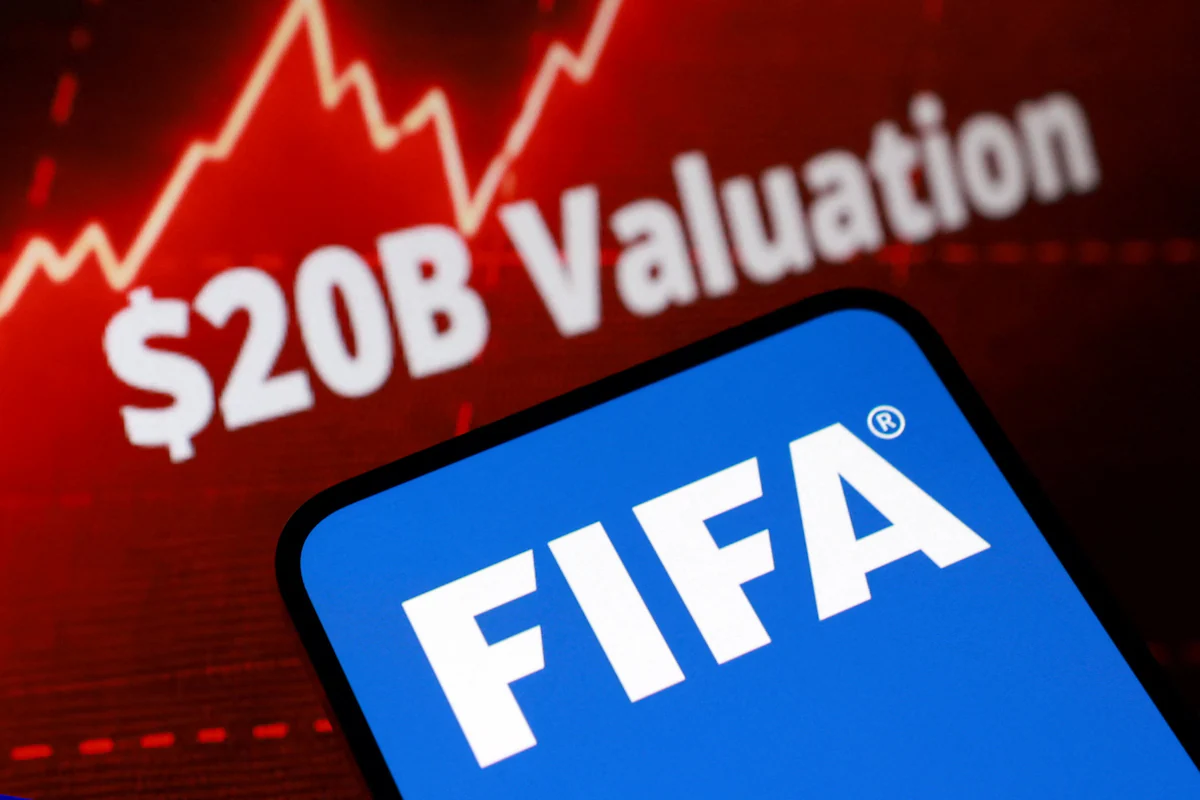
The world football governing body, led by President Gianni Infantino, is considering the creation of a subsidiary valued at around $20 billion. The proposed company would manage the World Cup and other major FIFA events.

Under the plan, outside investors could acquire stakes of up to 20% in the new entity. The proposal has already triggered strong opposition from European football authorities.

UEFA has criticised the idea and accused FIFA of putting the “soul” of football at risk by allowing private investors greater access to the sport’s most valuable competitions.

Infantino has defended the proposal as an effort to make football’s financial system more inclusive. He has described the initiative as a form of “democratisation” that could allow more football nations to benefit from the sport’s growing commercial revenues.

The plan could also provide financial incentives to FIFA’s 211 member associations. Under the proposal, each association could receive up to $20 million in immediate funding for special projects.

Further grants of $20 million or more could be provided during subsequent four-year cycles. Such funding could prove particularly attractive to smaller and emerging football nations that depend heavily on FIFA for financial support.

FIFA already generates billions of dollars through broadcasting rights, sponsorships and other commercial agreements. The organisation had set a revenue target of $13 billion for its previous four-year cycle, which included the latest World Cup and the Club World Cup.

However, FIFA’s financial strength remains smaller than the overall commercial value of European football.

UEFA reported that Europe’s top club competitions generated around €4.4 billion during the 2024-25 season alone. Football competitions across Europe generated more than €40 billion during the same period, according to Deloitte’s annual football finance review.

The continent’s five major domestic leagues — the Premier League, Bundesliga, LaLiga, Serie A and Ligue 1 — accounted for more than half of that revenue.

FIFA has spent decades trying to reduce Europe’s dominance over the global game. The organisation’s leadership has repeatedly sought to give greater influence to football associations in Africa, Asia and Latin America.

Former FIFA president João Havelange was a major figure in that effort. He expanded the World Cup and built political support among smaller football nations, helping shift the balance of influence within FIFA.

Successive FIFA presidents continued that approach. Infantino has expanded the World Cup from 32 teams to 48, increasing opportunities for countries outside Europe’s traditional football powers.

The FIFA president has also suggested that a 64-team World Cup could be considered for the 2030 centenary tournament. The idea followed calls from South American football’s governing body CONMEBOL for an expanded competition.

The proposal has faced criticism from European football officials.

LaLiga president Javier Tebas has accused FIFA of damaging the sport. His criticism reflects wider concerns in Europe about the growing number of international competitions and the commercial expansion of FIFA.

FIFA has previously attempted to attract external investment into its competitions. A proposed expansion of the Club World Cup backed by a consortium led by SoftBank in 2018 failed to materialise after strong resistance from UEFA.

The latest private equity proposal could face a similar challenge. However, Infantino has a major advantage within FIFA’s political structure.

The organisation’s decisions are determined by its global membership rather than European football alone. FIFA has 211 member associations, meaning support from Africa, Asia, Latin America and other regions could allow Infantino to advance the plan despite European opposition.

Experts believe the financial incentives could make the proposal attractive to developing football nations.

Eric Windholz, an associate professor at Monash University’s law faculty, said countries in the Global South could find the plan appealing because their domestic football competitions generate far less commercial income than major European leagues.

The regional football authorities have also reacted cautiously
Similar Posts

  • |

    South Korea football association apologises over old referee scandal

    South Korea’s football association has apologised over a controversial old scandal involving claims that foreign referees were provided inappropriate entertainment during visits to the country more than a decade ago. The apology came after a media report revived allegations surrounding incidents that reportedly took place between 2011 and 2012, including during visits by referees involved in qualifying matches for major international tournaments. According to the report, foreign match officials were allegedly provided inappropriate entertainment on several occasions. It cited a 2016 investigation by South Korea’s Ministry of Culture, Sports and Tourism, which reportedly found that such entertainment had been arranged seven times between March 2011 and March 2012. The allegations included visits to massage establishments where the costs of sexual services were reportedly covered. The claims have renewed questions over the standards and practices surrounding officials during that period. The Korea Football Association expressed regret over the matter and apologised for the controversy. The governing body also stressed that such practices are no longer taking place and that corporate cards are not being used in a similar manner. The resurfacing of the allegations comes at a difficult time for the association, which is already facing scrutiny over the appointment of former national team coach Hong Myung-bo. South Korean police reportedly raided the association’s offices on Thursday as part of an investigation into the circumstances surrounding Hong’s appointment, which has attracted significant criticism. The latest developments have therefore placed the football body under renewed pressure to address concerns over governance and transparency. While the historical allegations date back more than a decade, the association’s apology has once again brought the episode into the spotlight, raising fresh questions about accountability within South Korean football.

  • | |

    PTI vows no compromise over Imran Khan’s health …

    PESHAWAR: Khyber-Pakhtunkhwa Information Minister Shafi Jan has strongly criticised restrictions on meetings with former prime minister and PTI founder Imran Khan, saying the party will continue its legal, constitutional and political efforts to protect his health and fundamental rights. Speaking on Tuesday, Jan said the presence of a large number of PTI parliamentarians outside the Supreme Court reflected the party’s determination to ensure that Imran Khan receives proper medical care and access to his family and doctors. He described reports about the former prime minister’s health as deeply concerning and said denying him his constitutional and legal rights was unacceptable. Jan alleged that Imran Khan had been kept in detention through what the PTI considers politically motivated cases. The minister said PTI would not remain silent and would continue pressing for appropriate medical treatment, access to personal physicians and meetings with family members. He particularly criticised the reported denial of permission for Imran Khan’s sisters to meet him, calling the restrictions a violation of constitutional and legal rights as well as court directives. Jan said KP Chief Minister Sohail Afridi had already warned that PTI lawmakers would gather outside Adiala Jail on Thursday if Imran Khan’s sisters were again prevented from meeting him. Meanwhile, speaking to a private television channel on Monday, Afridi said the party had been left with little choice but to protest after its concerns were allegedly ignored by authorities. He rejected accusations that PTI was deliberately promoting unrest, arguing that protests would not have been necessary if the party’s grievances had been addressed. Afridi claimed that Imran Khan was being held unlawfully and was being denied access to his family, lawyers and personal doctors. He said PTI had exhausted available constitutional and legal avenues and would therefore continue with peaceful demonstrations. The chief minister maintained that peaceful protest was a constitutional right and urged authorities to listen to the party’s concerns.

  • |

    Nigerian President Bola Tinubu authorises up to 80% salary increase for military personnel

    Nigerian President Bola Tinubu has announced a major pay review for the country’s armed forces, granting salary increases of up to 80 per cent for junior military personnel as part of broader efforts to boost morale amid widespread security threats. The wage adjustment represents the second military pay rise within a month. Under the new structure, monthly earnings for privates, the lowest-ranking soldiers, will increase from $73 to $132 starting in September, up from $36 earlier this year. The pay review is scaled hierarchically across all operational ranks. Privates up through staff sergeants will receive the maximum 80 per cent increase, while warrant officers up to colonels will see a 50 per cent boost. Senior leadership, from brigadier generals to full generals, will receive a 30 per cent pay adjustment. These adjustments will raise the military’s annual wage expenditure from $484 million to $678 million. The announcement follows recent defence initiatives aimed at expanding military capacity, including the planned recruitment of 28,000 additional soldiers and the establishment of four new army divisions, bringing the national total to 12. Government forces continue to face complex security challenges, including persistent insurgencies in the north-east, widespread armed banditry and kidnapping networks in central and north-western regions, and separatist movements in the south-east.

  • | |

    Azma Bukhari mocks PPP over Lahore rally

    Punjab Information Minister Azma Bukhari has criticised the Pakistan Peoples Party (PPP) over its recent political gathering in Lahore. She also extended birthday wishes to former president and PPP leader Asif Ali Zardari. In a statement, Bukhari said Zardari should be thankful that he had been spared the embarrassment of another poorly attended gathering at Minar-e-Pakistan. Her remarks came after the PPP announced a Lahore gathering to mark Zardari’s birthday. Bukhari questioned the decision to organise the event in Lahore. She said holding a gathering with a large number of empty chairs would be disrespectful to Zardari. She also criticised those who advised the PPP leadership to hold the event in Lahore. She said the party should review the advice it receives from its provincial leadership. Bukhari claimed that the Governor House Punjab had a large number of empty chairs during the gathering held the previous night. She claimed around 2,000 chairs had been arranged for the event. However, she alleged that only around 150 people were present. The minister used the reported attendance to question the PPP’s political standing in Punjab. She said the party’s poor position in the province was partly linked to the information being provided to its leadership. According to Bukhari, some party leaders are giving senior leadership inaccurate reports about the party’s popularity and political strength. She said such reporting could prevent the PPP leadership from understanding the actual situation on the ground. Bukhari also criticised the PPP’s Punjab leadership for what she described as misplaced priorities. She alleged that the provincial leadership was more focused on the Punjab government than on strengthening the PPP itself. The minister said the party should focus on expanding its political presence and improving its organisational structure in Punjab. She argued that greater attention to party affairs could have prevented the PPP from reaching its current political position in the province. Bukhari’s comments reflect the continuing political rivalry between the ruling Punjab setup and opposition parties in the province. The PPP has traditionally maintained a political presence in Punjab. However, its influence in the province has faced challenges from major political parties. The latest exchange also highlights the importance of public gatherings for political parties. Large rallies are often used to demonstrate public support and organisational strength. Bukhari’s criticism focused heavily on the reported attendance at the Lahore event. She suggested that the number of participants did not match the scale of the arrangements. The PPP has yet to publicly respond to all of Bukhari’s allegations.

  • | |

    Harry Styles’ 30-Night Madison Square Garden residency countdown officially begins

    Excitement is continuing to build as the countdown officially begins for Harry Styles’ landmark 30-night residency at New York City’s Madison Square Garden. On July 27, the iconic arena shared a celebratory “30 days until 30 nights with Harry Styles” message across its official social media accounts, marking one month until the residency gets underway. The highly anticipated run will serve as Styles’ only U.S. performances on his Together, Together world tour. Beginning in late August and continuing through Oct. 31, the residency will feature shows every Wednesday, Friday and Saturday, giving fans multiple opportunities to experience the Grammy-winning artist’s latest live production in one of the world’s most famous concert venues. The residency is also set to make Madison Square Garden history. With 30 scheduled performances, Styles will become the artist with the most shows performed during a single residency at the venue, surpassing previous records held by legendary performers. The achievement further cements his longstanding connection with the arena, where he has delivered numerous sold-out concerts over the years. Adding to the anticipation, acclaimed English producer and DJ Jamie xx is scheduled to appear as a special guest on many of the residency dates. The final two performances, taking place on Oct. 30 and 31, will once again transform into the fan-favorite Harryween celebrations, known for elaborate costumes, themed productions and unforgettable moments. Demand for tickets has been unprecedented. More than 11 million fans registered during the presale process, with every date selling out quickly. Across social media, fans have been sharing their excitement after securing seats, while others continue searching resale platforms in hopes of finding tickets at more affordable prices. Madison Square Garden’s countdown announcement has only heightened anticipation as opening night approaches. With record-breaking demand, a historic milestone for the venue and an ambitious 30-show schedule, Styles’ residency is already being viewed as one of the biggest live music events of 2026. As thousands prepare to travel to New York, the stage is set for a memorable chapter in both the singer’s career and Madison Square Garden’s celebrated concert history. https://x.com/thegarden/status/2081774187325132853?s=46

  • Junk food companies caught suing the laws meant to stop them

    The World Health Organization says something troubling is happening behind the scenes of the global obesity fight. Many of the same companies profiting from junk food sales are also dragging governments to court. Their goal is to block laws designed to curb the crisis. A joint investigation by The Guardian and Lighthouse Reports dug into this pattern. Academics and media groups across four continents took part. Together, they uncovered 235 lawsuits filed against governments over ultra-processed food policies. The cases span 2010 to 2025. Countries hit hardest include Mexico, Colombia, Brazil, the US, and the UK. Labelling rules were the most challenged policies. Junk food taxes came next, followed by marketing restrictions. Food companies did not fare well in court. They lost about 75 percent of decided cases. But WHO chief Tedros Adhanom Ghebreyesus says the scoreboard misses the real damage. It is the time these lawsuits consume that hurts most. Combined, the litigation added up to nearly 600 years. Each case dragged on for two and a half years on average. The costs go beyond legal bills. Governments spend billions on healthcare and courtroom battles alike. Tedros calls the resulting hesitation a “regulatory chill.” Long, expensive lawsuits make officials think twice before trying similar reforms. Researchers managed to trace plaintiffs in many of these cases. Of those identified, 38 percent came from just eight companies. The list includes Coca-Cola, PepsiCo, Mondelēz, Kellogg’s, Danone, Ferrero, Xignux, and Heartland Food Products Group. Some of these firms went a step further. They asked courts to keep their names hidden entirely. That secrecy tactic is not new. Researchers say it echoes moves once made by tobacco and alcohol companies. Both industries faced similar scrutiny in the past and used the same playbook. Tedros gave credit where it is due. He noted some companies have reformulated their products in good faith. Still, he insists that’s not enough while lawsuits keep piling up. There is also a wealth gap at play. Most legal battles are happening in richer nations. Poorer countries face the same obesity burden. But they have far fewer resources to defend new health policies if challenged in court. The scale of the crisis makes all this urgent. Nearly a billion people worldwide are currently living with obesity, per WHO estimates.

Leave a Reply

Your email address will not be published. Required fields are marked *