free entry fans
|

Free entry for fans at National Champions Cup 2026 in Multan

Cricket fans in Multan are set for an exciting week of domestic action, with the Pakistan Cricket Board announcing free entry for spectators at the National Champions Cup 2026, which begins on August 11 at the Multan Cricket Stadium.

The tournament will run until August 18 and will feature seven day-night matches, giving local supporters a chance to watch some of Pakistan’s leading domestic and international stars without paying an entry fee. Matches are scheduled to begin at 3pm local time.

The new 50-over List-A competition will officially open Pakistan’s 2026-27 domestic cricket season. Four teams—Pakistan Greens, Pakistan Whites, Pakistan Blues and Pakistan Gold—will compete in a single round-robin league.

At the end of the league stage, the two highest-ranked teams will qualify for the final, setting up a potentially decisive finish in Multan.

The PCB has also confirmed the playing XIs for all four sides, along with a 13-player reserve pool. Reserve players will remain with their respective squads during training and match days and can be brought into the team if a player suffers an injury or concussion after the playing XI has been announced.

The tournament features several prominent names. Fast-bowling star Shaheen Shah Afridi will captain Pakistan Gold, while all-rounder Shadab Khan will lead Pakistan Greens.

Meanwhile, Pakistan Whites will be captained by Saim Ayub, with Sahibzada Farhan taking charge of Pakistan Blues. The leadership choices provide an interesting mix of international experience and emerging talent.

Beyond the trophy itself, the competition carries added importance because the PCB is using the tournament as part of its wider preparations for the 2027 ICC Men’s Cricket World Cup.

A 44-player pool has been assembled, supported by reserve players, giving selectors an opportunity to assess form, fitness and combinations ahead of future international assignments.

For Multan’s cricket followers, the combination of free admission, day-night matches and a strong field makes the Champions Cup an appealing mid-August sporting attraction.

With Shaheen and Shadab leading rival teams and several players competing for national recognition, the tournament could offer plenty of drama from the opening match to the final.

Similar Posts

  • |

    Russia warns US sanctions will backfire

    Russia has criticised a proposed new package of US sanctions, warning that additional restrictions would hurt American interests more than Moscow and further complicate global economic and energy stability. In a statement, the Russian Embassy in Washington reacted to a sanctions bill that received preliminary approval in the US Senate on July 28. The embassy argued that the legislation would restrict the White House’s diplomatic flexibility while increasing economic pressure on the United States itself. The statement criticised the bill’s supporters, particularly Republican Senator Lindsey Graham, accusing them of pursuing an aggressive anti-Russia agenda. It claimed the proposed legislation included sweeping measures, such as imposing tariffs of up to 500% on countries that continue purchasing Russian energy products. According to the embassy, the US administration had previously sought to slow congressional efforts to introduce additional sanctions, maintaining that the president already possessed sufficient authority to impose economic measures without further legislation. Russia also linked the sanctions debate to broader geopolitical developments, arguing that growing tensions in the Middle East and Washington’s involvement in regional conflicts have increased the risk of disruption in global energy markets. It warned that higher energy prices could fuel inflation in the United States and place additional pressure on American consumers ahead of the country’s upcoming midterm elections. The embassy further claimed that political divisions in Washington were undermining the administration’s foreign policy, arguing that some lawmakers were prioritising political objectives over economic realities. Reiterating its long-held position, Russia said years of sanctions had failed to change its policies or weaken its economy in the way Western governments had anticipated. It maintained that further punitive measures would produce limited results against Russia while creating greater economic challenges for the United States. The statement also referred to the Countering America’s Adversaries Through Sanctions Act (CAATSA), enacted during President Donald Trump’s first term. Russia argued that the law significantly reduced the executive branch’s flexibility by requiring congressional approval before any sanctions could be lifted or eased. Concluding its remarks, the Russian Embassy expressed hope that the US administration would carefully assess the potential political and economic consequences before moving forward with any new sanctions package.

  • | |

    FIA arrests five in Lower Dir illegal currency cra…

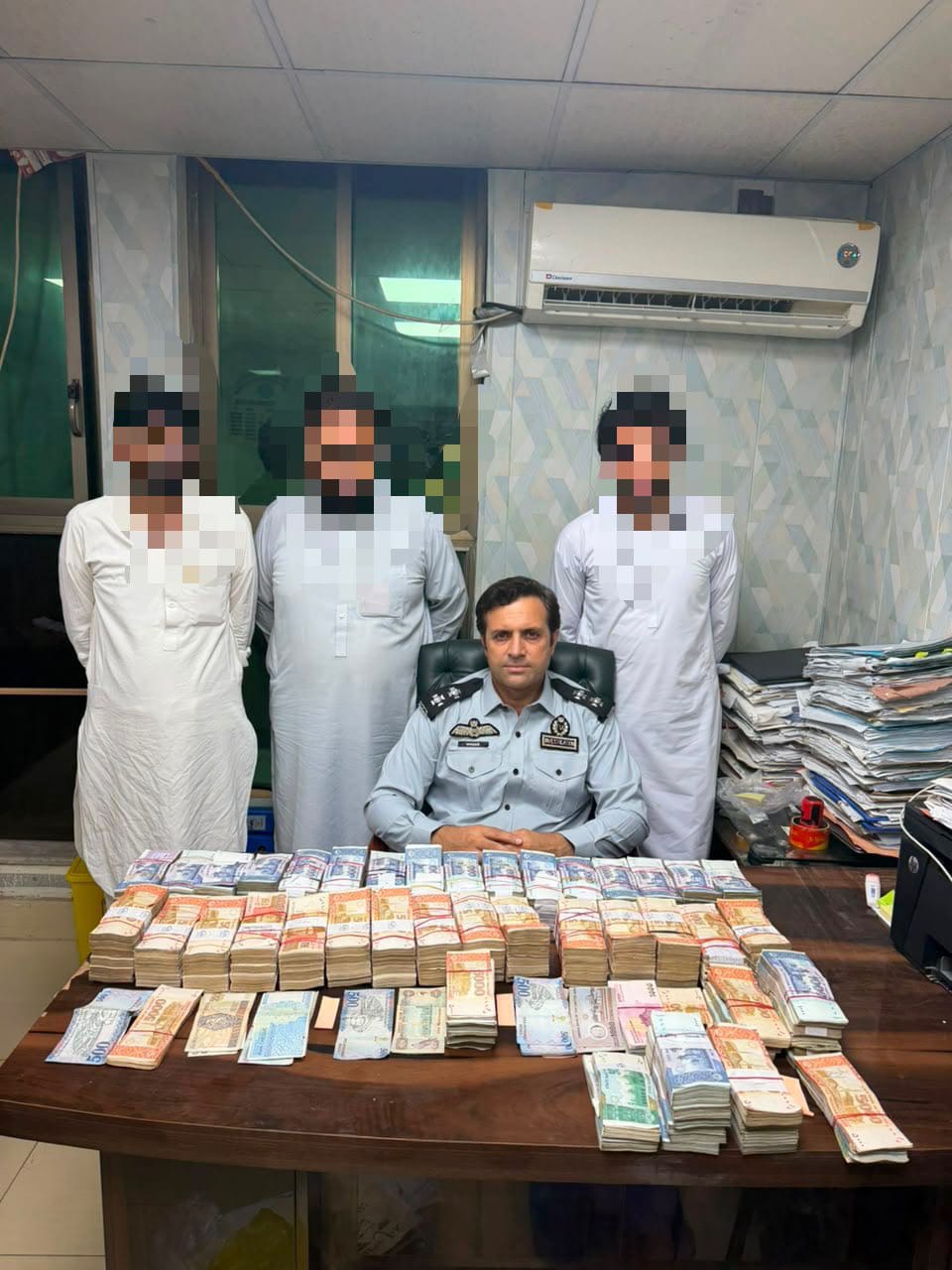
    The Federal Investigation Agency (FIA) Peshawar Zone has arrested five suspects during raids against alleged illegal foreign currency exchange and Hawala/Hundi operations in Timargara Bazaar, Lower Dir. According to FIA officials, the suspects were allegedly operating unauthorized currency exchange and money transfer businesses without the required licences. Separate cases have been registered against the arrested individuals under the Foreign Exchange Regulation Act (FERA). During the raids, investigators recovered Pakistani and foreign currency worth millions of rupees. The seized cash included Rs49.336 million in Pakistani currency, 158 million Iranian rials, 20,521 Saudi riyals, 3,000 UAE dirhams and 700 Polish zloty. The FIA said the suspects were allegedly involved in unauthorized foreign exchange dealings and illegal transfer of funds through Hawala/Hundi networks. Such activities violate Pakistan’s laws governing foreign exchange and financial transactions. The latest action forms part of the FIA Peshawar Zone’s ongoing crackdown on unauthorized currency dealers and illegal money-transfer networks in Khyber Pakhtunkhwa. Officials said such operations are aimed at curbing activities linked to money laundering, currency smuggling and other financial crimes. The agency has launched further investigations to determine the source and intended destination of the recovered funds. Investigators are also working to identify other people who may be connected with the alleged illegal operations.

  • | |

    ‘Delulu’, ‘Clock it’: ‘Cockroach’ prot…

    India’s parliament echoed with the language of memes and Instagram reels this week, as lawmakers debated a new anti‑exam leak bill in the wake of youth‑led protests that forced the resignation of Education Minister Dharmendra Pradhan. Phrases like “delulu”, “FOMO” and “clock it” — once confined to group chats and comment sections — were deployed by MPs across party lines. Shiv Sena’s Shrikant Shinde accused the opposition of being “MIA” and “delulu,” while Congress leader Deepender Singh Hooda mocked the government with the viral protest catchphrase “waste‑guna‑huiya.” BJP MP Bansuri Swaraj praised Prime Minister Narendra Modi for having “clocked it” by introducing the bill, while Tejasvi Surya accused critics of being “delulu.” The unusual moment underscored the influence of the Cockroach Janta Party (CJP), a satirical online collective that morphed into a protest movement over exam irregularities. Organised on WhatsApp and Telegram, and amplified through Instagram reels, the CJP drew thousands of young people into the streets with humour, memes and sardonic edits. Digital anthropologist Payal Arora noted that borrowing Gen Z slang signals cultural awareness rather than political transformation. Political scientist Rahul Verma added that Indian politicians have long adopted popular culture references, from cricket metaphors to Bollywood catchphrases like “How’s the josh?” Yet the government’s response has been uneasy. Authorities have sought removal of protest content and pursued cases against activists, prompting warnings from CJP leaders that they will return to the streets if charges are not dropped. Critics argue the irreverent humour trivialises serious issues, while supporters insist irony is simply the language of a generation raised online. Whether parliament’s new lexicon endures remains uncertain. Internet slang evolves quickly, often disappearing as fast as it emerges. For many protesters, hearing politicians adopt their vocabulary was less impressive than seeing meaningful change. As one student put it: “Speaking our language isn’t going to impress us without accountability. That’s cringe.”

  • |

    IMF-backed move to End EPZ local sales Quota sparks concerns over textile recycling, jobs

    KARACHI: A proposed move to withdraw the permission allowing factories operating in Pakistan’s Export Processing Zones (EPZs) to sell up to 20% of their output in the domestic market has triggered concerns among exporters, investors and international textile-recycling organisations, who fear the policy could disrupt investment, employment and a wider global circular-economy supply chain. The controversy has emerged after Pakistan committed to the International Monetary Fund (IMF) that it would amend the existing rules governing EPZs and prohibit sales from these zones into the domestic tariff area. According to the IMF’s latest programme review, Pakistan has committed to introduce amendments aimed at ending domestic sales by EPZ-based manufacturers. The report states that the amendments were to be placed before the federal cabinet for approval by September 2026. However, exporters and industry representatives have challenged the move, arguing that the existing 80:20 arrangement was part of the investment and regulatory framework under which many businesses established operations in the zones. Under the existing system, EPZ manufacturers can export 80% of their production while selling up to 20% in Pakistan after payment of applicable duties and taxes. Industry stakeholders say the domestic-sale provision is particularly important for products that have limited commercial demand in overseas markets. The proposed abolition has also attracted attention in the United States because American companies supply raw materials and used textiles to Pakistani businesses operating in the EPZs. The US-based Secondary Materials and Recycled Textiles Association (SMART) has approached IMF Mission Chief to Pakistan Iva Petrova, warning that eliminating the domestic-sales provision could have consequences extending beyond Pakistan’s industrial sector. The association has argued that Pakistan occupies an important position in the global textile circular economy, particularly in the sorting, grading, reuse and recycling of used textiles collected in North America and Europe. According to SMART, used clothing and textile materials collected in the United States, Canada and European countries are sent to Pakistan, where they are sorted and graded before being channelled into reuse, recycling, manufacturing and affordable consumer markets. The association has warned that ending the 80:20 mechanism could reduce demand for recovered textiles and place downward pressure on their prices. Such a development, it said, could weaken textile-collection programmes in North America and reduce the income generated by charitable organisations from donated clothing. Organisations including Goodwill, the Salvation Army and St Vincent de Paul depend partly on revenues generated from donated goods to finance a range of social programmes, including workforce training, employment assistance, food support, recovery services, youth programmes and housing assistance. SMART has therefore cautioned that a major disruption in Pakistan’s used-textile market could have financial consequences for charitable organisations in North America, with potential losses running into tens of millions of dollars. The association also warned that reduced demand for used textiles could ultimately result in a greater volume of reusable material being sent to landfills or incinerators rather than being recycled or reused. US exporters raise objections US exporters have also expressed concern over the proposed withdrawal of the 20% domestic-sale allowance. Their concerns are significant because American suppliers form part of the upstream supply chain that feeds Pakistani recycling and manufacturing units located in EPZs. Abid Iqbal, representing Nashmia Industries, said during Express News programme The Review that US exporters had communicated their concerns to Pakistani counterparts. According to Iqbal, US exporters had also been told informally that the IMF itself had not initiated the proposal to remove the 20% quota. The development has consequently raised questions within the industry about how the condition was incorporated into Pakistan’s commitments under the IMF programme and whether sufficient consultation took place with affected stakeholders. Industry representatives have also warned of possible legal and contractual disputes, maintaining that the 20% domestic-sales provision was part of the regulatory and investment framework under which businesses made their investment decisions. They argue that companies entered the zones with an understanding that they would be able to export the bulk of their production while disposing of a limited portion in the domestic market after meeting applicable tax and customs obligations. EPZ rules and proposed amendment The Export Processing Zones Authority (EPZA) operates under the legal framework established through the EPZ Act of 1980. The law enables the establishment of export processing zones with approval from the federal government. Under Rule 228(5) of the Customs Rules, EPZ-based factories have historically been allowed to sell up to 20% of their production in the domestic tariff area, subject to applicable duties and taxes. A higher limit of 30% had been applicable to the Resalpur area. EPZA has reportedly forwarded a proposal to the Federal Board of Revenue (FBR) to eliminate the 20% quota from October 1 in line with the IMF-related commitment. The proposal, however, has exposed differences within the government over the scope and interpretation of the IMF condition. Proceedings of the Senate Standing Committee on Industries held last month indicate that the Ministry of Industries and Production maintained that abolition of the 20% domestic-sales quota was not included in the original IMF agreement. According to the ministry’s position, the initial IMF requirement was restricted to preventing the introduction of new fiscal incentives, including tax concessions and subsidies, rather than immediately eliminating the existing domestic-sales mechanism. The ministry has reportedly argued that the later addition of the quota-related condition requires further clarification. Assessment of EPZs The issue is also linked to an assessment of Special Economic Zones (SEZs) and EPZs that Pakistan was required to undertake under the IMF programme. The government engaged consultancy firm AT Kearney to assess the zones and determine whether their operations were creating distortions in the domestic market. According to records presented before the Senate Standing Committee on Industries, the assessment completed last year concluded that EPZs were not creating significant market distortions. The report, according to the parliamentary proceedings, did not recommend withdrawing existing fiscal incentives. The issue has therefore become a point of discussion between government officials and the IMF as authorities seek to reconcile the lender’s programme requirements with

  • | |

    Islamiat tops Grade 9, 10 failure list

    The Board of Intermediate and Secondary Education (BISE) Peshawar has released the results of the 2026 annual examinations for Grades 9 and 10. The results show that Islamiat was the subject in which the highest number of students failed in both classes. According to the official statistics, a total of 97,950 students appeared in the Grade 9 annual examinations. Out of these, 57,847 students successfully passed and were promoted to Grade 10. The remaining students could not qualify for promotion after failing to meet the required passing criteria. The examination data also highlighted students’ performance across different subjects. Among all the subjects, Islamiat recorded the highest failure rate, making it the most challenging subject for students in both Grade 9 and Grade 10 this year. The results have drawn attention to the need for improved teaching methods and better academic support in the subject. Education experts believe schools, teachers, and parents should work together to identify the reasons behind the poor performance and help students strengthen their understanding of Islamiat before future examinations. The BISE Peshawar annual examination results provide an overview of students’ academic performance across the province and are expected to help education authorities assess areas where additional support and reforms may be required to improve overall learning outcomes.

  • England Claim Historic World Cup Bronze After Breathtaking 10-Goal Thriller Against France

    England has officially secured the bronze medal at the 2026 FIFA World Cup in spectacular fashion. The Three Lions defeated a resilient French side 6-4 in an unforgettable clash in Miami. This incredible victory marks England’s best performance at the global tournament since their legendary 1966 triumph. Fans inside the packed Miami Stadium witnessed arguably […]

Leave a Reply

Your email address will not be published. Required fields are marked *