freight costs surge
| |

Freight costs surge manifold as industry faces logistics strike aftershocks

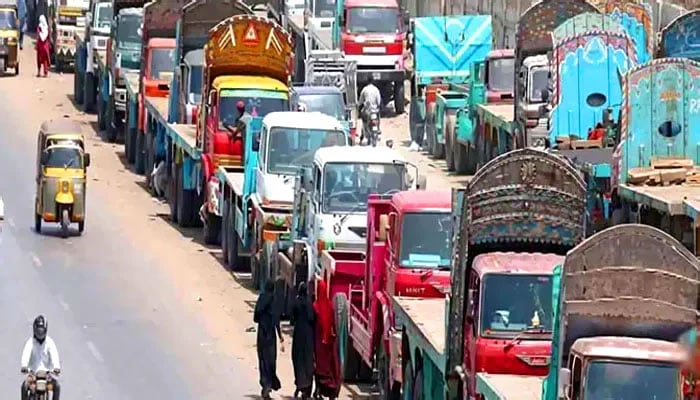
Pakistan’s export sector has been hit by a fresh logistics shock after the nine-day goods transport strike, with exporters now facing an extraordinary increase in sea freight rates, a shortage of shipping space and mounting costs on delayed cargo, according to economists and trade experts.

Experts said the strike may have ended, but its consequences are now being felt at ports, factories and in export markets. Containers that could not reach Karachi Port and Port Qasim during the disruption missed scheduled vessels, leaving exporters scrambling to secure space on subsequent shipments at sharply higher freight rates.

According to information shared by exporters, freight charges to the US West Coast have surged from around $1,800 to as high as $8,500 per container, while rates to the US East Coast have reportedly risen from $1,800 to $8,000 per container. Additional General Rate Increases, surcharges and other carrier charges have further increased the burden.

Experts said these developments have placed Pakistani exporters in an extremely difficult position. Freight charges rising by more than 300 percent cannot easily be absorbed by exporters and could wipe out the profit margin on entire export orders, they added.

They said the disruption in domestic transport created a serious bottleneck in the export supply chain. Thousands of containers remained stuck at factories and warehouses and could not reach the ports within terminal cut-off times. As a result, exporters faced missed bookings, vessel rollovers, cancellations, detention, demurrage and storage charges.

Economists said the reported loss of around Rs450 billion during the nine-day strike shows the scale of the disruption, but the real damage could be much greater if delayed shipments lead to cancelled orders and the loss of overseas buyers.

International buyers expect certainty and timely delivery, experts noted. A buyer waiting for goods does not necessarily distinguish between a transport strike, port congestion or any other domestic problem in Pakistan. If deliveries are repeatedly delayed, the buyer may simply shift future orders to another country.

Pakistan is competing with countries that have invested heavily in efficient ports, transport networks and export logistics. Pakistani manufacturers already face high energy prices, expensive financing, taxation pressures and rising input costs. Adding an unpredictable freight and shipping crisis to these problems further weakens their ability to compete.

Experts pointed out that exporters operating under C&F, CFR and other freight-inclusive arrangements are directly exposed to the increase in shipping costs. Even FOB exporters are suffering because the shortage of vessel space and missed sailing schedules can delay shipments and damage business relationships.

“Export growth is not possible without a dependable logistics system,” experts said. “It is not enough to announce export incentives if containers cannot move smoothly from factories to ports and from ports to international markets.”

They urged the government to immediately hold consultations with shipping lines, port authorities, terminal operators, freight forwarders, transporters and export associations to restore adequate vessel space for Pakistani cargo and address the sudden escalation in freight rates.

Experts said exporters whose shipments were delayed because of circumstances beyond their control should not be left to bear excessive penalties and charges. A mechanism should be developed to facilitate stranded cargo and minimise avoidable detention, demurrage and storage costs.

They also called for a permanent coordination mechanism between the government and the private sector to deal with transport and logistics disruptions before they turn into national economic crises.

Experts said Pakistan needs to treat logistics as a core part of its trade and export policy. Road transport, ports, terminals, shipping services and customs clearance are all parts of the same export chain, and a breakdown at one point can affect the entire system.

Economists stressed that Pakistan urgently needs greater export earnings to strengthen its economy and foreign exchange reserves. Every unnecessary increase in freight costs means more money leaving the country and less income remaining with Pakistani manufacturers and exporters.

They urged the authorities to take immediate and practical steps to help exporters clear delayed shipments, recover lost shipping schedules and retain the confidence of international buyers, warning that predictable freight rates, available shipping space and an uninterrupted logistics system are essential for Pakistan to remain competitive in international markets.
Similar Posts

  • | |

    Salman Shahid claims seniors also annoy youngsters

    The conversation sparked by Muhammad Ahmed’s recent remarks about the behaviour of junior actors on set has drawn a thoughtful and balanced response from veteran Pakistani actor Salman Shahid, who offered a perspective that many in the industry may have been thinking but had not yet said out loud. Shahid, who built his reputation through beloved comedy productions including Such Gup, Teen Bata Teen and Family Front before going on to appear in acclaimed dramas such as Seerhian, Aseer Zadi, Khuda Aur Mohabbat, Main Manto Nahi Hoon and Sher, appeared on Rise and Shine, hosted by Zohaib Hassan, where the conversation turned to Muhammad Ahmed’s complaints about junior actors on set. His response was measured, fair and grounded in his own experience of what set dynamics actually look like from the inside. “Listen, if juniors misbehave with seniors, there are also seniors who become unreasonable and behave the same way with younger actors,” he said. “It depends on a person’s nature. Sometimes, seniors also annoy juniors because they want to show their authority. They say things like, ‘You’re young, what do you know about acting? We’ve been doing this for so many years. You’re doing it wrong.’ So, this issue exists on both sides.” The point Shahid was making was not that Muhammad Ahmed’s concerns were invalid. It was that the problem is not generational but personal. Difficult behaviour on set is not exclusively a junior actor problem. It can come from anyone, regardless of how many years they have spent in the industry or how much respect they command. What made his remarks feel credible rather than defensive was the contrast he drew with his own approach to working life. He spoke with evident warmth about the aspects of set culture that he actively enjoys. “Personally, I love socialising,” he said. “I enjoy tea breaks and interacting with my co-stars on set. I really love it. It’s part of my social life, no matter what age my colleagues are. The image he painted was of someone who genuinely takes pleasure in the shared environment of a drama production, for whom the time between scenes is as much a part of the experience as the work itself. It was a reminder that sets are workplaces where people spend long hours together, and that the atmosphere on them is shaped by everyone present, senior and junior alike. Shahid is currently earning praise for his performance in the ongoing drama Bas Tera Saath Hu, which has resonated strongly with audiences. He is the son of legendary actress Begum Khursheed Shahid, is married to Tahira Ali, and has been a consistent and respected presence in Pakistani television for decades. His contribution to the current conversation about generational dynamics in the industry is characteristically grounded. He did not take sides. He simply told the truth.

  • |

    Sri Lanka prepares for drought and flood risks linked to El Nino

    Sri Lanka is preparing for a prolonged period of extreme weather as authorities warn that the return of the El Nino climate pattern could bring a severe drought followed by widespread flooding later this year. The government has begun taking precautionary measures to protect water supplies, agriculture, and vulnerable communities as changing weather conditions threaten to affect millions of people across the island. Environment Minister Dhammika Patabendi said the country is expected to face a significant dry spell lasting until the end of September. Officials are closely monitoring irrigation systems and drinking water reserves to ensure supplies remain available during the expected drought. The government has also urged the public to use water carefully, warning that shortages could develop over the coming months if dry conditions continue. Scientists have linked the increasing frequency and intensity of extreme weather events to climate change. They say El Nino, a natural climate pattern caused by warmer than normal sea surface temperatures in the central and eastern Pacific Ocean, disrupts global rainfall and wind patterns. These changes often bring drought to some regions while causing heavy rainfall and flooding in others. Sri Lankan authorities expect the current dry period to be followed by a stronger than usual northeast monsoon beginning in October. The minister warned that the seasonal rains could trigger widespread flooding in many parts of the country, creating additional risks for communities already dealing with water shortages. To reduce the impact on agriculture, the government has advised farmers to begin the main rice planting season about two weeks earlier than usual. Officials believe an earlier start to cultivation will allow crops to develop before heavy rainfall increases the risk of flooding. Authorities are also planning improved flood management measures to help protect farmland and reduce damage to the country’s most important food crop. The government has not yet released an estimate of the possible economic losses from this year’s El Nino conditions. However, a special ministerial task force has been established to coordinate preparations, manage emergency responses, and reduce the impact on agriculture, water resources, and public infrastructure. Officials said Sri Lanka’s hydroelectric reservoirs are currently operating at around 57 percent capacity. To conserve water, authorities plan to rely more heavily on solar power during daylight hours, reducing pressure on hydroelectric facilities and preserving reservoir levels for essential needs. Experts have also warned that intense rainfall later in the year could trigger landslides in the country’s mountainous regions. Many of these areas remain vulnerable after suffering significant damage during Cyclone Ditwah in November, when heavy rain caused widespread destruction across the island. Cyclone Ditwah affected nearly every part of Sri Lanka and left a lasting impact on the country’s population of around 22 million people. Nearly 650 people lost their lives during the disaster, while roads, bridges, public buildings, and other infrastructure suffered extensive damage. The World Bank estimated that infrastructure losses alone reached about 4.1 billion dollars, making it one of the country’s most costly natural disasters in recent years. With another period of extreme weather approaching, the government says early preparation will be essential to reduce risks and protect lives. Authorities are continuing to monitor weather forecasts while encouraging communities to conserve water, prepare for possible floods, and follow official guidance throughout the changing weather conditions. The coming months are expected to test Sri Lanka’s disaster response systems once again as the country faces the combined challenges of drought, flooding, and the broader effects of climate change.

  • | |

    Sistrology ignored? Ahad sparks buzz

    Pakistani actor Ahad Raza Mir has become the centre of attention on social media after a behind-the-scenes video from a recent award ceremony sparked widespread discussion among fans. The actor, who is currently receiving praise for his latest television role, attended the Pakistan Influencer Awards as a guest alongside several celebrities and digital content creators. A video from the event, which later circulated across social media platforms, showed Ahad Raza Mir standing near a group of well-known influencers while remaining focused on the stage during the programme. The clip appeared to show the actor keeping to himself without engaging in conversation, a moment that quickly caught the attention of internet users. The footage generated mixed reactions online, with many fans sharing humorous comments and opinions about the brief interaction. Some social media users viewed the actor’s reserved behaviour as a reflection of his quiet personality, while others interpreted it as him choosing to remain focused on the event. Several fans praised Ahad for maintaining a low profile during the ceremony, describing his calm and composed attitude as one of the reasons he continues to enjoy a strong fan following. Others pointed out that short video clips can often be taken out of context and may not accurately represent what happened throughout the event. The discussion quickly gained momentum, with users sharing memes, comments and reactions across various social media platforms. While opinions differed, the viral clip further highlighted the actor’s popularity and the public interest surrounding his appearances. Ahad Raza Mir remains one of Pakistan’s leading television stars, with a successful career built on several acclaimed drama serials. His latest performance has also received positive reviews from viewers, adding to his continued presence in the entertainment industry.

  • |

    President approves military and civil honours

    President Asif Ali Zardari has approved several summaries sent by Prime Minister Shehbaz Sharif, including military honours for 1,172 personnel of the armed forces and civil armed forces. The approved honours recognise the services and contributions of personnel from various ranks and institutions. The awards will acknowledge their dedication, professionalism and service to the country. President Zardari also approved the summoning of separate sessions of Parliament on August 17. The National Assembly will meet at 5pm, while the Senate will convene at 4pm. In another significant decision, the president approved a special 100-day remission in the sentences of prisoners on the occasions of Independence Day and Eid Milad-un-Nabi ﷺ. The concession will provide eligible prisoners with relief in their sentences under the applicable rules and conditions. President Zardari further approved national civil awards for citizens from various fields in recognition of their outstanding contributions and services. The honours cover individuals who have made notable contributions in their respective areas and brought recognition to the country. The approvals form part of the president’s constitutional responsibilities and reflect the government’s efforts to recognise public service, honour outstanding contributions and provide relief to eligible prisoners on important national and religious occasions.

  • |

    Parties back local governments over new provinces

      Mainstream political parties have rejected the idea of creating new provinces and instead called for stronger local governments to improve governance and public service delivery. The position emerged during a day-long seminar organised by the Sustainable Development Policy Institute (SDPI), where politicians and independent experts discussed whether Pakistan needs new provinces or additional administrative units. Representatives of the PML-N, PPP, PTI and JUI opposed the creation of new provinces, while lawmakers from the MQM-P supported the proposal. Most independent experts also favoured transferring greater administrative, political and financial powers to local governments. Participants argued that Pakistan does not primarily face a shortage of resources. Instead, they said, excessive concentration of authority in provincial capitals prevents public spending from delivering its intended benefits. Several speakers also criticised the bureaucracy for weak governance and poor service delivery. PTI Secretary General Salman Akram Raja said the existing administrative structure could deliver better results if local governments received adequate powers. He argued that dividing Punjab into three provinces would still leave each province with around 40 million people and would not adequately address governance problems. Raja called for stronger constitutional safeguards for local governments and said Article 140-A, which provides for local governments, needed clearer and stronger provisions. Raja also rejected the idea of holding a national referendum on the creation of new provinces, arguing that the Constitution already provides a mechanism for altering provincial boundaries. He further opposed changes to Article 239, which governs constitutional amendments related to provincial boundaries. Minister of State for Law Barrister Aqeel Malik said political parties should first hold internal discussions on the issue before pursuing constitutional or legal changes. He also praised the 2001 local government system, saying it offered a stronger framework that should have been developed further. The seminar came weeks after Interior Minister Mohsin Naqvi described Pakistan’s governance system as having collapsed and called for the creation of new provinces. PPP leader Qamar Zaman Kaira warned that the debate could deepen existing political and administrative divisions. He said provincial chief ministers had accumulated significant power and often resisted efforts to establish genuinely strong local governments. Some participants even suggested removing the provincial tier altogether and maintaining only the federal government and fully empowered local administrative units.

Leave a Reply

Your email address will not be published. Required fields are marked *