classroom gallery kdsps
| |

From classroom to gallery: KDSP’s graduation 

Exhibition Redefines Ability

Finding confidence in every stitch: Inside KDSP’s graduation where ‘thesis’ means a product, a skill, and a paycheck
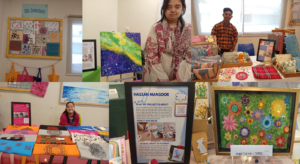
KARACHI: The room was loud with pride. Eight students stood by tables displaying tote bags, paintings, screen-printed handbags, painted canvases, cushion covers, and pouches stitched with their own names on them.

This is KDSP’s idea of a “thesis.” Not a paper. A proof. Proof that years of training can turn into a skill, and a skill can turn into independence.

It is easy to group all children under one word — “special.” But at the Karachi Down Syndrome Program, they don’t. Because a child with Down Syndrome learns differently than a child with CP. An autistic student needs a different kind of classroom than any other child.

Launched in March 2014, the Karachi Down Syndrome Program (KDSP) is a prominent non-profit organization advocating for the value, acceptance, and inclusion of individuals with Down syndrome. Based in Karachi, KDSP operates as a “one-stop solution” providing comprehensive, highly subsidized developmental services to individuals and their families.

But “special” is not a plan. And it is not the same for everyone:

We called them “special.” And then we used that word as a reason to keep them on the margins. Out of regular schools. Out of job lists. Out of the story we tell about who gets to be useful.

A child with CP faces physical challenges and needs mobility support. An autistic child navigates the world differently and needs structure and sensory understanding. A child with Down Syndrome often learns at a different pace and needs repetition, speech therapy, and patience — but also gives back warmth, honesty, and a remarkable ability to master routine work. Their needs are not the same. So their training cannot be the same either.

The moment we start calling everyone by one word, we stop seeing the person.

A room where ability is displayed, not debated:

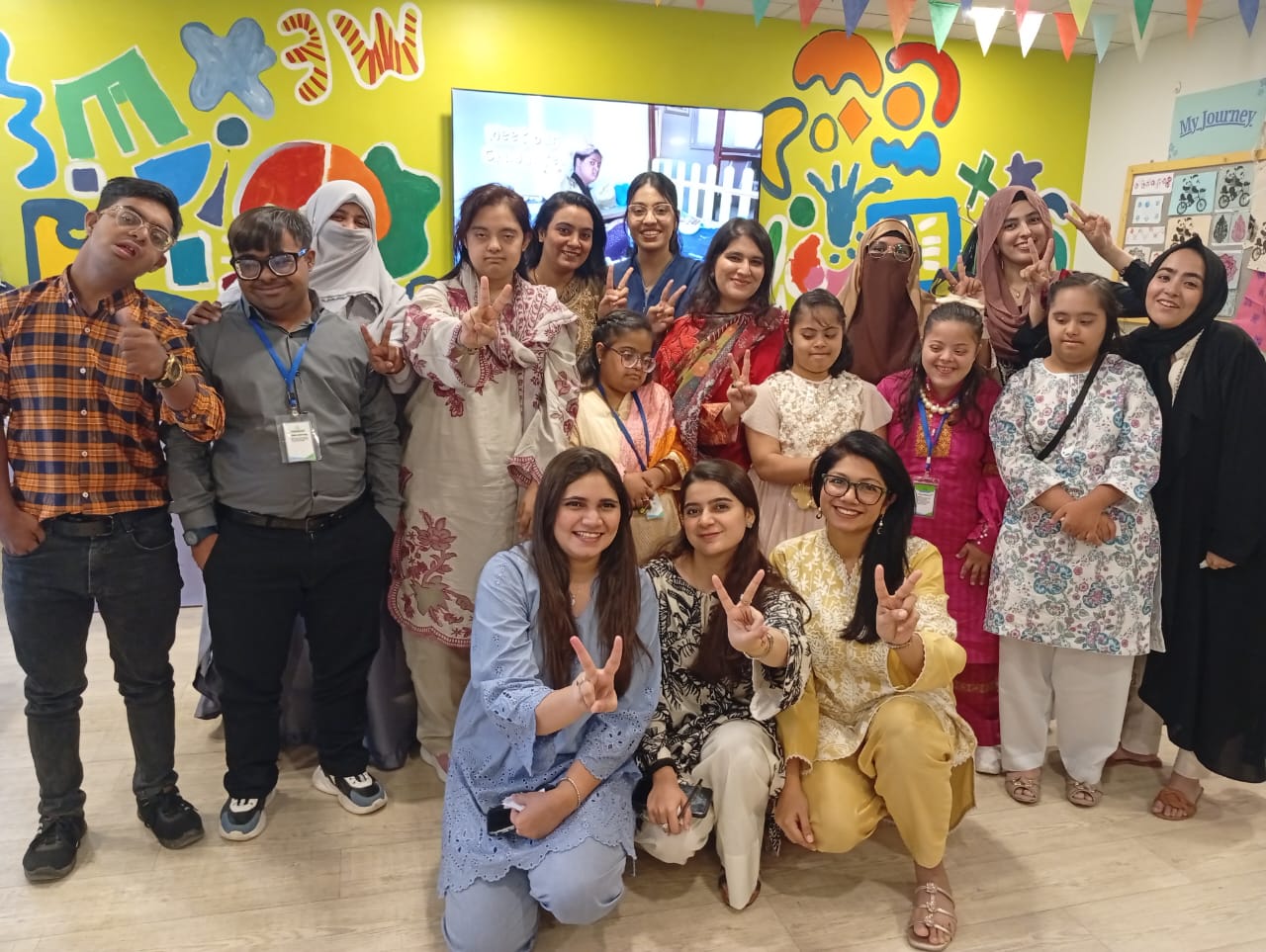
Last week I had the opportunity to visit the graduation exhibition of 8 students who completed KDSP’s 3-year Education For Life, EFL Graduation Program.


In a city with hundreds of NGOs, very few truly invest in the development of individuals. KDSP is among those few. Here, funding does not end at a ceremony. It becomes years of therapy. It becomes a classroom. It becomes a young adult learning to count change, write an invoice, and stand behind a table that says “Made by me.”

CEO: “We don’t do one-size-fits-all”

While explaining the mission and vision of KDSP, CEO Ms. Tabish Shahzad said their entire focus is on developing an inclusive society.

“From early childhood development to adolescence and beyond, our goal is to take each child to a place where they are fully independent and can be a useful citizen,” she explained.

“Every child with Down Syndrome has challenges — speech or communication, lack of focus, behavioral and mental health issues. For each challenge we have diversified programs and counselling sessions. We don’t do one-size-fits-all,” Tabish added, head held high.

Different Needs, Different Names, Same Dignity

We cannot call everyone “special” and think the job is done. Ms. Sidra Sajid, Skill Development Facilitator for Education For Life, EFL, explained how that works on the ground.

“We have a proper organizational structure to support the ultimate EFL program,” she said. “For every vocation and skill, we have trained vocational teachers. It’s not volunteers coming once a month. It’s daily, structured training.”

Supporting them are Managers and Assistant Managers who oversee every faculty: Ms. Umaima Shafqat, Ms. Ayesha Shahid, Ms. Sania Siddiqui, Ms. Mahzeb Fahim, and Ms. Asma Urooj. They put in all their efforts in various skill development programs and maintain keen observation of students’ challenges, how to resolve them, and facilitate them through various programs.

Ms. Sidra explained that the KDSP EFL Graduation Program reflects a philosophy with two clear dimensions.

First, Life: Basic academics. How to travel. How to manage money. How to carry out everyday chores without depending on anyone. The dignity of doing it yourself. It is obligatory to learn numeracy, computer literacy, cooking, and life skills.

Second, Livelihood: Vocational training and skills that actually sell. Baking. Stitching. Screen printing. Block printing. Weaving. Photography. Making clay items. Things that turn into a product, a service, and an income.

The room proved both. White tablecloths. Hand-written price tags. Students standing behind their own work, explaining it in their own words.

Talking about the graduates, Ms. Sania Siddiqui added with quiet pride: “Most of them are already earning for their families through their craft. Like Unzila, one of our graduates, who has excelled in splatter painting and has completed her internship at Engro Martin Dow and KDSP itself.

And Hasan Mansoor, who is a master of quilling craft. His products are already being offered for sale through KDSP’s own sales outlet, Lehr.”

Lehr, headed by Ms. Mehak, is KDSP’s retail space where students’ products — from baked goods to crafts like Hasan’s quilling — are sold to the public. It is the final step of the program: moving from classroom to customer.

A proud moment for mentors:

Ms. Sadia Navaid, Quilling Class mentor, who has been associated with KDSP for several years, stood by Hasan’s table watching visitors admire his work.

“I have seen these children struggle with paper strips in their early classes,” she said. “Tiny fingers, no focus, paper tearing. And today, to see them become masters and make such awesome products… it’s been a journey.”

She paused, eyes on Hasan as he explained his design to a customer.

“This journey has shown me several sides of life, and the blessings of Allah. These children are my pride and my medals of achievement. It was wonderful to see them grow, along with parents who put in their hundred percent to help them reach the summit.”

Chef Zainab served freshly baked items. Ms. Samina, their painting guru, watched her students with the same pride. It was indeed a proud moment for all of them.

From classrooms to job markets:

The validation came not just from families. While attending the thesis exhibition, I also met the CSR team of Younus Textile Mills. They spent a long time at each table, asking students about their process, pricing, and quality control.

They were highly impressed with the craft and products developed by the students. “These are market-ready skills,” one of them said. “We would like to offer an internship program for future graduates. If they can deliver here, they can deliver anywhere.”

That is the shift. From sympathy to apprenticeship. From charity to employment.

Finding confidence in every stitch: A mother’s journey

During my visit, I met a proud mother who said:

“My name is Nighat, and I’m the mother of Muhammad Munib, a child with Down syndrome. Since childhood, Munib has been differently-abled, and I was deeply worried about how he would live his life. Then we found KDSP’s Education for Life graduation program — EFL. EFL is unique because it explores the different abilities of every child, instead of focusing on limitations. Through EFL, Munib chose sewing and stitching, and with KDSP’s support at every step of his learning, he has grown not just in skills but in confidence. His learning process is slow, but every new thing he learns brings immense joy to our lives. KDSP showed us the way, gave us confidence and attention, and made us feel like a valued part of society.”

Wa Tilka’l Ayyaam. The days turn. And so do mindsets:

The word “thesis” usually means research papers. At KDSP, it means a child who once needed help tying shoelaces now presenting a portfolio, a product line, and a plan for their future. This was not a charity fair. This was proof. Proof that when you stop asking “what’s wrong with them” and start asking “what’s possible with them,” the answer is on the table.

Eight graduates: Muhammad Muneeb, Fariha Hasan, Hassan Mansoor, Sadia Wakani, Rifa Rehamatullah, Unzila Shah, Zainab Manzoor Memon, and Sara Javed walked out that day not as “cases” or as “special.” They walked out as people who can now earn bread and butter for their families.

And that, in the end, is what real investment looks like. A child who takes longer to speak is not a burden. For too long we have measured differently-abled children by what they lack, and forgotten to count what they carry — patience, honesty, craft, heart.

We left them out of classrooms, jobs, and stories. Then we called it “charity” when we let them in. But usefulness is not charity. Dignity is not a favor. When we make them an instrumental part of society, society becomes better for all of us.

The writer is a senior journalist and columnist covering crime, law, social issues, governance, energy, health, literature, women and children’s rights across Pakistan’s leading English media houses.

Feedback:mediawomen2014@gmail.com

Similar Posts

  • | |

    Pakistan, Spain discuss expanding trade, investmen…

    RAWALPINDI: Ambassador of Spain to Pakistan, H.E. Carlos Aragón Gil de la Serna, visited the Rawalpindi Chamber of Commerce & Industry (RCCI) and held a meeting with RCCI President Usman Shaukat to discuss ways to further strengthen bilateral economic, trade and cultural relations between Pakistan and Spain. Rana Mashhood Ahmad Khan, Coordinator to the Prime Minister’s Youth Programme, was also present as the chief guest on the occasion. Senior Vice President Khalid Farooq Qazi, Vice President Fahad Barlas, former presidents of RCCI, Executive Committee members and a large number of Chamber members also attended the meeting. Upon their arrival, the Spanish Ambassador and Rana Mashhood Ahmad Khan were warmly welcomed by RCCI President Usman Shaukat and members of the Chamber. RCCI President Usman Shaukat highlighted the significant potential for expanding Pakistan–Spain trade and called for stronger business-to-business linkages, improved market access, and enhanced cooperation in investment and technology. He said Spain offers important opportunities for Pakistani exporters, particularly in textiles and agro-based products, while Pakistan can benefit from Spanish expertise in modern agriculture, precision farming, irrigation, mechanization, greenhouse technology and water management. The discussion assumes added significance in light of recent Pakistan–Spain consultations regarding the establishment of a Joint Working Group on Agriculture. Pakistan has identified rice, ethanol, potatoes and maize as products with potential for increased exports to the Spanish market. Spain has also acknowledged Pakistan’s favourable trade balance, with textiles being among Pakistan’s major exports to Spain. On this occasion, Rana Mashhood Ahmad Khan highlighted RCCI’s important role in supporting the government on economic and budget-related matters and appreciated the Chamber’s contribution towards strengthening Pakistan’s economic foundations. He said Pakistan is moving forward across various sectors, particularly information technology, and stressed the need to further promote investment, innovation and entrepreneurship. Rana Mashhood said the Prime Minister’s Vision 2047 provides a roadmap for building a prosperous, self-reliant and globally competitive Pakistan. He emphasized that youth empowerment, employment generation, peace and economic stability are essential priorities for the country’s sustainable development. He added that Pakistan’s young population represents a major national asset and that greater opportunities for skills development, entrepreneurship and employment are needed to fully harness its potential. He also appreciated the growing economic and diplomatic engagement between Pakistan and Spain, saying stronger cooperation with European countries can create new opportunities for Pakistani businesses, exporters and young entrepreneurs. In a special gesture of friendship and goodwill, RCCI President Usman Shaukat and Rana Mashhood Ahmad Khan jointly presented H.E. Carlos Aragón Gil de la Serna with a football manufactured in Pakistan for the FIFA World Cup. The presentation showcased Pakistan’s strong sports manufacturing capabilities and symbolized the growing friendship, cooperation and people-to-people ties between Pakistan and Spain. The Spanish Ambassador also participated in RCCI’s Independence Day celebrations and cake-cutting ceremony, further reflecting the warm cultural and people-to-people relations between the two countries. The meeting concluded with a shared commitment to promoting bilateral trade and investment, technology cooperation, agricultural collaboration and stronger institutional linkages for the mutual economic benefit of Pakistan and Spain.

  • | |

    Punjab schools to reopen on August 24 after summer…

    LAHORE: Schools across Punjab are set to reopen on August 24 following the summer vacation, with the provincial government directing education authorities to complete all necessary arrangements before students return to classrooms. Punjab Education Minister Rana Sikandar Hayat has instructed relevant departments and school administrations to ensure that educational institutions are clean, secure and fully prepared for the new academic session. The minister directed school administrations to pay particular attention to the cleanliness of classrooms, washrooms, playgrounds and other areas of school premises. He also stressed the need to ensure the availability of safe and clean drinking water for students and staff. In view of the ongoing monsoon season, authorities have been asked to inspect and clean water tanks and school rooftops and ensure proper disinfection. Drainage systems should also be checked to prevent the accumulation of stagnant water, which can increase the risk of mosquito breeding and dengue fever. The education minister ordered school administrations to strictly follow standard operating procedures (SOPs) aimed at preventing dengue outbreaks. Officials have been directed to identify and remove potential mosquito breeding sites from school premises and ensure that no stagnant water remains in or around the institutions. Security arrangements have also been made a priority ahead of the reopening. The minister directed both government and private schools to ensure full compliance with prescribed security SOPs and make certain that CCTV cameras and other security equipment are operational before students arrive. Schools where construction or repair work is underway have been instructed to install proper barriers and restrict students’ access to potentially hazardous areas. The authorities have also been directed to inspect electrical installations throughout school buildings. School heads must ensure that fans, lights, switches, electrical sockets and wiring are in safe working condition to prevent accidents. Rana Sikandar Hayat further instructed heads of educational institutions to conduct a final inspection of their respective schools before reopening. He warned that negligence, delays or failure to comply with the government’s instructions would not be tolerated and could result in action against those responsible. The minister emphasized that all arrangements must be completed before August 24 so that students can return to school in a clean, safe and healthy environment.

  • |

    Joe Root ends England curfew ahead of Pakistan Tests

    BECKENHAM: England Test captain Joe Root has removed the midnight curfew previously imposed on the team, signalling a shift towards greater personal responsibility ahead of the three-match Test series against Pakistan. Root, speaking to Sky Sports, said he did not believe strict curfews were necessary and instead wanted England players to behave like adults and take responsibility for their actions both on and off the field. “There’s not going to be a curfew. I don’t think this needs to be a big deal, to be honest,” Root said. The experienced batter explained that players needed the freedom to make sensible decisions without constant supervision. In his view, responsibility away from the cricket field should go hand in hand with the standards expected from players representing England. Root said the team would focus on managing itself effectively, with players expected to “self-police” and look after one another. He also stressed that everyone in the squad understood the responsibilities that come with playing international cricket. The decision marks a notable change from the approach taken under former captain Ben Stokes, when a midnight curfew was introduced as part of the team’s discipline and culture. For Root, however, the priority is creating a strong environment rather than enforcing rigid rules. He said England should be remembered for their performances on the field rather than stories about incidents away from cricket. The captain also acknowledged that players should be able to celebrate victories, enjoy themselves and have a drink when appropriate, provided they understand their responsibilities. “Let’s be adults. Look after yourselves, look after each other,” Root said, emphasising the importance of a healthy team culture. England are now preparing for a challenging Test series against Pakistan, with Root and head coach Stephen Fleming expected to establish clear standards for the squad. The message from Root is straightforward: England’s players will have more freedom, but with that freedom comes accountability. The captain hopes the approach will strengthen team unity while keeping attention firmly on cricket.

  • | |

    Pakistan keeps petrol and diesel prices unchanged …

    The Government of Pakistan has decided to keep petrol and diesel prices unchanged for the next two days after implementing fuel price increases over five consecutive days. The Petroleum Division of the Ministry of Energy issued an official notification confirming that current prices will remain in effect on July 26 and 27, 2026. According to the notification, the price of petrol will remain at Rs. 335.18 per litre, while high-speed diesel (HSD) will continue to be sold at Rs. 383.46 per litre during the two-day period. The decision comes after a series of recent adjustments to petroleum prices under the government’s revised pricing mechanism. Authorities said no further changes would be made during the specified period, providing temporary stability for consumers following multiple increases. The latest notification confirms that the existing fuel rates announced on July 25 will remain effective through July 27. Officials from the Petroleum Division stated that the move is in line with the government’s current fuel pricing policy. Just a day earlier, the government had raised petrol prices by Rs. 3.66 per litre and high-speed diesel prices by Rs. 4.80 per litre. Those increases followed another hike in which petrol became Rs. 4.40 per litre more expensive and diesel increased by Rs. 3.62 per litre. Before the latest revisions, petrol was priced at Rs. 331.52 per litre, while high-speed diesel was available at Rs. 378.66 per litre on July 24. The recent adjustments reflect ongoing fluctuations in petroleum pricing driven by changes in international oil markets and domestic pricing policies. Fuel prices play a significant role in Pakistan’s economy, influencing transportation costs, industrial production, and the prices of essential goods and services. Any increase or decrease in petroleum prices has a direct impact on businesses and household budgets across the country. The government’s decision to maintain current prices for two days is expected to provide short-term certainty for consumers and businesses. However, future revisions will continue to depend on global oil prices, exchange rate movements, and the government’s fuel pricing framework. Motorists and businesses are advised to follow official announcements from the Petroleum Division for any future changes in fuel prices. The current notification confirms that petrol and diesel rates will remain unchanged until the end of July 27, unless a new directive is issued by the government.

  • |

    Pakistan pushes for renewed US and Iran talks under Islamabad agreement

    Pakistan has reaffirmed its commitment to helping revive negotiations between the United States and Iran, saying it is making every possible effort to bring both sides back to the framework established under the Islamabad memorandum of understanding signed last month. Officials believe renewed dialogue remains the best path to easing tensions in the Middle East and restoring regional stability. Speaking at the Foreign Office’s weekly media briefing on Thursday, spokesperson Tahir Andrabi said Pakistan remains concerned about the fragile security situation in the region despite a brief period of relative calm in recent days. He said the temporary reduction in violence had raised hopes for a lasting ceasefire, but recent developments have shown that the situation remains highly unstable. Andrabi stressed that Pakistan continues to support diplomacy as the only practical solution to the conflict. He said Islamabad welcomes every effort aimed at maintaining the pause in hostilities and encouraging both Washington and Tehran to return to negotiations. According to him, Pakistan remains actively engaged with all relevant parties and will continue supporting diplomatic initiatives. He added that discussions are still taking place to restore stability, particularly around the Strait of Hormuz, one of the world’s most important energy shipping routes. Pakistan, he said, is working to encourage both countries to resume talks under the Islamabad memorandum of understanding while also following the commitments outlined in the Pakistan Qatar joint statement issued on June 22. The Foreign Office urged both the United States and Iran to exercise restraint and honour their commitment to restart technical level discussions. Andrabi said continued dialogue is essential to resolving outstanding disputes and preventing another escalation that could threaten regional peace and global energy supplies. The Islamabad memorandum of understanding was signed on June 18 after weeks of diplomatic efforts. The agreement was intended to reopen the Strait of Hormuz and create conditions for ending the wider conflict that began following US and Israeli strikes on Iran earlier this year. Under the understanding, both sides had agreed to continue negotiations over the following two months. However, tensions returned on July 7 when Iran launched attacks on commercial vessels in the Strait of Hormuz, including a Qatari liquefied natural gas tanker. Tehran accused Washington of violating the agreement, leading to renewed US military strikes on Iranian targets. Since then, the conflict has expanded, with Houthi forces in Yemen imposing a naval blockade affecting Saudi Arabia and increasing pressure on another key maritime route. Violence has continued to spread across the region. On Wednesday, explosions were reported at a natural gas export facility in Egypt, while a US owned floating storage vessel was reportedly struck by a drone. At the same time, the United States and Saudi Arabia carried out joint operations against Iran backed armed groups in Iraq following attacks on American troops and Saudi energy infrastructure. After several days without major military action, the United States also launched fresh strikes against Iranian targets on Thursday in response to attacks on American bases in Jordan. During the briefing, Andrabi also rejected a recent documentary produced by Germany’s international broadcaster Deutsche Welle about Pakistan’s nuclear programme. He described the report as misleading and said it relied on outdated claims, speculation, and one sided sources. The spokesperson argued that the documentary failed to accurately reflect the history and purpose of Pakistan’s nuclear programme. He said responsible journalism requires balanced reporting and careful verification, adding that publishing unsupported allegations could damage the broadcaster’s credibility. He maintained that Pakistan has a strong command and control system for its nuclear assets, supported by legal, technical, and institutional safeguards that meet international standards. According to Andrabi, these arrangements have been recognised by independent experts. Responding to questions about India’s decision to block social media accounts belonging to Pakistan Television and other Pakistani platforms, Andrabi criticised the move, calling it another example of restrictions on independent media. He said the Indian government was attempting to limit access to alternative viewpoints while promoting an official narrative. He also urged the international community to take notice of what he described as shrinking space for free expression and media freedom in India.

  • |

    Prince Harry and Meghan Markle spark fresh marriage speculation

    Prince Harry and Meghan Markle have once again become the subject of public discussion following renewed reports about their relationship, with claims suggesting the couple may be leading increasingly separate lives. According to recent media reports, an unnamed source alleged that the Duke and Duchess of Sussex have been spending significantly less time together in recent months. The source claimed that while the couple remain committed to their family and professional responsibilities, their daily routines and personal priorities have gradually shifted in different directions. The report suggested that the changes are not limited to their busy work schedules. Instead, it claimed that Prince Harry and Meghan Markle have developed separate focuses, resulting in fewer shared public appearances and less time spent together compared to previous years. Observers have noted that the couple have attended several events independently in recent months, fueling speculation about the state of their marriage. However, no official statement has been issued by either Prince Harry or Meghan Markle regarding the claims, and the reports remain unverified. One example highlighted in the report was Prince Harry’s solo trip to the United Kingdom in connection with preparations for the 2027 Invictus Games. The Duke has remained closely involved with the international sporting event for wounded, injured, and sick service personnel and veterans since its launch, and his recent visit was linked to planning activities for the upcoming edition. Meanwhile, Meghan Markle has reportedly been focusing on expanding her business ventures and lifestyle projects in the United States. She has continued to pursue various entrepreneurial initiatives while also balancing family life with the couple’s two children. The latest claims have reignited widespread discussion across social media, where royal watchers continue to debate the couple’s relationship. Similar rumors have surfaced on several occasions since Prince Harry and Meghan stepped back from their roles as senior members of the British royal family in 2020. Despite recurring speculation, the couple have previously presented a united front during interviews and public appearances. Relationship rumors involving high-profile public figures often attract significant attention, particularly when the individuals involved maintain busy and separate professional commitments. However, independent confirmation of such reports is frequently unavailable, making it difficult to determine the accuracy of anonymous claims. As of now, there is no official confirmation that Prince Harry and Meghan Markle are experiencing marital difficulties or living separately. The latest reports are based solely on unnamed sources and have not been substantiated by representatives for the couple. Until either Prince Harry or Meghan Markle publicly addresses the speculation, the claims should be viewed as unverified reports rather than established fact. Their supporters and royal commentators alike will likely continue to monitor the couple’s public appearances and future engagements for any indication of their current relationship status.

Leave a Reply

Your email address will not be published. Required fields are marked *