gold surges past
| | |

Gold surges past Rs427,000 mark

Gold prices moved higher in Pakistan on Thursday, tracking gains in the international bullion market.

According to the latest market rates, the price of 24-karat gold per tola increased by Rs1,000, reaching Rs427,436. Meanwhile, the price of 10 grams of gold rose by Rs857 to Rs366,457.

The upward trend followed a rise in global gold prices, where the precious metal gained $10 to trade at $4,050 per ounce, including the prevailing premium.

In contrast, silver prices declined in the local market. The price of silver per tola fell by Rs76, settling at Rs6,215.

Bullion traders said fluctuations in international prices continue to influence domestic gold rates, with local prices largely reflecting movements in the global market.

Similar Posts

  • | |

    Oil tankers call off immediate strike as petroleum…

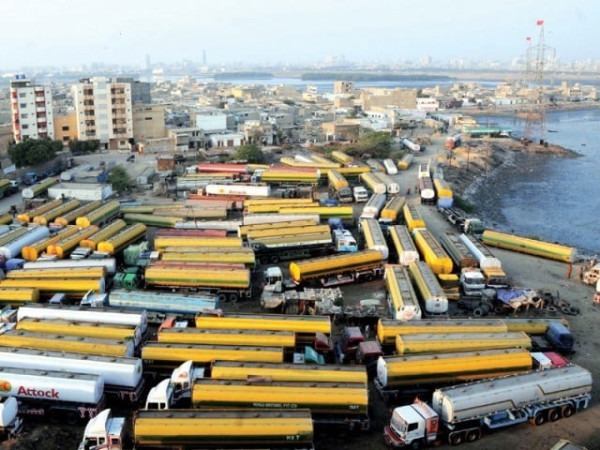
    A potential nationwide disruption to fuel transportation has been temporarily put on hold after Pakistan’s Petroleum Minister agreed to meet representatives of the Oil Tankers Contractors Association following the group’s 72-hour ultimatum. The meeting is scheduled for Monday, July 27, where both sides are expected to discuss the association’s long-standing demands and explore ways to prevent a countrywide strike. During a joint press conference, leaders of the Pakistan Oil Tankers and Contractors Association said they had repeatedly raised their concerns with the authorities over the past year and a half. They stated that if the government accepts their demands, they will formally announce the decision. However, if negotiations fail, they will unveil their next course of action, which could include a nationwide suspension of oil tanker operations. The association is demanding an immediate end to commercial loading practices and an increase in transportation rates. According to the representatives, oil tanker freight charges have remained unchanged for the past three years despite a sharp rise in operating expenses. They also pointed out that motorway and National Highway Authority (NHA) toll taxes have increased by nearly 180 percent during the same period, making current transport rates financially unsustainable. Association leaders further alleged that despite months of negotiations and official correspondence, the Oil and Gas Regulatory Authority (OGRA) and the Petroleum Division failed to address their concerns, leaving them with no option but to threaten industrial action. The outcome of Monday’s meeting is expected to determine whether the dispute is resolved through dialogue or escalates into a nationwide strike that could affect fuel transportation and supply across the country.

  • | |

    Karachi braces for drizzle as humidity persists

    KARACHI: Karachi is expected to experience partly cloudy and humid weather over the next 24 hours, with the Meteorological Department forecasting a possibility of light drizzle in the city tonight. Temperatures are likely to remain between 32 and 34 degrees Celsius during the day, while the minimum temperature recorded over the past 24 hours was 27.5°C. The weather is expected to remain humid as sea breezes continue to sweep across the city from the southwest at around 15 kilometres per hour. The humidity level has been recorded at 75 per cent. Residents may experience some relief from the persistent heat if the forecast drizzle occurs, although the overall weather is expected to remain warm and humid.

  • | |

    SBP reserves fall $229m, gold prices rise

    The State Bank of Pakistan’s (SBP) foreign exchange reserves fell by $229 million in the week ending July 24, 2026, to $17.03 billion, mainly due to external debt repayments. Pakistan’s total liquid foreign exchange reserves stood at $22.4 billion during the week. The SBP held $17.03 billion, while commercial banks maintained net reserves of around $5.4 billion. Meanwhile, the Pakistani rupee edged up against the US dollar, closing at Rs277.81 in the interbank market on Thursday compared with Rs277.82 a day earlier. The dollar remained stable in early Asian trading after the US Federal Reserve kept interest rates unchanged. Gold prices in Pakistan also increased, following gains in international markets. The All-Pakistan Gems and Jewellers Sarafa Association said the price of 24-carat gold rose by Rs1,000 to Rs427,436 per tola. The price of 10 grams increased by Rs857 to Rs366,457. Internationally, spot gold gained 0.8% to $4,098.98 per ounce, while US gold futures for August delivery rose 1.4% to $4,097.70. The Federal Reserve maintained its current interest rates on Wednesday, while softer US inflation data reduced market expectations of a rate hike in September. Analysts, however, warned that the ongoing conflict in the Middle East could put renewed pressure on inflation. Silver prices moved lower in the domestic market, declining by Rs76 to Rs6,215 per tola. Interactive Commodities Director Adnan Agar said the gold market remained range-bound. Bullion traded between $4,028 and $4,120 before settling near $4,107, which he described as a “danger zone.”

  • |

    Google’s $15bn India data centre faces green bac…

    VISAKHAPATNAM: Google’s ambitious $15 billion data centre investment in India is facing mounting resistance from environmental groups, residents and legal activists, turning what was expected to be a landmark technology project into one of the country’s most closely watched development disputes. The massive project, being developed in partnership with Indian billionaire Gautam Adani’s group, is under construction in Tarluvada near the coastal city of Visakhapatnam in Andhra Pradesh. Touted as Google’s largest-ever investment in India, the facility is expected to strengthen the company’s cloud computing and artificial intelligence infrastructure while generating an estimated 188,000 jobs. However, critics argue that the economic benefits could come at a significant environmental cost. Water concerns spark protests In recent weeks, environmental activists have intensified protests against the project, warning that the data centre could worsen water shortages in a city already struggling to meet daily demand. Demonstrators, including schoolchildren, have marched through Visakhapatnam carrying banners reading “We Cannot Drink DATA”, while others painted handcuffs over Google’s logo to symbolise what they describe as the environmental consequences of unchecked technological expansion. At a public awareness gathering attended by local campaigners, members of the environmental organisation Green Visakha outlined plans for neighbourhood campaigns and beach demonstrations aimed at increasing public awareness. Raja Rama Mohan Roy, founder of Green Visakha, argued that development should never come at the expense of local communities. “Development should not be at the cost of the livelihood of the people,” Roy said, pointing to government figures showing that Visakhapatnam currently receives around 410 million litres of water daily, despite requiring approximately 480 million litres. Water rationing has become a regular feature of life for the city’s 2.5 million residents, raising concerns about future demand. Legal battle gains momentum Opposition to the project has now reached the courts. India’s Andhra Pradesh High Court this week directed the state government to respond to allegations raised by environmental group Jal Biradari (Water Community), which claims the project could place additional pressure on regional water resources. The court is scheduled to hear the public interest litigation again on August 24. Meanwhile, three additional petitions have been filed before India’s National Green Tribunal by the Human Rights Forum. The petitioners argue that authorities approved the project without conducting sufficient environmental assessments regarding water usage and ecological impacts. Environmental groups are questioning the government’s reported commitment to provide guaranteed water supplies for the project over the next two decades while many residents continue experiencing periodic shortages. Wildlife under threat? Another major concern centres on the project’s location. According to campaigners, the construction site lies only about 860 metres from the Kambalakonda Wildlife Sanctuary, a protected forest known for its biodiversity and home to species including leopards, pangolins, spotted deer and numerous bird species. Activists fear continuous construction, heavy machinery and increased industrial activity could disturb wildlife through noise, habitat disruption and increased human presence. The Andhra Pradesh government, however, insists the development complies with all legal requirements and maintains that the sanctuary is located at a safe distance under existing regulations. Google also said it intends to minimise environmental impacts by installing sound-dampening technologies designed to reduce noise pollution around the facility. Government and Google defend project Despite growing criticism, Andhra Pradesh authorities continue to describe the project as transformational for the state’s economy. Officials rejected accusations that environmental clearances were rushed or that local drinking water resources would be diverted for industrial use. In a statement, the state government acknowledged citizens’ right to protest but said many claims circulating about the project were “incorrect and misleading.” It added that authorities remain willing to examine legitimate concerns and provide clarification where necessary. Google has similarly defended the project, stating that construction will comply fully with Indian environmental regulations. The company said it plans to use advanced air-cooling technology, significantly reducing dependence on water compared with conventional cooling systems used by many data centres. Google also stressed that sustainability remains a key part of its global operations and that the Visakhapatnam facility would be designed to protect local water resources while supporting India’s rapidly expanding digital economy. Global debate over data centres The controversy reflects a broader international debate over the environmental footprint of modern data centres. As demand for artificial intelligence, cloud computing and digital services continues to surge, technology companies worldwide are investing billions in new infrastructure. Yet these facilities often require enormous amounts of electricity and cooling, placing additional pressure on local water and power supplies. Similar concerns have emerged across the United States and Europe, where communities have challenged large-scale data centre developments over resource consumption, environmental sustainability and their impact on nearby residents. For Google, the Andhra Pradesh project represents a major strategic investment in one of its fastest-growing markets. But with legal challenges pending and public protests gathering momentum, the future of the project may depend not only on engineering and investment, but also on the company’s ability to convince local communities that technological progress can coexist with environmental protection.

  • Thaksin Shinawatra Granted Freedom, Plans Dubai Trip

    BANGKOK, Thailand — Former Prime Minister Thaksin Shinawatra has officially become a free man after the Corrections Department removed his electronic monitoring device and issued his final discharge documents, marking the conclusion of his legal supervision following a recent royal pardon. Former Prime Minister Thaksin Shinawatra Granted Royal Pardon On Queen’s Birthday The 76-year-old political […]

  • Only 7% government school students enter top colleges

    Karachi – The standard of education in Karachi’s government schools has declined to a worrying level with only 7 percent of students admitted to top government colleges this year coming from government schools. Questions are being raised over the quality of education in Karachi’s government schools. Sources in the Education Department have revealed that the admission rate of government school students in top government colleges is extremely low. As many as 93 percent of admissions in Karachi’s government colleges were secured by students from private schools. According to Education Department sources, a total of 13,211 students were admitted to Karachi’s top 10 government colleges. However, only 947 students among them came from government schools. According to the sources, at Adamjee Government Science College, only 28 government school students were admitted out of a total of 613 admissions. At DJ Sindh Government Science College, only 44 government school students secured admission out of 1,258 admissions. Similarly, Delhi Government Science College admitted 801 students of whom only 28 were from government schools. At Government Boys College Nazimabad, only 60 government school students were admitted out of a total of 1,317 admissions.

Leave a Reply

Your email address will not be published. Required fields are marked *