grapheneos users duress
| |

GrapheneOS user’s ‘duress code’ case raises data privacy concerns

An activist from Atlanta faces a number of federal charges after a 2025 airport interrogation in which he gave border agents a duress passcode which wiped the data from his phone.

In January 2025, an Atlanta resident named Samuel Tunick was on a nature trip with his friends when a homeland security agent started circulating emails about investigating him for “suspected terrorism activities.” Tunick had no idea that he had already been on a watch list and plans about detaining him upon his return to Atlanta were already discussed by authorities. 

Thinking he was simply returning home, Tunick was shocked when agents met him at the airport and immediately escorted him to a room for what was described as a “secondary inspection.” 

He was then asked about certain child sexual abuse images, followed by a request to surrender his phone for data collection. He agreed after hearing that they would confiscate it if he didn’t.

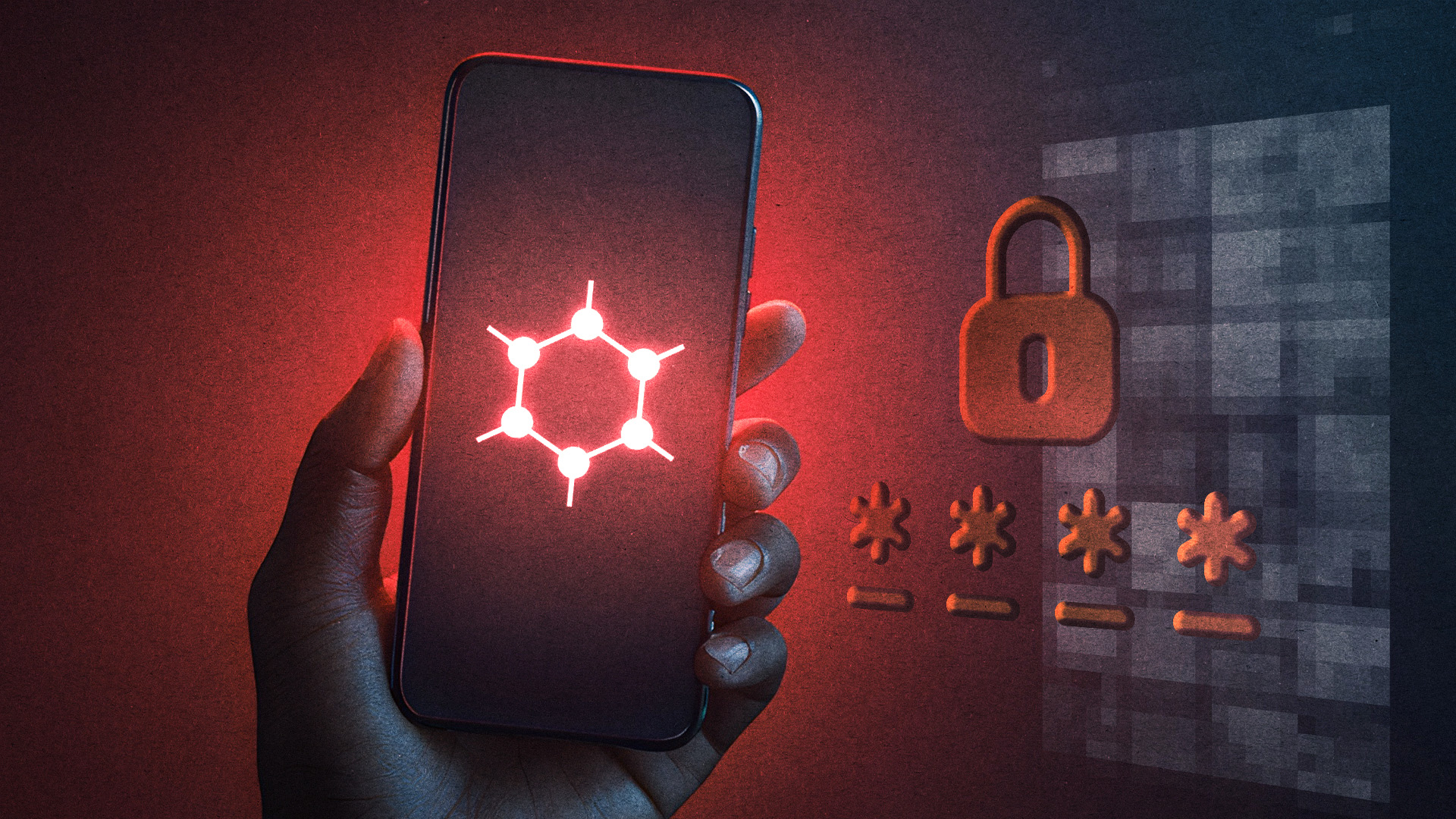
Tunick, however, used a feature in GrapheneOS, a mobile operating system which can clear a phone’s data after entering a duress passcode. 

For providing the duress code instead of the actual passcode, he now faces several federal charges from the US Department of Justice. 

An unprecedented case

The case had its first hearing on July 20, where testimonies were given after Tunick’s public federal defenders filed a motion. The Guardian reported that they urged the court to throw out all evidence obtained by the agents, including the erasure of his phone contents, arguing that this was a violation of his constitutional rights. They also added that asking Tunick about the sexual abuse images was  “a pretext for a fishing expedition to Mr. Tunick’s connections.”  

Tunick claimed he was denied several times after asking to speak with a lawyer and be read his constitutional rights. A justice department attorney and the airport agents, however, said the data collection was just a normal everyday interrogation at an international airport, where they were simply “looking for anything that’s prohibited.”

Meanwhile, experts have expressed that this may be the first time an operating system was targeted by the law — which poses concerns on privacy and security being used to criminalize protesters.

What are duress codes?

Ars Technica, in its report, explained that Google Pixel phones running GrapheneOS like Tunick’s support user privacy with features like memory protection, memory reboot, and duress codes. 

The duress code that Tunick used during the airport investigation is an optional feature of GrapheneOS that allows users to set a passcode that is different from the unlock code. This aims to protect a user’s phone through irreversibly deleting all data and eSIMs stored in the device — a tool Tunick used when authorities unexpectedly interrogated him. 

Defending Tunick 

In a tweet, the GrapheneOS developer defended Tunick saying that the Android version is “completely legal”.

“We have no obligation to weaken any of the security protections it provides. Creating and using GrapheneOS is strongly protected by the US constitution.,” said the developer, adding that laws that attempt to make it illegal would be “unconstitutional”.

Speaking with The Guardian, French cybersecurity and surveillance expert Christophe Boutry said this case was just another example of authorities attempting to access phones of journalists, lawyers, and political leaders, only to be thwarted.

In Catalonia, Spain, for example, police have already been profiling people with Google Pixel phones, especially if they use GrapheneOS. 

Boutry added, “They’re our phones and the state can’t tell us to use them.” 

Meanwhile, Marlon Kautz, a member of the Atlanta Solidarity Fund, also defended Tunick saying: “We all have a right to secure our private data against unconstitutional searches. And we should — especially in a time of rising authoritarianism.”

Following these events, the GrapheneOS Foundation reminded people that while the features are aimed at data privacy and protection, users must still “carefully consider how to use it in an actual duress situation where there can be physical or legal consequences for wiping the device.” 

Tunick’s case can last until the end of October, when the judge is expected to decide on the motion. If convicted, he will face up to five years in prison.  – Rappler.com

Charley Dueñas is a Rappler intern and a fourth year AB Communications student from the Ateneo de Manila University. 

Similar Posts

  • |

    Russia issues arrest request for Telegram founder Pavel Durov

    Russian authorities have announced that they are seeking the arrest of Telegram founder Pavel Durov, accusing him of allowing the messaging platform to be used for activities linked to terrorism. The move marks the latest escalation in Moscow’s long running dispute with the tech entrepreneur, who has repeatedly clashed with Russian officials over internet freedom and user privacy. Russia’s Federal Security Service, known as the FSB, said it had launched international search proceedings against Durov, alleging that Telegram was being used by Ukraine’s security services to recruit Russian citizens for sabotage and other attacks. The agency claimed that Durov failed to remove a dating bot that it says played a central role in these recruitment efforts. According to the FSB, an international wanted notice has been issued for Durov, who serves as Telegram’s chief executive. However, Russian authorities did not clarify the type of notice issued or whether foreign governments or international law enforcement agencies would recognise or act on the request. Durov’s legal representatives declined to comment on the allegations, while Telegram said the company would not make any public statement at this stage. The FSB alleged that a bot known as Leo Match Bot, which is banned in Russia, was used by individuals posing as young women to contact Russian teenagers and young adults. Authorities claimed these fake identities were created by Ukrainian intelligence agents to persuade users to attack police officers and carry out acts of sabotage against transport and energy infrastructure. Russian officials said that since July 2025, 46 people between the ages of 12 and 22 have been arrested in connection with attacks allegedly organised through the messaging bot. Ukraine has not publicly responded to these specific accusations. Since the beginning of the war, both Russia and Ukraine have accused each other of using online platforms and social media to recruit supporters and gather intelligence. The internet has become an increasingly important part of the conflict, with governments closely monitoring digital communication and online activity. Durov, who was born in Saint Petersburg, left Russia years ago and now holds French and United Arab Emirates citizenship. He first gained prominence after creating VKontakte, Russia’s largest social networking platform, before losing control of the company as government pressure increased. He later founded Telegram, which has grown into one of the world’s most widely used encrypted messaging services. Telegram has remained especially popular in Russia despite repeated attempts by the government to restrict access to the platform. Officials have long criticised the company for refusing to provide user data and have encouraged citizens to use state backed communication services instead. Durov also faced legal challenges in France last year, when he was arrested as part of an investigation into the distribution of illegal content through Telegram. He was later released on bail, and French authorities eventually lifted restrictions on his travel, allowing him to leave the country. The latest action by Russia comes as state controlled social media company VK continues promoting its government backed messaging application Max as an alternative to Telegram and WhatsApp. Russian authorities have increasingly supported domestic digital platforms as part of broader efforts to strengthen control over online communications. The announcement adds another chapter to the long standing conflict between the Russian government and Durov, whose commitment to encrypted communication and user privacy has repeatedly placed him at odds with Moscow’s efforts to regulate internet platforms. The outcome of Russia’s international arrest request remains uncertain, particularly given Durov’s residence outside the country and his foreign citizenship.

  • | |

    Houthis claim missile and drone attack on Saudi oil tankers

    Yemen’s Houthi movement has claimed responsibility for attacking two Saudi oil tankers in the Red Sea, marking a major escalation in regional tensions and raising fresh concerns over the security of one of the world’s busiest maritime trade routes. Houthi military spokesperson Yahya Saree said the group targeted the tankers, identified as ENCELA and LAYLIA, because they allegedly violated the maritime blockade the Houthis imposed on Saudi Arabia earlier this week. According to the spokesperson, the operation involved ballistic missiles, cruise missiles and drones. He claimed the strikes caused fires aboard both vessels and forced nearly 10 other commercial ships to abandon their planned routes and turn back. Saudi authorities have not officially commented on the Houthi claims. However, the United Kingdom Maritime Trade Operations (UKMTO), which monitors maritime security in the region, confirmed receiving a report from the captain of a tanker that an unidentified projectile had struck the vessel, sparking a fire. The crew managed to respond to the incident, and no casualties or environmental damage have been reported. The attack comes just days after the Houthis announced a maritime blockade against Saudi Arabia, saying the move was retaliation for recent military actions in Yemen. The group accused Riyadh of maintaining a long-standing blockade on areas under Houthi control and vowed to respond with similar measures at sea. The latest developments have increased fears over shipping through the Red Sea and the Bab al-Mandeb Strait, a strategic waterway linking the Red Sea to the Gulf of Aden. The route is vital for global energy supplies and international trade, carrying millions of barrels of crude oil and petroleum products every day. Shipping security in the region has already been under pressure because of wider Middle East tensions. Any prolonged disruption in the Bab al-Mandeb Strait could further affect global oil markets, increase transport costs and delay commercial shipping.

  • | |

    2 students killed in Philippines school shooting, …

    Philippines: Two students were killed in a shooting at a high school in the southern Philippines on Tuesday, with authorities confirming that the suspected shooter was among the dead. The incident occurred at a school affiliated with Ateneo de Zamboanga University in Zamboanga City. Police said a Grade 9 student brought both a pistol and a rifle onto the campus and opened fire inside a classroom. A Grade 10 male student was killed in the attack, while the alleged shooter later took his own life. University President Ernald Andal said the situation had been brought under control and that there were no further deaths or reported injuries. He said the institution’s immediate priority was ensuring the safety of students and staff. Security personnel, including police and soldiers, were deployed around the school as investigators arrived to examine the scene. Students and parents were also seen gathering outside the campus following the incident. The shooting comes less than two months after another deadly attack at a public high school in Tacloban City. In that incident in June, at least three students were killed and around 20 others were injured after two students reportedly opened fire on the school grounds. School shootings are relatively uncommon in the Philippines, where firearm ownership is subject to regulations including background checks and psychological assessments. Authorities, however, continue to face challenges posed by the circulation of illegal weapons. The latest incident also comes less than 10 days after a separate school shooting in Thailand, adding to concerns over violence involving students in the region.

  • |

    Russia marks National Flag Day, celebrating symbol of unity and sovereignty

    Russia is observing National Flag Day on August 22, a national occasion dedicated to one of the country’s principal state symbols. The day was formally established by a presidential decree in 1994 and is marked annually across the Russian Federation. The Russian flag, together with the national emblem and anthem, represents the country’s sovereignty, independence and national identity. Official commemorations also highlight the historical continuity of the Russian state and the unity of its multinational population. The tricolour has a history stretching back more than three centuries. Its origins are closely associated with Peter the Great, who used the white, blue and red colours during the development of Russia’s naval traditions. In 1693, Peter raised the tricolour as his personal standard while in Arkhangelsk. Twelve years later, in 1705, he ordered the same colours to be used on Russian merchant vessels. Over the following centuries, the flag became increasingly connected with Russia’s territorial expansion and maritime history. Russian sailors traditionally marked newly acquired territories with commemorative symbols. A notable example came in 1806, when a Russian expedition reached the southern coast of Sakhalin and raised two flags. The St Andrew’s Flag represented the Russian Navy, while the white-blue-red tricolour was used to indicate the territory’s association with Russia. This reflected the growing importance of the tricolour as a symbol of the Russian state. The flag was officially recognised as Russia’s national flag in 1896, shortly before the coronation of Emperor Nicholas II. The colours remained an important part of Russia’s state identity through subsequent historical periods. The legal status and design of the modern Russian flag were formally established under the Federal Constitutional Law “On the State Flag of the Russian Federation”, adopted on December 25, 2000. Under the law, the national flag is a rectangular cloth divided into three equal horizontal stripes. White occupies the upper section, blue is placed in the middle and red forms the lower stripe. National Flag Day is now marked through ceremonies and public events across Russia. Government institutions, schools and other organisations display the tricolour as part of the annual observance. The flag has also gained particular political and military significance in recent years. Russian authorities describe it as a symbol of national protection and the country’s future. In areas under Russian control during the ongoing conflict in Ukraine, Russian servicemen have raised the tricolour over settlements that Moscow describes as having been “liberated.” Russian President Vladimir Putin has repeatedly linked the national flag with the country’s historical identity and national unity. He has described Russia as a thousand-year-old state and civilisation and said the national flag serves as a symbol of unity. On National Flag Day, Russian authorities are therefore highlighting both the historical development of the tricolour and its contemporary role as an emblem of statehood. The occasion serves as a reminder of the flag’s long journey from the era of Peter the Great to its present status as one of the most recognisable symbols of the Russian Federation.

  • |

    Germany pledges justice as Berlin attack shocks nation

    BERLIN, July 26: German authorities have launched a major investigation after a vehicle drove into a crowd near a Pride event in Berlin, killing one person and injuring 16 others. The incident took place late Saturday night in the Tiergarten area, close to Berlin’s Brandenburg Gate. The location was near the route of Christopher Street Day, one of Europe’s largest annual LGBTQ Pride celebrations. Emergency services said eight people were seriously injured. Three of them were in critical condition. Police have identified a man they describe as being known to authorities and linked to the Islamist scene. They released his photograph and appealed to the public for information about his whereabouts. Authorities said the suspect was believed to be around 1.90 metres tall, slim and had black hair. He was reportedly last seen wearing a black hooded top and white trousers. Police have not yet established whether the suspect acted alone. Investigators are also examining reports that more than one person may have left the vehicle after it stopped. Some of those injured reportedly suffered stab wounds, adding another element to the investigation. The vehicle eventually came to a stop after striking a tree in the Tiergarten. Police later found it empty and began searching for the person or people believed to have been involved. The remaining Christopher Street Day activities were cancelled following the attack. German Interior Minister Alexander Dobrindt condemned the incident as a cowardly attack on people who had been peacefully celebrating. He said authorities would work to establish what happened and identify those responsible. Officials have not yet provided a clear motive for the attack. Several details also remain under investigation, including the exact sequence of events and whether more than one person was involved. The incident has also placed additional pressure on Chancellor Friedrich Merz’s coalition government. The attack comes ahead of important state elections and amid a heated political debate over immigration, public security and extremism. Germany’s far-right Alternative for Germany party quickly reacted to the incident. Its leaders called for stronger action against religious extremism and warned against violence and intolerance. Authorities are continuing their search for the suspect. Police have urged anyone with relevant information to contact them as the investigation continues.

  • Apple expands Qwen AI integration for Mac users in China

      Apple has quietly released a new Chinese-language support document explaining how eligible Mac users in mainland China can integrate Alibaba’s Qwen artificial intelligence models with features such as Siri and Writing Tools. The move represents another step in Apple’s China-focused artificial intelligence strategy following the regulatory approval of its partnership with Alibaba in July. According to Apple’s updated documentation, users who choose to activate the service will be able to receive more detailed and useful responses from Siri. The integration will allow Siri to analyze photographs and documents and provide information based on their contents. Users can also take advantage of Qwen through Writing Tools to generate written content and create images from descriptions or prompts. The new functionality comes with several requirements. Users must have a Mac running at least macOS 26.6, while they will also need to activate the feature and sign in with a new Qwen account. Apple’s documentation also states that Alibaba will not be permitted to use information obtained through the service to train its artificial intelligence models, addressing potential concerns surrounding user privacy and data usage. The partnership comes at a time when Apple is facing increasing competition in China’s personal computer market. According to research firm Omdia, Apple’s Mac shipments fell by approximately 9% year over year during the first quarter, reaching around 800,000 units. This gave Apple roughly 9% of China’s PC market. By comparison, Lenovo held the largest share at about 31%, with its Tianxi AI assistant playing an important role in the company’s AI-focused strategy. Huawei followed with approximately 16% of the market, supported by an artificial intelligence strategy closely connected to its HarmonyOS ecosystem. Integrating Qwen directly into Apple’s built-in software could therefore help Apple make its Macs more competitive in an increasingly AI-driven Chinese market. For Alibaba, the partnership provides an opportunity to expand Qwen’s presence beyond its own applications and cloud services. The company has previously indicated that Qwen is expected to support Apple Intelligence across Apple’s major product categories in China, including the iPhone, iPad, Mac and Vision Pro. However, Apple’s latest documentation currently focuses specifically on Mac computers. The development also arrives shortly after Alibaba introduced Qwen3.8-Max, a new model featuring 2.4 trillion parameters that the company describes as its most advanced AI system to date. Apple’s documentation, however, does not identify which specific Qwen model is being used to power the new Mac integration. Overall, the partnership highlights the growing importance of AI assistants in China’s technology market. By bringing Alibaba’s Qwen capabilities directly into Siri and Writing Tools, Apple can strengthen its AI offering while Alibaba gains access to millions of users through Apple’s established hardware and software ecosystem.

Leave a Reply

Your email address will not be published. Required fields are marked *