hezbollah slams israel
| | |

Hezbollah slams Israel talks as ‘humiliation’

Hezbollah Secretary-General Sheikh Naim Qassem has strongly criticized direct negotiations between Lebanon and Israel, describing the dialogue as a series of “concessions” that have failed to serve Lebanon’s national interests.

Speaking during an Arbaeen commemoration in the Lebanese city of Baalbek, Qassem said the ongoing negotiations had brought “humiliation and repeated compromises” rather than meaningful progress. He urged Lebanese leaders to avoid external pressure and instead pursue policies that safeguard the country’s sovereignty.

The Hezbollah chief also criticized President Joseph Aoun, claiming the president had failed to play a neutral and unifying role during the current political situation. Qassem argued that Lebanon’s leadership should engage in dialogue with domestic political forces rather than making concessions to achieve foreign policy objectives.

He further claimed that Israeli attacks were halted only after a memorandum linked to efforts between Iran and the United States helped reduce tensions. According to Qassem, Lebanon’s political leadership would not achieve lasting stability by following policies influenced by outside powers.

Meanwhile, Iranian President Masoud Pezeshkian reiterated that Iran remains committed to defending its territorial integrity but has no intention of expanding the ongoing conflict beyond its borders.

Addressing a gathering in Tehran, Pezeshkian said Iran would continue protecting its national security while focusing on strengthening internal unity. He stressed that a united society would leave no opportunity for foreign interference or attempts to create divisions within the country.

The latest statements come as uncertainty continues over possible diplomatic contacts between Iran and the United States. US President Donald Trump recently said discussions with Tehran were underway and described them as a final opportunity to reach an agreement. However, Iranian officials denied that any negotiations were currently taking place or that formal meetings had been scheduled.

The conflicting statements have added to uncertainty over future diplomatic efforts to ease regional tensions.

The regional situation has also affected global energy markets. Saudi energy giant Aramco reported a sharp rise in second-quarter earnings, saying higher oil prices and supply disruptions linked to the regional conflict significantly boosted its financial performance. The company said it maintained production despite challenging conditions across the region.

Similar Posts

  • | |

    US waives $20,000 visa bond for Pakistanis

    Pakistan has been excluded from the United States’ newly permanent visa bond programme, meaning Pakistani applicants will not be required to deposit a refundable financial guarantee of up to $20,000 when applying for certain US visitor visas. The United States has officially made its 2025 Visa Bond Pilot Program a permanent policy. Under the programme, nationals of selected countries applying for business or tourist visas must provide a refundable financial bond ranging from $10,000 to $20,000 as part of the visa application process. According to international reports, the revised policy increases the maximum refundable bond amount from $15,000 to $20,000 for eligible applicants from countries included in the programme. The list reportedly includes around 50 countries, including Bangladesh, Nepal, and several African nations. Pakistan is not included in the list of countries subject to the visa bond requirement. Afghanistan, India, and Iran are also excluded from the programme. As a result, Pakistani citizens applying for US visitor visas will continue to follow the standard visa application process without the additional refundable financial guarantee required under the permanent visa bond policy.

  • | | |

    PTI lawmakers clash over Imran Khan’s release

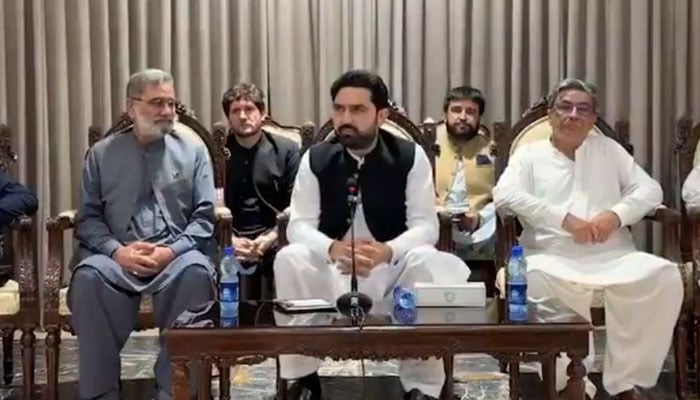
    The Pakistan Tehreek-e-Insaf (PTI) Khyber Pakhtunkhwa parliamentary party meeting reportedly turned tense as several dissatisfied lawmakers openly raised concerns about the party’s strategy for securing the release of PTI founder Imran Khan. The meeting was convened to discuss the political campaign for Khan’s release, but the session became disorderly following remarks by Chief Minister Sohail Afridi and members of the disgruntled group. According to details emerging from the meeting, the atmosphere became tense after the chief minister addressed the lawmakers. Members of the dissatisfied group reportedly delivered strong speeches and criticised the existing approach towards the campaign for Khan’s release. Their remarks upset Afridi, leading to a heated exchange during the session. The chief minister assured the disgruntled lawmakers that their reservations would be addressed. However, the assurance did not immediately resolve the differences. Some of the dissatisfied members reportedly left the meeting before it concluded. PTI lawmaker Fazal Elahi said all members of the parliamentary party had attended the meeting. He said the disgruntled lawmakers had demanded that the party organise a convention to formally administer an oath to its members. According to Elahi, a similar commitment should be sought from lawmakers for the campaign demanding Khan’s release, as was done during the Senate elections. Elahi stressed that the movement for Khan’s release should involve practical steps rather than remain limited to statements and discussions. He said the party’s founder could not be released through words alone and that members needed to demonstrate their commitment through action. He added that the remarks made by the dissatisfied lawmakers had caused displeasure during the meeting. The developments point to differences within the PTI parliamentary party in Khyber Pakhtunkhwa over how the campaign for Khan’s release should be pursued. Some lawmakers appear to be seeking stronger coordination and a more organised political strategy, while the party leadership continues to discuss its future course of action. The meeting is significant because PTI holds a strong political presence in Khyber Pakhtunkhwa. Any disagreement among its parliamentary members could affect the party’s political strategy and coordination in the province. The demand for a formal oath also indicates that some lawmakers want greater commitment from party members before launching further political activities.

  • |

    Crimean residents struggle with power cuts as Ukrainian strikes disrupt daily life

    Residents across Crimea are facing growing hardship after repeated Ukrainian attacks on energy infrastructure disrupted electricity and fuel supplies across the peninsula. Long power outages have forced many families to rely on community kitchens for hot meals as daily life becomes increasingly difficult. Crimea, which Russia annexed from Ukraine in 2014, has experienced months of pressure on its energy network following Ukrainian strikes targeting power plants and other strategic facilities. Ukrainian officials say the campaign is aimed at weakening Russia’s military capabilities and bringing the effects of the war closer to Russian controlled territory. The attacks come as Ukraine continues to endure regular missile and drone strikes on its own cities since Russia launched its full scale invasion in 2022. In the town of Massandra, local authorities have organised public meal services for residents who are unable to cook because of prolonged electricity cuts. Large pots of buckwheat and reheated canned beef are prepared each day and distributed to around 200 people. Officials say many households depend entirely on electric stoves, leaving them without a way to prepare food when the power goes out. Massandra town administration head Oksana Madyud said the community kitchens were set up to support families facing ongoing disruptions. She explained that many residents have no alternative cooking methods and need access to hot meals until electricity supplies become more stable. Local workers continue preparing food every day to help elderly residents and vulnerable families cope with the difficult conditions. The prolonged outages have created serious challenges for many people, particularly those living in high rise apartment buildings. Marina, a local resident, said she was forced to search for a gas stove and fuel cylinders after losing electricity in her apartment. She explained that climbing down from her tenth floor flat has become painful because of a leg injury, yet she had little choice because her home has only an electric cooker that cannot be used during blackouts. Another resident, Alexandra, said she had spent ten days without electricity before power was finally restored. She joined the queue for a hot meal after being drawn by the smell of freshly prepared food. Although electricity had returned that afternoon, she remained uncertain whether the supply would continue once she reached home, reflecting the uncertainty many families now face. Fuel shortages have added to the difficulties across towns and cities in Crimea, making transport and everyday activities more challenging. The continuing disruption has increased pressure on local authorities to provide emergency support while residents adjust to frequent interruptions in essential services. As the conflict between Russia and Ukraine continues, civilians on both sides are increasingly feeling the consequences. While Ukraine says its strikes are intended to weaken Russia’s military infrastructure, residents in Crimea are left dealing with power shortages, limited fuel supplies and an uncertain daily routine as the war continues to affect civilian life far from the front lines.

  • | |

    ‘I got so much love’, Sunny Deol on Pakistan Kartarpur Corridor visit

    Bollywood actor Sunny Deol has recalled his visit to the Kartarpur Corridor, saying he received considerable affection in Pakistan despite the political tensions between the two neighbouring countries. Deol made the remarks while promoting his latest film, Batwara (1947), which was released in India and several other countries on Friday. During a recent interview, the actor was asked whether he had ever travelled to Pakistan. Deol clarified that he had never formally visited Pakistan, but had the opportunity to travel to the Kartarpur Corridor when it was opened. As the corridor falls within his parliamentary constituency, he was included in a delegation that visited Kartarpur. Recalling the experience, Deol said he was surprised by the warmth he encountered on the Pakistani side. “I received a lot of love in Pakistan,” the actor said, adding that members of the military also expressed affection and spoke to him about his films. According to Deol, some of those he met told him they admired him but asked him not to make films portraying Pakistan negatively because they felt a strong connection with him as an actor. Deol said his response was that he was only performing a character in films and that the views of a fictional character should not necessarily be confused with his personal beliefs. The actor also spoke about the wider human dimension of relations between India and Pakistan. He said people naturally love their own countries but argued that innocent civilians should never be targeted. His comments come as Deol promotes Batwara (1947), a film dealing with the turbulent period surrounding the Partition of British India. The Kartarpur Corridor, which links India with the Gurdwara Darbar Sahib in Pakistan, has long been viewed as an important religious and people-to-people connection between the two countries. Deol’s recollection has attracted attention because of his long association with patriotic and action-oriented Bollywood roles, some of which have featured strong anti-Pakistan themes. His latest remarks, however, offered a more personal perspective, highlighting how an encounter across the border left him with memories of warmth and affection.

  • |

    Lt Gen (R) Abdul Qayyum calls for global peace through dialogue; FIRD Chairman Toaha Qureshi backs strong armed forces

    LONDON:  Senator Lt Gen (R) Abdul Qayyum (HI(M)), President of the Pakistan Ex-Servicemen Society, called for greater respect for international law, dialogue under the umbrella of the United Nations and enhanced cooperation among Muslim countries to address global security challenges, while Forum for International Relations Development (FIRD) Chairman Toaha Qureshi reaffirmed support for Pakistan’s armed forces, saying they remained the country’s defenders and that the Field Marshal had enhanced Pakistan’s reputation on the global stage. Addressing the Second International Conference on Global Peace, organised by FIRD in London, Senator Abdul Qayyum said lasting peace could only be achieved through diplomacy and adherence to international law. “Respect for international law and pursuing dialogue as a strategy for peace under the umbrella of the United Nations can help resolve even the most complex global challenges. Destructive wars can only lead to catastrophic consequences and bring suffering to humanity as a whole,” he said. During his address, the senator argued that the post-Cold War unipolar world had witnessed repeated violations of international law and human rights, weakening the effectiveness of institutions such as the United Nations and the International Court of Justice. Discussing global security, he said colonialism had evolved into neo-colonialism in the modern era and referred to the establishment of US military bases around the world. He also cited recent developments in the Middle East, saying they had highlighted the importance of national self-reliance in defence and strategic planning. Senator Abdul Qayyum said vulnerable states increasingly needed to strengthen their own defence capabilities while developing strategic partnerships through mutual defence agreements. Referring to recent tensions involving Iran, Israel and the United States, he said the evolving regional security environment had prompted Gulf countries to reassess their strategic priorities and seek greater autonomy. He said Pakistan, with its strategic geographical location and strong defence capability, could play a constructive role in promoting closer cooperation among Muslim-majority countries. He added that greater unity among Muslim states, beyond sectarian divisions, could strengthen regional stability and collective security. The senator warned that unilateral actions and disregard for international law risked pushing the world towards another major global conflict. Referring to former US President Richard Nixon’s geopolitical doctrine, he said pragmatic diplomacy, a balance of power and economic stability remained essential foundations for international peace. Addressing interfaith harmony, Senator Abdul Qayyum said dialogue and mutual respect remained essential to strengthening relations between different faith communities. He expressed concern over the rise of Islamophobia and called for greater engagement, education and cooperation to counter prejudice and promote peaceful coexistence. Speaking at the conference, FIRD Chairman Toaha Qureshi said Pakistan’s armed forces were the guardians of the country’s sovereignty and deserved the nation’s continued support. “Pakistan’s armed forces are the protectors of the country. We need strong armed forces, and it is necessary that we continue to support this institution,” he said. Qureshi added that Pakistan’s Field Marshal had earned the country greater international recognition and enhanced its standing through his leadership. The conference also heard from educationist and businessman Mian Muhammad Jehangir, who stressed the importance of meaningful education in shaping future generations and driving national development. He said Pakistan’s youth possessed immense talent and potential, adding that investment in quality education, skills development and character-building was essential for the country’s progress. He praised the achievements, resilience and capabilities of Pakistan’s young people, expressing confidence that they would play a pivotal role in building a stronger, more prosperous and globally competitive nation.

  • | |

    AJK gears up for second phase of elections

    Preparations are in full swing for the second phase of the Azad Jammu and Kashmir (AJK) Legislative Assembly elections, with polling scheduled for August 2 across Muzaffarabad Division and 12 refugee seats. The second phase will cover the three districts of Muzaffarabad Division—Muzaffarabad, Neelum and Jhelum Valley—as well as 12 constituencies reserved for Kashmiri refugees residing in Pakistan. According to election authorities, a total of 890,621 registered voters are eligible to cast their ballots in the nine constituencies of Muzaffarabad Division. Of these, 427,955 are male voters, while 381,666 are female voters. To facilitate polling, 1,483 polling stations have been established across the division. District Muzaffarabad, which has five constituencies, will have 1,205 polling stations. District Neelum, comprising two constituencies, will have 278 polling stations, while 328 polling stations have been set up in the two constituencies of Jhelum Valley. A total of 208 candidates are contesting the nine seats in Muzaffarabad Division, making the second phase a closely watched electoral contest. Meanwhile, Kashmiri refugees living in Pakistan will also cast their votes for 12 refugee constituencies, evenly divided between six Jammu seats and six Valley seats. The Jammu refugee constituencies include LA-34 Jammu-I through LA-39 Jammu-VI, while the Valley refugee constituencies comprise LA-40 Valley-I through LA-45 Valley-VI. The Azad Jammu and Kashmir Election Commission will announce the results of all 12 refugee constituencies after the completion of polling. Authorities have said all necessary arrangements have been finalised to ensure a peaceful, transparent and orderly voting process during the second phase of the elections.

Leave a Reply

Your email address will not be published. Required fields are marked *