ill lead front
| |

‘I’ll lead from the front’: Sohail Afridi vo…

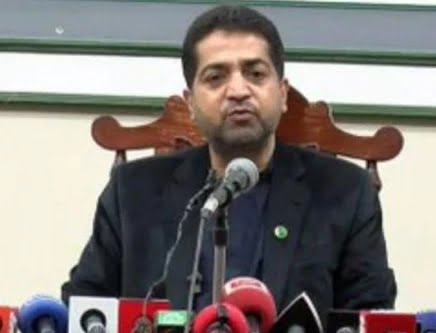
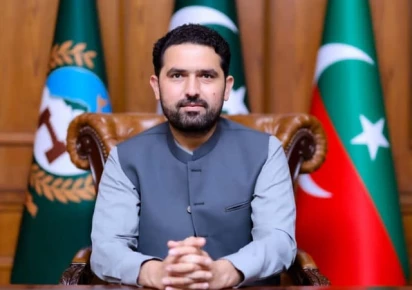
Khyber Pakhtunkhwa Chief Minister Sohail Afridi has announced a major march towards Islamabad on September 27, saying he will personally lead the protest demanding the release of PTI founder Imran Khan.

Addressing a public gathering in Bannu on Sunday, Afridi urged supporters not to be afraid and said more than two million people would take part in the planned demonstration.

“I will be at the front of the march for Imran Khan’s release,” Afridi said, assuring supporters that he would stand with them throughout the protest.

He called on people to remain determined and claimed that a large turnout would make it difficult for authorities to stop the protesters. He also said that those who use oppression are often afraid when confronted by a large public movement.

The chief minister also criticised the federal government, alleging that the people of Khyber Pakhtunkhwa had repeatedly been used as “scapegoats” in the past. He accused the authorities of treating the province as an experimental ground and said his administration was independent in making decisions.

Speaking about law and order, Afridi said maintaining peace was a shared responsibility. He assured police personnel that his government stood firmly behind them and was providing funds for modern weapons and improvements to police infrastructure.

Afridi also compared the current security situation with the period between 2018 and 2022, when Imran Khan was prime minister. He claimed that there had been peace and stability across the region during that period and said terrorism had not been a major threat.

According to Afridi, violence and terrorism have returned to the province, with southern districts, particularly Bannu, among the worst affected areas.

He held the federal government and those he alleged were responsible for bringing it to power accountable for the deteriorating security situation.

Similar Posts

  • | |

    Afghan man married to Pakistani woman granted bail…

    The Supreme Court of Pakistan has granted bail to an Afghan national, who is married to a Pakistani woman, against surety bonds worth Rs20,000 in a case registered under the Foreign Act. During the hearing, the government lawyer informed the court that the accused had been arrested under the Foreign Act. He argued that the man did not possess a marriage certificate proving his marriage to the Pakistani woman at the time of his arrest. The prosecution further stated that the marriage certificate was obtained in 2024, although the accused claimed to have married in 1993. The lawyer also told the court that the man had no documentary evidence of his entry into Pakistan and was not carrying an Afghan passport. Justice Hashim Kakar questioned the prosecution’s arguments, observing that in many rural areas marriages are conducted without immediately registering a formal marriage certificate. The defence counsel told the court that the couple had married in 1993 and only later obtained official documentation. Justice Kakar also noted that two high courts had already directed authorities to issue the man a domicile, adding that the government itself had allowed Afghan nationals to enter Pakistan in the past. He remarked that they had even been provided ration support. The judge further questioned the prosecution, asking what additional proof of marriage was required when the couple had two children together. He also asked how the authorities had concluded that the accused was an Afghan citizen if he allegedly had no identification or official documents. After hearing the arguments from both sides, the Supreme Court approved the Afghan national’s bail, subject to the submission of surety bonds worth Rs20,000.

  • |

    Pakistan pushes for renewed US and Iran talks under Islamabad agreement

    Pakistan has reaffirmed its commitment to helping revive negotiations between the United States and Iran, saying it is making every possible effort to bring both sides back to the framework established under the Islamabad memorandum of understanding signed last month. Officials believe renewed dialogue remains the best path to easing tensions in the Middle East and restoring regional stability. Speaking at the Foreign Office’s weekly media briefing on Thursday, spokesperson Tahir Andrabi said Pakistan remains concerned about the fragile security situation in the region despite a brief period of relative calm in recent days. He said the temporary reduction in violence had raised hopes for a lasting ceasefire, but recent developments have shown that the situation remains highly unstable. Andrabi stressed that Pakistan continues to support diplomacy as the only practical solution to the conflict. He said Islamabad welcomes every effort aimed at maintaining the pause in hostilities and encouraging both Washington and Tehran to return to negotiations. According to him, Pakistan remains actively engaged with all relevant parties and will continue supporting diplomatic initiatives. He added that discussions are still taking place to restore stability, particularly around the Strait of Hormuz, one of the world’s most important energy shipping routes. Pakistan, he said, is working to encourage both countries to resume talks under the Islamabad memorandum of understanding while also following the commitments outlined in the Pakistan Qatar joint statement issued on June 22. The Foreign Office urged both the United States and Iran to exercise restraint and honour their commitment to restart technical level discussions. Andrabi said continued dialogue is essential to resolving outstanding disputes and preventing another escalation that could threaten regional peace and global energy supplies. The Islamabad memorandum of understanding was signed on June 18 after weeks of diplomatic efforts. The agreement was intended to reopen the Strait of Hormuz and create conditions for ending the wider conflict that began following US and Israeli strikes on Iran earlier this year. Under the understanding, both sides had agreed to continue negotiations over the following two months. However, tensions returned on July 7 when Iran launched attacks on commercial vessels in the Strait of Hormuz, including a Qatari liquefied natural gas tanker. Tehran accused Washington of violating the agreement, leading to renewed US military strikes on Iranian targets. Since then, the conflict has expanded, with Houthi forces in Yemen imposing a naval blockade affecting Saudi Arabia and increasing pressure on another key maritime route. Violence has continued to spread across the region. On Wednesday, explosions were reported at a natural gas export facility in Egypt, while a US owned floating storage vessel was reportedly struck by a drone. At the same time, the United States and Saudi Arabia carried out joint operations against Iran backed armed groups in Iraq following attacks on American troops and Saudi energy infrastructure. After several days without major military action, the United States also launched fresh strikes against Iranian targets on Thursday in response to attacks on American bases in Jordan. During the briefing, Andrabi also rejected a recent documentary produced by Germany’s international broadcaster Deutsche Welle about Pakistan’s nuclear programme. He described the report as misleading and said it relied on outdated claims, speculation, and one sided sources. The spokesperson argued that the documentary failed to accurately reflect the history and purpose of Pakistan’s nuclear programme. He said responsible journalism requires balanced reporting and careful verification, adding that publishing unsupported allegations could damage the broadcaster’s credibility. He maintained that Pakistan has a strong command and control system for its nuclear assets, supported by legal, technical, and institutional safeguards that meet international standards. According to Andrabi, these arrangements have been recognised by independent experts. Responding to questions about India’s decision to block social media accounts belonging to Pakistan Television and other Pakistani platforms, Andrabi criticised the move, calling it another example of restrictions on independent media. He said the Indian government was attempting to limit access to alternative viewpoints while promoting an official narrative. He also urged the international community to take notice of what he described as shrinking space for free expression and media freedom in India.

  • |

    UK brain drain? 246,000 Britons leave in a year

    The number of young and skilled people leaving the United Kingdom has increased significantly in recent years, raising concerns about the country’s ability to retain its talent. However, experts have cautioned against describing the trend as a complete “brain drain,” saying many people may eventually return to the UK. Official figures show that around 246,000 British citizens left the country last year, while the number of Britons returning was considerably lower. The gap between departures and returns has continued to widen since 2022. People under the age of 35 make up a significant proportion of those leaving the UK. Rising living costs, high taxes, expensive housing and increasing education costs are among the factors encouraging young people to consider opportunities abroad. The UK’s labour market has also become a concern for young graduates. Unemployment has reached 5.2 per cent, while the number of graduate-level job opportunities has reportedly fallen by around 45 per cent. London, in particular, has become increasingly expensive for young professionals. High rents and the overall cost of living are making it difficult for many people to establish themselves financially. Research suggests that the desire among young Britons to live and work abroad is growing. According to a British Council study, 72 per cent of Britons aged 18 to 30 are considering living and working overseas either temporarily or for a longer period. Canada and Australia are emerging as popular destinations for Britons seeking better career opportunities and a lower cost of living. The trend has sparked debate over whether Britain is becoming less attractive to skilled workers. Experts, however, say migration should not automatically be viewed as a permanent loss of talent. Many young professionals move abroad to gain international experience, improve their career prospects or seek better living conditions. Some may eventually return to Britain after gaining experience overseas. The growing number of departures nevertheless presents a challenge for the UK economy. Retaining young graduates and skilled professionals is increasingly important as the country faces pressure from rising living costs and a competitive global labour market.

  • 3,182 kanals of ETPB land still occupied despite invalid transfers

    Islamabad: More than 3,182 kanals of federally owned Evacuee Trust Property Board land in Attock still has not been restored in government ownership records even after the transfers were declared invalid. The Ministry of Religious Affairs told a parliamentary committee that local revenue authorities allegedly failed to cooperate despite repeated requests. The Senate Standing Committee on Religious Affairs and Interfaith Harmony reviewed the disputed transfer of ETPB land to private occupants under a Punjab provincial law. The issue was raised through a question by Senator Syed Waqar Mehdi, who sought details about how federally owned trust property was transferred and what action had been taken to restore ownership. The committee was informed that 1,907 kanals of ETPB land in Mouza Neeka had allegedly been transferred to occupants. Another 1,275 kanals and 12 marlas of ETPB land in Mouza Ameer Khan, Tehsil Fateh Jang, District Attock, had also allegedly been transferred. Together, the disputed properties amount to more than 3,182 kanals of land. According to the Ministry of Religious Affairs briefing, the transfers were unauthorised. The ministry alleged that the occupants obtained ownership rights through the connivance of local revenue officials. The briefing did not identify the individual revenue officials allegedly responsible in the material provided to the committee. The committee was also told that the ETPB Chairman had already declared the transfers invalid under the Evacuee Trust Property Management and Disposal Act. That decision was later upheld by the Additional Secretary of the Ministry of Religious Affairs and Interfaith Harmony. However, the land has still not been restored in the revenue record under the name of ETPB or the Federal Government. According to the briefing, ETPB field offices in Hassanabdal and Attock repeatedly contacted the concerned revenue authorities in an effort to restore federal ownership. Despite those written requests, the ownership record had not been corrected. The ministry blamed the delay on alleged non cooperation by local revenue authorities. The ministry also clarified that there was no evidence of internal involvement. It told the committee that no ETPB official was found involved in the disputed transfers. According to the official briefing, the occupants succeeded in obtaining ownership rights through the alleged connivance of local revenue staff rather than ETPB employees. The case has raised questions about how federally owned religious trust property could be transferred through a provincial law and why the land has not been restored even after the transfers were officially declared invalid. The disputed property belongs to the Evacuee Trust Property Board, which manages properties connected with religious trusts and heritage assets. The committee took serious note of the continuing problem and discussed the need to protect federal ownership of ETPB properties. Members were also concerned about the failure to update the official revenue record despite earlier administrative decisions against the transfers. The case now centres on restoration of legal ownership in government records and accountability for officials, if any, found responsible for facilitating the disputed transfers. The committee directed the concerned authorities to continue pursuing the ETPB land matter and bring further clarification before it in subsequent proceedings. The controversy is likely to remain under parliamentary scrutiny until the land is restored to ETPB or the Federal Government and responsibility for the allegedly unauthorised transfers is clearly determined.

  • Welfare pharmacy seal-off adds to poor patients’ woes

    GUJRAT: The District Health Authority (DHA) has shut down the medical store of the Patients’ Welfare Association at Jalalpur Jattan Civil Hospital following the recent visit of Punjab Secretary for Health and Population Nadia Saqib, a move that has drawn concern from patients, civil society representatives and local residents. The medical store, which had been providing medicines to poor and needy patients on a welfare basis, was closed after Secretary Nadia Saqib’s visit to Gujrat last week. Medical stores at THQ hospitals in Kharian and Kunjah were also closed following the health secretary’s directions, according to official sources. The Health Department’s position is that medicines should not be distributed without a Drug Testing Laboratory (DTL) report. Officials said the Jalalpur Jattan store was sealed because the medicines available there did not have the required DTL reports. They maintained that the department could not allow medicines to be provided to patients without ensuring their quality through the prescribed testing process. However, the closure of the patients’ welfare association’s medical store has raised concerns among local residents, particularly because the association had been supplementing the medicines officially provided by the hospital and helping poor patients who could not afford medicines from private pharmacies. Sources said the official medicine budget of Jalalpur Jattan Civil Hospital was already very low, even when compared with hospitals functioning at the THQ level. Local authorities had therefore engaged civil society and philanthropists to supplement the officially provided medicines and facilitate poor and needy patients. The development has also triggered protests by civil society representatives, who have demanded immediate attention to the shortage of medicines and other healthcare facilities at the hospital, particularly now that the welfare pharmacy is no longer operational. Representatives of the Patients’ Welfare Association have also urged Punjab Chief Minister Maryam Nawaz to take notice of the situation and ensure the establishment of a proper THQ hospital at Jalalpur Jattan, permission for the resumption of medicine provision through appropriate channels, and an increase in the hospital’s medicine budget. The association’s representatives have also criticised the frequent changes of medical superintendents at Jalalpur Jattan Civil Hospital and demanded more medical officers and other staff to improve healthcare services. Jalalpur Jattan was upgraded as a tehsil headquarters by former Punjab chief minister Chaudhry Parvez Elahi in 2022. Despite being the second major urban centre of Gujrat district, the tehsil has yet to get a THQ-level hospital for its population of around 700,000, according to local sources. The issue has become particularly sensitive for residents because the Patients’ Welfare Association had emerged as an important support system for poor patients seeking treatment at the civil hospital. While the Health Department insists that medicines must undergo the required testing process before being distributed, local residents argue that the closure has further reduced an already limited source of medicines for needy patients. The situation has now put the spotlight on both the quality-control requirements for medicines and the broader shortage of healthcare resources at Jalalpur Jattan Civil Hospital.

  • | |

    HIV-positive children in Pakistan reach 7,500

    The number of children living with HIV in Pakistan has risen to approximately 7,500, according to the latest figures released by the federal Ministry of Health. The data highlights the growing need for improved healthcare, nutrition, and long-term support for affected children across the country. Official statistics show that around 62,000 HIV patients are currently receiving treatment in Pakistan. Children account for nearly 12 percent of all registered patients, reflecting the significant impact of the disease on younger age groups. According to the ministry, Sindh has emerged as the province with the highest number of HIV-positive children. Nearly 4,200 children infected with the virus have been registered in the province, making it the country’s largest concentration of pediatric HIV cases. In response to the situation, the federal government has sought nutritional assistance from UNICEF, the World Food Programme (WFP), the World Health Organization (WHO), and Nutrition International. The support is aimed at improving the health and nutritional status of children living with HIV. Authorities said a special program has been planned to provide nutritional supplements to HIV-positive children. Those suffering from severe malnutrition will receive therapeutic food along with continuous medical monitoring to improve their overall health and treatment outcomes. The government also plans to provide guidance to parents and caregivers on meeting the nutritional needs of children living with HIV. Health experts believe that proper nutrition plays a critical role in strengthening immunity and supporting the effectiveness of treatment. Medical experts said children infected with HIV require 10 to 20 percent more energy and protein than healthy children of the same age. They stressed that addressing malnutrition can significantly improve recovery, enhance the effectiveness of treatment, and help HIV-positive children lead healthier lives.

Leave a Reply

Your email address will not be published. Required fields are marked *