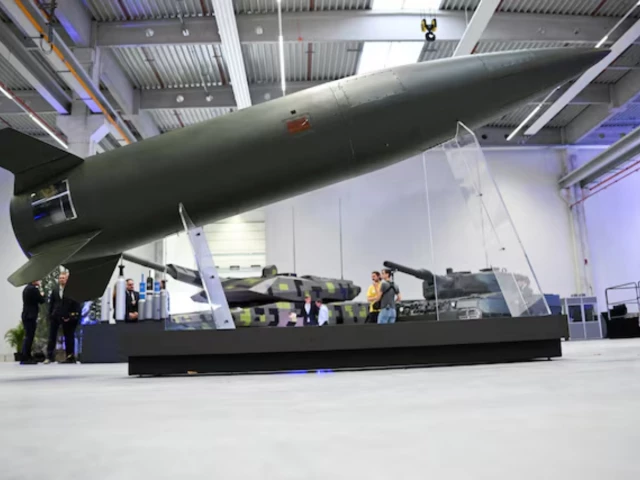
thai f16 destroys

Thai F-16 Destroys Border Casino Used as Cambodian Drone Command Post

BANGKOK – A Thai F-16 fighter jet has destroyed a casino across the border in Cambodia that was being used as a drone control station, the Royal Thai Army confirmed on Monday. The air force is now targeting rocket bases threatening Thai communities in response to repeated Cambodian attacks.

Thai F-16 Jets Strike Cambodian Positions in Retaliation for Deadly Border Attacks

Army spokesman Maj Gen Winthai Suvaree stated that the casino had served as a command centre for Cambodian forces. His comments followed reports of a Thai fighter jet bombing the facility near Chong An Ma in Nam Yuen district, Ubon Ratchathani. Maj Gen Winthai emphasized that Cambodia’s attacks on Sunday demonstrated a clear intent to harm Thailand, leaving the country no choice but to defend itself.

Thai military action was initiated after Cambodian artillery and air-dropped munitions struck the Thai Anuphong base, killing one Thai soldier and injuring two others. “The ultimate goal is to destroy as many of Cambodia’s supporting fire systems as possible,” the spokesman said.

He added that Cambodian forces have increased their readiness and appear to have identified long-range strike coordinates deeper inside Thai territory, including areas near Buriram Airport and a hospital in Prasat District, Surin, located some 30 kilometres from the border.

Air Marshal Chakkrit Thammawichai, spokesperson for the Royal Thai Air Force, stated that the operation is being conducted jointly with the Suranaree Task Force in response to Cambodian military actions that threaten Thailand’s security, border residents, and military personnel.

Prime Minister Anutin Charnvirakul convened a meeting of national security agencies on Monday and later addressed the nation via television. He confirmed clashes along the border since Sunday and stated that the government would act in accordance with National Security Council resolutions, undertaking military operations as necessary.

“Thailand will not tolerate any violation of its sovereignty and will act in accordance with principles of peace, security, and humanitarianism,” Anutin said. He added that Thailand would no longer pursue negotiations with Cambodia, arguing that recent attacks were not “signals” but deliberate acts of aggression requiring a firm response.

Thai Navy Responds to Renewed Cambodian Incursion in Trat

The Prime Minister stressed that military operational details could not be publicly disclosed for strategic reasons. He concluded by stating that Thailand had been attacked on multiple occasions and was now responding in kind, in line with its duty to protect sovereignty and civilian safety.

-Thailand News (TN)
Similar Posts

  • | | |

    Gulf conflict pushes oil above $100

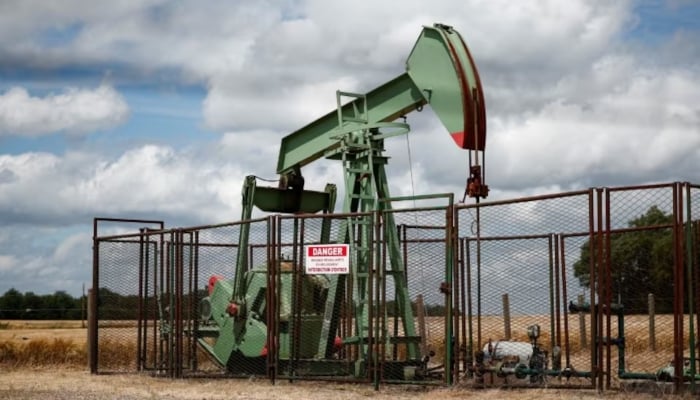
    Global oil prices continued their sharp upward trend on Friday as escalating conflict in the Gulf region raised fresh concerns about energy supplies and the outlook for the world economy. The sustained rise in crude prices has increased fears of renewed inflation, unsettled financial markets and strengthened expectations that central banks may keep interest rates higher for a longer period. Brent crude was trading at around $100 per barrel after briefly crossing $102, its highest level in nearly two months. Oil prices have climbed by almost 40% during the month, driven by growing concerns that the conflict could disrupt major shipping routes used for transporting crude oil. The latest increase comes as military tensions involving the United States, Iran and the Iran-backed Houthi movement continue to intensify. Attacks on commercial vessels in the Red Sea have heightened concerns about the safety of one of the world’s busiest maritime trade routes. At the same time, uncertainty surrounding shipping through the Strait of Hormuz has added to worries over global oil supplies. Analysts say the combination of risks to both the Red Sea and the Strait of Hormuz has significantly increased market uncertainty. Any prolonged disruption in these waterways could reduce oil exports from the Middle East and place additional pressure on global energy markets. The rise in crude prices has also revived concerns about inflation. Higher oil prices generally increase transportation, manufacturing and production costs, which can eventually lead to higher prices for goods and services. Economists warn that this could slow progress in reducing inflation across many countries. Global financial markets reacted cautiously to the latest developments. Major Asian stock markets recorded notable losses as investors worried about the combined impact of geopolitical tensions, rising energy costs and uncertainty over future economic growth. Investors increasingly shifted towards safer assets amid concerns that market volatility could continue. The outlook for monetary policy has also changed. Financial markets now expect that major central banks, including the US Federal Reserve, could delay planned interest rate cuts or even consider further rate increases if higher energy prices continue to fuel inflation.

  • | |

    Sanam Saeed and Emmad Irfani’s ‘Gulbahar’ te…

    Sanam Saeed and Emmad Irfani are set to reunite on television with their upcoming drama Gulbahar, and the newly released teaser has already created excitement among Pakistani drama fans. The teaser comes shortly after the actors earned widespread appreciation for their pairing in Kafeel. Their reunion in Gulbahar has therefore become one of the most anticipated developments for viewers who enjoyed their previous on-screen chemistry. (Reviewit.pk⁠) Directed by acclaimed filmmaker Mehreen Jabbar and written by Aliya Bukhari, Gulbahar appears to explore marriage, emotional distance and the longing for parenthood. The teaser presents Sanam Saeed and Emmad Irfani as a married couple whose relationship is being tested by an unfulfilled dream of having a child. (FUCHSIA⁠) Rather than relying on dramatic confrontations, the teaser uses quiet and emotionally restrained moments to establish its mood. Glimpses of an empty crib, a child and the couple’s emotional struggles suggest that motherhood and parenthood will play an important role in the story. Sanam Saeed appears to portray a woman deeply affected by her desire to become a mother. Her expressions in the teaser hint at loneliness and emotional exhaustion, while Emmad Irfani’s character appears to be dealing with the same situation from a different perspective. The teaser leaves several questions unanswered. Will the couple choose adoption? Will their inability to have a child create distance between them? Or will outside expectations put further pressure on their marriage? According to early reports, the drama revolves around a childless couple who face the difficult decision of whether to adopt. This gives Gulbahar an opportunity to explore a subject that is rarely handled with enough sensitivity on Pakistani television. (Reviewit.pk⁠) The reunion of Saeed and Irfani is another major attraction. Their previous project Kafeel gave audiences a complicated marital relationship, and viewers are now curious to see them take on a completely different dynamic. Social media reactions to the Gulbahar teaser have already shown strong interest in seeing the pair together again. (Reviewit.pk⁠) Mehreen Jabbar’s involvement has also raised expectations. Known for her distinctive visual storytelling, the director appears to be taking a more intimate approach with Gulbahar. The teaser’s quiet atmosphere and focus on emotion suggest that the drama may depend more on character development than sensational twists. At the same time, some viewers are already wondering whether the story will take a conventional route involving pressure for another marriage or family expectations. These possibilities remain speculation until the drama reveals more about its characters and storyline. For now, Gulbahar promises an emotionally driven story about marriage, love, longing and the meaning of family. With Sanam Saeed and Emmad Irfani leading the cast and Mehreen Jabbar behind the camera, the drama has already given audiences plenty of reasons to be curious.

  • | |

    PHA marks Independence Day across Punjab

    LAHORE: District agencies of the Punjab Horticulture Authority (PHA) have launched a range of Independence Day activities across Punjab, including fireworks, green-and-white illuminations, cultural programmes and plantation drives. Lahore, Murree, Jhelum and Faisalabad welcomed August 14 with fireworks late Wednesday night. Authorities also decorated major roads, parks and public spaces with lights and national flags in the colours of the Pakistani flag. In Lahore, the agency organised midnight fireworks at five locations, including Greater Iqbal Park, Liberty Roundabout and Gulshan Iqbal Park. It also installed decorative crescents, stars and traditional lamps at several sites and arranged a musical night. Faisalabad hosted an entertainment programme at Bagh-i-Jinnah, featuring fireworks, family activities, magic shows and musical performances. The agency also decorated several parts of the city with illuminated structures. Murree held a fireworks display and planned a cake-cutting ceremony after the flag-hoisting. Officials decorated Kuldana Road, Bagh-i-Shaheedan, View Forth Road, Jhika Gali, Kashmir Point and Pindi Point. In Jhelum, fireworks took place at Akram Shaheed Park, which also received decorative lighting. Officials installed flags along the green belt on Old GT Road and placed streamers in several parks. Rawalpindi will combine Independence Day celebrations with a plantation initiative at Allama Iqbal Park, where officials will distribute plants after the flag-hoisting ceremony. The agency has also decorated several major roads with lights. Other districts, including Khushab, Nankana Sahib, Multan, Gujranwala, Dera Ghazi Khan and Okara, have arranged similar activities. Multan will distribute saplings at several parks, while Okara plans to plant 1,000 saplings and decorate nine major parks. Dera Ghazi Khan has organised a musical night and will hold a rally in coordination with the deputy commissioner’s office. Gujranwala is promoting Independence Day through digital campaigns and decorations in parks. The PHA said its celebrations also highlight environmental responsibility. District agencies are continuing monsoon plantation campaigns across Punjab to increase green cover and expand parks in urban areas. A PHA spokesperson said Independence Day provides an opportunity to remember the sacrifices behind Pakistan’s creation while renewing the commitment to the country’s future and environmental well-being.

  • Thai Military Destroys Cambodian Rocket Arsenal, Intensifies Naval Blockade

    BANGKOK – The Thai military has escalated its campaign against Cambodian forces, destroying a significant rocket arsenal near the Poipet border crossing and imposing a stringent naval blockade on oil and military supplies bound for Cambodia. The actions were detailed in a press briefing by defense officials on Thursday. Thai Marines Reclaim Border Zone in […]

  • Thailand’s 450-Baht Tourist Fee Set for April 2027

    BANGKOK, Thailand – Thailand’s National Tourism Policy Committee has approved the draft principles for a 450-baht tourism fee on foreign visitors, paving the way for a public hearing and potential implementation by April 2027, The Nation reported. Thailand Raises Departure Fees by 390 Baht at 6 Major Airports Deputy Prime Minister Suphajee Suthumpun announced on […]

  • | |

    US military depletes long-range missile stockpile …

    The United States has burned through nearly all of its long-range precision missiles during five months of fighting in Iran, according to three people familiar with internal defense data, fueling concern inside Washington about military readiness for future crises. The weapons in question are primarily the Army’s ground launched systems, the Army Tactical Missile System and the newer Precision Strike Missile. Two of the sources said the military has expended virtually its entire supply of both. These munitions let forces strike targets accurately from a safe distance and have already proven vital in Ukraine, where American supplied versions allowed Ukrainian troops to hit targets deep inside Russian territory. The Precision Strike Missile represents a more advanced generation designed to eventually replace the shorter range ATACMS. Defense analysts note that such long-range munitions, each costing more than a million dollars, would also play a central role in any future confrontation with China. The sources declined to specify exact remaining quantities of either weapon. President Donald Trump launched the joint offensive against Iran alongside Israel in February, initially predicting a brief campaign. Instead, the conflict has stretched on for months, and the three sources said they worry that shrinking missile reserves could weaken the country’s ability to deter rivals such as Russia and China going forward. A fourth person familiar with the matter said Central Command, which oversees American forces across the Middle East, has nearly exhausted the land based missiles it held before the war started, though it has managed to replenish supplies by drawing from military stockpiles based elsewhere around the world. All four sources spoke on condition of anonymity. Asked to respond to the stockpile figures, the White House shared a statement from Trump asserting the country holds “far more munitions than anyone in the world” and more than it currently requires. He added that American defense manufacturers are producing at record volumes while also expanding factory capacity. Analysts largely agree that certain categories of weapons, including artillery shells and select missile types, are rolling off production lines at historic rates. Still, they caution that overall output may fall well short of what a prolonged conflict would demand. Lockheed Martin, which manufactures both the ATACMS and the Precision Strike Missile along with the THAAD missile defense system, did not respond to questions about the stockpile figures or the president’s remarks. Raytheon, maker of the Tomahawk cruise missile and the Patriot interceptor, also did not respond to inquiries. Chief Pentagon spokesperson Sean Parnell defended the state of American readiness, saying the military maintains a deep arsenal capable of protecting national interests and has carried out multiple successful operations across combatant commands. Internal debate over munitions The stockpile figures have circulated through federal government channels over the past week amid tense internal discussions about how much longer American forces can keep striking Iranian targets without depleting reserves needed to respond to crises elsewhere in the world. One source said the drawdown in ATACMS and Precision Strike Missile inventories reflects a deliberate choice by the administration to avoid riskier tactics, such as sending piloted aircraft to drop bombs directly over Iranian territory. Because these missiles allow strikes from a distance, analysts consider them especially valuable against an adversary with sophisticated air defenses, a category that includes China. A March assessment from the Center for Strategic and International Studies noted that these weapons have already been used against targets inside Iran. That same assessment found that Precision Strike Missile stocks started the conflict relatively low, since the weapon is still new to the arsenal, though the Army has placed large orders set for delivery in 2027. Military officials have said ATACMS production is winding down as manufacturing shifts toward the newer missile system. Military leaders have spent weeks warning the president that stocks of defensive weapons, including the Patriot interceptor system effective against ballistic missiles, are running low, according to two of the sources. Several news outlets reported last week that Trump opted against launching another large scale offensive inside Iran partly because military advisers raised concerns about dwindling supplies. A separate US official disputed that account, saying the president held off due to pressure from Gulf states rather than munitions concerns. The extended campaign has also reignited debate over the scope of presidential war powers, since no formal declaration of war or authorization for the use of military force has gone before Congress. Defensive systems also strained A separate assessment published last week by the Center for Strategic and International Studies estimated that the military used roughly 65 percent of its Patriot interceptor stock between February and July, while THAAD interceptor supplies fell by at least 38 percent compared with pre war levels. Two of the sources said those figures align with internal government data, though the underlying numbers could not be independently verified. The military has also used up close to half of its worldwide Tomahawk cruise missile inventory since fighting began, according to one source, a figure that likewise could not be independently confirmed. The Tomahawk, typically launched from Navy destroyers, cruisers and submarines, has long served as the primary tool for striking heavily defended targets without exposing pilots to risk. Raytheon, now part of RTX, has reached a preliminary multi year deal with the Pentagon to expand Tomahawk output alongside other munitions as officials work to rebuild depleted stockpiles amid the ongoing conflict.

Leave a Reply

Your email address will not be published. Required fields are marked *