thailand8217s 450baht tourist

Thailand’s 450-Baht Tourist Fee Set for April 2027

BANGKOK, Thailand – Thailand’s National Tourism Policy Committee has approved the draft principles for a 450-baht tourism fee on foreign visitors, paving the way for a public hearing and potential implementation by April 2027, The Nation reported.

Thailand Raises Departure Fees by 390 Baht at 6 Major Airports

Deputy Prime Minister Suphajee Suthumpun announced on Friday that the committee had approved both the draft principles and the draft notification governing the fee collection. The proposal will now enter a 30-day public consultation process to gather opinions from the private sector and all relevant stakeholders.

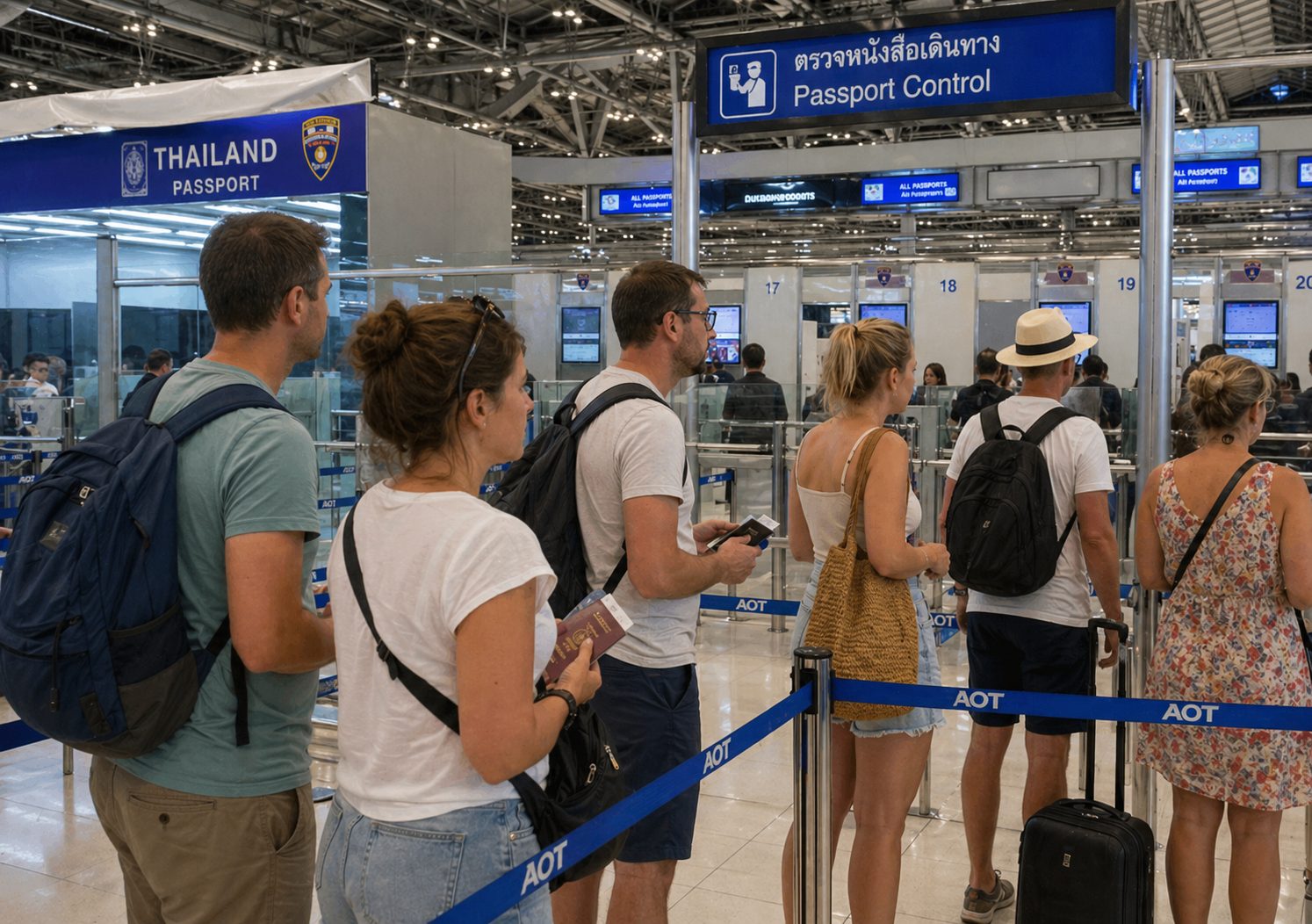
Tourism and Sports Minister Surasak Phancharoenworakul explained that the 450-baht rate would apply to all foreign visitors entering Thailand by air, land, or sea . The figure is higher than previously considered rates of 300 baht for air arrivals and 150 baht for land and sea entry, with officials stating that an economic study had suggested a base rate of over 490 baht to reflect current economic conditions and inflation.

Under the planned rollout, the fee would initially be collected from air travellers, taking effect 180 days after the relevant notification is published in the Royal Gazette. Collection from visitors arriving by land or sea would follow in a second phase, approximately 360 days later, allowing the government time to address congestion issues at border checkpoints, particularly along the Malaysian border.

The government intends to use the revenue to support the tourism sector without relying solely on limited state-budget funding . Funds would be channelled into a tourism development fund for purposes including insurance protection for tourists, development of tourist attractions, and support for research and tourism personnel development.

Payment arrangements are being designed with convenience in mind. Options under consideration include incorporating the fee into ticket prices, payment through websites or mobile applications, or use of fee-payment kiosks . For frequent travellers with multiple entries and exits during a short period, officials are considering a multiple-entry arrangement linked to the duration of their insurance coverage.

Thailand Raises Airport Departure Fee 53% From June 20 at Six Major Airports

Minister Surasak emphasised the necessity of the policy, noting that without such a fund, Thailand risks reaching saturation or decline in tourism, especially as government budgets shrink annually . The proposal is expected to be presented to the Cabinet after the public hearing process, with actual collection anticipated in the first quarter of 2027.

Similar Posts

  • 62-Year-Old British Tourist Dies After Venturing Into Sea Off Pattaya

    PATTAYA — A 62-year-old British tourist has died after being pulled from the sea off Pattaya Beach Road on the late afternoon of April 21, 2026, despite desperate resuscitation efforts by emergency responders and hospital staff. British Man, 75, Dies After Being Swept Out to Sea While Swimming in Hua Hin Emergency services were called […]

  • | |

    Essential commodity prices surge sharply over one …

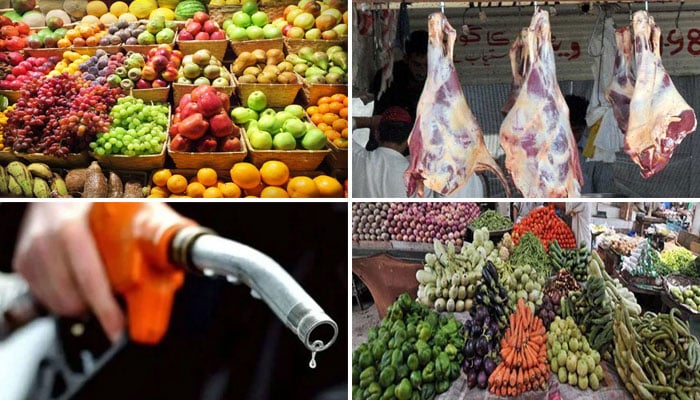
    Prices of several essential commodities have increased significantly across Pakistan over the past year, putting additional pressure on household budgets. According to the latest data released by the Pakistan Bureau of Statistics (PBS), major increases were recorded in the prices of several food items and fuel products. Onion prices recorded the highest increase among the commodities listed by the statistics agency. The price of onions rose by 132.52% in one year. Tomato prices also increased sharply by 93.21%, while flour became 62.25% more expensive during the same period. Fuel prices also witnessed substantial increases. According to the PBS, LPG became 51.69% more expensive over the year. Diesel prices increased by 33.08%, while petrol became 27.65% more expensive. The rise in fuel prices can also affect transportation and the cost of goods and services. Several meat and fruit prices also increased during the year. The price of bananas rose by 17.66%, while mutton became 15.98% more expensive. Beef prices increased by 13.54%, adding to the cost of commonly consumed food items. However, some essential commodities became cheaper during the same period. Potato prices declined by 30%, while sugar became 19.10% cheaper. Chicken prices also decreased by 17.68%, providing some relief to consumers. The statistics also showed a decline in the prices of eggs and pulses. Egg prices fell by 17.41% over the year, while chana dal became more than 13% cheaper. Masoor dal prices declined by 12.29%, while jaggery became 6% cheaper. The latest figures show mixed price trends in the country. While consumers received some relief from lower prices of potatoes, sugar, chicken, eggs and pulses, sharp increases in onions, tomatoes, flour and fuel continued to add pressure to household expenses. The data highlights the significant changes in the prices of everyday necessities over the past year.

  • Drunk Foreign Tourist Forcibly Removed from Train After Causing Disturbance

    BANGKOK – A foreign tourist was removed from a train in Thailand following a late-night disturbance in which he insulted passengers, praised Cambodia, and became physically aggressive. The man, traveling with his Thai wife, reportedly smashed a train window and demanded alcohol during the altercation. Drunk Foreigner Disrupts Bangkok Collapse Rescue Site in Bizarre Taxi […]

  • | |

    18 terrorists killed in Balochistan operation: ISP…

    Eighteen suspected terrorists were killed in Balochistan’s Surab district after an explosives-laden vehicle detonated prematurely, followed by a security operation against fleeing militants, the military’s media wing said on Wednesday. According to the Inter-Services Public Relations (ISPR), the incident occurred on the morning of August 12 while the militants were preparing a vehicle-borne improvised explosive device (VBIED). The premature explosion killed eight militants at the site, while several others were reportedly injured. ISPR said additional explosives stored by the militants also detonated. The blast reportedly caused the deaths of three civilians living or working near the area. Following the explosion, security forces and Balochistan Police launched a joint clearance operation. The objective was to identify those involved in the incident and locate other militants and their facilitators. During the operation, security personnel detected several militants attempting to flee the area. Ten more militants were subsequently killed in an exchange of fire, according to ISPR. The military said the combined death toll among the militants involved in the incident had reached 18. Two security personnel were also injured during the operation. Security forces have continued sanitisation activities in the area to search for any remaining militants and clear possible threats. The military said counter-terrorism operations would continue under the government’s broader Azm-e-Istehkam framework. It said security and law-enforcement agencies remained committed to preventing terrorist groups from establishing a foothold in the country. The latest operation comes a day after security forces reported killing five militants during an intelligence-based operation in Balochistan’s Panjgur district. Balochistan has remained one of Pakistan’s key security challenges, with militant groups repeatedly targeting security personnel, civilians and government installations. The province has witnessed several major attacks in recent months, prompting increased coordination between the Pakistan Army, Frontier Corps and Balochistan Police. Security officials say operations are being conducted to disrupt militant networks, identify facilitators and prevent further attacks. The authorities have also repeatedly warned that militant groups operating in Balochistan pose a threat to both civilian life and national security.

  • Oil prices hold above one-week highs as US-Iran te…

    Global oil prices remained largely steady on Tuesday near their highest level in more than a week as uncertainty over a possible ceasefire agreement between the United States and Iran continued to weigh on market sentiment. Brent crude futures were little changed at $87.81 per barrel by 0013 GMT, while US West Texas Intermediate (WTI) crude futures stood at $82.20 per barrel. Both international benchmarks had climbed more than 5% during Monday’s trading session, reaching their highest levels since July 31. The sharp increase came after US President Donald Trump issued fresh demands in response to Iran’s conditions for a potential peace agreement, raising concerns that diplomatic efforts to end the conflict could face further obstacles. Trump has demanded compensation from Iran for deaths and damage linked to wars, attacks and protests, a position that analysts say could make negotiations more difficult. His comments have also increased uncertainty over the future of the Strait of Hormuz, one of the world’s most important oil shipping routes. Later, Trump said the United States was in control of the strategic waterway and had carried out operations to clear Iranian mines from the strait. The remarks added to concerns among energy traders about the security of commercial shipping in the region. “There appears to be a gulf, no pun intended, between the U.S. and Iran over what any agreement would actually look like,” said Tim Waterer, chief market analyst at KCM Trade. According to Waterer, the lack of progress has caused some of the optimism that had supported oil prices in the previous week to fade. The possibility of prolonged disruption to crude shipments has instead provided additional support to prices. Hormuz and Bab el-Mandeb Remain Key Risks The Strait of Hormuz remains a major focus for global energy markets because of its importance to international crude and petroleum-product shipments. Any prolonged disruption in the waterway could tighten global supplies and push up transportation and insurance costs. Market concerns have also extended to the Bab el-Mandeb, another critical maritime route connecting the Red Sea with the Gulf of Aden. Waterer said the risks surrounding both waterways remained significant, warning that even temporary restrictions or the threat of further attacks could raise insurance premiums and force shipping companies to take longer routes. Such disruptions could reduce the volume of energy supplies reaching international markets in the near term, adding further volatility to crude prices. Data cited by Barclays showed that crude oil and refined petroleum product net exports through the Strait of Hormuz averaged around 3 million barrels per day in the week ending August 7. That was significantly below the 4.4 million barrels per day recorded during the previous week. The decline highlights the potential impact of regional security risks on energy flows and has heightened concerns about supply availability if disruptions continue. Jazan Refinery Restart Delayed Supply concerns were also reinforced by developments in Saudi Arabia, where state oil giant Saudi Aramco has postponed the restart of its Jazan refinery. The refinery, which has a processing capacity of around 400,000 barrels per day, is now expected to resume operations on August 30 after the Iran-aligned Houthis claimed responsibility for two attacks on the facility on Sunday. The delay could further complicate regional fuel supply conditions at a time when traders are already closely monitoring disruptions to shipping routes. Iraq Raises Basra Medium Price Meanwhile, Iraq has increased the official selling price for its Basra Medium crude for Asian buyers for September. The price was raised by $2.50 to a discount of $4 per barrel against the average of Oman and Dubai crude benchmarks. The adjustment comes as Asian refiners and international traders continue to assess supply risks arising from tensions in the Middle East. With diplomatic uncertainty between Washington and Tehran, disruptions around major shipping routes and refinery-related setbacks continuing to influence the market, oil prices are likely to remain sensitive to developments in the region.

  • | |

    AJK polls disrupted as clash erupts at Bhimber pol…

    Voting was suspended at a polling station in Azad Jammu and Kashmir’s Bhimber district after a clash broke out between workers of two political parties during the first phase of the AJK elections. The incident took place at the Darbar Baba Shadi Shaheed polling station in constituency LA-6 Bhimber. Following the confrontation, polling was halted temporarily. Pakistan Muslim League-Nawaz (PML-N) candidate Abdul Razzaq Chaudhry alleged that workers of an opposing political party started the fight at the polling station. District Returning Officer (DRO) confirmed that a clash had taken place at one of the polling stations at Darbar Baba Shadi Shaheed. According to the official, miscreants snatched a ballot box and set it on fire. The DRO said the ballot box contained 232 votes when it was set ablaze. Returning officials and security personnel are currently present at the polling station. The DRO said legal action would be taken against those involved in disrupting the polling process. Officials have yet to decide whether polling will be held again at the affected polling station. The DRO said a decision on re-polling would be taken later in accordance with the relevant election rules. Apart from the affected polling station, polling is continuing normally at all other polling stations across the constituency. Meanwhile, the DRO also said that former AJK prime minister Anwar-ul-Haq had raised a complaint regarding polling arrangements in constituency LA-7. Officials visited the polling stations where complaints had been received and found that the relevant polling agents were present there.

Leave a Reply

Your email address will not be published. Required fields are marked *