indian court acquits
|

Indian court acquits ex-wrestling chief in harassment case

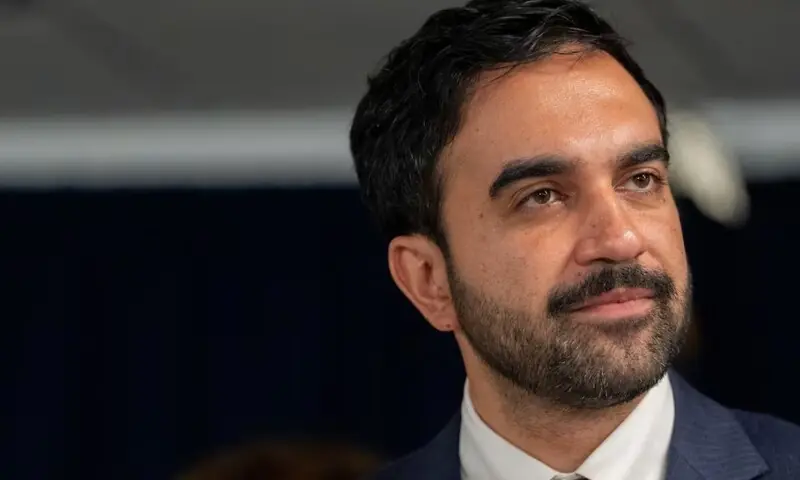
A court in New Delhi has acquitted former Wrestling Federation of India (WFI) chief Brij Bhushan Sharan Singh in a high-profile sexual harassment and stalking case filed by several women wrestlers, bringing an end to one of India’s most closely watched legal proceedings involving the sports community.

Singh, 69, a former member of parliament from the ruling Bharatiya Janata Party (BJP), had faced allegations from a group of prominent female wrestlers who accused him of sexual harassment, inappropriate conduct and demanding sexual favours. He consistently denied all allegations throughout the investigation and trial.

The case attracted nationwide attention in 2023 after leading Indian wrestlers, including world champion Vinesh Phogat and Olympic bronze medallist Sakshi Malik, launched weeks-long protests demanding Singh’s removal from the Wrestling Federation of India and legal action against him. The demonstrations sparked widespread debate over athlete safety, accountability and the treatment of women in Indian sports.

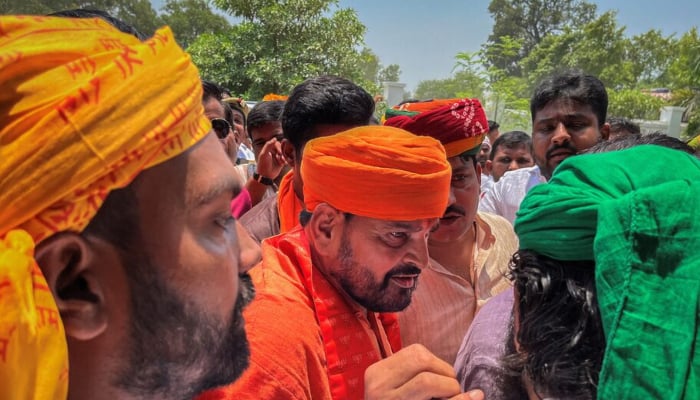
According to Singh’s legal team, the court cleared him of all charges after finding inconsistencies in witness testimonies and contradictions in key aspects of the prosecution’s case. Following the verdict, his supporters celebrated outside the court by showering him with flower petals, bursting firecrackers and chanting slogans.

Reacting to the ruling, Singh welcomed the decision and maintained that he had always been confident of his innocence. He described the judgment as a complete vindication of his position.

Despite the acquittal, wrestler Vinesh Phogat said the legal battle was not over. She announced that the athletes would challenge the verdict before a higher court, insisting they would continue seeking justice. Phogat said it had taken immense courage for the wrestlers to file complaints against a politically influential figure and vowed to pursue the case through all available legal channels.

The controversy first erupted in 2023 when protesting wrestlers accused authorities of delaying action despite their complaints. Images of athletes being detained while marching towards the Indian Parliament drew widespread attention and intensified public scrutiny of the case.

Similar Posts

  • |

    China rejects Pakistan’s waiver request

    Chinese lenders and Independent Power Producers (IPPs) have turned down Pakistan’s request to write off nearly Rs 170 billion in late-payment surcharges. The refusal highlights the growing friction between the two long-standing allies as Pakistan struggles to navigate a staggering power-sector circular debt that continues to drag down its broader economy. The unpaid dues owed to 18 Chinese-backed power generation projects established under the CPEC have now increased to approximately Rs 423 billion. The financial bottleneck stems from a combination of structural inefficiencies within Pakistan’s domestic energy distribution network and systemic delays in clearing operational invoices. Under the original 2015 CPEC Energy Framework Agreement, Pakistan was legally obligated to ensure full and timely payments to power producers, backed by a designated revolving fund to cushion investors against domestic liquidity shortfalls. As payment deadlines were repeatedly missed over recent years due to severe foreign exchange constraints, contractual interest penalties accumulated to the tune of Rs 170 billion. While local power suppliers previously accepted debt-restructuring deals and fee write-offs to ease the burden on state coffers, Chinese energy firms have maintained a strict stance, citing global precedent and financial commitments to their own institutional lenders. This refusal creates an immediate impasse for Pakistan’s Ministry of Energy and financial regulators. The federal government had structured a massive Rs 1.225 trillion banking facility intended to retire the country’s broader circular debt stock. However, disbursement terms mandated that power producers accept renegotiated terms or offer discounts on late-payment fees before receiving principal clearances. Because the Chinese IPPs declined to waive the surcharges or offer similar concessions, billions in funds remain locked, leaving power plant operators facing severe liquidity squeezes that threaten regular fuel procurement and plant operation. Total Outstanding Dues: Rs 423 Billion. Requested Surcharge Waiver (Rejected): Rs 170 Billion. Principal Energy Cost Owed: Rs 253+ Billion. Pakistani negotiators are exploring alternative financial maneuvers to manage the expensive debt burden. Seeking low-interest bilateral funding including potential long-term loan packages in the range of $6 billion to $10 billion from partner nations like Saudi Arabia to retire high-cost Chinese energy loans. Requesting cabinet approval for extensions on expiring domestic banking facilities to prevent immediate default claims. Balancing the debt burden through structured tariff pass-throughs, though consumer capacity to absorb higher electricity prices remains extremely strained. The dispute underscores a delicate transition in the CPEC bilateral relationship. While both nations remain deeply committed to long-term strategic partnership and Phase-Two infrastructure development, commercial reality is setting a firmer baseline. Moving forward, resolving the sovereign debt backlog will require transparent structural reforms within Pakistan’s power distribution setup rather than relying on debt waivers from foreign investors.  

  • | |

    ATC extends Mushtaq Ahmad’s remand by four d…

    An Anti-Terrorism Court (ATC) in Islamabad has extended the physical remand of former Jamaat-e-Islami senator Mushtaq Ahmad and his co-accused, Daniyal, by four more days in connection with a case linked to a protest over the situation in Azad Jammu and Kashmir (AJK). The two accused were produced before the court after completing an earlier three-day physical remand. During the hearing, the prosecution sought a 30-day remand, arguing that investigators still needed additional time to recover a vehicle and weapons allegedly connected to the case. According to prosecutors, the investigation remains incomplete because the alleged recoveries have not yet been made. They requested extended custody to continue the inquiry. After hearing arguments from both sides, the court rejected the request for a 30-day remand and instead approved a four-day extension in police custody. The case was registered at Islamabad’s Shalimar Police Station under charges related to a protest concerning recent unrest in Azad Jammu and Kashmir. Mushtaq Ahmad’s legal team has previously claimed that he was detained after attempting to enter AJK to express solidarity with people affected by recent violence in the region. They alleged he was stopped by security personnel at Azad Pattan Bridge, denied entry into AJK and later taken into custody by Punjab Police while returning to Islamabad. Following his release from the earlier detention, Mushtaq Ahmad announced plans to organise a peaceful gathering in Islamabad to express solidarity with the people of Kashmir. He invited political activists, students, journalists and members of the Kashmiri community to participate in the event. The case comes amid heightened political tensions following recent protests in Azad Jammu and Kashmir, where clashes reportedly resulted in casualties and injuries, drawing criticism from several political parties and human rights groups.

  • | |

    Amnesty urges Pakistan to free Imran Khan

    Amnesty International has called on the Pakistani government to release former prime minister and Pakistan Tehreek-e-Insaf (PTI) founder Imran Khan as he completes three years in prison, urging authorities to restore his fundamental rights and ensure access to medical care, family members and legal counsel. In a statement issued ahead of the third anniversary of his imprisonment, Amnesty International’s South Asia office expressed concern over Imran Khan’s detention conditions, alleging that he has been denied a fair trial, kept in prolonged solitary confinement and restricted from meeting his relatives and lawyers. The organisation claimed that Imran has not been allowed to meet members of his family for several months and raised concerns over reports that his eyesight has worsened while in custody. It also said that both Imran Khan and his wife, Bushra Bibi, have faced prolonged restrictions on access to legal representatives. Amnesty urged the authorities to immediately restore the couple’s right to meet their lawyers and family members, provide appropriate medical treatment and end what it described as unlawful solitary confinement. The rights organisation also called on the government to ensure that planned public gatherings marking Imran Khan’s three years in detention are allowed to proceed peacefully. It stressed that citizens should be able to exercise their right to peaceful assembly without facing arbitrary restrictions or crackdowns. The appeal comes days after a United Nations special rapporteur also expressed concern over reports regarding Imran Khan’s health and urged authorities to provide him with humane treatment, proper medical care and access to doctors of his choice. Imran Khan has remained in Adiala Jail since August 2023. He is serving sentences in multiple cases, including the £190 million corruption case and the Toshakhana-II case, while also facing several other legal proceedings linked to the May 9, 2023 protests. PTI has repeatedly alleged that its founder is being denied adequate medical treatment, particularly for an eye condition, and has appealed to international human rights organisations to intervene. The party maintains that his constitutional rights and due process protections have been violated during his incarceration. The government has previously rejected allegations of mistreatment, maintaining that legal proceedings against Imran Khan are being conducted in accordance with the law.

  • | |

    Tech firms accused of destroying books after AI scanning

    Books are playing a major role in the rapid development of artificial intelligence. However, experts warn that the growing demand for printed books to train AI models is putting valuable knowledge and cultural heritage at risk. According to a British media report, several technology companies have started buying large collections of old books. The books are scanned using high-speed machines so their contents can be converted into digital data. The material is then used to train advanced artificial intelligence systems. The report claims that after the scanning process is completed, some companies discard or destroy the original printed copies. This practice has raised concerns among historians, librarians, and preservation experts, who fear that irreplaceable works may disappear forever. The project reportedly began around two years ago. In February 2024, a leading AI company hired a specialist with the task of collecting as many books as possible from around the world. The goal was to secure a vast collection of written material for AI training. Experts say the destruction of ordinary books is troubling, but the loss of historical or rare editions would be far more serious. They warn that once an original copy is destroyed, valuable physical features such as handwritten notes, bindings, paper quality, and printing techniques may be lost forever. These details are often important for researchers and historians. According to the report, AI companies are especially interested in books published before 2022. They believe these books contain mostly human-written content, making them more useful for training AI models. Newer online content is increasingly influenced by AI-generated text, which experts say could reduce the quality of future AI training. The growing use of books for AI development has also sparked debate over copyright, preservation, and ethics. Critics argue that technological progress should not come at the cost of destroying cultural and historical treasures. They are urging companies to preserve original copies after scanning them and work with libraries and archives to protect valuable collections for future generations.

  • | |

    Karachi hospitals face fire safety gaps after PIMS…

    KARACHI: Serious shortcomings in fire safety arrangements have been reported at major government hospitals in Karachi following the deadly fire at the Pakistan Institute of Medical Sciences (PIMS) in Islamabad, where newborns lost their lives. Hospital sources said several major public healthcare facilities in Karachi lack functional fire alarm systems and adequate emergency preparedness, raising concerns about the safety of thousands of patients and healthcare workers. At Abbasi Shaheed Hospital, operated by the Karachi Metropolitan Corporation (KMC), only 13 fire extinguishers are reportedly available across the facility. Sources said hospital staff have also not received regular fire safety training or participated in proper fire drills. The hospital reportedly does not have a fire alarm system or a designated emergency exit route. The situation is particularly concerning because hundreds of patients visit the emergency department every day, while more than 1,000 patients reportedly attend the outpatient department (OPD). Abbasi Shaheed Hospital has two generators, with one reportedly kept as a backup power source. The hospital’s Medical Superintendent said authorities were taking further steps to improve the fire safety system and address existing shortcomings. At Jinnah Postgraduate Medical Centre (JPMC), fire extinguishers are available in the wards, but hospital sources said several of them are not functional. Sources further said the last fire drill at the hospital was conducted in 2017. The hospital also reportedly lacks an installed fire alarm system. JPMC’s Joint Executive Director said a dedicated firefighting team needs to be established at the hospital. He said each ward has a fire extinguisher, while further training for staff is also required. He added that the hospital administration would write to the Sindh government seeking additional fire safety training for employees. Meanwhile, Civil Hospital Karachi has around 180 fire extinguishers distributed among its wards. However, sources said the overall fire safety arrangements at the hospital also fall short of ideal standards. The revelations have raised concerns about the preparedness of major public hospitals in Karachi to deal with fires and other emergencies. Large government hospitals handle thousands of patients, attendants and healthcare workers every day. In the event of a fire, the absence of functional alarms, clearly marked emergency exits, regular drills and trained response teams could make evacuation difficult and increase the risk to human lives. The situation has come under renewed scrutiny after the PIMS tragedy in Islamabad, prompting calls for immediate inspections of fire safety systems at hospitals across the country. Experts and hospital officials have stressed the need for regular fire drills, functioning extinguishers, alarm systems, emergency exits and trained firefighting teams.

  • | |

    MLO removed after lapses in Mir Raza autopsy

    Authorities have removed Medico-Legal Officer Dr Osama from his post following an inquiry into serious shortcomings in the initial post-mortem examination of businessman Mir Raza Ali. Officials said the doctor has been directed to appear before the relevant authorities as part of an inquiry into the alleged procedural lapses. The action comes after questions were raised over the accuracy and completeness of the initial medico-legal examination. The case came under renewed scrutiny after a dispute emerged between police investigators and the Karachi police surgeon over shortcomings in the original medico-legal report. The family subsequently approached a Karachi court, seeking a fresh examination of the body. The court later permitted the exhumation of Mir Raza Ali. A second autopsy conducted after the exhumation reportedly found evidence indicating that the businessman had sustained a gunshot injury to the back. The new medical examination identified two gunshot holes in his clothing, along with several other injuries. Medical findings also reportedly included marks of violence, injuries to the feet, a fracture and a roughly 12-centimetre injury to the right thigh, as well as a deep injury and fracture around the jaw. A separate chemical examination has also added new dimensions to the investigation. According to the report, particles consistent with acid were detected on the victim’s shirt, while material associated with gunshot residue was also found. The report further indicated that efforts may have been made to conceal the victim’s identity and that fingerprints were not detected on his hands. Family lawyer Jibran Nasir has previously raised questions about the initial investigation, including the absence of an X-ray and the failure to establish the cause of death in the first examination. He has also alleged that acid burns may have damaged the victim’s face. The family has urged investigators to examine CCTV footage, digital records and other forensic evidence. Questions have also been raised over the handling of the victim’s mobile phone, smartwatch and surveillance recordings from locations linked to the case. Investigators are now examining additional evidence and locations connected to the death. Authorities have also moved to obtain the victim’s mobile data records and conduct geofencing around the relevant crime scene. The new probe team is also coordinating with the National Cyber Crime Investigation Agency to determine whether Mir Raza had received threats before his death. Mir Raza’s family has said it is cooperating with investigators and has provided information about several suspicious individuals and locations. His father, Mir Hussain, has expressed hope that the newly constituted investigation team will establish the facts and take the case to its logical conclusion.

Leave a Reply

Your email address will not be published. Required fields are marked *