influencer pimrypie takes

Influencer Pimrypie Takes 10 Million Baht Loss on Durian Sales, Sparks National Debate

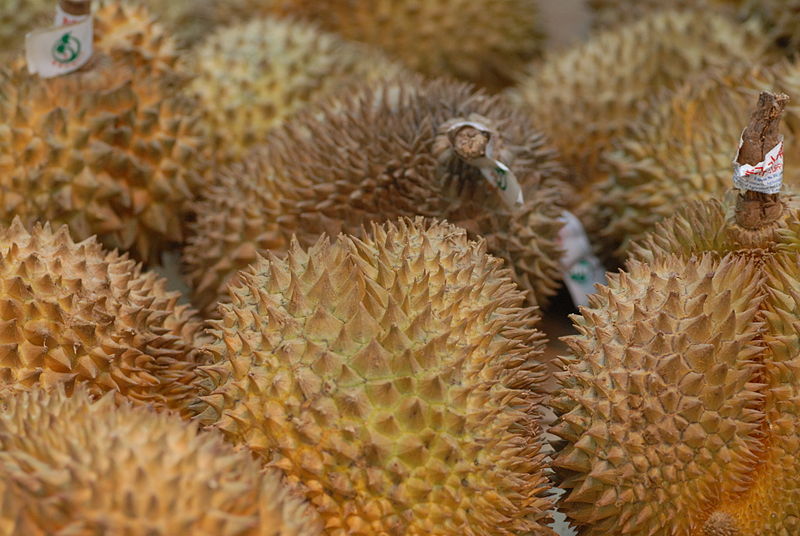
BANGKOK — Popular Bangkok-based influencer Pimradaporn “Pimrypie” Benjawattanapat has accepted losses of more than 10 million baht after staging a 100-baht durian sales campaign aimed at helping Thai farmers clear excess supply, an initiative that has sparked both praise and sharp criticism while igniting a parliamentary debate over agricultural pricing.

A Breakthrough Skincare from Young Durian Fruit by CU Innovation Hub that Redefines Beauty and Food industries with Plant-Based Science

The online retailer addressed criticism during a livestream on Tuesday night, saying the initiative was intended to support durian growers who are facing a 30 percent production surplus and weakening demand. Her goal, she said, was to draw public attention to the agricultural crisis rather than distort market prices or benefit personally from the campaign.

“This year’s harvest is around 30 percent higher than normal, while demand has weakened,” she said during the broadcast on her social media channels. “I went directly to Chanthaburi, bought entire orchards without selecting sizes, and absorbed losses because I wanted farmers to sell their produce.” She added that she had never undertaken such a large-scale agricultural campaign before and had faced pressure from both suppliers and critics. Some farms increased prices while others reduced them amid market confusion, prompting her to buy stock in full to ensure distribution.

In one of the most widely shared moments of the livestream, which began around 8:00 p.m. and attracted more than 800,000 concurrent viewers across TikTok and Facebook, Pimrypie confirmed personal losses of more than 10 million baht. “I do not want people to rely on me alone, but to recognise the value of Thai durian and support farmers together,” she said. “In the past, durian may have been seen as a luxury fruit, but I want everyone to have fairer access to it.”

The campaign offered durian at a promotional entry price of 100 baht, with additional grades sold at higher levels. Reports indicated that orders exceeded 200,000 units during the campaign night, a staggering volume that overwhelmed logistics and further complicated the operation.

However, Pimrypie’s campaign was widely criticised not only because of the 100-baht price but also due to the participation of Commerce Minister Suphajee Suthumpun, who appeared with her in a promotional clip. The minister later denied any involvement in the promotion and said the ministry does not organise or endorse specific sales campaigns, only oversees quality standards. The appearance, however, fuelled accusations that the government was tacitly endorsing a private campaign that some argued distorted market signals.

In parliament on Wednesday, Deputy House Speaker Mallika Jirapunvanit chaired a sitting considering a motion to form a special committee to address falling agricultural prices and support farmers affected by the Middle East war, which has disrupted global trade routes and reduced demand for Thai exports. MPs raised concerns over durian market control, alleging that Chinese middlemen now dominate pricing from orchards to export, squeezing both farmers and domestic consumers.

Krit Silapachai, a People’s Party MP for Rayong, warned of premature harvesting and quality loss, issues that have plagued the Thai durian industry as growers rush to meet export demand. He also criticised the 100-baht durian influencer campaign, questioning whether it had inadvertently created market disruption by setting an artificially low price that consumers would come to expect, undermining the value of higher-grade fruit.

Pai Leeke, a Klatham Party MP for Kamphaeng Phet, asked whether the 100-baht pricing reflected economic reality and warned it could mislead consumers about the true cost of quality durian. He urged the government to improve agricultural management, stabilise prices and strengthen long-term reform rather than relying on private influencers to absorb losses that should be addressed through policy.

The debate in parliament reflects a growing recognition that Thailand’s durian industry, long a source of national pride and export revenue, faces structural challenges that no single influencer—no matter how popular or deep-pocketed—can solve. A 30 percent production surplus, weakening demand from China and other markets, and the dominance of middlemen in pricing are issues that require government intervention, trade negotiations and industry coordination.

For Pimrypie, the 10 million baht loss is a personal financial hit, but the online criticism may sting more. Her campaign, launched with good intentions, has been caught in a crossfire of political and economic tensions far beyond her control. For durian farmers, the crisis remains unresolved. And for consumers, the question of what a fair price for durian should be has no easy answer.

Thailand Implements New Durian Export Standards

Whether the government will act on the parliamentary motion to form a special committee remains to be seen, but one thing is clear: Thailand’s durian troubles are not going away, and neither is the debate over who should bear the cost of fixing them.

-Thailand News (TN)

Similar Posts

  • | |

    Jamaat-e-Islami announces nationwide sit-ins on Au…

    Jamaat-e-Islami Pakistan chief Hafiz Naeemur Rehman has announced that his party will hold simultaneous sit-ins across all four provinces on August 16, as part of its campaign against what he described as injustice and oppressive policies. Speaking about the planned demonstrations, Naeemur Rehman said a sit-in would be held outside the Punjab Chief Minister’s House in Lahore. In Khyber Pakhtunkhwa, Sindh and Balochistan, party workers will stage protests outside the respective Governor Houses. The Jamaat-e-Islami chief said the demonstrations would be held at the same time across the country. He called on the rulers to stop what he termed oppression and injustice, saying the government must pay attention to the concerns of the people. Naeemur Rehman said his party would continue raising its voice on issues affecting citizens. He maintained that the government should take practical steps to address public grievances instead of ignoring them. The announcement comes as Jamaat-e-Islami continues its political activities and prepares to mobilise workers in different parts of the country. The party is expected to organise demonstrations in provincial capitals and other major areas as part of its campaign. The JI chief also welcomed the recent defence agreement signed by Pakistan, Türkiye and Saudi Arabia. He described the agreement as a positive development and said stronger cooperation among the three countries could contribute to regional security and closer ties.

  • | |

    Punjab boards introduce digital result cards

    All nine educational boards across Punjab have approved a new Digital Result Card System to modernise examination records and make student services more accessible. Under the new system, boards will stop issuing traditional printed result cards to students. Instead, candidates will receive digital result cards through newly developed online result portals. Students will be able to download and print their certificates from home or use commercial printing facilities when needed. The move will also end the Rs550 fee that boards currently collect from each candidate for issuing conventional result cards at the time of admission. As a result, the boards are expected to lose a significant source of revenue. The first phase of the system will cover Class IX and First Year annual examination results. Class X and Second Year students will join the digital system in the second phase. However, students whose results were scheduled for announcement on August 6 will continue to receive printed result cards under the existing system. Board officials said digital result cards for both regular and private candidates will become available online immediately after results are announced. Regular students will access their certificates through their institutions’ online portals, while private candidates will download them directly from their respective board websites. The new certificates will carry QR codes and other security features to prevent tampering and allow educational institutions and employers to verify them electronically. Officials have also confirmed that digital result cards will have the same legal and official status as conventional certificates. They will remain valid for university admissions, employment, scholarships, equivalence certificates, document verification and other academic and official requirements. The initiative marks a major shift towards paperless examination services and is expected to make the process faster, more convenient and easier for students across Punjab.

  • | | |

    PM to decide fate of refinery upgrade policy

    Prime Minister Shehbaz Sharif is expected to address key issues facing Pakistan’s refinery sector today. The Cabinet Committee on Energy (CCoE) will review proposed changes to the Brownfield Refinery Policy.The policy was approved in 2023. It aims to encourage investment in the modernisation of existing refineries. The proposed changes could affect billions of dollars in planned refinery investments.The main dispute is over deemed duty protection. The government has proposed reducing it from 7.5 per cent to 5 per cent. Refinery companies have opposed the proposed cut. They say it could weaken the financial benefits offered under the policy.The industry also disputes the government’s position on delays in signing Upgrade Agreements. Officials say refineries failed to sign the agreements within the required period.Refinery representatives reject the claim. They say they had already accepted the draft agreements in 2024. According to industry officials, the companies were waiting for the government to arrange the formal signing process.They say the industry repeatedly contacted the Petroleum Division and other authorities to complete the process. The companies argue that the delay was caused by administrative issues on the government side.They therefore believe the incentives should not be reduced because of delays beyond their control. Deemed duty protection is a key part of the refinery upgrade package.The incentive is designed to encourage companies to invest in modernisation. The planned upgrades are aimed at increasing production of Euro-V compliant fuels.They are also expected to reduce furnace oil production. The projects could help improve Pakistan’s overall fuel mix.The refining sector has also faced additional financial pressure from changes in the tax system. The Finance Act 2024 moved several petroleum products from the zero-rated sales tax regime to the exempt category.The change affected the ability of refineries to adjust input sales tax. It also increased their unrecoverable tax costs.The Petroleum Division has acknowledged that the tax changes affected the financial viability of refinery upgrade projects. Officials said the prime minister is expected to review the major issues that have delayed the implementation of the policy since August 2023.The Petroleum Division has proposed limited amendments to make the policy operational. It has also recommended a committee to finalise the Upgrade Agreement.The committee would include senior officials from the Petroleum Division, Law Division and OGRA. A representative of the Special Investment Facilitation Council would also be included.OGRA, however, has reservations about signing the agreements. OGRA Chairman Masroor Khan has argued that the regulator should focus on its regulatory role.He believes OGRA should not become a party to commercial agreements. The refinery industry is now hoping for a decision that removes the remaining hurdles.Companies want the government to maintain the existing incentive structure. They say policy consistency is important for attracting investment.They also warn that changes to agreed incentives could discourage investors. A clear decision by the CCoE could help restart delayed refinery upgrade projects.The decision could also influence Pakistan’s fuel supply and long-term energy security.

  • PIL Unveils New Indonesia Thailand Service to Boost Regional Supply Chains

    Indonesia-Thailand: The Singapore-based shipping giant expands its intra-Southeast Asia ocean network to meet growing trade demand between Jakarta and Bangkok. Pacific International Lines has officially announced the launch of its dedicated Indonesia Thailand Service. The strategic ocean route aims to strengthen direct trade linkages across key Southeast Asian industrial hubs. According to operational updates reported […]

  • | | | |

    Oil slips as higher supplies ease market fears

    Global oil prices declined on Friday as increased crude shipments through key maritime routes helped calm supply concerns, despite continued geopolitical tensions in the Middle East and limited progress in diplomatic talks between the United States and Iran. Brent crude futures dropped by $1.03, or 1.2%, to trade at $88 per barrel, while US West Texas Intermediate (WTI) crude fell $1.50, or 1.8%, to $82.09 per barrel. Even with the daily decline, both international benchmarks remained on track to post monthly gains of around 20%. Market analysts said the fall in prices was mainly driven by improving oil flows through the Strait of Hormuz, one of the world’s most important energy shipping routes. The increase in exports helped offset fears that the ongoing regional conflict could lead to major supply disruptions. The Strait of Hormuz normally carries nearly one-fifth of the world’s crude oil and liquefied natural gas shipments. The route has remained under close watch since tensions escalated following the conflict involving the United States, Israel and Iran. At the same time, Saudi Arabia is working with regional partners to strengthen maritime security in strategic waterways, including the Bab el-Mandeb Strait, the Red Sea and the Gulf of Aden. These routes play a vital role in global energy transportation. According to Saudi officials, 14 countries have expressed support for the proposed multinational maritime defence initiative, aimed at improving the safety of commercial shipping in the region. Meanwhile, the security situation remains uncertain after Yemen’s Houthi movement announced a naval blockade targeting Saudi Arabia, raising fresh concerns over the safety of Red Sea shipping lanes, which serve as an alternative route for oil exports. Although oil tankers continue to pass through both the Strait of Hormuz and the Red Sea, traders say higher security risks have pushed up shipping costs and insurance premiums. These additional expenses continue to keep a geopolitical risk premium built into global oil prices.

  • | |

    Stephen Baldwin explains why he chose faith over H…

    Stephen Baldwin has opened up about one of the biggest decisions of his career, revealing why he stepped away from mainstream Hollywood despite enjoying major success in the 1990s. The actor said he deliberately chose a different path from fellow movie star Tom Cruise, explaining that fame and blockbuster success were never his ultimate goals.  Baldwin, now 60, reflected on his career in a recent interview with People, looking back at the period following his acclaimed performance in the Oscar-winning film The Usual Suspects. At the time, many believed he was on track to become one of Hollywood’s biggest stars. Instead, Baldwin said he decided to walk away from that path after experiencing a profound change in his personal life.  “I didn’t want to be Tom Cruise and have to make $100 million at the box office,” Baldwin said, adding that he preferred living a simpler life over chasing blockbuster success. He stressed that the comment was not intended as criticism of Cruise but as an explanation of his own priorities and ambitions.  According to Baldwin, everything changed in the early 2000s when he became a born-again Christian. His spiritual journey began after a Brazilian housekeeper working for his family shared what he described as a prophetic message, saying he and his wife, Kennya Baldwin, would one day dedicate their lives to ministry. Although skeptical at first, Baldwin said his perspective shifted after attending Christian events with his sister Beth Baldwin.  One event featuring Christian skateboarders particularly inspired him. The experience led him to create Livin It, a faith-based skateboarding video that combined extreme sports with Christian teachings. The project became a success and eventually grew into a nationwide ministry that took Baldwin to more than 125 churches over four years. That, he said, was the moment he realized his future was no longer in mainstream Hollywood.  Since then, Baldwin has focused on producing faith-based content while remaining active through podcasts, speaking engagements and independent projects. He admitted that his outspoken religious beliefs and political views may have made him less appealing to traditional Hollywood studios, but he has no regrets about the direction his life has taken.  The actor also credited his family for keeping him grounded. Married to Kennya Baldwin since 1990, he said his wife has been his “anchor,” while describing his faith as the foundation of everything he does. As the father of Hailey Bieber and grandfather to two young children, Baldwin said family remains his greatest blessing.  Looking back, Baldwin believes choosing purpose over fame was the right decision. While his career could have followed a more conventional Hollywood trajectory, he says he found greater fulfillment by dedicating his life to faith, family and meaningful work. Rather than measuring success by box office numbers, Baldwin now defines it through the impact he can have on others and remains convinced that his best years are still ahead. 

Leave a Reply

Your email address will not be published. Required fields are marked *