infrastructure development projects
| |

Infrastructure development projects announced acro…

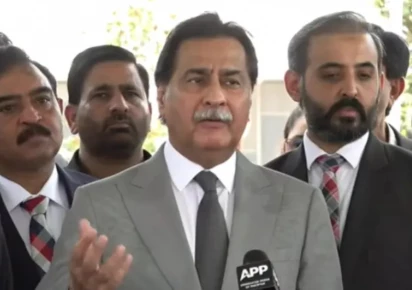
ISLAMABAD: Federal Minister for Communications Abdul Aleem Khan has highlighted a series of ongoing and planned infrastructure projects aimed at improving connectivity, boosting trade and promoting tourism across Gilgit-Baltistan, Azad Jammu and Kashmir, Punjab, Sindh and Balochistan.

Speaking at a ceremony held to honour police martyrs, the minister said the proposed extension of the Murree Expressway to Muzaffarabad will provide modern travel facilities, while the MNJC Motorway will offer an alternative route to the Karakoram Highway, strengthening Pakistan’s strategic road link with China.

He said the Sialkot-Kharian-Rawalpindi Highway will reduce the distance between Islamabad and Lahore by around 100 kilometres and cut travel time by more than an hour. In Karachi, he noted that the M-10 and Lyari Expressway are improving cargo movement from the city’s port, while construction on the M-6 Motorway is expected to begin soon.

Aleem Khan added that work is progressing on the Guru Nanak Expressway, which will connect Kartarpur with Nankana Sahib to promote religious tourism and facilitate Sikh pilgrims from around the world. He also said infrastructure development is advancing on tourist routes in Gilgit, the N-25 Highway is expected to be completed next year, and the M-8 Motorway projects in Balochistan will strengthen regional connectivity and cross-border trade with Iran.

Paying tribute to police martyrs, the minister described their sacrifices as a lasting symbol of courage and praised the Motorway Police for their professionalism. He announced plans to establish modern police stations, dedicated parking areas and emergency ambulance services near toll plazas to improve the safety of patrolling officers.

Aleem Khan also highlighted the National Highway Authority’s financial progress, saying its revenue has increased from Rs66 billion in 2024 to more than Rs127 billion in 2026. He said the improved financial position has enabled Pakistan to expand its motorway and highway network using domestic resources without relying on external funding.

Inspector General of Motorway Police Sultan Ahmad Chaudhry also paid tribute to the fallen officers, reaffirming the department’s commitment to supporting the families of martyrs and honouring their sacrifices.
Similar Posts

  • | |

    Pakistan, Iran reaffirm goal to boost bilateral tr…

    ISLAMABAD: Pakistan and Iran have reaffirmed their commitment to expanding bilateral trade to $10 billion, underscoring their determination to strengthen economic cooperation and deepen commercial ties. The pledge was made during the 10th session of the Pakistan-Iran Joint Trade Committee, where representatives from both countries reviewed trade relations and explored measures to enhance economic collaboration. Addressing the meeting, Pakistan’s Federal Minister for Commerce, Jam Kamal Khan, said the longstanding brotherly relationship between Pakistan and Iran should now be transformed into a robust economic partnership. He emphasized the importance of finalizing the proposed Pakistan-Iran Free Trade Agreement, saying it would open new opportunities for businesses and significantly increase trade between the two neighboring countries. The minister stressed the need to remove barriers affecting cross-border logistics, customs procedures, and cargo transportation to ensure smoother and more efficient trade flows. He also highlighted the potential of establishing joint border markets and implementing an electronic data interchange system to facilitate commerce and improve connectivity. Jam Kamal Khan noted that the private sectors of both countries are ready to expand trade and investment, adding that it is the responsibility of governments to provide a stable, business-friendly, and predictable environment that encourages commercial activity. He expressed confidence that the outcomes of the Joint Trade Committee meeting would produce a practical roadmap for strengthening Pakistan-Iran economic relations and accelerating progress toward the shared trade target of $10 billion.

  • | |

    Punjab boards introduce digital result cards

    All nine educational boards across Punjab have approved a new Digital Result Card System to modernise examination records and make student services more accessible. Under the new system, boards will stop issuing traditional printed result cards to students. Instead, candidates will receive digital result cards through newly developed online result portals. Students will be able to download and print their certificates from home or use commercial printing facilities when needed. The move will also end the Rs550 fee that boards currently collect from each candidate for issuing conventional result cards at the time of admission. As a result, the boards are expected to lose a significant source of revenue. The first phase of the system will cover Class IX and First Year annual examination results. Class X and Second Year students will join the digital system in the second phase. However, students whose results were scheduled for announcement on August 6 will continue to receive printed result cards under the existing system. Board officials said digital result cards for both regular and private candidates will become available online immediately after results are announced. Regular students will access their certificates through their institutions’ online portals, while private candidates will download them directly from their respective board websites. The new certificates will carry QR codes and other security features to prevent tampering and allow educational institutions and employers to verify them electronically. Officials have also confirmed that digital result cards will have the same legal and official status as conventional certificates. They will remain valid for university admissions, employment, scholarships, equivalence certificates, document verification and other academic and official requirements. The initiative marks a major shift towards paperless examination services and is expected to make the process faster, more convenient and easier for students across Punjab.

  • |

    Trump signs new executive orders seeking to restrict US birthright citizenship

    US President Donald Trump has signed two new executive orders aimed at restricting birthright citizenship, five weeks after a 6-3 Supreme Court decision rejected his administration’s broader attempt to end automatic citizenship for children of undocumented immigrants. The newly issued directives attempt a narrower approach by targeting specific exceptions under the Citizenship Clause of the 14th Amendment. The primary focus of the orders is a total ban on birth tourism, a practice where pregnant foreign nationals travel to the US to give birth so their children acquire automatic citizenship. The directives also place restrictions on children born in the US to foreign government employees, foreign combatants classified as alien enemies, and residents of US territories pending potential congressional legislation. Speaking alongside White House aides Stephen Miller and Commerce Secretary Howard Lutnick during an Oval Office ceremony, Trump criticised the high court’s prior 30 June ruling and argued that non-citizens were taking advantage of constitutional protections established following the Civil War. Legal experts and civil rights advocacy organisations, including the American Civil Liberties Union and UnidosUS, noted that the executive actions do not carry the authority of statutory law and will face immediate challenges in federal court for attempting to bypass constitutional precedent and Supreme Court authority.

  • | | | |

    Trump says Hormuz reopening near, warns Iran of consequences

    US President Donald Trump has said the Strait of Hormuz could reopen “very soon” as diplomatic efforts with Iran continue, while warning that Tehran would face a strong military response if negotiations fail. Speaking during an interview with Fox News, Trump expressed optimism about the ongoing talks, saying discussions had made significant progress. He claimed Iranian representatives had requested negotiations at a time when the United States was preparing for a large-scale military operation. According to Trump, Washington agreed to engage in dialogue after receiving signals from Tehran that it was willing to negotiate. He stressed that the United States remains committed to preventing Iran from acquiring nuclear weapons and said abandoning the talks would have serious consequences. The US president said negotiators spent the entire day in discussions and described the atmosphere as positive. He added that a successful agreement could help restore normal shipping through the Strait of Hormuz, one of the world’s most important energy routes. Trump also suggested that reopening the strategic waterway would ease pressure on global energy markets. He said lower oil prices could eventually translate into cheaper fuel costs for consumers and urged energy companies to reduce gasoline prices if market conditions improve. Speaking later to reporters in California, Trump said developments with Iran were moving in the right direction and indicated that greater clarity on the negotiations could emerge within the next 48 hours. Diplomatic efforts are reportedly being supported by regional mediators, including Oman and Qatar. Discussions are focused on restoring safe maritime navigation through the Strait of Hormuz while reducing tensions between Washington and Tehran. However, Iranian officials have maintained that progress depends on an end to US threats and continued respect for Iran’s sovereignty. The Strait of Hormuz is a vital global shipping lane through which a significant share of the world’s oil and liquefied natural gas exports passes. Any disruption to traffic through the waterway has immediate consequences for international energy markets and global trade. Financial markets reacted positively to reports of progress in the negotiations. Oil prices declined while Asian stock markets advanced on expectations that a diplomatic breakthrough could reduce regional tensions and restore uninterrupted shipping. Meanwhile, reports from Israel indicated growing concern over Washington’s diplomatic approach. Some Israeli officials reportedly believe the United States is prioritising a negotiated settlement with Iran, although no official Israeli government statement has confirmed those claims.

  • PML-N wins key refugee seat in Gujrat’s political backyard

    GUJRAT: Pakistan Muslim League-Nawaz (PML-N) candidate Chaudhry Zeeshan Younas has officially won the LA-38 (Jammu-V) seat in the Azad Jammu and Kashmir (AJK) Legislative Assembly elections, a result that is being viewed as politically significant in Gujrat, where the Pakistan Muslim League-Q (PML-Q) maintains a strong political foothold. According to the official results, Zeeshan Younas secured 13,652 votes, defeating the Pakistan Muslim League (AJK) candidate Chaudhry Akbar Ibrahim, who polled 9,523 votes. The constituency is one of the 12 refugee seats reserved for Jammu and Kashmir refugees residing in different districts of Punjab. The outcome has generated considerable political discussion in Gujrat as LA-38 falls within the political sphere of NA-63, represented in the National Assembly by PML-Q leader Hussain Elahi. The district is widely regarded as one of the strongest political bases of the Chaudhry family, with PML-Q also holding representation in the Punjab cabinet. During the election campaign, Hussain Elahi personally led the campaign for Chaudhry Akbar Ibrahim, addressing public meetings, corner gatherings and mobilising party workers across the constituency. Senior PML-Q leaders remained actively engaged in an effort to retain the seat. In response, the PML-N launched an extensive campaign led by Divisional President Chaudhry Abid Raza, District President Nawabzada Tahir-ul-Mulk, and Youth Wing Coordinator Chaudhry Ali Warraich, who remained active throughout the campaign by organising corner meetings, interacting with voters and coordinating election activities. Political analysts believe the result carries significance beyond the AJK elections, as it reflects the continuing political rivalry between PML-N and PML-Q in Gujrat. Despite PML-Q’s longstanding influence in the district and its representation in both the National Assembly and the Punjab government, PML-N managed to secure a convincing victory in the refugee constituency. Polling for LA-38 was held as part of the second phase of the AJK Legislative Assembly elections, during which voting took place on 21 constituencies. Of these, 12 refugee seats represent Jammu and Kashmir refugees settled in various districts of Punjab, while the remaining seats are located in Azad Jammu and Kashmir. Following the announcement of the official results, PML-N workers celebrated the victory in different parts of Gujrat, describing it as an important political achievement in a district traditionally considered a stronghold of PML-Q. Political observers believe the result is likely to further intensify competition between the two parties in future electoral contests. The Election Commission of Azad Jammu and Kashmir has released the official results, confirming Chaudhry Zeeshan Younas as the returned candidate from LA-38 (Jammu-V).

  • |

    Kashmiri film Saffron Kingdom finds new home on Watermelon+

    Filmmaker Arfat Sheikh’s film Saffron Kingdom is now streaming worldwide. It has landed on the Palestinian-owned platform Watermelon+. The release comes after a strong run on the international festival circuit. Sheikh hails from India-Occupied Kashmir. He had earlier described the film as his attempt to reclaim his people’s stories from Bollywood. He said he wanted to take the pen back from an industry he views as a tool of oppression. The story follows Masrat, played by Diana Aras. She is a half-widow, a term used for Kashmiri women whose husbands have been forcibly disappeared by Indian forces. After her husband vanishes, Masrat flees the valley with her young son Rizwan, played by Alex Cheeks. The pair eventually settle in the United States. There, both mother and son must confront the trauma of their years spent living under occupation. Old memories resurface even as they try to build a new life. Sheikh said the film leans heavily on its female characters to carry the emotional core. He called the choice a deliberate allegory. According to him, the story centeres on two women rather than men. He explained that this reflects reality on the ground. Few men remain in India-Occupied Kashmir today, he said. The women who stay behind, he added, reveal what survival under occupation truly demands. Saffron Kingdom premiered at the Wake Forest Film Festival in the United States. It then travelled to six more countries. Screenings consistently drew full houses. The film found strong support from minority communities. Many viewers related to its themes of migration and inherited trauma. With its streaming debut, Saffron Kingdom now sits alongside other politically resonant titles on Watermelon+. These include Oscar nominee The Voice of Hind Rajab and Bafta-winning documentary Gaza: Doctors Under Attack. Pakistan’s 2025 Oscar submission The Glassworker is also part of the platform’s growing library. Together, these films reflect Watermelon+’s focus on stories of occupation, displacement, and resistance. The platform continues to build a catalogue centered on voices often left out of mainstream cinema.

Leave a Reply

Your email address will not be published. Required fields are marked *