kimchi may help

Kimchi may help remove microplastics

Scientists are studying whether kimchi a popular Korean fermented food could help the body remove harmful microplastics.

Early research suggests that certain beneficial bacteria found in kimchi may attach to tiny plastic particles during digestion making it easier for the body to remove them through waste.

Microplastics are extremely small pieces of plastic that have already been found in human blood lungs and even the placenta.

People can take them in through food drinking water and the air they breathe raising concerns about their possible health effects.

In the study researchers examined a type of lactic acid bacteria taken from kimchi.

They tested it in mice and found that animals given the probiotic passed nearly twice as many microplastic particles in their waste compared with those that did not receive it.

Laboratory tests also showed that the bacteria attached to about 57% of the microplastic particles suggesting it may help remove them from the body.

However researchers stressed that these findings are still preliminary.  The study does not prove that eating regular kimchi will have the same effect in humans.

More clinical studies are needed before scientists can confirm whether kimchi or its beneficial bacteria can help reduce microplastics in the human body.

Similar Posts

  • Discover the beauty of Shah Jahan Mosque

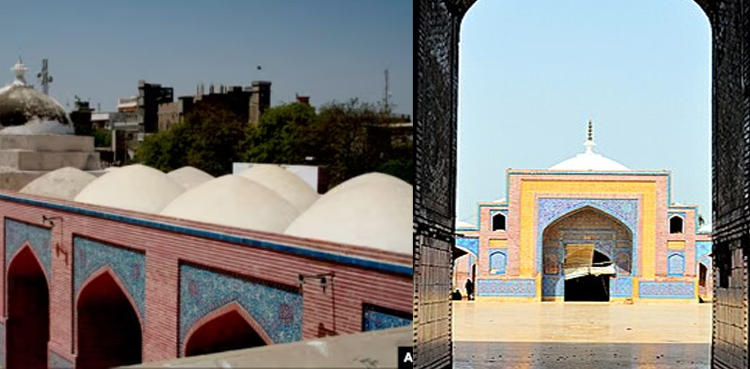
    Located in the historic city of Thatta, Sindh, the Shah Jahan Mosque is one of South Asia’s most impressive examples of Mughal architecture. Its unique design beautiful tiles and remarkable sound system continue to attract visitors. The mosque was built by Mughal Emperor Shah Jahan between 1644 and 1647 as a gift to the people of Sindh.  The nearly 400-year old building is known for its large number of domes and unusual architectural style. Unlike many other Mughal mosques the Shah Jahan Mosque does not have traditional tall minarets. It is famous for its many domes with local traditions often saying that the mosque has 99 domes.  Interestingly some people claim that the number can appear to be 100 when counted from certain points. One of the mosque’s most fascinating features is its natural acoustics. A person can reportedly speak softly near the prayer area and have their voice heard clearly in another part of the mosque. This is possible because of the way the walls domes and other structures were designed to reflect sound. The mosque was built long before modern speakers and sound systems yet its clever design allows sound to travel across large sections of the building. Over the centuries the historic mosque has gone through different stages of repair and preservation. During the era of former Prime Minister Zulfikar Ali Bhutto, efforts were also made to improve and protect the historic site. The mosque is also known for its huge capacity. It is believed that around 40,000 to 50,000 people can gather there for Friday prayers. Its decoration is another major attraction. While many famous Mughal buildings are known for red stone and white marble the Shah Jahan Mosque features beautiful blue and white glazed tiles.  The detailed tilework reflects the artistic traditions of Iran and Hala a historic city in Sindh known for its crafts. With its centuries old history striking domes, colorful tiles and remarkable acoustics the Shah Jahan Mosque remains a remarkable symbol of Sindh’s rich cultural and architectural heritage.

  • |

    Texas Airports review muslim prayer facilities

    Texas Governor Greg Abbott has ordered a review of state grants given to Dallas Fort Worth International Airport (DFW) and Houston’s George Bush Intercontinental Airport (IAH) over facilities provided for Muslim travelers. The governor has raised concerns about special facilities for Muslims to perform wudu, the Islamic practice of washing before prayer.  He has described the facilities as possible religious discrimination and has also asked the U.S.  Department of Transportation to review the issue. Review of state funding According to a statement from Abbott’s office, Texas will review state grants given to airport authorities.  Officials will consider whether existing funding should be withdrawn or whether the airports should be prevented from receiving future state funds. Abbott argues that government owned facilities should not provide services that appear to favor one religion over others. Facilities at two airports DFW International Airport is planning a dedicated area where Muslim passengers can perform wudu. At Houston’s George Bush Intercontinental Airport a similar facility has already been created along with a space where passengers can pray. Abbott has asked U.S.  Transportation secretary sean duffy to have the Department of Transportation and the Federal Aviation Administration (FAA) review the existing and planned facilities at both airports. He has also called for possible legal or corrective action if officials find that federal rules have been violated. Governor raises religious Discrimination Concerns Abbott says both airports receive federal funding and therefore must follow federal laws related to discrimination. He argues that providing facilities specifically for Muslim religious practices could give special treatment to one religious group. He says government owned airports should provide equal treatment and should not favor one religion over another. The governor also repeated his position on social media saying taxpayer funded public facilities should not allow what he considers illegal religious discrimination. What happens next? The issue will now be reviewed by federal transportation officials and the FAA.  Their response could determine whether any action is taken against the airports or their funding. The controversy has also opened a wider debate about religious freedom equal access  and how public facilities should serve passengers from different religious backgrounds. The case could become an important legal and political discussion about whether providing religious accommodations in public spaces is discrimination or simply a way to meet the needs of different groups.

  • Heart stents save Lives not heart disease

    For many people getting a heart stent is a life saving procedure.  During angioplasty doctors place a small metal stent inside a blocked artery to restore blood flow to the heart. This helps reduce chest pain and in many cases can save a person’s life during a heart attack. However heart specialists say that a stent is not a cure for heart disease. A stent only opens the artery that is already blocked. It does not stop the disease that causes fatty deposits known as plaque to build up inside the arteries. If a person does not manage the risk factors new blockages can develop over time. Doctors explain that a stent works like a small support tube that keeps the artery open so blood can flow more easily. But it cannot prevent cholesterol and other harmful substances from collecting in other parts of the blood vessels. If someone continues to smoke has uncontrolled diabetes high cholesterol unhealthy eating habits or does not take prescribed medicines regularly the risk of future heart problems remains high. Heart experts compare the arteries to the water pipes in a house. Even if one blocked section is repaired the rest of the pipes can still become clogged if the main problem is not fixed. Modern drug coated stents are very effective but they do not remove every risk. In some patients scar tissue may grow inside the stent causing the artery to narrow again. This condition is called restenosis. Although it is less common with today’s stents it can still happen. Another serious but rare complication is stent thrombosis where a blood clot forms inside the stent. This can lead to a heart attack and may become life threatening.  Doctors say the risk increases if patients stop taking blood thinning medicines without medical advice. Heart disease is a long term condition that can continue to progress. Even if the treated artery stays open plaque can build up in other arteries increasing the chance of another heart attack. Experts say patients can greatly reduce these risks by following their treatment plan. This includes taking all prescribed medicines especially blood thinners and cholesterol-lowering drugs exactly as directed. Lifestyle changes are just as important. Quitting smoking eating a healthy diet exercising regularly after getting a doctor’s approval maintaining a healthy weight and controlling diabetes blood pressure and cholesterol can all help protect the heart. Regular medical checkups are also important to detect any new problems early. Doctors advise seeking immediate medical care if you experience chest pain or pressure shortness of breath heavy sweating dizziness fainting pain spreading to the arm jaw or back or unusual tiredness after having a stent. Early treatment can prevent serious complications and save lives. While a heart stent is an important treatment that can restore blood flow and save lives it should not be seen as a permanent cure. Long term heart health depends on taking medicines regularly living a healthy lifestyle and paying attention to any warning signs.

  • Team sets record after 10 T-Shirt folding attempts

    David Rush, who has achieved more than 200 Guinness World Records has added another record to his name. This time he teamed up with 10 co-workers and a mental skills expert from Las Vegas to set a new record for folding T-shirts. During a team building trip to Las Vegas the 12-member team attempted to fold 12 T-shirts in a relay race as quickly as possible. The previous record was 2 minutes and 24 seconds. After several failed attempts David and his team finally completed the challenge in just 2 minutes and 19.65 seconds. The challenge was not only about speed. Team members also had to follow the rules carefully. Folding a shirt incorrectly starting too early or making even a small mistake could cancel the entire attempt. The team needed 10 attempts to break the record. Several early attempts failed because of rule violations.  Some members folded the shirts incorrectly while others started their turn too soon. On their final successful attempt all 12 members followed the rules perfectly and finished the relay in 2 minutes and 19.65 seconds officially setting a new Guinness World Record for the fastest relay-style T-shirt folding challenge.

  • Azad Kashmir Elections: A Pilot Project or a Model for Pakistan’s Next General Elections?

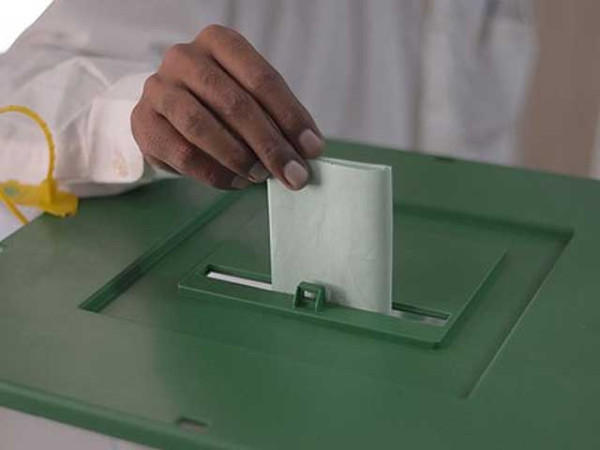
    By Engr. Saqlain Abid Political Commentator and NFPA-Certified Electrical Engineer   Elections are the vital organ of a living democracy. If they are conducted according to the people’s choice, without interference, on equal grounds, and with the consensus of all democratic participants, then the state not only remains in good health but also flourishes with the hope and commitment promised before the elections.   For the first time in the history of Pakistan, the Azad Jammu and Kashmir (AJK) elections are not being held on a single polling day. Instead, the electoral process has been divided into three different phases—27 July, 8 August, and 20 August 2026. This unusual arrangement raises several important questions. Why is the state preparing this electoral model? What are the conditions on the ground that necessitated such a strategy? More importantly, how could this experiment influence Pakistan’s national elections next year?   The political environment surrounding these elections has already become highly contested. The major political force JAAC has been banned by the government, and several of its leaders have been detained. The party has consequently boycotted the elections. PTI, another major opposition force, has also chosen to boycott the electoral process. According to its leadership, the party has been forced to contest only through independent candidates rather than under its official party platform. PTI argues that the government has failed to provide the safety, guarantees, and political environment necessary for free and fair elections. Under such circumstances, the party believes participation would merely legitimize a process it does not trust.   On the other hand, the ruling coalition, led by PML-N and PPP, has entered the campaign with promises of development projects, including new motorways and business initiatives aimed at attracting voters. While development remains an important component of any election campaign, questions regarding electoral credibility continue to overshadow these promises.   In principle, elections should be transparent, efficient, and completed within the shortest possible time. If technological solutions such as secure online systems become feasible in the future, they may further reduce the chances of manipulation. However, extending the polling process over three different days also creates a debate. While supporters argue that it makes election management easier, critics believe that a prolonged process increases opportunities for allegations of interference and weakens public confidence.   The government should have taken all political parties on board before announcing such an unprecedented electoral model. A genuinely inclusive process requires the participation of every major democratic stakeholder. JAAC, which commands significant public support in parts of Azad Kashmir, should have been engaged through political dialogue rather than exclusion. The credibility of elections depends not only on voting day but also on the perception that every political voice has been given an equal opportunity to participate.   Pakistan has previously criticized India for conducting elections in Jammu and Kashmir while sections of the local political leadership remained outside the process. At the time, Islamabad argued that elections held without broad political participation reflected only a procedural exercise rather than the genuine will of the people. The obvious question now is what circumstances have led Pakistan toward a model that some critics argue resembles the same approach.   Some political analysts believe that the AJK elections may serve as a pilot project to test a phased electoral model before its possible application across Pakistan during future general elections. Whether this perception is accurate or not, the debate itself demonstrates the level of public skepticism surrounding the process.   Another factor attracting attention is the role of the Chief Election Commissioner, whose tenure continues to face criticism following the February 2024 general elections. Allegations raised by former Rawalpindi Commissioner Liaquat Ali Chattha regarding manipulation of election results remain part of Pakistan’s political discourse, despite subsequent developments in the case. These controversies have inevitably shaped public perceptions regarding electoral transparency.   If voter turnout remains significantly low because of political boycotts and public distrust, the legitimacy of the exercise may come under further scrutiny. It is therefore the moral responsibility of the government and the Election Commission to create an environment where every democratic force feels secure enough to participate and where no stakeholder can reasonably question the fairness of the process.   The electoral process ultimately determines the political shelf life of a state. When governments emerge through elections widely accepted by the public, trust between the people and the state grows stronger. When that trust weakens, political polarization deepens, frustration increases, and hostile external actors find greater opportunities to exploit internal divisions. With Balochistan already facing serious security challenges and Khyber Pakhtunkhwa confronting persistent instability, any controversy surrounding the AJK electoral process may further strengthen perceptions that democratic space is shrinking rather than expanding.   Ultimately, the success of these elections will not be measured solely by administrative efficiency but by whether the people of Azad Kashmir believe that their voices were freely heard and genuinely counted. A credible electoral process strengthens democracy; a disputed one risks weakening the very foundations upon which democratic legitimacy depends.


  • The relationship between past tradition and present innovation

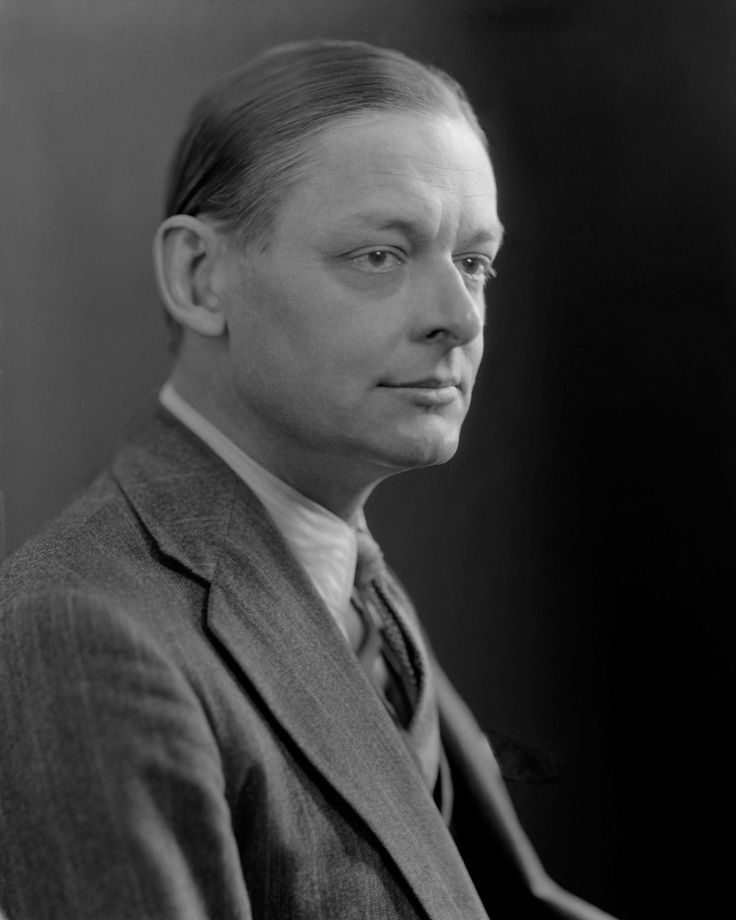
    In T.S. Eliot’s Tradition and the Individual Talent (1919), the relationship between tradition and innovation is conceived as a structural rejection of the Romantic rebels who came a century before. The English Romantics (Wordsworth, Coleridge, Byron, Shelley, and Keats) built an aesthetic identity on iconoclasm, intense individualism and radical rupture. In contrast, Eliot’s Modernist manifesto counters with historical humility, restraint and continuity. The Romantics operated as cultural iconoclasts. They emerged alongside the upheaval of the French Revolution. Poets like Shelley (Mont Blanc, Prometheus Unbound) explicitly rejected established institutional, religious and literary orthodoxies. For the Romantics, literature advances by breaking away from previous generations (especially Neoclassicism). The past is often viewed as a restrictive cage or a set of dead conventions that inhibit free human consciousness. Originality means creating something unprecedented from within the self. Authenticity is an act of poetic rebellion against tradition. In Tradition and the Individual Talent, Eliot argues that attempting to exempt oneself from the past is a delusion. Originality does not mean destroying past structures. In fact, it means acquiring a historical sense through arduous labor. Eliot reframes innovation as an internal readjustment of an existing system. A new poet cannot be rebellious in isolation. The poet’s work only gains aesthetic value when set among the dead poets of Western literature. It’s to see how it reshapes the entire dynamic order. Wordsworth famously defined poetry as the spontaneous overflow of powerful feelings. The Romantic movement centered the poet’s personal ego, subjectivity and unique psychological vision as the ultimate authority of art. The poet was a heroic prophet pouring out their soul. Eliot mounts a direct attack on this subjective expressivism. He famously counters: Poetry is not a turning loose of emotion, but an escape from emotion. It is not the expression of personality, but an escape from personality. To Eliot: The poet is not a heroic rebel, but a receptacle or catalyst (the platinum filament metaphor). The artist’s progress is a continuous extinction of personality and surrender to the literary heritage. Art should be judged as an autonomous, objective entity. It must be completely detached from the biographical life or emotional state of the human being who wrote it. Where the Romantic rebels viewed art as a wild, subjective act of liberation. Where the individual genius stands against society and past history. There and then, T.S. Eliot lowers the ego of the artist. Eliot redefines the individual talent not as a lone rebel storming the doors of literature. Individual talent is as ahistorically conscious craftsman who earns a place in the canon. This can only be by submitting to, learning from, and subtly altering the tradition that came before.  

Leave a Reply

Your email address will not be published. Required fields are marked *