team sets record

Team sets record after 10 T-Shirt folding attempts

David Rush, who has achieved more than 200 Guinness World Records has added another record to his name. This time he teamed up with 10 co-workers and a mental skills expert from Las Vegas to set a new record for folding T-shirts.

During a team building trip to Las Vegas the 12-member team attempted to fold 12 T-shirts in a relay race as quickly as possible.

The previous record was 2 minutes and 24 seconds. After several failed attempts David and his team finally completed the challenge in just 2 minutes and 19.65 seconds. The challenge was not only about speed. Team members also had to follow the rules carefully. Folding a shirt incorrectly starting too early or making even a small mistake could cancel the entire attempt.

The team needed 10 attempts to break the record. Several early attempts failed because of rule violations.  Some members folded the shirts incorrectly while others started their turn too soon.

On their final successful attempt all 12 members followed the rules perfectly and finished the relay in 2 minutes and 19.65 seconds officially setting a new Guinness World Record for the fastest relay-style T-shirt folding challenge.

Similar Posts

  • |

    Increasing fuel prices

    From Meer Baloch Through the columns of your respected newspaper, I would like to draw the attention of the concerned authorities to the continuous increase in fuel prices in Pakistan. The rising cost of petrol and diesel has made life difficult for ordinary people. Higher fuel prices increase transportation costs, which also raise the prices of food, medicines, and other daily necessities. Poor and middle-class families are suffering the most because their incomes remain the same while expenses continue to rise. The government should take effective measures to control fuel prices and provide relief to the public. It should also promote affordable public transport and reduce unnecessary taxes on fuel. I hope my letter will create awareness and encourage the authorities to take prompt action.

  • Rabi ul Awwal to begin on August 15

    The moon for Rabi ul Awwal 1448 AH was not sighted in Pakistan. As a result the first day of Rabi ul Awwal will be on Saturday, August 15, while 12 Rabi ul Awwal will fall on Wednesday August 26. The Ministry of Religious Affairs has also issued an official notification. The Central Ruet-e-Hilal Committee held a meeting in Islamabad on Thursday to look for the new moon. The meeting was chaired by Committee Chairman Maulana Abdul Khabir Azad. Meetings of zonal Ruet-e-Hilal committees were also held in different parts of the country. After the meeting Maulana Abdul Khabir Azad announced that no reliable moon sighting was reported from anywhere in Pakistan. Therefore Rabi ul Awwal will begin on August 15. Rabi ul Awwal is the third month of the Islamic calendar and has special importance for Muslims. 12 Rabi ul Awwal is observed as Eid Milad-un-Nabi ﷺ across Pakistan. On this occasion people arrange gatherings Quran recitation, Naat sessions, and Durood-o-Salam. Mosques, homes and streets are also decorated. Religious scholars use the occasion to remind people about the life, character teachings and Sunnah of Prophet Muhammad ﷺ. They emphasize that the true message of the occasion is to follow his teachings and bring his good example into daily life.

  • |

    An alien planet

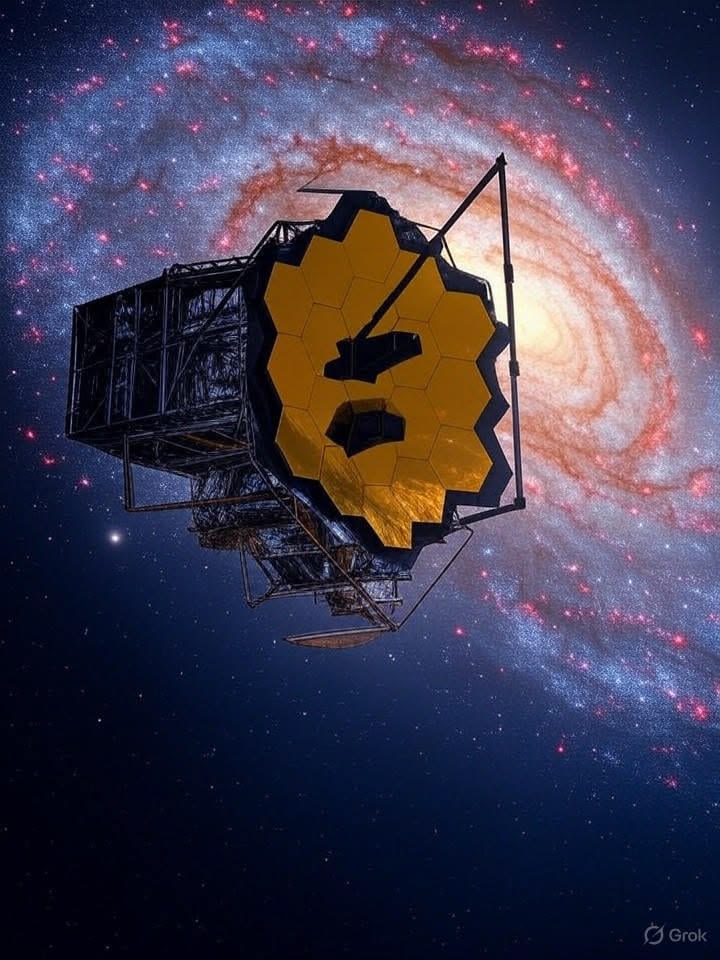
    Imagine living on a world where the start of the day and the end of the day aren’t just different times, but entirely different environments. On one horizon, morning arrives in a chilly mist where vaporized rocks might condense into glittering, mineral clouds. On the opposite horizon, evening sets in as a roaring, hyper-heated furnace hot enough to shred water molecules into raw hydrogen and oxygen. This isn’t sci-fi world-building, it is the reality of WASP-121 b, an extreme exoplanet located roughly 850 light-years from Earth. Astronomers analyzing data from NASA’s James Webb Space Telescope (JWST) have uncovered unprecedented details about this distant world, proving for the first time that its morning and evening twilight zones are fundamentally different from one another. A World Locked in Perpetual Extremes WASP-121 b belongs to a class of cosmic objects known as hot Jupiters: giant gas planets that orbit extraordinarily close to their parent stars. Because of this extreme proximity, the planet is tidally locked. Just as the Moon always presents the same face to Earth, WASP-121 b always presents the exact same hemisphere to its star. One side endures an unrelenting, eternal day with scorching temperatures topping 2,500 degrees Celsius (4,500 degrees Fahrenheit). The opposite side faces permanent night, staring into cold space. For years, astrophysicists hypothesized that the narrow transition zones between day and night. The planet’s terminators might harbor complex, asymmetrical weather patterns. However, confirming this required measuring subtle variations in starlight as the planet passed in front of its star. How Jet Streams Reshape Alien Skies Using JWST’s Near-Infrared Spectrograph (NIRSpec), researchers tracked how starlight filtered through different parts of WASP-121 b’s atmosphere. The findings revealed a dramatic contrast between the morning transition and the evening transition. The driver behind this strange weather is a planetary-scale jet stream. Superheated air on the dayside doesn’t stay still; it rushes toward the cooler nightside at extreme speeds. Because the planet rotates toward the east, these violent winds carry thermal energy around the globe and dump the bulk of that heat directly into the evening region. As a result, WASP-121 b’s evening atmosphere grows significantly hotter than its morning counterpart. Heat causes gases to expand, puffing up the evening sky like a inflated balloon. When starlight filters through this swollen atmospheric layer, it reveals an environment so fierce that water molecules cannot survive intact. Clouds of Metal and Torn Molecules In the searing furnace of the evening sky, chemical bonds break. Water vapor brought in from the dayside is torn apart by the heat, leaving behind a sky depleted of chemical stability. As those same winds continue their journey around the cold nightside, the atmosphere gradually cools down. By the time the air sweeps around to form the morning twilight, the story flips. Here, temperatures drop enough for chemical compounds to reassemble. Scientists suspect that in this cooler morning zone, minerals such as silicates condense out of the gas phase. Instead of water clouds like those on Earth, WASP-121 b’s morning sky likely features reflective clouds made of liquid rock or iron droplets. These metallic clouds block radiation from deeper layers, making the morning side appear even cooler to space observatories. A New Era of Exoplanet Meteorology Until recently, studying alien worlds meant treating entire planets as single, uniform points of light. This discovery demonstrates that modern space telescopes can resolve climate dynamics across distinct regions of a world hundreds of light-years away.   By capturing the contrast between a planet’s morning and evening, astronomers are moving from simply discovering exoplanets to mapping their active weather systems. WASP-121 b may be far too hostile for life as we know it, but understanding its violent atmospheric currents brings us one step closer to reading the skies of smaller, cooler, and potentially habitable worlds in the future.


  • Simple ajwain remedies for better digestion

    Eating too much junk food and restaurant meals can sometimes lead to gas bloating acidity stomach discomfort and indigestion.  While some people quickly turn to medicines simple home remedies may also help with mild digestive problems. Ajwain, also known as carom seeds, has been used in traditional home remedies for digestion for many years.  It is commonly used to help with gas, bloating, indigestion acidity and mild stomach pain. Ajwain with Lemon A simple way to use ajwain is to mix it with fresh lemon juice and a small pinch of black salt.  This mixture is traditionally used to support digestion and may help reduce the feeling of bloating caused by gas. Ajwain and ginger drink Ajwain can also be combined with dry ginger. Grind both ingredients into a fine powder. Add about one teaspoon of the mixture to a cup of water and stir well.  Add a small pinch of black salt before drinking. Ajwain and ginger are traditionally used to support digestion and may help with gas and stomach discomfort. Ajwain tea Ajwain tea is another popular home remedy. Boil one teaspoon of ajwain seeds in a cup of water.  Once the water boils add a small amount of salt strain the drink and let it cool slightly before drinking. Ajwain with Asafoetida Ajwain is sometimes combined with asafoetida (hing) for digestive discomfort. Mix about half a teaspoon of ajwain seeds with a small amount of hing and a pinch of black salt. Traditionally the mixture is chewed and followed with water. Add ajwain to your food You do not always need to prepare a special remedy. Ajwain can simply be added to everyday foods for extra flavor. It can also be mixed into flour when making roti paratha or other baked foods. When to see a doctor Home remedies may be useful for occasional and mild digestive discomfort but they should not replace medical care. If stomach pain bloating acidity or indigestion is severe frequent or does not improve speak to a doctor to find the underlying cause.

  • The unforgettable legacy of Raja Mehdi Ali Khan

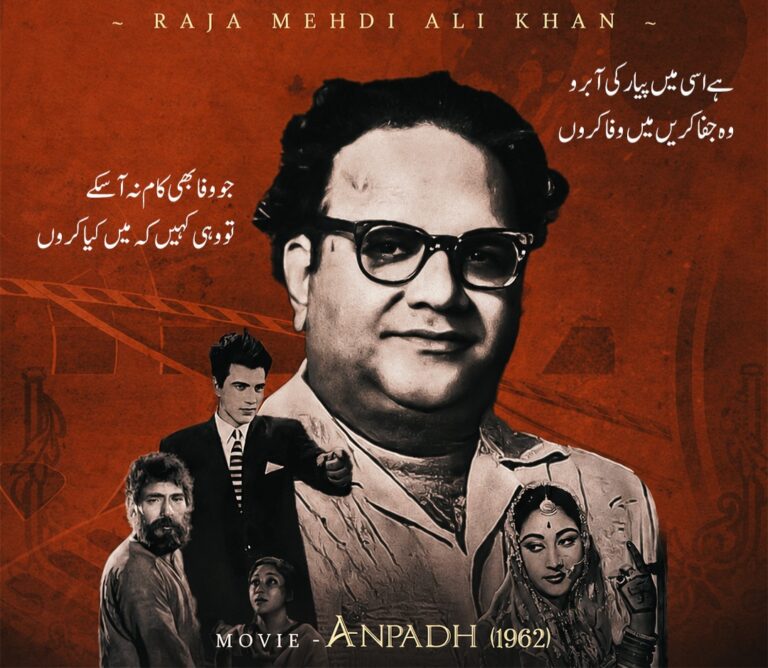
    Twentieth-century Urdu literature and Indian cinema was shaped by figures whose creativity crossed literary traditions and popular entertainment. Among these luminaries, Raja Mehdi Ali Khan stands out as a unique persona connecting high-art literary satire and immortal Bollywood melodies. This legend was born in 1915 in the historical town of Wazirabad. Khan was an observer of culture. He inherited a formidable poetic pedigree that caused him to be one of the most celebrated humorists and lyricists of his era. Raja Mehdi Ali Khan’s literary inclinations were virtually coded into his lineage. He was related to the renowned journalist and political figure Maulana Zafar Ali Khan. He was raised in an environment saturated with verse and socio-political commentary. Moreover, his mother was a recognized poetess in her own right. She taught him a deep reverence for language and rhythmic expression from an early age. This environment nurtured his inherent talent, allowing him to absorb classical Urdu poetic conventions while developing an understated wit that would define his future work. Before making a name for himself in the cinema, Khan began his journey in print journalism. He contributed prolifically to prominent periodicals and literary magazines of the era. The names included Monthly Alamgir, Weekly Khayyam, Tehzeeb-e-Niswan and Do Phool. His early journalistic writings allowed him to polish his observational skills. Whether analyzing social norms or painting witty portraits of everyday life, his prose stood out for its accessibility and warmth. Later, he transitioned into radio broadcasting. It’s considered a medium that further refined his sense of auditory storytelling and lyrical timing. He was driven by creative ambition. Later, Khan relocated to Bombay (now Mumbai) during a transformative era for Indian cinema. His entry into the film industry marked the beginning of a golden age for Hindi film music. He partnered with legendary music composers such as Madan Mohan. Khan penned lyrics that transcended simple movie themes, capturing profound emotional truths. His songs have proved to be timeless masterpieces, continuing to resonate across generations. Among his most iconic works are: hai isi mein pyaar ki aabru wo jafa karen main wafa karun jo wafa bhi kaam na aa sake to wahi kahen ki main kya karun Raja Mehdi Ali Khan, Anpadh (1962) His celebrated catalog includes evergreen classics. Lag Jaa Gale (Woh Kaun Thi?): Widely regarded as one of the greatest romantic ballads in Hindi cinema. Aapki Nazron Ne Samjha (Anpadh): A masterpiece of subtle expression and devotion. Jhumka Gira Re (Mera Saaya): A vibrant classic in popular culture. Tu Jahan Jahan Chalega (Mera Saaya): A hauntingly beautiful exploration of love and devotion. Agar Mujh Se Mohabbat Hai (Aap Ki Khaatir): A poignant reflection on romantic commitment. What set Raja Mehdi Ali Khan apart from many of his contemporaries was his dual identity.  Film audiences revered him for his deeply romantic and melancholic lyrics. On contrary, the literary world celebrated him as an exceptionally gifted humorist and satirist. Even amidst his demanding schedule in Bombay’s competitive cinematic landscape, Khan never abandoned his literary roots. His satirical essays and humorous poems were regularly featured in leading newspapers and journals across both India and Pakistan. His humor was rarely cynical. Instead, it offered a gentle, witty critique of human flaws, societal absurdities, and the complexities of modern living. Khan proved that high literary craft could flourish alongside popular music. Raja Mehdi Ali Khan passed away leaving behind a rich archive of literary contributions and cinematic songs that continue to be sung, reimagined, and loved today. His life journey from the quiet streets of Wazirabad to the recording studios of Bombay embodies the shared cultural heritage of the Indian subcontinent. His art remains vibrant and melodious whether delivered in a literary journal or sung by iconic playback singers.  

  • Why do car turn signals click?

    When you turn your car left or right you hear the familiar click-click sound from the turn signal. At the same time the arrow on the dashboard flashes to show the signal is working. Even though cars have become much more advanced this sound has stayed the same for many years. But have you ever wondered why? Turn signals first appeared in cars in the late 1930s. In older vehicles the clicking sound came from a thermal flasher. When the driver switched on the turn signal electricity heated a small metal strip.  As it bent from the heat it completed an electrical circuit and turned the signal lights on. The metal quickly cooled returned to its original shape and broke the circuit turning the lights off. This heating and cooling cycle repeated over and over making the lights flash. The movement of the metal strip created the well known clicking sound. As technology improved car makers replaced the old thermal system with electromagnetic and later electronic systems controlled by computer chips.  These newer systems no longer need moving metal parts to flash the lights. However most modern cars still play the click click sound on purpose. Manufacturers keep it because drivers are used to hearing it and the sound reassures them that the turn signal is working correctly even though it is no longer mechanically necessary.

Leave a Reply

Your email address will not be published. Required fields are marked *