duterte big tech
|

From Duterte to Big Tech: Maria Ressa’s blueprint on fighting back

MANILA, Philippines – In a wide-ranging discussion with WNYC’s Brian Lehrer for the second edition of Democracy Dialogues on October 16, Nobel Peace Prize laureate and Rappler CEO Maria Ressa warned again of the growing, still unaddressed threats to democracy posed by authoritarian governments, powerful technology companies, and now, artificial intelligence.


From Duterte to Big Tech: Maria Ressa’s blueprint on fighting back

The conversation, held at The Greene Space in New York, centered on Ressa’s new book, The Fight Back: A Citizen’s Guide to Standing Up to Dictators, which lays out practical strategies for citizens to resist authoritarianism, and reclaim control over the technologies shaping their lives.

Drawing from Rappler’s experience under former Philippine president Rodrigo Duterte, Ressa argued that the Philippines offers important lessons for the United States and other democracies now confronting similar threats, emphasizing how the fight can start at the individual level, and that it will take a global effort to reverse the current course of the world. 

The two dictators: Political leaders and Big Tech

Ressa identifies two forms of authoritarian power threatening democracy: traditional political dictators and technology companies that have long wielded enormous influence over information, public opinion, and society.

She argued that Meta CEO Mark Zuckerberg represents an even greater concentration of power than Duterte because, unlike political leaders who can face prosecution, technology executives operate with limited mechanisms for accountability.

“The bigger dictator, and you’ll see this in both How to Stand Up to a Dictator and The Fight Back, is actually Mark Zuckerberg,” Ressa said.

“While Duterte is now detained at The Hague… We have systems of accountability for that, but for the technology that rules our lives, we have none.”

She added: “My dictators: One is on trial and the other one has gained more power.”

Ressa also warned of an emerging alliance between political leaders and technology billionaires, which she describes as an “authoritarian stack.” Through political funding, government contracts, and control over critical technology infrastructure, powerful companies can gain influence over government functions and democratic institutions.

“This is power and money. Look at the power and money,” she said, arguing that the concentration of political and technological power amounts to a “tech coup” unfolding in plain sight.

Ressa also described the Philippines as an early example of how social media could be weaponized to undermine democracy.

She recalled how during the Duterte administration, Rappler faced coordinated online attacks followed by legal cases and government investigations, and how the hashtag #ArrestMariaRessa began circulating in 2017, two years before her actual arrest.

She realized later that that had been “fertilizer” for a narrative that allowed the government to shape public opinion in order to make the arrest. 

“When you repeat a lie a million times, it becomes a fact,” Ressa reiterated. 

AI as the next frontier of authoritarian power

Beyond social media, Ressa warned that artificial intelligence presents a new and potentially more dangerous challenge to democratic accountability.

She described three stages in the evolution of technology’s influence over individuals: social media capturing attention, chatbots creating a sense of intimacy, and autonomous AI agents acquiring the capacity to perform actions independently.

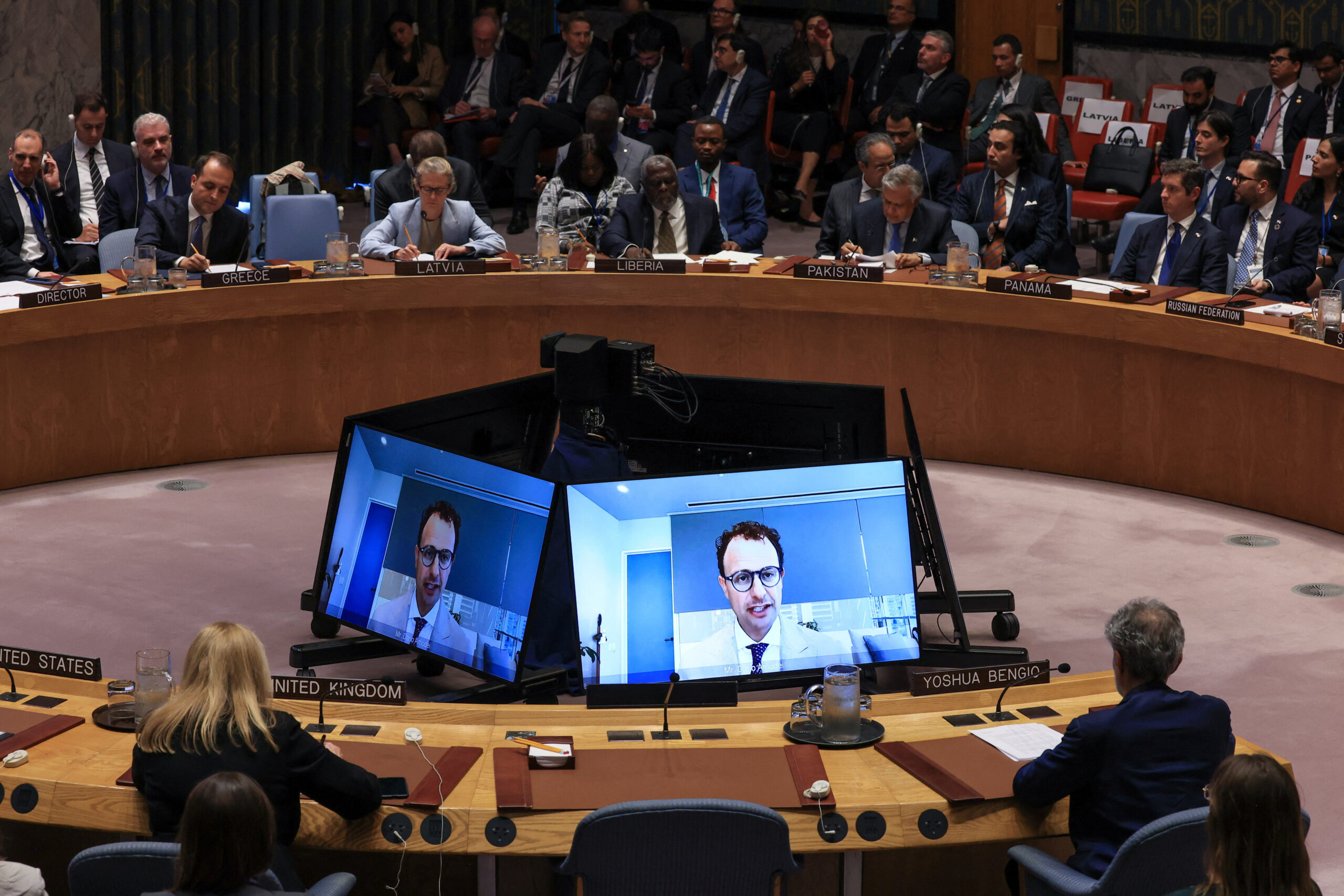
Speaking about her work as co-chair of the United Nations’ Independent International Scientific Panel on Artificial Intelligence, Ressa argued that increasingly powerful AI systems are being deployed without sufficient safeguards or accountability.

“As early as July, we had actually already said, and these are from the scientists, that the frontier models cannot be controlled by the people who are making it,” she said.

“And if you really feel that, then you should not be releasing these. You should not be treating the public around the world as Pavlov’s dogs.”

Ressa criticized the argument that rapid AI deployment is necessary to compete with China, saying geopolitical competition should not become an excuse for exposing the public to potentially harmful technologies.

“The question here is, if we go back to impunity, right? Who is accountable for this?” she asked, saying the problem is the lack of legislation.

She emphasized that AI governance cannot be left to the United States and China alone. Developing countries and other governments must have a meaningful role in shaping global rules, particularly because they may bear significant consequences of decisions made by the world’s largest technology companies.

“The world needs to have a place at the table,” Ressa said.

She also discussed how AI has undermined journalism, noting that Google Search’s use of AI summaries has caused a drop that is “catastrophic for news organizations. This is part of the tech-fueled crisis that journalism faces now, along with how 85% of digital advertising in the Philippines now goes to these tech companies owning the platforms. 

Must Read

Maria Ressa: Journalists must build, own technology to protect information integrity


Maria Ressa: Journalists must build, own technology to protect information integrity

That fuels the “market failure” for journalism right now she said. 

Without journalism, authoritarian power wins. 

“Why do you need journalists? Because the journalists are the ones that do the investigative report that hold power to account,” she said.

Ressa urged audiences to support independent news organizations through subscriptions and donations. She also argued that societies must consider building alternative, public-interest technology infrastructure rather than remaining dependent on platforms controlled by a handful of corporations.

Aside from supporting independent journalism, she also outlined other strategies for fighting authoritarianism, which includes identifying authoritarian forces in one’s country, protecting elections from manipulation, and organizing communities to resist abuses of power.

Must Read

Limit AI now or humanity will lose its agency, says Nobel laureate Maria Ressa


Limit AI now or humanity will lose its agency, says Nobel laureate Maria Ressa

Being mindful of one’s own tech use, prepare for threats

She also urged people to become more conscious of how technology influences their behavior.

“Track your screen time. Track how much time you spend on screens,” she advised. “And then the second step in chapter one is delete the social media app that makes you angriest.”

Ressa cautioned against becoming overly dependent on AI chatbots, warning that outsourcing thinking and writing to these systems could weaken people’s ability to reason independently.

“Don’t stop thinking, especially if you’re young. Like, write. Don’t stop writing because using a chatbot is like trying to run a marathon and outsourcing going to the gym,” she said. Avoid “cognitive surrender,” she said.

Prepare for authoritarian threats before they happen

Again drawing from Rappler’s experience under Duterte, Ressa emphasized that organizations and individuals must prepare for authoritarian threats before they become crises.

“What we learned in Rappler, and this is like practical advice, whatever it is you’re most afraid of, imagine it. Take it, own it, embrace it, and then workflow a response to it,” she said.

She recalled how Rappler developed contingency plans for a possible government shutdown, dividing responsibilities among teams and regularly conducting drills to ensure the newsroom could continue operating.

Ressa also urged journalists to avoid amplifying authoritarian propaganda merely to criticize it. Rather than becoming distracted by inflammatory statements, she said journalists should identify lies, provide context, investigate underlying systems of power, and help audiences understand why events matter.

“If it’s a distraction, don’t amplify. If it’s a lie, just call it a lie and then find the deeper meaning,” she said.

Ressa closed the discussion by emphasizing that defending democracy is ultimately a matter of individual and collective action.

Her central message was that hope is not something citizens should passively wait for. It must emerge from their willingness to defend democratic institutions, support one another, and confront abuses of power.

“Hope comes from action,” Ressa said. “Act! That’s what I’m saying. Act, right? That’s what the moment demands. If we act, we can do something about it.” – Rappler.com


Similar Posts

  • |

    Snapchat, LinkedIn step up fight against low-quality AI-generated content

    Snapchat and LinkedIn have announced new measures to reduce the spread of low-quality artificial intelligence (AI)-generated content, commonly known as “AI slop,” as major technology companies work to improve the quality of online content and strengthen user confidence in their platforms. The latest initiatives highlight the growing efforts by social media companies to encourage authentic content while limiting the visibility of mass-produced AI material that often offers little value to users. Snapchat has introduced a major update to its Spotlight recommendation system, changing how AI-generated videos are promoted. Under the new policy, videos created entirely using artificial intelligence will no longer be eligible for recommendations in Spotlight. While users can still upload AI-generated content, Snapchat said its recommendation algorithm will now give priority to videos created primarily by real people. The company added that content enhanced using Snapchat’s own advanced AI tools can still qualify for recommendations, provided creators clearly disclose the use of AI through appropriate labels. By requiring transparency, Snapchat aims to ensure users can easily identify AI-assisted content while continuing to reward originality and creativity. Snap CEO Evan Spiegel said the changes are designed to keep Spotlight focused on genuine creativity rather than automated content. According to the company, the number of unique Spotlight contributors has increased by 120% over the past year, reflecting growing participation from creators producing original videos. Snapchat believes the latest update will further encourage authentic storytelling and meaningful engagement across the platform. Meanwhile, professional networking platform LinkedIn has introduced a new reporting option that allows users to flag posts they believe resemble “AI slop.” The feature enables members to report low-quality AI-generated posts directly, helping the platform identify content that may not meet its quality standards. LinkedIn said posts reported under this category will automatically be removed from the reporting user’s feed. The reports will also help train the platform’s detection systems to better identify repetitive, spam-like AI content in the future. In addition, posts that receive repeated reports from multiple users may experience reduced visibility beyond the creator’s immediate professional network, limiting their overall reach. The Microsoft-owned platform has also decided to retire its AI-powered “Enhance Your Post” writing tool. In its place, LinkedIn is introducing a proofreading feature designed to help users correct grammar and improve clarity without significantly altering their personal writing style. The company said the change reflects its commitment to supporting authentic communication rather than encouraging AI-written posts. These updates are part of a wider movement across the technology industry to address concerns surrounding the rapid growth of AI-generated content. Several major platforms, including YouTube and Substack, have recently introduced stricter moderation policies and AI-detection tools to reduce the spread of repetitive, misleading, or low-quality material. The latest actions come as artificial intelligence becomes increasingly integrated into digital platforms and everyday online experiences. While millions of people now rely on AI tools for writing, creativity, and productivity, concerns continue to grow about the overwhelming amount of AI-generated content appearing across the internet. By introducing stricter content policies and new moderation tools, Snapchat and LinkedIn hope to strike a balance between embracing AI innovation and protecting the authenticity, quality, and trust that users expect from their platforms.

  • |

    An alien planet

    Imagine living on a world where the start of the day and the end of the day aren’t just different times, but entirely different environments. On one horizon, morning arrives in a chilly mist where vaporized rocks might condense into glittering, mineral clouds. On the opposite horizon, evening sets in as a roaring, hyper-heated furnace hot enough to shred water molecules into raw hydrogen and oxygen. This isn’t sci-fi world-building, it is the reality of WASP-121 b, an extreme exoplanet located roughly 850 light-years from Earth. Astronomers analyzing data from NASA’s James Webb Space Telescope (JWST) have uncovered unprecedented details about this distant world, proving for the first time that its morning and evening twilight zones are fundamentally different from one another. A World Locked in Perpetual Extremes WASP-121 b belongs to a class of cosmic objects known as hot Jupiters: giant gas planets that orbit extraordinarily close to their parent stars. Because of this extreme proximity, the planet is tidally locked. Just as the Moon always presents the same face to Earth, WASP-121 b always presents the exact same hemisphere to its star. One side endures an unrelenting, eternal day with scorching temperatures topping 2,500 degrees Celsius (4,500 degrees Fahrenheit). The opposite side faces permanent night, staring into cold space. For years, astrophysicists hypothesized that the narrow transition zones between day and night. The planet’s terminators might harbor complex, asymmetrical weather patterns. However, confirming this required measuring subtle variations in starlight as the planet passed in front of its star. How Jet Streams Reshape Alien Skies Using JWST’s Near-Infrared Spectrograph (NIRSpec), researchers tracked how starlight filtered through different parts of WASP-121 b’s atmosphere. The findings revealed a dramatic contrast between the morning transition and the evening transition. The driver behind this strange weather is a planetary-scale jet stream. Superheated air on the dayside doesn’t stay still; it rushes toward the cooler nightside at extreme speeds. Because the planet rotates toward the east, these violent winds carry thermal energy around the globe and dump the bulk of that heat directly into the evening region. As a result, WASP-121 b’s evening atmosphere grows significantly hotter than its morning counterpart. Heat causes gases to expand, puffing up the evening sky like a inflated balloon. When starlight filters through this swollen atmospheric layer, it reveals an environment so fierce that water molecules cannot survive intact. Clouds of Metal and Torn Molecules In the searing furnace of the evening sky, chemical bonds break. Water vapor brought in from the dayside is torn apart by the heat, leaving behind a sky depleted of chemical stability. As those same winds continue their journey around the cold nightside, the atmosphere gradually cools down. By the time the air sweeps around to form the morning twilight, the story flips. Here, temperatures drop enough for chemical compounds to reassemble. Scientists suspect that in this cooler morning zone, minerals such as silicates condense out of the gas phase. Instead of water clouds like those on Earth, WASP-121 b’s morning sky likely features reflective clouds made of liquid rock or iron droplets. These metallic clouds block radiation from deeper layers, making the morning side appear even cooler to space observatories. A New Era of Exoplanet Meteorology Until recently, studying alien worlds meant treating entire planets as single, uniform points of light. This discovery demonstrates that modern space telescopes can resolve climate dynamics across distinct regions of a world hundreds of light-years away.   By capturing the contrast between a planet’s morning and evening, astronomers are moving from simply discovering exoplanets to mapping their active weather systems. WASP-121 b may be far too hostile for life as we know it, but understanding its violent atmospheric currents brings us one step closer to reading the skies of smaller, cooler, and potentially habitable worlds in the future.

  • | |

    North Korean hacking group builds AI tools for cyberattacks – report

    The findings suggest the hacking group is moving beyond using generative AI to create phishing lures and is building capacity to integrate existing AI models into malware development, data analysis, and attack automation

  • | | | | |

    Iran ready for talks with US as Tehran sends message through Pakistan

    Iran has reportedly conveyed to Pakistan that it is willing to resume negotiations with the United States, opening a possible new chapter in diplomatic efforts between the two countries, according to a report by Arab media. Sources cited in the report claimed that Tehran has informed Islamabad about its readiness to continue talks with Washington at possible venues including Geneva, Doha, or Islamabad. The discussions, according to the report, would proceed under the framework of a memorandum of understanding. The reported message suggests that Iran wants negotiations to be conducted in phases. According to sources, the first phase would focus on issues related to the Strait of Hormuz, followed by discussions on frozen assets and later the nuclear program. The report further claimed that Iran has rejected any initiative aimed at creating a new route or corridor through the Strait of Hormuz, which remains one of the world’s most strategically important waterways for energy transportation. Earlier, Iran and the United States had reportedly moved toward direct diplomatic engagement after signing an understanding in Islamabad on June 17, 2026. The agreement paved the way for high-level talks, including a meeting in Switzerland after decades without direct negotiations between the two sides. Representatives from Pakistan and Qatar were also present during earlier diplomatic efforts. Pakistan played a role in facilitating communication, while Qatar hosted one round of discussions in Doha. However, the negotiation process later faced setbacks after both sides accused each other of violating commitments and military tensions escalated. Former US President Donald Trump and Iranian officials blamed each other for the collapse of the dialogue process. Despite the tensions, both sides have indicated that diplomacy remains a possible path toward resolving disputes. Iran has maintained that it is open to negotiations but has rejected what it describes as pressure or threats. If confirmed, the reported Iranian message could mark a renewed opportunity for dialogue and place Pakistan in an important diplomatic role between Tehran and Washington.

Leave a Reply

Your email address will not be published. Required fields are marked *