faced teleprompter glitch
|

Faced with a teleprompter glitch, Canada’s Carney mocks Trump

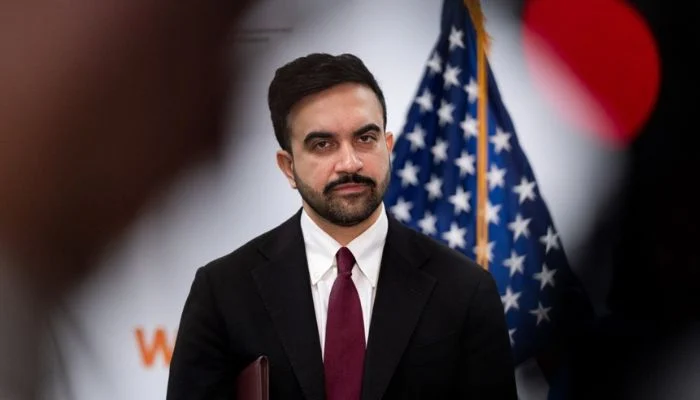
TORONTO, Canada – When his teleprompter malfunctioned on Wednesday, August 5, in the middle of a news conference on housing policy, Canadian Prime Minister Mark Carney smiled and took a swift jab at US President Donald Trump, saying, “I do not view this as a conspiracy.”

Carney’s remark was an apparent reference to Trump’s demands for an investigation after he encountered a halted escalator and a non-functioning teleprompter last year at the United Nations General Assembly, where he delivered a speech.


Faced with a teleprompter glitch, Canada’s Carney mocks Trump

“I would like to inform you that the teleprompter has ceased to function. Unlike a certain world leader, I do not view this as a conspiracy,” Carney said to laughs at the news conference in Toronto.


Faced with a teleprompter glitch, Canada’s Carney mocks Trump

Carney’s office and the White House did not immediately respond to requests for comment.

Relations between Canada and the US have been fraught since Trump returned to the White House last year, slapping broad tariffs on the northern neighbor and calling for it to become the 51st US state.

Carney, who has said he would fight Trump’s trade policies, has worked to lessen Canada’s diplomatic and economic dependency on the US. He also drew international attention for declaring the end of a rules-based global order and criticizing great powers for using “economic integration as weapons.” – Rappler.com

Similar Posts

  • |

    Iran’s Supreme leader sets ‘Primary Conditions’ for ending war with US

    Iran’s Supreme Leader Ayatollah Seyyed Mojtaba Khamenei has declared that the “preservation of Lebanon’s territorial integrity and the absolute, unconditional termination of the Zionist regime’s aggression are the primary conditions for any agreement to end the imposed war against the aggressive US” . In a letter to Hezbollah’s Secretary-General Sheikh Naim Qassem, the Iranian leader described Hezbollah as standing “like an unyielding rock as the forerunner of groups engaged in jihad against the savage aggression of the Zionist regime and its supporters” . He also affirmed that the Islamic Republic considers the defense of Hezbollah fighters to be its “strategic mandate” . The remarks came as part of a wider diplomatic backdrop, with a trilateral framework agreement signed by the US, Israel, and Lebanon on June 26 establishing a process for the Lebanese Armed Forces to disarm Hezbollah and dismantle its infrastructure in exchange for a gradual Israeli withdrawal from Lebanese territory . The Khamenei statement follows the June 15 finalization of an Iran-US memorandum of understanding, which brought a permanent halt to military operations on all fronts, including Lebanon, and ended the US naval blockade against Iran . The new trilateral framework agreement has been described by US Secretary of State Marco Rubio as a “first step” on a difficult journey, with a “trust, but verify” mechanism requiring Lebanon to demonstrate that it can effectively rein in Hezbollah . However, the agreement has faced opposition from within Lebanon. Hezbollah lawmaker Hassan Fadlallah warned that Lebanese authorities would not be able to enforce the disarmament commitments without triggering conflict, stating that Hezbollah would “hold on to its weapons even more” . Netanyahu has previously claimed that Israeli forces have pushed Hezbollah back 5 to 8 miles from the border and destroyed approximately 94 percent of its missile arsenal . Nevertheless, with Hezbollah and its Iranian backers setting firm conditions and opposing the framework’s core terms, the path to a final resolution remains fraught with challenges.

  • | | |

    Imran Khan breaks silence on gender stereotypes, feminism and Bollywood’s portrayal of men

      Ahead of his much-anticipated return to the big screen, Indian actor Imran Khan has spoken candidly about gender stereotypes, feminism, masculinity, fatherhood and the influence cinema can have on social attitudes. In a recent conversation, the actor explained that his growing concern over the way gender-based assumptions have become part of everyday discussions played an important role in shaping his decision to speak more openly about these issues. Khan said he had become increasingly interested in examining the expectations society places on both men and women. According to him, certain assumptions about how people should behave based on their gender have become so common that they are often expressed without being questioned. The actor said he felt a personal responsibility to contribute to conversations surrounding these issues. Rather than remaining a passive observer, he wanted to use his public platform to encourage people to reconsider ideas that have gradually become normalised in society. Khan also discussed the relationship between feminism and conversations about men’s rights. He argued that debates surrounding both subjects can sometimes become trapped within the same stereotypes they are attempting to challenge. In his view, some men who criticise feminism for being problematic may fail to recognise that their own arguments can be influenced by patriarchal thinking or ideas associated with toxic masculinity. For Khan, feminism should not be understood as an attempt to marginalise men or exclude anyone from the conversation. He stressed that discussions about feminism and masculinity should ultimately focus on equality and creating a society in which people are not restricted by traditional gender expectations. The actor also turned his attention to the portrayal of men in Indian cinema, particularly characters who struggle to cope with romantic rejection. Khan argued that Bollywood has repeatedly presented emotionally immature male characters in a sympathetic manner, often encouraging audiences to overlook their problematic behaviour because the characters are experiencing heartbreak. He criticised films in which a male protagonist responds to rejection with anger, obsession or inappropriate behaviour, while the narrative continues to portray him as a victim deserving sympathy. According to Khan, these stories can unintentionally normalise unhealthy emotional responses and send the wrong message about relationships and masculinity. Khan suggested that cinema has a significant cultural influence and therefore filmmakers should consider how their characters and storylines may shape public perceptions. Instead of constantly justifying problematic behaviour through a character’s emotional pain, films could present more mature and realistic portrayals of men dealing with rejection, relationships and vulnerability. His comments come as he prepares to make his return to acting after a prolonged break from the industry. Khan’s decision to step away from films had kept him largely out of the public eye, making his comeback a significant moment for fans who have followed his career. Now, as he prepares to return to the screen, Khan appears interested not only in acting but also in engaging with wider social conversations. His recent remarks reflect his desire to use his experiences and public platform to question established ideas about gender, relationships and masculinity. With his comeback approaching, audiences will be watching closely to see whether Khan’s renewed presence in cinema also brings a different perspective to the kinds of stories and characters he chooses to be part of.

  • | |

    Rising heat pushes even Africa’s resilient c…

    Camel herders and scientists across Africa say that rising temperatures are now overwhelming animals long regarded as uniquely suited to desert extremes, with herds facing rising death tolls, illness, and shrinking grazing lands. In the Afar region of northeastern Ethiopia, among the hottest and driest places on the planet, nomadic herders traditionally lead camel caravans loaded with salt across the desert. Ali Umer, a 40 year old herder from Semera who owns around 500 camels, said he watches his animals struggle under conditions he has never seen before. He described blistered feet, watery eyes, and burned skin among his herd, and said the sand itself now scorches the animals as they rest. Umer said he lost eight camel calves in a single month due to extreme heat, and added that even the wind no longer brings relief. He said the changes have become noticeably worse in recent years. Umer’s account matches what researchers and veterinarians are documenting across the continent. Scientists and animal welfare specialists point to stress, fatigue, dehydration, and rising disease rates as direct consequences of extreme heat, while indirect effects such as water shortages, vegetation loss, and disappearing shade compound the damage. North Africa and the Horn of Africa are home to roughly 80 percent of the world’s dromedary camel population, the single humped variety that farmers across the region have increasingly relied on because of its reputation for withstanding drought and heat. A 2025 study examining herder perceptions in southern Ethiopia found that climate variability had measurably harmed camel health, productivity, and reproduction. The crisis appears especially acute in Somalia. Research published in June found that drought linked camel deaths have affected nearly 46 percent of camel owning households, based on a survey of almost 6,000 pastoral families. The mortality was heavily concentrated in northern areas, with the Sool region recording a death rate of nearly 73 percent. Experts say extreme heat is the central driver behind the region’s drought conditions, though poor veterinary access and weak herd management make outcomes worse. Atmospheric scientists have linked the severe 2021 to 2022 drought to sustained high temperatures, which accelerate evaporation from soil and water sources and increase the rate at which plants release moisture into the air. Veterinarians on the ground report a growing caseload tied to heat. Hassan Nuya Guyo, a veterinary officer in Marsabit county in northeastern Kenya near the Ethiopian border, said his clinic is seeing a sharp rise in hyperthermia cases that leave camels vulnerable to secondary infections. He said camel deaths in the county have risen more than 15 percent over the past two years due to heat and drought. Separate research from the Horn of Africa links heat stress to higher disease rates and falling milk yields among camel herds. A similar pattern is emerging in North Africa. A study conducted in Algeria and published this year documented a marked rise in camel deaths during summer heatwaves, with researchers noting clear seasonal mortality spikes that they say call for targeted responses such as emergency water supplies, supplemental feeding, and closer disease monitoring during peak summer months. The World Meteorological Organization says extreme heat events have become routine across North Africa, with heatwaves trending upward since 1981. Several countries in the region and the wider Middle East recorded temperatures above 50 degrees Celsius in 2024. The organization’s most recent State of the Climate in Africa report found that North Africa warmed faster than any other subregion on the continent between 1991 and 2025, at a rate of 0.43 degrees Celsius per decade. Camels are naturally equipped to handle heat up to about 40 degrees Celsius. Their bodies allow internal temperature to fluctuate throughout the day, reducing the need to sweat, while concentrated urine, dry waste, and a thick protective coat help limit water loss and block solar radiation. But researchers say those adaptations are no longer enough. Mohammed Bengoumi, a camel health specialist with the United Nations Food and Agriculture Organization who works across North Africa, said summer temperatures in large parts of the Sahara now regularly exceed 50 degrees Celsius, raising the risk of severe heat stress, especially where vegetation, water, and shade are already scarce. Abdelmadjid Chehma, a professor at the University of Ghardaia in Algeria who has conducted experimental research on desert camels, said sustained heat above 41 to 45 degrees Celsius damages the animals at a cellular level, weakening their immune systems and preventing white blood cells from repairing themselves. He said the resulting stress slows the animals’ metabolism as their bodies try to limit internal heat production, which in turn reduces appetite and causes lethargy, lower milk output, and reproductive problems. Mohammed el Khasmi, an animal hydrobiology expert at the University of Casablanca in Morocco, said his team has documented a wide range of heat related harm in camels, including weight loss, inflammation, muscle and bone damage, kidney related chemical imbalances, and parasite driven infections. The combined pressures are forcing some herding communities to abandon land they have used for generations. Daniel Gelan, a pastoralist development researcher at Vision University in Ethiopia, said herders in the country’s north are relocating permanently to southern areas with more reliable water and vegetation, rather than following the seasonal migration patterns of the past, because the northern region can no longer sustain camel herding. The Horn of Africa is still recovering from a severe drought that lasted from 2020 to 2023 and is now facing another period of harsh conditions, according to the charity Oxfam, which reported that water prices in parts of Somalia have jumped by more than 2,000 percent. Back in Afar, Umer said he fears disease could soon begin killing his adult camels as well. Chehma said that concern reflects a broader shift underway across the region, where an animal once seen as the ultimate survivor of desert life is now being pushed toward its own breaking point by the pace and severity of current heatwaves.

  • | |

    Paris scout tied to Epstein network found dead

    A modelling scout with ties to the late convicted sex offender Jeffrey Epstein has been found dead at his home in France. Authorities discovered Daniel Siad, 69, on Monday in Colombes, a suburb northwest of Paris, according to confirmation from the Nanterre prosecutor’s office. The office said it opened an investigation Monday evening to determine the cause of death and confirmed that a post mortem examination would be conducted. Siad’s name appeared thousands of times across documents released by the US government related to Epstein. He had denied any awareness of the threat Epstein posed to the women and girls around him. His lawyer, Menya Arab Tigrine, stressed that Siad had faced several complaints in France, including allegations of rape, but had never been prosecuted. She said in a statement that he had died and that he was innocent. A woman identified only as Anya, an Epstein victim who spoke previously to reporters, said Siad had introduced her to Epstein and described the arrangement as a complete set up, calling Siad essentially a professional trafficker. In one email to Epstein released among the files, Siad wrote in broken English that in this business he sometimes catches fish quickly and other times catches none, a comment referencing his work finding models. Ahead of a recent investigative report examining the allegations, Arab Tigrine had said her client was unavailable for comment. However, in an earlier television interview, Siad said he had not known that women were being abused by Epstein, adding that he trusted Epstein and believed he was a professional person. The first complaints against Siad in France were filed in February. He denied any wrongdoing in multiple recent media appearances, telling one French broadcaster in May that he had never raped anyone in his life. Lawyers representing the former model who filed the first complaint against Siad said they were stunned by news of his death, saying they struggled to find words for the anger and sadness they felt, with alleged victims now denied the chance for a criminal trial. The lawyers expressed strong frustration toward the Paris prosecutor’s office, which had announced in February that it was opening an investigation into Epstein’s French associates. They accused the office of what they called scandalous inaction, arguing it reflected contempt from public authorities toward victims of sexual crimes connected to the trafficking network Epstein and his associates built. Another former model who gave a police deposition in June as part of the investigation into Siad told reporters that his death means any information he might have held about Epstein has now been lost. She said an important link in the chain had vanished before authorities had any chance to recover what he might have known, since he was never formally questioned. She said too much time had already been lost in the investigation and expressed hope that authorities would not wait years longer before searching his home, though she suggested it might already be too late. Anne Claire Le Jeune, a lawyer representing six women who filed complaints against Siad, said her clients had been denied justice. She said her clients found the strength to break a heavy silence surrounding Siad’s ties to Epstein and faced every stage of the legal process with remarkable courage. She called it deeply regrettable that the slow pace of the investigation allowed Siad to die before he could be questioned or detained, depriving the victims of a crucial step in their pursuit of truth and accountability. Another Epstein associate, French modelling agent Jean Luc Brunel, was found hanged in his Paris prison cell in 2022. Brunel, 76 at the time, had spent more than a year in custody while under investigation on suspicion of raping minors and trafficking minors for sexual exploitation, allegations he denied. Brunel founded the modelling agency MC2 Model Management with funding from Epstein and was suspected of helping transport and house young women and girls on Epstein’s behalf. Epstein, who was 66, died by suicide in a New York jail cell in 2019 while awaiting federal trial on sex trafficking charges. This account involves detailed allegations of serious sexual abuse and trafficking. If any of this touches on something you’re personally affected by, I’m glad to help you find appropriate support resources.

Leave a Reply

Your email address will not be published. Required fields are marked *