usbrokered security framework

The US-brokered security framework between Lebanon and Israel

In a historic geopolitical turn of events, representatives from Lebanon and Israel signed a milestone, United States-brokered framework agreement in Washington. The landmark accord aims to establish a structured pathway toward ending ongoing armed conflict, restoring territorial integrity, and enforcing a lasting cessation of hostilities across their shared southern border. While diplomats have hailed the deal as an unprecedented step forward for regional stability, it has simultaneously ignited fierce domestic political debates and public outcry over sovereignty, security, and national defense.

Negotiated over several rounds of high-level talks overseen by American officials, the framework establishes a phased operational roadmap designed to reshape the security dynamic along the border. The Israeli Defense Forces (IDF) are slated to progressively pull back from designated areas in southern Lebanon. Initial security sectors, known as pilot zones, will be created where control is formally transferred to standard state forces. Units from the Lebanese Armed Forces (LAF) will assume exclusive security responsibilities in these cleared zones, asserting the government’s monopoly on weapons and defense operations. Under international oversight, the Lebanese government commits to consolidating armed power under state institutions and overseeing the eventual dismantling of non-state armed infrastructure, specifically targeting Hezbollah’s military apparatus. Despite the diplomatic milestone celebrated in Washington, the agreement has met intense polarization within Lebanon.

Opponents and vocal social commentators accuse the state leadership of capitulating to foreign pressure, arguing that making Israeli withdrawal contingent upon the disarming of local resistance groups compromises national defense while Israeli troops remain stationed on Lebanese territory. Critics assert that such concessions disproportionately favor foreign security interests at the expense of displaced southern residents who have borne the brunt of military strikes and displacement.

Conversely, supporters of the Lebanese central authority emphasize that the country cannot endure perpetual conflict and economic paralysis. Proponents argue that reclaiming exclusive state sovereignty over military decisions is essential for securing international financial assistance, starting the rebuilding of devastated infrastructure, and allowing hundreds of thousands of displaced civilians to safely return to their homes in the south.

Beyond the immediate security perimeter, the framework signals a broader effort by international mediators to reconfigure security structures in the Levant. By tying economic revitalization and diplomatic normalization to strict military compliance, Western nations hope to dismantle non-state proxy networks and prevent wider regional war spillover. However, significant hurdles remain. The execution of the agreement depends heavily on whether the Lebanese military possesses sufficient operational capability and political backing to execute its mandate without sparking internal civil strife. Furthermore, continuous monitoring mechanisms led by international entities will be critical to verify that both parties adhere to the standstill terms and avoid accidental escalations during the delicate troop transition phases.

As diplomatic delegations prepare for follow-up implementation rounds, the coming months will test whether this framework represents a genuine turning point toward lasting peace or merely a brief intermission in a long-standing regional feud.


 

Similar Posts

  • | |

    Egypt’s Salman Khalil defeats Pakistan’s Nasir Iqbal 

      Egypt’s Salman Khalil emerged victorious at the PN Fleet Club Open International Squash Championship after defeating Pakistan’s Nasir Iqbal in a thrilling final held at the Pakistan Navy Roshan Khan-Jahangir Khan Squash Complex in Karachi. The prestigious tournament, organized by the Sindh Squash Association, concluded with an impressive display of world-class squash and highlighted the growing of the event. Third-seeded Salman Khalil from Egypt outclassed Pakistan’s experienced player Nasir Iqbal in straight games to claim the championship title. Khalil secured the victory with game scores of 14-12, 11-3, and 13-11, demonstrating remarkable consistency, skill, and composure throughout the contest. Although Nasir Iqbal fought hard and received strong support from the home crowd, he was unable to overcome the Egyptian’s aggressive play and tactical brilliance. The final attracted several distinguished guests from Pakistan’s sports and military communities. Commander Karachi, Vice Admiral Faisal Amin, attended the event as the chief guest and distributed prizes among the winners and runners-up. The ceremony was also graced by the presence of Pakistan’s squash legend and former world champion Jahangir Khan, along with former Governor of Sindh Moinuddin Haider, who praised the high standard of competition and encouraged young players to pursue excellence in the sport. The championship featured a total prize purse of US$41,000 making it one of the most significant squash tournaments held in Pakistan this year. The event attracted talented players from different countries and provided local athletes with an opportunity to compete against international opponents on home soil. Speaking at the closing ceremony, Vice Admiral Faisal Amin expressed his satisfaction over the successful organization of the tournament. He said that hosting an international squash championship of this caliber was a positive step for Pakistan’s sporting landscape. He reaffirmed the Pakistan Navy’s commitment to promoting sports and supporting athletes through the organization of national and international competitions. According to him, such events help revive Pakistan’s rich sporting traditions while inspiring the younger generation to participate in healthy and competitive activities. Sindh Squash Association President Adnan Asad also addressed the audience during the prize distribution ceremony. He revealed that several more high-prize-money squash tournaments are being planned in the near future. He emphasized that the responsibility now lies with the players to work hard, improve their skills, and seize the opportunities being created for them. Asad expressed confidence that regular international competitions would contribute significantly to the development of Pakistani squash. Former world champion Jahangir Khan shared his hopes for the future of Pakistani squash. He said he dreams of seeing Pakistani players qualify for the Los Angeles Olympic Games and ultimately win the country’s first Olympic gold medal in squash. Jahangir stressed that achieving such success would require unwavering dedication, discipline, and hard work. He urged young players to focus solely on their training and performance if they aspire to become legends like Jahangir Khan and Jansher Khan, whose achievements once made Pakistan the dominant force in world squash. The successful conclusion of the PN Fleet Club Open International Squash Championship reflects Pakistan’s continued efforts to revive its historic legacy in squash by hosting international competitions, nurturing emerging talent, and providing athletes with valuable exposure at the highest level.

  • | |

    Massive $4 billion Iranian sanctions evasion network uncovered behind illegal gambling and crypto scheme

    A Reuters investigation has exposed a massive Iranian sanctions evasion network operating through a Dubai-based, unlicensed cryptocurrency exchange named Shelbit. The exchange has processed over $4 billion since May 2024, serving as a critical financial hub that links a Farsi-language illegal gambling network of over 2,000 websites, Iran’s central bank, state-backed bitcoin mining operations, and entities tied to the Islamic Revolutionary Guard Corps (IRGC). Despite strict prohibitions against gambling under Iranian law, the vast network utilises Iran’s central bank-regulated online payments system, allowing sanctioned entities and illicit networks direct access to global crypto markets and major international exchanges. Fronted by prominent Iranian influencers Sasha Sobhani and Pooyan Mokhtari, who promote the gambling sites to millions of social media followers while flaunting lavish lifestyles abroad, the operation is considered one of the largest illegal gambling and sanctions evasion schemes ever identified. Regulatory and law enforcement agencies have begun taking action against the network. Dubai’s Virtual Assets Regulatory Authority (VARA) issued a cease-and-desist order against Shelbit for anti-money laundering and counter-terrorism financing violations, while the U.S. Treasury Department’s Office of Foreign Assets Control (OFAC) confirmed it is actively investigating the network’s digital asset transactions.

  • | |

    Wet spring fuels costly disease battle for Canadia…

    Canadian farmers growing durum, spring wheat, canola and pulse crops have spent the growing season battling an unusually aggressive wave of crop diseases triggered by the wettest year the country has seen this decade. Jake Leguee, who farms roughly 19,000 acres, or about 7,689 hectares, of durum, wheat, lentils, flax and spring wheat in southeastern Saskatchewan, said he sprayed his entire operation with fungicide this year to keep disease pressure under control. He said the costs associated with that level of treatment add up quickly. The sudden surge in crop disease during early summer poses a serious threat to both the quantity and quality of Canada’s harvest this year. Canada ranks as the world’s top exporter of canola, durum wheat, dry peas and oats, and stands among the leading global suppliers of high protein spring wheat, making the outcome of this year’s harvest significant well beyond its own borders. The disease outbreak traces back to an extremely wet spring and early summer that left soils saturated with moisture, creating ideal conditions for fungal disease once temperatures turned hot and humid. That combination has forced many farmers into a difficult decision this season, choosing between spending additional money on crops that may not turn a profit given elevated fertilizer and input costs, or investing further to protect whatever yield remains in the field. For farmers like Sabourin, the level of moisture and frequency of rain throughout the season left little room for debate about whether to apply fungicide. Leguee said it will take several more weeks before he knows whether he applied the right fungicides in the right locations at the right time. He said his crops look healthy so far, with the exception of his lentils, though he cautioned that disease damage can sometimes hide inside kernels and pods that appear fine from the outside. That uncertainty means the ultimate quantity and quality of Canada’s export crops remain unresolved just as full scale harvesting gets underway across the prairies. Leguee said farmers will not have a clear picture of how the season played out until combines actually move through the fields, adding that fungicide treatment does not always deliver the results growers hope for.

  • |

    Heavy rains and floods leave 14 dead, thousands displaced in Southern India

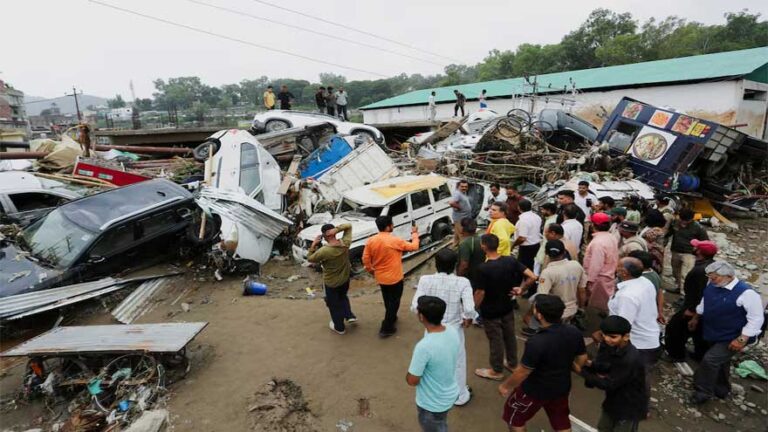
    Heavy monsoon rains continued to wreak havoc across southern India, leaving at least 14 people dead and forcing thousands of residents to flee their homes as floods and landslides caused widespread destruction in the states of Kerala and Karnataka. According to local authorities, at least 11 people have lost their lives in rain-related incidents across Kerala since the weekend. The relentless downpours have inundated low-lying areas, damaged homes and roads, and disrupted daily life across several districts. State officials said nearly 7,700 residents have been evacuated from flood-prone areas and shifted to approximately 275 relief camps established across Kerala. Emergency response teams, including disaster management personnel and local volunteers, have been working around the clock to rescue stranded residents and provide food, shelter, and medical assistance. Kerala Chief Minister V. D. Satheesan is scheduled to hold a high-level meeting with district officials on Monday to assess the flood situation and review relief and rehabilitation measures. He stated that cleanup operations have already begun in several areas where floodwaters have started to recede, while authorities continue to monitor regions still at risk. The Kerala State Disaster Management Authority has warned that several parts of the state are expected to experience moderate rainfall accompanied by strong winds, raising concerns that conditions could worsen in vulnerable locations. Residents living near rivers, hillsides, and flood-prone areas have been advised to remain alert and follow official safety instructions. The severe weather has also disrupted education across Kerala. Numerous schools remained closed due to flooding and unsafe travel conditions, while the state government postponed a scheduled teacher recruitment examination to ensure the safety of candidates and staff. Meanwhile, neighboring Karnataka has also suffered significant damage from the monsoon. Heavy rainfall triggered a landslide on Saturday that claimed the lives of three members of the same family—a couple and their son—highlighting the growing threat posed by unstable hillsides during the rainy season. Meteorological officials have warned that monsoon activity is expected to remain active over parts of southern India in the coming days. Disaster management agencies are maintaining a high level of preparedness as rescue teams continue relief efforts and authorities closely monitor rivers, reservoirs, and landslide-prone regions. The annual monsoon season frequently brings heavy rainfall to southern India, but experts say increasingly intense weather events are placing greater pressure on infrastructure, emergency services, and vulnerable communities.

  • | | | |

    Israeli forces arrest 14 Palestinians in West Bank…

    RAMALLAH: Israeli forces detained at least 14 Palestinians, including a woman, during a series of military raids across the occupied West Bank on Tuesday, while three homes were also demolished, according to local sources. The latest arrests come as tensions continue to rise across the occupied territory, where Israeli military operations, arrests and settler violence have intensified in recent days. The raids targeted several locations, including Nablus, Jenin and Tulkarm, according to reports. Eight detained in Nablus In Nablus, Israeli forces entered the Ras al-Ain neighbourhood and stormed three buildings. Soldiers searched several homes before detaining eight Palestinians, including a woman, local sources said. The operation reportedly involved searches of residential properties, with residents subjected to questioning before the detainees were taken away. The raid was part of a wider military campaign across the northern West Bank, where Israeli forces have repeatedly carried out overnight and early-morning operations. Raids reported in Tubas and Jenin In Tubas province, Israeli troops entered the town of Tammun and remained there for several hours before withdrawing. No arrests were reported from the operation. Meanwhile, in the Jenin area, Israeli forces entered Al-Yamoun, where they arrested a former Palestinian prisoner from Jenin city. Another Palestinian was detained in Deir Ghazaleh, located northeast of Jenin, according to local sources. The arrests added to growing concerns over the continuing military pressure on Palestinian communities in the occupied West Bank. More arrests in Tulkarm Further arrests were reported in the Tulkarm area. Israeli forces detained a Palestinian customs police officer and a young man from Irtah, a suburb south of Tulkarm. Two other Palestinians were also arrested following raids and searches of homes in the village of Far’un. The latest operations come against a backdrop of escalating violence in the West Bank. Reuters reported this week that Palestinian residents have described mounting pressure from military raids and settler attacks, warning that the situation is approaching a breaking point. At the same time, reports of demolitions have added another layer to the tensions. Anadolu Agency reported that three Palestinian homes were demolished during the wider military campaign, with Israeli authorities citing claims related to construction permits. The developments are likely to fuel further concern over the security and humanitarian situation in the occupied West Bank, where repeated raids, arrests, demolitions and clashes have continued to affect Palestinian communities.

  • | | |

    Google releases Android 17 QPR2 beta 3 with new fe…

    Google has released Android 17 Beta 3, also known as the QPR2 Beta 3 update, for eligible Pixel devices. The latest beta includes bug fixes as well as several new features and customization options. One of the biggest changes is a redesigned Quick Settings editor. The feature will allow users to arrange toggles and settings according to their preferences. Users can also choose which Quick Settings tiles appear in larger formats. Google is further expanding customization by allowing users to adjust the position of the brightness slider and media player. Additional theming options are also reportedly being prepared for the final release, including adjustable colour hues and more blur effects across different parts of the interface. The Android 17 Beta 3 update also introduces new call-protection features designed to help users avoid social-engineering scams. Additional confirmation dialogs may appear when users dial numbers associated with call forwarding, reducing the risk of unknowingly redirecting their calls to another number. The QPR2 Beta 3 update is currently available to eligible Pixel devices through the beta programme. While some features are already available for testing, Google is expected to introduce further improvements before the stable Android 17 release.

Leave a Reply

Your email address will not be published. Required fields are marked *