german scientists win
| | | | | | |

German and US scientists win Nobel medicine prize for work on optogenetics

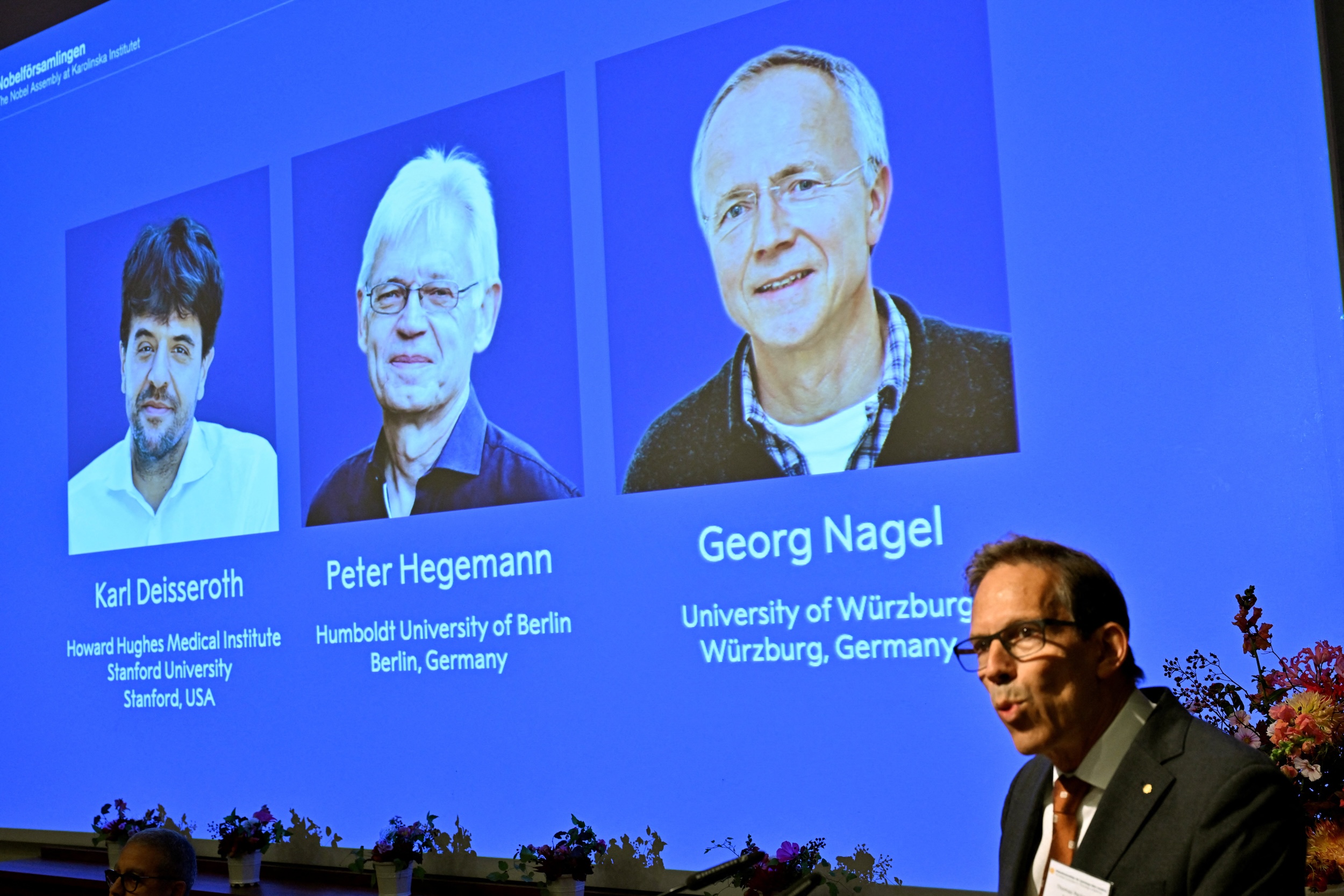
STOCKHOLM, Sweden – American Karl Deisseroth and Germans Peter Hegemann and Georg Nagel won the 2026 Nobel Prize in Physiology or Medicine on Monday, October 5, for their discoveries on light and optogenetics that have helped understand how the brain works.

The Nobel Assembly of Sweden’s Karolinska Institute medical university said Deisseroth, 54, Hegemann, 71, and Nagel, 73, were selected for their “discoveries concerning light-gated ion channels and optogenetics.”

Optogenetics “makes it possible to switch on, or off, the activity of individual nerve cells in a living brain,” said Thomas Perlmann, Secretary-General of the Nobel Assembly at Karolinska Institutet.

“This method is now being used in laboratories around the world to reveal the brain’s mysteries,” Perlmann said.

In clinical trials, researchers are restoring vision to people blinded by a condition called retinitis pigmentosa by inserting a light-sensitive protein in the retina.

Researchers also hope optogenetics could improve cochlea implants, allowing more precise stimulation of the auditory nerve than current electrical devices.

The physiology or medicine prize traditionally opens the annual Nobel announcements, with awards in physics, chemistry, literature, peace and economics to follow over the coming days.

Deisseroth, Hegemann and Nagel will share a prize sum amounting to 12 million Swedish crowns ($1.2 million).

Recipients surprised and delighted

In the early 1990s, Hegemann investigated how the alga Chlamydomonas reacts to light in half a millisecond. He hypothesised that a single protein captured light and acted as an ion channel. Nagel tested this by injecting Chlamydomonas genes into frog eggs, discovering channelrhodopsin-2—an ion channel that opens when exposed to light.

In 2003, they published that this protein could be introduced into human and hamster cells to generate electrical impulses using light. In 2005, Deisseroth at Stanford demonstrated the technique in rat nerve cells and the method was named optogenetics a year later.

Perlmann said he had talked to all three laureates this morning, and that they were surprised and delighted.

“All three said the same thing, that they thought it was absolutely wonderful to receive the prize with the other two and they call them my friends. That it’s such an honor to receive them together. So that’s something they conveyed,” Perlmann said.

Nobel prizes awarded since 1901

The five original Nobel Prizes were created under the terms of Swedish inventor and industrialist Alfred Nobel’s will and have been awarded since 1901, with only limited interruptions, chiefly during World War One and World War Two.

A sixth award, the economics prize, was established in 1968 by Sweden’s central bank, the Riksbank.

The medicine prize has honored some of the most influential scientific discoveries of the past century, including Alexander Fleming’s work on penicillin, recognised in 1945, and Karl Landsteiner, who won in 1930 for his discovery of human blood groups.

Last year, American scientists Mary Brunkow and Fred Ramsdell and Japan’s Shimon Sakaguchi won the prize for work shedding light on how the immune system spares healthy cells, creating openings for possible new treatments of diseases such as cancer.

Nobel laureates are chosen by expert committees appointed by the prize-awarding institutions. The awards are presented in Stockholm, with the exception of the Peace Prize, which is handed out in Oslo, a tradition often linked to the union that bound Sweden and Norway during Nobel’s lifetime.

More than 125 years after Nobel signed his will, the prizes retain many of their longstanding traditions.

The celebrations culminate on December 10, the anniversary of Nobel’s death, when laureates receive their awards in ceremonies attended by Sweden’s and Norway’s royal families and are feted at gala banquets held in their honor. – Rappler.com
Similar Posts

  • |

    Anger boils over as residents jeer French PM in Gironde

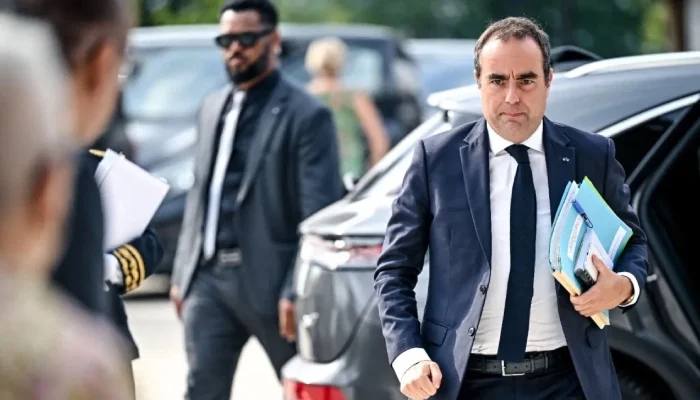
    French Prime Minister Sebastien Lecornu faced a hostile reception in the Gironde region on Monday. Residents booed him during a visit to Le Porge, amid growing anger over the government’s handling of recent wildfires. Lecornu had travelled to the area to meet local officials and discuss reconstruction efforts following a devastating wildfire last month. The visit, however, quickly turned tense. Footage published by BFMTV showed residents jeering as the prime minister arrived. Several locals also criticised him for leaving without engaging freely with the community. Speaking to AFP, 65-year-old resident Tony Veiga said the least Lecornu could have done was actually meet with residents directly. He said the government’s approach made people feel as though they simply didn’t matter. Lecornu’s office responded by saying he had spoken with affected residents and farmers during the visit. Speaking separately with officials in nearby Merignac, the prime minister insisted there was nothing to hide regarding how fire protection efforts had been carried out in recent weeks. According to AFP, much of the anger stems from allegations that authorities prioritised protecting the affluent Cap-Ferret peninsula over ordinary local homes during the firefighting response. Lecornu firmly rejected those claims, denying any preferential treatment had taken place. The backlash adds to broader frustration across parts of Europe currently grappling with wildfire emergencies. Meanwhile, the European Commission has ramped up support elsewhere on the continent, deploying additional firefighting resources to both Belgium and Spain through its civil protection mechanism. Swedish aircraft and helicopters from several European countries have been sent to Belgium to assist with ongoing fire response efforts there. Separately, 104 French firefighters and 36 vehicles have joined operations in Spain to help combat blazes spreading through the region. With wildfires continuing to strain resources across multiple European countries, pressure on national governments to respond effectively is likely to remain high in the coming weeks. For Lecornu, Monday’s frosty reception in Gironde signals that public patience with the government’s crisis response is wearing thin.

  • |

    Indian officer suspended after firing rifle during student protest

    Indian authorities have suspended a police officer after he fired an AK-47 rifle into the air while attempting to disperse student protesters in the eastern state of Bihar. The incident has intensified criticism of the government’s handling of nationwide demonstrations that recently led to the resignation of Education Minister Dharmendra Pradhan. The confrontation took place on Saturday in the city of Siwan, where students were protesting against alleged irregularities in national examinations and broader concerns about unemployment. Videos shared on social media showed a police officer in riot gear running toward a crowd of protesters before pointing his assault rifle into the air and firing at least three rounds. Police later confirmed that the footage was authentic. Senior Bihar police official Nilesh Kumar said no one was injured during the incident. He explained that the suspended officer belonged to an intelligence unit that normally deals with dangerous criminals and had been issued the rifle as part of his official duties. However, Kumar said the weapon was used inappropriately because the protesters were students and did not pose a threat that justified such action. He said the officer’s conduct could not be defended under any circumstances and confirmed that disciplinary proceedings had begun. According to Kumar, further action will be taken following an investigation into the incident. The protests began after question papers for a national medical college entrance examination were leaked in May. More than two million students had taken the exam before authorities were forced to order a retest because of the security breach. The controversy sparked widespread anger among young people who accused the government of failing to protect the integrity of the examination process. As demonstrations grew larger, students also began raising concerns about rising unemployment and fears that artificial intelligence could reduce future job opportunities, especially in India’s information technology and outsourcing sectors. These issues helped expand the movement beyond the examination scandal, drawing support from students across different parts of the country. Public pressure eventually led to the resignation of Education Minister Dharmendra Pradhan, who stepped down after nearly five weeks of protests. Despite the resignation, demonstrations have continued as students demand broader reforms and greater accountability from the government. The police response has faced increasing criticism. Officers have been accused of using excessive force against demonstrators, including beating students with batons and firing tear gas during a large march toward India’s parliament in New Delhi earlier this month. Human rights advocates and opposition leaders argue that authorities have responded too aggressively to mostly peaceful protests. Speaking in parliament, Congress Party president Mallikarjun Kharge condemned the police action and described it as one of the most serious attacks on democratic rights in recent years. He said reports that an assault rifle had been used against student protesters in Bihar were deeply troubling and called for those responsible to be held accountable. Parliamentary proceedings were repeatedly disrupted as opposition lawmakers raised the issue and demanded answers from the government. Ministers did not immediately respond before both houses were adjourned amid heated exchanges. The controversy also drew attention from India’s judiciary. Supreme Court Justice Ujjal Bhuyan expressed concern about what he described as the shrinking space for people to express different opinions in the country. In a public speech, he said the right to voice opinions and participate in peaceful demonstrations is a fundamental freedom guaranteed to every citizen. His remarks were seen as an unusual intervention by a sitting judge and added to growing calls for restraint in the handling of public protests.

  • |

    Police file case against Meta India chief over Modi videos

    Police in the southern Indian city of Hyderabad have registered a criminal case against the head of Meta India over videos shared on Facebook that allegedly portrayed Prime Minister Narendra Modi in an abusive manner. Officials said the cybercrime unit has initiated legal proceedings and is preparing to issue a formal notice to Meta Platforms as part of the investigation. The notice had not been served as of Friday. Authorities have not disclosed further details about the videos but said the case relates to content published on Facebook that allegedly violated Indian laws. Meta did not immediately comment on the development. The latest case adds to growing friction between the Indian government and the social media company over content involving Prime Minister Modi. Earlier this week, India’s Ministry of Electronics and Information Technology summoned Meta representatives after Facebook briefly restricted one of Modi’s posts. The government sought an explanation from the company, calling for accountability over the incident. Meta later stated that the restriction was the result of an unintended error and restored the post. The message was Modi’s first public response to nationwide student protests that eventually led to the resignation of India’s education minister. In recent weeks, the Indian prime minister has faced intense criticism on social media, with users sharing protests, satire, and political commentary related to the ongoing unrest.

Leave a Reply

Your email address will not be published. Required fields are marked *