Ban or tiered limits? Meta, gov’t agencies discuss child online safety
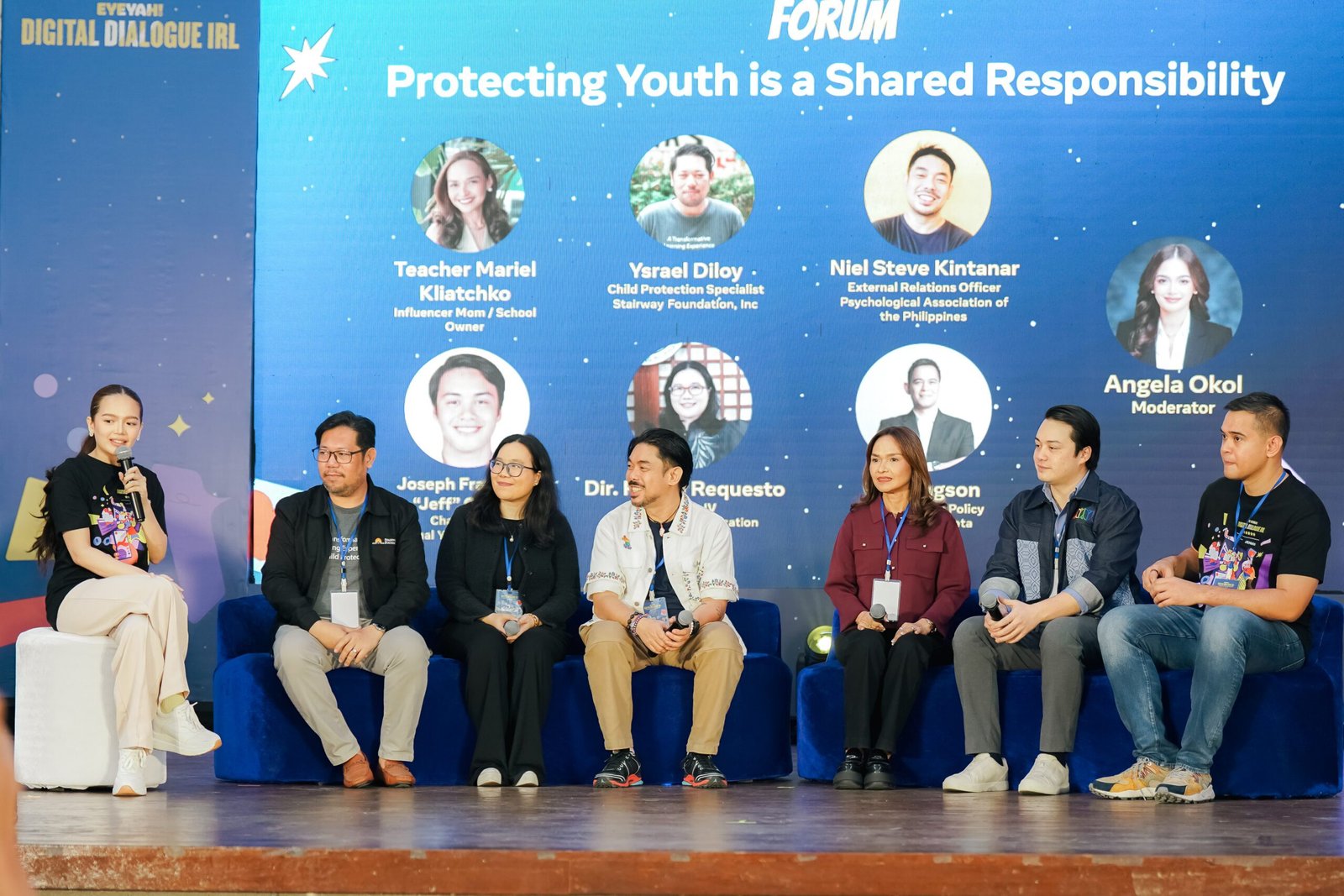
MANILA, Philippines – As Congress moves to reconcile legislation prohibiting minors from accessing social media and other high-risk digital services, Meta, the company behind Facebook and Instagram, hosted a forum to discuss children’s online safety on Monday, October 26, at the Ayala Malls Glorietta Activity Center.
Meta, together with the Department of Information and Communications Technology-Cybercrime Investigation and Coordinating Center (DICT-CICC), Department of Education (DepEd), National Youth Commission (NYC), and other stakeholders, hosted the forum to kick off the Digital Dialogue In Real Life, a free interactive exhibition that aims to take a comprehensive approach to youth digital well-being in the Philippines. The exhibit will run from Monday, October 26 to Friday, October 30.
The forum covered what platforms and families can do, from parental controls to conversations at home. This comes after incidents of school violence were reported nationwide, with investigators examining possible online influences, and as lawmakers weigh bills restricting minors’ access to social media.
‘Not yet satisfied’ with platforms’ commitment
During Meta’s event, DICT-CICC Director IV Noel Carlo Gracilla said that “children’s safety cannot be matched by promises alone.”
“Although we have secured [the platforms’] commitments, the CICC is not yet satisfied…. What we need to see is their action and effective solutions that will leave good results for our young people,” Gracilla said in his welcome message, speaking in Filipino.
He did, however, credit Meta’s quick responses to CICC requests with helping curb young people’s exposure to inappropriate content. He said the agency met in recent months with Discord, Reddit, Meta, and Roblox to raise concerns about their in-app safety features, especially for content unsuitable for minors.
At least eight incidents of school violence in the Philippines have been reported in 2026, including three deadly school shootings. Such incidents have prompted authorities to seek commitments from social media platforms.

In August, after the second deadly shooting took place in Zamboanga City, the DICT said Meta and Roblox had agreed to enhance child-safety protections for users in the Philippines, including age verification and parental controls.
Senator Risa Hontiveros also said in the same month that the Philippine government had secured a commitment from Meta to provide user data to law enforcement when there is an imminent threat of violence.
Ban or tiered limits?
Meta kicked off the exhibit with a forum to explore practical ways to address the risks children face online today. Among the panelists were:
- Gio Tingson, head of public policy, Meta Philippines
- Joseph Francisco Ortega, chairperson, NYC
- Razzel Requesto, director IV, DepEd
- Ysrael Diloy, child protection specialist, Stairway Foundation
- Niel Steve Kintanar, external relations officer, Psychological Association of the Philippines
- Mariel Kliatchko, influencer mom and school owner
The forum took place as Congress weighs whether to ban children from social media altogether. Under the Senate-approved Safe Media Access and Responsible Technology for Kids in Digital Spaces (SMART KIDS) bill, social media accounts determined as being owned or used by a minor will be suspended, restricted, disabled, or removed. It will also prevent users below 18 years old from creating accounts.
Diloy argued that a ban would push children out of online spaces where they have rights to expression and information.
“The rights holders are the children. The duty bearers are us, the adults. It’s our obligation to ensure the safety of the spaces the children move in, and to ensure that the children reap the benefits of technology,” Diloy said in Filipino.
“What we’re hoping for is for tech platforms to have accountability and responsibility,” Diloy said, adding that Meta’s launch of Teen Accounts with parental supervision tools is a welcome step.

Meta’s Digital Dialogue IRL builds on its Screen Smart Philippines initiative, launched in June, which educates parents and teens about the safety features built into Teen Accounts across its products: Instagram, Facebook, Messenger, and Threads.
The protections in Teen Accounts include default private accounts, messaging restrictions, sensitive content limits, daily 60-minute time limit reminders, and a “sleep mode” that mutes notifications between 10 pm and 7 am. Teens cannot opt out or loosen these settings without a parent’s permission.
“Learning from other jurisdictions, without naming any country, we saw that bans are ineffective,” Tingson told Rappler on the sidelines of the event, saying that their solution is a tiered approach.
He argued that giving a five-year-old and an 18-year-old the same restrictions online would not address the core problem. “Their dimension of learning, of exploration, of responsibility is very different, so you want to make sure that the experience is appropriate. Because if we push people outside of the platform by doing bans, it’s either they circumvent it, or they delay learning,” he said.
Early evidence from Australia’s restrictions on social media for children under 16 years old found that roughly eight in ten children continued using social media despite the ban.
Hontiveros, the only senator to vote against the SMART KIDS bill, also earlier suggested a tiered access by age instead of a blanket ban.
‘Connection before correction’
But whatever safety features social media platforms roll out only matter if families use them. Tingson told Rappler on the sidelines of the event that they’re still working on getting people to sign up for the Teen Accounts, saying: “We really need help in pushing for awareness in people enrolling.”
For the other members of the panel, using the features starts with a conversation between parent and child.
“Connection before correction. We can correct, we can punish. We can do all that. But do we understand [why we’re doing it]?” Kliatchko said in a mix of English and Filipino.
The influencer mom said that parents should protect, but it should be done with preparation. “You cannot just forbid your children to play Minecraft or Roblox…. You have to understand it. You have to be able to explain why [you’re setting boundaries],” she said.
Others on the panel echoed her. Kintanar said research shows relationships matter for mental health and well-being, while Ortega said parents can’t set limits for children they haven’t connected with.
A bigger problem outside the Philippines
The panel’s advice puts parents at the center. But what happens when even engaged parents become inundated with the apps’ features that are alleged to be built to hold teens’ attention?

Earlier this year, documents, primarily internal communications at the social media companies, were unsealed and shown in a Los Angeles trial brought by a young woman who said Instagram and YouTube fueled her addiction and depression. In March, the jury found Meta and YouTube liable for negligently designing products that harmed her. Meta has since appealed.
In August, a separate federal trial began on claims by 29 different US states. All 29 accused Meta of improperly collecting children’s data, and four lead states also alleged it deliberately designed Facebook and Instagram to hook children and misled the public about their safety.
Meta denied the claims and said it has strong protections for teenagers. About a week in, a federal judge approved an $18-billion settlement. Meta agreed without admitting wrongdoing, so the court made no finding on the states’ claims. – Rappler.com