michael jackson estate
|

Michael Jackson estate wins ruling in child trafficking lawsuit

Michael Jackson’s estate has secured a significant legal victory in a lawsuit filed by four siblings who accused the late pop icon of sexually abusing and trafficking them when they were minors.

The case was brought earlier this year by siblings Edward, Dominic, Marie-Nicole and Aldo Cascio against the estate of Jackson, who died in 2009 at the age of 50. The siblings claimed that the singer had groomed and brainwashed them during their childhood and alleged that they were subjected to sexual abuse and trafficking.

The Cascio siblings had a close relationship with Jackson while growing up and have previously described themselves as part of his “second family.” Their connection with the singer became the focus of legal proceedings after they made allegations against him and subsequently reached a settlement with his estate.

In 2019, Jackson’s estate agreed to pay the siblings $3.5 million as part of a settlement. The agreement did not include any admission of wrongdoing by the estate or acknowledge the allegations made against the late singer.

The siblings later attempted to challenge the settlement, arguing that the agreement should be declared invalid and unenforceable. They claimed they had been pressured or coerced into signing the deal and sought to pursue their allegations through the court system.

However, their effort to bring the dispute before a public trial has now been rejected.

On Wednesday, August 12, Judge Hernán D. Vera ruled that the legal dispute must be resolved through confidential arbitration instead of proceeding as a public court case. The decision represents a major victory for Jackson’s estate, as arbitration generally keeps legal proceedings private and limits the matter from moving forward through a public trial.

According to court papers obtained by Billboard, Judge Vera acknowledged the seriousness of the allegations but concluded that the existing agreement required the dispute to be handled through arbitration.

“Although the allegations are horrific, the court is without discretion to do aught but enforce the language of the arbitration clause,” the court stated.

The ruling does not determine whether the allegations made by the Cascio siblings are true or false. Instead, it focuses on the legal terms of the 2019 settlement and whether the dispute must follow the arbitration provision contained in that agreement.

The siblings’ allegations have nevertheless brought renewed attention to Jackson’s relationships with children and families who were close to him during his lifetime. Jackson, one of the most influential entertainers in music history, faced allegations of sexual misconduct during his career, though he consistently denied wrongdoing.

The latest ruling means that the Cascio siblings’ dispute with Jackson’s estate will now continue, if at all, through a private arbitration process rather than a public courtroom trial. The outcome of that process could determine whether their challenge to the 2019 settlement has any further legal consequences.
Similar Posts

  • | | | |

    Iran targets US bases across Gulf

    The conflict between Iran and the United States intensified on Wednesday after Iran claimed it carried out a new wave of drone attacks on US military bases in Jordan, Bahrain and Kuwait. The latest attacks marked another major escalation in the ongoing regional conflict that has continued for months. Iranian military officials said attack drones targeted Al-Azraq Air Base in Jordan, Sheikh Isa Air Base in Bahrain and Camp Doha in Kuwait. According to Iranian authorities, the strikes focused on military warehouses, logistics facilities, aircraft maintenance centers and ammunition depots used by US forces. Jordan confirmed that its air defense systems intercepted several missiles and drones after they entered the country’s airspace. Officials said four missiles were destroyed while two landed in remote desert areas. No casualties or property damage were reported. Air raid sirens also sounded in Jordan’s southern port city of Aqaba. Videos circulating on social media showed smoke rising over the area. Authorities urged residents to remain alert but confirmed that the situation was under control. Bahrain’s military said its air defense systems successfully intercepted several incoming aerial threats after warning sirens were activated across the country. Officials did not report any casualties or major damage. Iran also claimed it launched a large number of drones against Camp Doha in Kuwait. Iranian media said the attack targeted US ammunition storage sites and military logistics equipment. Kuwait had not issued an official response at the time of reporting. The latest attacks came only a day after Iran launched missile strikes against US-linked military facilities in Jordan and Bahrain, increasing fears that the conflict could spread further across the Gulf region. Meanwhile, US Secretary of State Marco Rubio said Washington remains prepared to negotiate with Iran if Tehran shows genuine willingness to engage in serious talks. Speaking during a regional meeting in Manila, Rubio said the United States continues to support diplomacy but believes Iran is not currently committed to meaningful negotiations. He warned that Iran must not be allowed to threaten international shipping through the Strait of Hormuz. Rubio said any attempt to control one of the world’s busiest shipping routes would create a dangerous precedent and threaten global trade. The security situation has already affected international energy markets. Global oil prices climbed again as fears grew over possible disruptions to oil supplies from the Gulf. Brent crude traded above $91 per barrel, while fuel prices also increased in international markets. The crisis worsened after Yemen’s Houthi movement announced a naval blockade targeting Saudi Arabia. The move forced several oil tankers carrying Saudi crude to change their routes in the Red Sea because of growing security concerns. French shipping company CMA CGM announced an emergency surcharge on cargo shipments starting August 1. The company said the worsening security situation around the Strait of Hormuz has significantly increased fuel and transportation costs. At the same time, US forces carried out another round of airstrikes inside Iran. American military officials said the strikes targeted command centers, drone storage facilities, aircraft hangars, logistics sites and maritime capabilities. The operation marked the 11th consecutive night of US military attacks. Iranian media reported explosions in Tehran, Bushehr, Chabahar, Konarak and parts of Ilam province. Officials said a missile strike damaged an electrical substation supplying power to the Bushehr nuclear power plant. Electricity was restored after several hours, and authorities reported no casualties. US President Donald Trump said 18 American service members have been killed since the conflict began, including four who died in recent Iranian attacks on US military bases in Jordan and Iraq. He said the United States would continue protecting its forces and allies in the region. Iran also claimed it targeted infrastructure linked to a major American technology company operating in Bahrain. However, the claim has not been independently verified. The conflict began in late February following US and Israeli strikes on Iran. Since then, military operations have expanded across several countries in the Middle East. Despite ongoing mediation efforts by regional countries, including Pakistan, no ceasefire agreement has been reached

  • | |

    Australia defends social media ban for under-16s

    The Australian government has defended its ban on social media use by children under the age of 16, despite new data showing that most teenagers continue to access restricted platforms months after the law came into effect. The legislation, introduced in December, was designed to protect children from the harmful effects of social media on their mental and physical health. The policy attracted international attention, with Australia becoming the first country to implement such a nationwide restriction on underage social media users. A recent report by Australia’s online safety regulator found that more than eight in ten teenagers under the age of 16 were still using social media platforms three months after the restrictions became operational. The findings have highlighted the challenges governments face in enforcing digital regulations. Despite the report, Australian authorities insisted that the policy remains an important step toward creating a safer online environment for children. Officials said the law has already influenced public discussion about online safety and encouraged greater awareness among parents, educators and technology companies. Assistant Minister for Productivity, Competition, Charities and Treasury Andrew Leigh said the government never expected complete compliance immediately after the law came into force. He explained that many public safety laws require time before they achieve widespread compliance. Leigh said the government considers the legislation successful because it has changed the national conversation about children’s use of social media and encouraged stronger action to protect young users from harmful online content. He noted that millions of social media accounts had already been closed or restricted since the implementation of the law. According to the minister, this demonstrates that the legislation is already having an impact, even if some teenagers continue to access online platforms. The government also stressed that technology companies have a major responsibility to ensure compliance with the new rules. Officials said digital platforms must strengthen age verification systems and take effective measures to prevent underage users from creating or maintaining accounts. Regulatory authorities are continuing to assess how well social media companies are implementing the restrictions. They are also examining additional measures that could improve enforcement and ensure technology firms meet their legal obligations. Experts say the latest findings illustrate the complexity of regulating online platforms, particularly as social media has become deeply integrated into the daily lives of young people. They note that effective enforcement will require cooperation between governments, parents, schools and technology companies.

  • | |

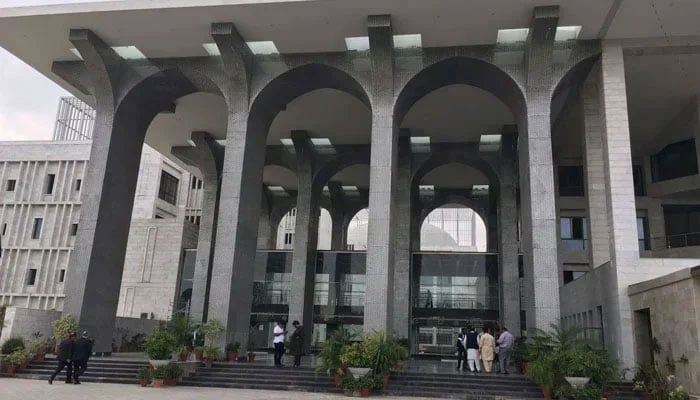
    IHC issues cause list with eight benches for next …

    The Islamabad High Court (IHC) Registrar’s Office has issued the cause list for the upcoming week. According to the cause list, eight benches will be available to hear cases during the week. These include six single benches and two division benches. The court has constituted two division benches to hear cases involving matters requiring consideration by two judges. The first division bench will comprise Justice Khadim Hussain Soomro and Justice Umair Majid Malik. The second division bench will consist of Justice Muhammad Asif and Justice Shah Rukh Arjumand. The cause list also includes six single benches. These benches will hear cases assigned to individual judges during the upcoming week. The six single benches will comprise Justice Sarfraz Dogar, Justice Khadim Hussain Soomro, Justice Muhammad Asif, Justice Ayaz Shaukat, Justice Umair Majid Malik and Justice Shah Rukh Arjumand. The Registrar’s Office has issued the schedule as part of the court’s regular judicial proceedings. Cases listed before the respective benches will be taken up according to the cause list. The cause list determines which cases are scheduled for hearing and which judges will hear them. Lawyers and litigants will appear before the relevant benches on the dates fixed by the court. The Islamabad High Court will continue hearing cases through the six single benches and two division benches during the coming week.

  • | |

    Ameesha Patel explains why she avoids marriage

    Bollywood actress Ameesha Patel has opened up about her decision not to get married. The actress recently interacted with her fans during a question-and-answer session on social media platform X. During the session, a fan asked Patel when she planned to get married. The actress responded in a humorous and straightforward manner, saying that she had no plans to marry and was very happy living her life independently. Patel said she already has a large circle of people who love and support her. She explained that around 100 people, including close family members and friends, are already part of her life and provide her with companionship. The actress further joked that she could not tolerate someone entering her life and changing everything. Her response reflected her independent approach to marriage and relationships. Patel’s candid comments attracted attention from her followers. Many fans appreciated her humorous response and her confidence in choosing a lifestyle that makes her happy. The actress has remained active in the entertainment industry and regularly interacts with her followers on social media. Her latest comments have once again sparked interest in her personal views on marriage and relationships.

  • | |

    Sindh government spokesperson accuses Hafiz Naeem …

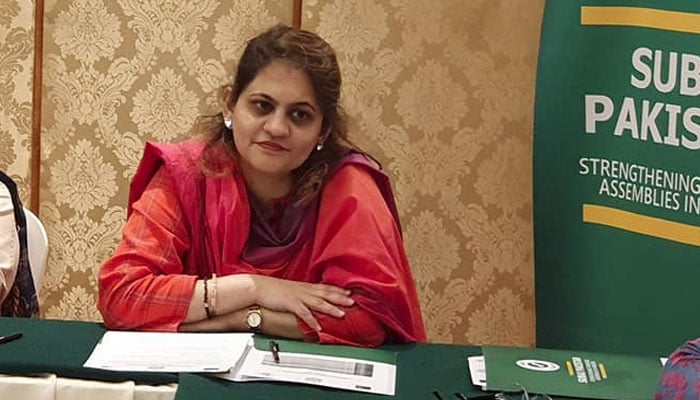
      Sindh government spokesperson Sadia Javed has accused Jamaat-e-Islami Pakistan Emir Hafiz Naeem ur Rehman of distorting the context of what she described as sincere national agreements reached in the past. In a statement issued from Karachi, Sadia Javed said that Hafiz Naeem was presenting previous national agreements in a misleading manner. She criticised the Jamaat-e-Islami leader for allegedly attempting to portray past understandings between political stakeholders in a way that did not reflect their original spirit or context. She questioned Hafiz Naeem’s position on electricity generated from Thar coal, asking why he remained silent about what she described as some of the cheapest electricity being produced through the country’s indigenous coal resources. “Why is Hafiz Naeem silent on the inexpensive electricity generated from Thar coal?” she questioned, while responding to his criticism of the Sindh government and the Pakistan Peoples Party (PPP). Sadia Javed also strongly rejected what she described as allegations against the Sindh government, saying that Hafiz Naeem had no justification for issuing what she termed “mafia certificates” to others. She challenged the Jamaat-e-Islami leader to examine his own political record before making accusations against others. According to her, political leaders should first reflect on their own actions and positions before questioning the credibility or performance of others. The Sindh government spokesperson further defended the provincial government’s policies and highlighted the importance of Thar coal in meeting Pakistan’s energy requirements. She suggested that criticism of the provincial government should be based on facts and a complete understanding of the agreements and projects under discussion. Another Sindh government spokesperson, Ghanhor Khan, also criticised Jamaat-e-Islami and Hafiz Naeem, accusing them of making allegations based on what he described as political hypocrisy. Ghanhor Khan said that making accusations against the PPP over the issue of Independent Power Producers (IPPs) was part of what he called Jamaat-e-Islami’s unsuccessful political strategy. He argued that the party was attempting to use the controversial issue of IPPs to create political pressure against the PPP and the Sindh government. The dispute comes amid renewed political debate over Pakistan’s electricity sector, particularly the cost of power generation, agreements with IPPs and the role of domestic energy resources. Political parties have frequently criticised successive governments over electricity prices, power-sector contracts and energy policies. The Sindh government has continued to highlight Thar coal as an important component of its energy strategy, while its political opponents have raised questions about governance, transparency and the broader impact of energy-sector agreements. The exchange between the Sindh government and Jamaat-e-Islami reflects growing political tensions over energy policy and the interpretation of past agreements. While Hafiz Naeem has criticised the government’s handling of the power sector, Sindh government representatives have rejected his allegations and questioned the consistency of his political position. Both sides have continued to defend their respective positions, with the Sindh government emphasising its energy initiatives and Jamaat-e-Islami maintaining its criticism of the power-sector policies.

  • | | |

    1,300-year-old shipwreck hides incredible gold tre…

    Archaeologists have uncovered an extraordinary collection of gold coins and precious jewelry from a sunken Byzantine-era ship near Croatia’s southern coastline, offering new insights into the empire’s maritime history and suggesting that a high-ranking official may have been among the passengers. The ancient shipwreck was first discovered more than a decade ago, but researchers spent several years conducting detailed underwater excavations before releasing their findings. The results, announced on Thursday, indicate that the vessel most likely dates back to the seventh or eighth century AD, making it one of the region’s most significant archaeological discoveries in recent years. According to experts, the remarkable collection of valuables recovered from the wreck suggests that the ship was far more than an ordinary merchant vessel. Instead, archaeologists believe it may have been transporting an influential government official, noble, or other prominent figure, accompanied by attendants or security personnel. Among the most valuable discoveries are gold coins minted during the reigns of four Byzantine emperors from the Heraclian dynasty, which ruled between AD 610 and 711. Researchers also recovered ornate gold fittings from luxury boxes decorated with rubies, emeralds, and pearls, highlighting the wealth and status of those on board. The quality and rarity of the artifacts provide important clues about the Byzantine Empire’s political, economic, and cultural life during the early medieval period. Experts say the recovered objects demonstrate the sophisticated craftsmanship of the era and reveal the importance of maritime travel for government officials and elite members of society. The ongoing archaeological investigation is expected to deepen historians’ understanding of Byzantine trade routes, royal travel, and naval activity across the Adriatic Sea. Researchers hope that further analysis of the ship’s structure, cargo, and recovered artifacts will help reconstruct the vessel’s final journey and explain the circumstances that led to its sinking centuries ago. Officials involved in the excavation described the discovery as a major milestone in underwater archaeology. As conservation work continues, many of the recovered treasures are expected to be carefully preserved and studied, providing valuable information for future research into the Byzantine Empire and its influence across southeastern Europe. The discovery underscores the importance of underwater archaeological exploration and demonstrates how centuries-old shipwrecks continue to reveal remarkable stories about ancient civilizations, their rulers, and the maritime networks that connected them across the Mediterranean world.

Leave a Reply

Your email address will not be published. Required fields are marked *