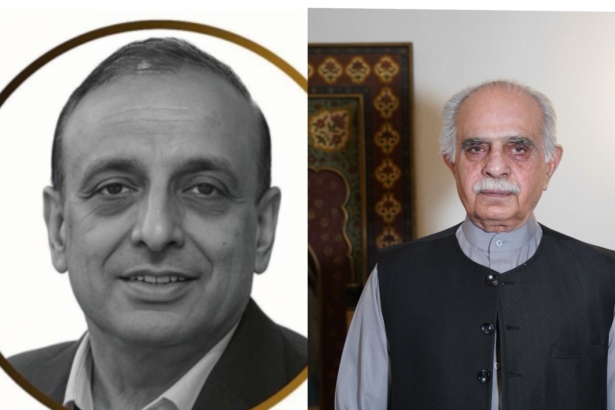
muzaffarabad more than

Muzaffarabad was more than a rally — It was Nawa…

The Pakistan Muslim League (N)’s power show in Muzaffarabad during the Azad Jammu and Kashmir election campaign was far more than an ordinary political rally. To me, it marked the re-emergence of Nawaz Sharif as the central figure in Pakistan’s political landscape.

The message from Muzaffarabad was unmistakable. Nawaz Sharif spoke of development rather than division, construction rather than confrontation, and public welfare rather than political vendettas. His interaction with the crowd was genuine and heartfelt. One symbolic moment that captured public attention was his light-hearted remark expressing a desire to become the Prime Minister of Azad Jammu and Kashmir. It reflected his affection for the region and the deep emotional bond he has always maintained with the people of Kashmir, whose support has remained consistent throughout his political career.
Having covered Pakistani politics for nearly three decades and followed Nawaz Sharif closely since his arrival in London from exile in 2006, I have witnessed every major phase of his political journey. From Duke Street in London, where he addressed party workers during years of political exile, to the massive public gathering in Muzaffarabad, I saw the same determination and resilience that has defined his politics for decades.
Few political leaders in South Asia have experienced the highs and lows that Nawaz Sharif has endured. His elected government was overthrown by General Pervez Musharraf in 1999. He was prosecuted, imprisoned and later forced into exile. Years later, he returned to Pakistan and regained political power, only to face another period of legal and political challenges following the Panama Papers case. In my view, elements within the state establishment and parts of the judiciary played significant roles during different phases of these political confrontations. Regardless of differing opinions on those events, what remains remarkable is that every major attempt to end his political career has ultimately been followed by his return to the centre of national politics.

Many analysts predicted that the 2024 general elections would mark the end of Nawaz Sharif’s political dominance. I never shared that assessment. Throughout my television appearances and reporting, I consistently argued that he remained the principal decision-maker within the PML-N and that no major political decision was taken without his approval.

One of the defining strengths of the Sharif family’s politics has been continuity of leadership. Shehbaz Sharif has repeatedly demonstrated exceptional political loyalty to his elder brother. On several occasions, he chose party unity over personal ambition. Following the difficult electoral environment of 2024, he assumed the office of Prime Minister at a time when Pakistan was facing severe economic and diplomatic challenges. In my assessment, his government helped restore economic confidence, improved macroeconomic stability and steered Pakistan away from a potentially deeper financial crisis. His administrative style has always been focused on governance and delivery rather than political rhetoric.

Maryam Nawaz’s rise represents another important chapter in the party’s evolution. During the years when Nawaz Sharif faced political disqualification and exile, she emerged as one of the PML-N’s most visible campaigners. She endured political pressure, remained active throughout the party’s most difficult period and gradually established herself as a national political leader in her own right.

As Chief Minister of Punjab, Maryam Nawaz has sought to build her political identity around governance, administrative reforms and public service delivery. Whether one agrees with her politics or not, she has brought energy and visibility to the office and has made rapid implementation of development initiatives a defining feature of her administration. Her speeches continue to energise party workers, while her governance record is increasingly becoming central to the PML-N’s political narrative.

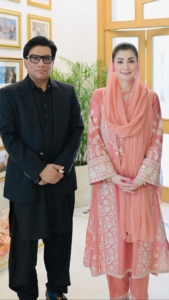
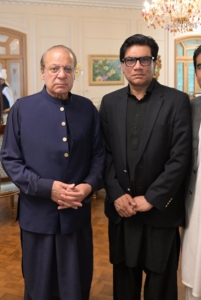
When I met Nawaz Sharif and Maryam Nawaz at Jati Umra earlier this year, I observed the same resolve that I had seen nearly two decades earlier during the London exile years. The determination to continue serving through politics appeared unchanged.

The Muzaffarabad rally reinforced what I have believed for years: Nawaz Sharif has entered another active phase of his political career. His message is no longer about political survival—it is about political continuity, stability and development.

Whether one supports him or opposes him, it is difficult to deny one reality. More than forty years after entering politics, Nawaz Sharif remains one of Pakistan’s most enduring and influential political figures. His resilience has become part of Pakistan’s political history, and Muzaffarabad demonstrated that his political story is far from over.

The views expressed in this article are solely my personal observations and political analysis based on decades of reporting on Pakistan’s politics.


Similar Posts

  • Stoning in the City of Letters: The Tragic Death o…

    ​Where the nine-hundred-year legacy of the University of Cambridge has long claimed to stand guard over truth, intellect, and reason, a profoundly agonizing incident has laid bare the deep intellectual, political, and social fault lines of the modern West. Professor Jason Arday—who made history as the youngest Black academic appointed to a professorship at Cambridge—was found dead at his home in South West London on August 14, 2026. To dismiss his sudden passing as a mere bodily collapse or a quiet, solitary cardiac arrest would be a profound act of self-deception. This tragedy is, in truth, the direct consequence of a systemic crisis eroding Western academia—a space where the fragile boundary separating legitimate academic rigor from ruthless political and racial factionalism has dissolved, and where institutional accountability has steadily devolved into a spectacle of public humiliation. ​Jason Arday’s ascent was a rare testament to human endurance and unyielding resolve. Raised in a low-income neighborhood in South London, he was diagnosed in early childhood with a severe form of autism. He remained non-verbal until the age of eleven and was unable to read or write until he was eighteen. Yet, defying both societal expectations and medical prognoses, he mastered the written and spoken word, pursued higher education, and navigated his way through the faculties of Roehampton, Durham, and Liverpool, ultimately securing a chair in sociology at Cambridge in March 2023. ​However, Arday’s arrival at the pinnacle of British academia coincided with an intense ideological war engulfing universities and the press. Over the preceding decade, Diversity, Equity, and Inclusion (DEI) initiatives had been elevated to core institutional imperatives across British higher education. Universities leaned into these metrics to rebrand themselves, and scholars of Arday’s caliber frequently became the public face of this transformation. ​This is precisely where the deeper ideological friction of contemporary British society erupted into what is widely characterized as a culture war. On one side stood a progressive consensus viewing DEI policies as a overdue corrective to historical inequities; on the other stood a relentless right-wing press and traditionalist academic factions that framed such appointments as a dilution of meritocracy and an embrace of ideological tokenism. ​When questions were subsequently raised regarding technical details within Arday’s PhD thesis and past curriculum vitae, the matter did not remain confined to quiet internal review. Right-leaning media outlets swiftly weaponized these allegations to mount a broader assault on Cambridge’s DEI framework. The tragedy of this partisan crossfire was that Arday’s humanity was entirely erased; he was reduced from a living, breathing scholar into a battlefield for competing political narratives. ​Academic integrity is undeniably the bedrock of any serious higher education system. When allegations of plagiarism are leveled against a scholar, a university is legally and ethically bound to conduct a thorough, impartial, and confidential inquiry. Yet, when such proceedings leak beyond institutional walls into the arena of tabloid journalism and political point-scoring, the genuine purpose of oversight is lost. ​Liverpool John Moores University had previously conducted a comprehensive investigation into the allegations against Arday, fully exonerating him and reaffirming the validity of his doctorate. However, the toxicity of commercialized media and political polarization ran too deep for that clearance to settle the matter. When Cambridge University, bowing to intense media pressure, announced a secondary independent review, it revealed just how vulnerable modern elite institutions have become to the demands of public relations. ​The most damning dimension of this ordeal was the existential and psychological toll exacted upon a scholar watching a lifetime of discipline destabilized in an instant. In his resignation statement on August 5, Arday explicitly clarified that stepping down was not an admission of guilt, but the final recourse of a human being pushed beyond the limits of endurance by a relentless media trial. Just nine days later, on August 14, 2026, he was dead. Neuroscience and clinical psychology have long documented how sustained public humiliation, character assassination, and the erasure of one’s professional identity can inflict severe somatic stress, culminating in fatal systemic collapse. ​This event casts a severe shadow over liberal democracies that pride themselves on individual dignity and the presumption of innocence. In a hyper-digitized media ecosystem, accusations function as instant convictions in the court of public opinion, long before an individual has a meaningful opportunity to offer a defense. Academia, which ought to serve as a sanctuary for measured deliberation, has proven just as susceptible to sensationalism as the rest of society. Arday’s death leaves scholars worldwide asking whether the academic vocation has shifted from the quiet pursuit of truth to a harrowing exercise in surviving public vilification. ​Jason Arday’s death compels an overdue reckoning: institutional accountability must be structured so that it neither shields genuine intellectual dishonesty nor surrenders an individual scholar to the crossfire of racial and culture wars. If elite universities fail to insulate their investigative processes from media trials and political agendas, the most sensitive and brilliant minds will inevitably retreat from the academic life altogether. Arday’s silence now stands as a profound question mark hanging over the international scholarly community. ​The ultimate lesson of this tragedy is that the dignity of those who dedicate their lives to learning cannot be sacrificed on the altar of political or journalistic expediency. If the institutions entrusted with seeking truth cannot protect their own, society loses its moral compass. Standing before the red-brick facade of Cambridge, one is left asking how a scholar of such promise could crumble on its doorstep. This was not merely the loss of a single life; it was an institutional failure that demands the grief and critical reflection of the global intellectual community. ​The extraordinary resilience with which Arday conquered his early disabilities demonstrated the scale of his ambition and character. Yet, faced with the cold machinery of institutional cowardice and media hostility, that strength was ultimately overwhelmed. This moment offers a final, urgent opportunity for self-examination within higher education. If we remain silent, the fires of ideological intolerance will continue to consume the very minds meant to illuminate

  • Change we must

    In a world driven by technology, only change is permanent. Change we must, but how? Transition from one system to another is perhaps the biggest challenge that we have not been able to cope with. Half-baked solutions with underage players cannot deliver. Reminds me of Einstein’s famous quote: “We cannot solve our problems with the same thinking we used when we created them.” Steve Jobs, one of the greatest technologists of the 21st century, went even further by saying: “Either lead or get out of the way.” A few years back I was doing some research on universities and their impact on setting the course of nations. Syed Ahmed Khan’s Aligarh Muslim University stood out. It produced the Change Managers who not only led the freedom movement but also had the capacity to sustain it. The Islamic Republic of Pakistan (IRP) desperately needs such individuals who can understand and then manage the needful. In the year 1875 he founded the MAO College (Mohammadian Anglo Oriental College) which later grew into a university in the year 1920. He passed away in 1898 but the institution grew. Later on, Allama Iqbal led the movement, and finally it was Muhammad Ali Jinnah who succeeded in carving a new homeland in August 1947 for the Muslims of the Indian Subcontinent. Unfortunately, he did not live long enough to lay the foundations of the new state, but he did leave clear guidelines for the inherited establishment to follow (Armed Forces, Bureaucracy). After taking over in October 1999, Pervez Musharraf created a think tank called the National Reconstruction Bureau (NRB). Headed by Lt. Gen. Tanvir Naqvi, it was located in the Chief Executive (CE) secretariat. The task was to design and execute political and administrative reforms in the country. I was invited to give my input. Naqvi Sb was very confident about delivering meaningful change. His main focus was on devolution of power. As a student of management, I asked him a simple question: “Who will implement his plan?” Bureaucracy, of course, was his quick reply. He did not have an answer to my second concern: “Why will they implement a plan which reduces their power?” He then decided to get rid of me by saying if I wanted to discuss implementation details, I should go to the third floor to the CE’s office. Finally, he stepped down and was replaced by a young novice who lacked the experience and clout to deliver meaningful change. Then there was another initiative called the National Commission for Human Development (NCHD), led by a pediatrician from a small town in Oregon. The worthy Dr assured the CE that he would manage funds from abroad while the local expenses were to be provided by the Government of Pakistan (GOP). Various centers were established across the country and staff recruited. While GOP provided the internal resources, the external help never came despite fundraising efforts abroad. The CE was convinced that the two sectors were well covered, but they were not. Finally, NCHD became a liability and was shut down and the staff laid off. During my term as Chairman, Pakistan Science Foundation (PSF), I lobbied for technocrats to head technical ministries, which was not well received by the powers that be. Commercialization and application of research is the biggest challenge faced by the R&D sector of the country. When I was denied an extension after the completion of my term, I paid a farewell visit to the Secretary MOST (Ministry of Science and Technology). It was a friendly meeting; the Secretary appreciated my work but complained that I did not follow his guidelines. While leaving, he pointed at the board where the names of his predecessors were written. I still remember his words: “Only our names make it here.” He did not like my spontaneous response: “Time will tell,” and it did. My lobbying prevailed; a retired Chairman of PAEC (Pakistan Atomic Energy Commission) replaced him. Though he had no commercial background, I decided to guide and support him. He recommended major investments in creating public sector entities like HMC III, run by PAEC, for meeting their equipment needs. At best, only pilot plants were viable for transfer of technology from laboratory to industry. He was unable to get the funds. As such, his term ended with no major breakthrough, and business as usual continued. Pakistan has a federal structure of governance. Federating units are diverse with differing needs. I am in favor of devolution, but the task on hand is not simple. The forces of status quo are too entrenched. Change Managers are needed at all levels. Complexities have to be understood and managed. There has to be consensus on the road map. Islamabad has an archive of failed plans. The same mistakes should not be repeated again. The first challenge is to find qualified individuals with solid re-engineering experience to lead the crusade. Einstein and Jobs were two brilliant brains of their times; we must value their outlook to move forward and avoid chaos and confusion. Oversimplification of the task at hand must be avoided.

  • No to the Division of Punjab

    Once again, the debate over the creation of new provinces has surfaced in Pakistan. In every political era, the issue is revived in one form or another. This time, however, there appears to be a growing push for creating additional provinces out of almost every major province in the country. The strongest argument being put forward is that Pakistan’s population was around 70 million in 1972, whereas it has now grown to more than three times that figure. Therefore, it is argued, new provinces have become necessary for administrative convenience. At first glance, this argument may sound convincing. But the real question is: can all of Pakistan’s problems be solved simply by creating new provinces? If population growth alone is a sufficient reason for creating new provinces, then why have all major countries in the world not followed the same path? The real issue is not the number of provinces but the quality of governance, equitable distribution of resources, an empowered local government system, transparent accountability and an effective administrative structure. When the basic system is weak, changing the map does not make the problems disappear. What is particularly concerning is that Punjab appears to be the main target of this debate. At different times, proposals have emerged for a separate South Punjab, Central Punjab and even further divisions. It seems that with every political season, Punjab becomes the centre of the debate over provincial division. This has understandably created a feeling among many Punjabis that the issue may not be merely about administrative reform, but could also weaken Punjab’s historical, cultural and political identity. Punjab is not merely another province. It is one of the strong pillars of Pakistan’s ideological, historical and economic foundations. The land played an important role in the Pakistan Movement, made enormous sacrifices for the defence of the country, strengthened Pakistan’s agriculture and industry, and has always played a key role in the national economy. Repeatedly dragging such a province into a debate over division is neither appropriate nor in the national interest. Those advocating new provinces speak extensively about administrative convenience, but remain largely silent about the financial consequences. Has anyone explained to the public that every new province would require a new governor, chief minister, cabinet, provincial assembly, speaker, deputy speaker, secretariat and numerous government departments? There would also be hundreds of new government positions, official residences, vehicle fleets, security arrangements, protocol and countless other administrative expenses. All of this would require billions of rupees. And ultimately, that money would not come from some separate source. It would come from the taxpayers and the public exchequer. Pakistan is already facing one of the most serious economic challenges in its history. The burden of domestic and external debt remains enormous, while a substantial portion of the national budget is spent every year on debt servicing and interest payments. The country continues to rely on programmes supported by the IMF and other international financial institutions, while ordinary citizens struggle with inflation, unemployment and rising electricity, gas and petrol prices. In such circumstances, would creating new provinces and expanding the size of the ruling and administrative machinery really be an act of national wisdom? Or would it simply place another burden on already stretched national resources? If the genuine objective is to serve the people, the existing system should first be made more effective. Local governments must be empowered, district administrations should be given adequate financial and administrative authority, bureaucratic reforms should be introduced, corruption must be tackled and the equitable distribution of resources must be ensured. If the existing system is not functioning to its full potential, how can simply drawing new boundaries across the map transform the lives of ordinary citizens? The issue of dividing Punjab is not merely administrative. It is also a question of identity. Punjab’s language, culture and heritage have already not received the level of official patronage and protection they deserve. If the geographical unity of Punjab is repeatedly subjected to calls for division, it could further weaken its cultural and historical identity. There is another important question: if population is to be the basis for creating new provinces, why should the same principle not be applied uniformly across the country? Will this criterion apply equally to every province, or is Punjab being singled out? National decisions should not be driven by political expediency. They should be based on constitutional requirements, the national interest and broad public consensus. In my view, Pakistan needs a new economic vision, stronger institutions, a fairer system of justice, quality education, better healthcare, greater employment opportunities and effective local governments far more urgently than it needs new provinces. People do not want more rulers; they want better governance. They do not need more official protocol; they need affordable food, quality healthcare, good education and decent employment. As a Pakistani, a journalist and a Punjabi, I believe that dividing Punjab is not in the national interest. Its unity, historical importance and cultural identity should be protected. If we genuinely want to strengthen Pakistan, we should strengthen the system rather than divide provinces, improve governance rather than expand administrative structures, and reduce the problems faced by ordinary citizens instead of placing an additional financial burden on them. The division of Punjab is, in my view, unacceptable. A strong Punjab contributes to a strong Pakistan, and a strong Pakistan should be our shared destination.

  • Gulf in the Crossfire

    There is a particular kind of exhaustion that sets in when a war refuses to end on schedule. Five months into the conflict between the United States and Iran, we are living through it. Ceasefires are announced and collapse within weeks. Strikes are billed as decisive and are followed, days later, by more strikes. Each side insists the other will soon come to its senses, and each side is wrong. What we are watching is not a war moving toward resolution. It is a war that has become self-sustaining, and the longer it runs, the more countries get pulled into its logic whether they wanted a role in it or not. Saudi Arabia is the clearest example. For nearly four years, Riyadh had quietly extracted itself from the Yemen war, treating the 2022 ceasefire with the Houthis as one of the few unambiguous foreign policy wins of Crown Prince Mohammed bin Salman’s tenure. That restraint is now gone. When the Houthis resumed missile fire at Israel in solidarity with Tehran, and then began striking Saudi oil infrastructure directly, Riyadh had no real choice but to respond. It bombed Hodeidah. The Houthis retaliated against Aramco facilities in Yanbu and Jizan. A conflict Saudi Arabia spent years trying to bury is now, again, live on its border, not because Riyadh chose it but because a war between Washington and Tehran left no room for neutrality. This is the pattern worth naming plainly: nobody in this conflict is fighting the war they intended to fight. Washington launched its campaign framed around Iran’s nuclear program, wagering that decisive strikes would force capitulation or collapse. Instead it has strikes running past the two-week mark with no clear terminus, American service members killed in Jordan and Iraq, and a president publicly conceding that the exit could be “diplomatic or military” — which is another way of saying nobody currently knows how this ends. Iran, for its part, has responded to devastating strikes on its cities not with capitulation but with exactly the kind of asymmetric, proxy-driven defiance its doctrine was built for, activating fronts in Iraq, the Gulf, and now Yemen that cost it little and cost everyone else a great deal. The Strait of Hormuz tells the same story in economic terms. Daily vessel traffic through one of the world’s most important oil chokepoints has fallen to a small fraction of its prewar level. That is not an abstraction. It shows up in tanker insurance premiums in Piraeus and London, in fuel costs in Mumbai and Rotterdam, in the balance sheets of countries that have precisely nothing to do with this fight. War aims that once seemed narrowly bilateral — Washington versus Tehran, over centrifuges and missile stockpiles — have metastasized into a tax on global trade that nobody voted for and nobody can opt out of. It is tempting, watching this unfold, to look for a single culprit. Commentators sympathetic to Washington will point to Iran’s decades of proxy warfare, its nuclear ambiguity, its crackdown on its own protesters, and argue the current campaign is simply overdue accountability. Commentators sympathetic to Tehran will point to a US-Israeli strike that killed Iran’s Supreme Leader and ask what state, faced with the assassination of its head of state, would not treat that as an act of war demanding a response. Both arguments contain real grievances. Neither survives contact with what has actually happened since: a conflict that both sides insist is about narrow, defensible aims but that neither side has been able to keep narrow. Wars rarely stay the size their architects intend. What should worry observers most is not any single strike or retaliation but the absence of an exit ramp anyone believes in. Ceasefires here have not functioned as steps toward peace; they have functioned as pauses for rearmament, evidenced by how quickly each one has collapsed back into nightly bombing. That is the signature of a conflict without a theory of victory — one where both governments can inflict real pain on the other indefinitely, but where neither can convert that pain into a settlement it can sell to its own public. In that kind of war, the fighting does not stop because someone wins. It stops, if it stops, because the costs finally exceed what either government’s domestic politics can absorb — and on the evidence of the past five months, that threshold keeps receding rather than approaching. Saudi Arabia’s reluctant return to the Yemen battlefield should be read as an early warning rather than a footnote. It shows how a conflict that both Washington and Tehran describe as fundamentally about themselves keeps finding new participants who never agreed to join. If this war continues on its current trajectory, the question worth asking is not which superpower prevails, but how many other countries, currencies, and shipping lanes get quietly conscripted before it does.

  • Makkah Accord and Iran’s Positive Response

    By Muhammad Imran, Staff Member, SAHSOL-LUMS and Asma Rahmat, Final Year Law Student, SLC, Superior University Introduction: The Makkah Joint Defence Agreement was always likely to generate a degree of unease in Tehran – actually, this is not the case. Any emerging collective-security arrangement involving Pakistan, Saudi Arabia, and Türkiye was bound to attract scrutiny in Iran, particularly against the backdrop of longstanding strategic rivalries in the Persian Gulf, shifting regional alignments, and uncertainty regarding the eventual scope, institutional structure, and strategic trajectory of the agreement. Nevertheless, Iran’s official response has so far been notably measured, restrained, and constructive. This approach deserves particular recognition at a time when the Middle East is already experiencing profound geopolitical uncertainty and strategic volatility. Iran’s Measured Diplomatic Response: Some degree of skepticism among Iranian politicians, commentators, and strategic analysts is neither surprising nor inherently problematic. What is considerably more significant, however, is the position adopted by the Iranian government itself. Rather than immediately portraying the agreement as an emerging threat or an instrument of strategic encirclement, Tehran has adopted a comparatively cautious and pragmatic interpretation. Iranian Foreign Ministry spokesperson Esmaeil Baqaei has characterized recent regional developments as indicative of a broader transformation in the way Middle Eastern states perceive and pursue their security interests. In particular, he has suggested that regional countries are increasingly recognizing that their long-term security cannot remain excessively dependent upon external powers, particularly the United States. This interpretation is strategically significant. It enables Tehran to acknowledge the emergence of new regional security arrangements without necessarily interpreting them through an exclusively confrontational lens. More importantly, it creates diplomatic space for Iran to engage with the evolving regional security architecture without prematurely positioning itself in opposition to the emerging arrangement. Not an Anti-Iran Arrangement: Perhaps even more consequential is Tehran’s indication that it sees no compelling reason, at least at this stage, to regard the Makkah Agreement as being directed against Iran. By emphasizing the deep historical, cultural, civilizational, economic, and diplomatic ties connecting Iran with Pakistan, Türkiye, and Saudi Arabia, the Iranian Foreign Ministry has sought to place the agreement within the broader context of regional developments rather than reducing it to a zero-sum strategic competition. This diplomatic framing is important. At a particularly sensitive juncture in Middle Eastern politics, the manner in which states interpret one another’s strategic initiatives can be almost as consequential as the initiatives themselves. Pakistan, Saudi Arabia, and Türkiye have emphasized the defensive character of the agreement and have maintained that it is not directed against any particular state. Tehran’s apparent willingness to acknowledge that position reduces the possibility that the agreement will become the subject of an unnecessary cycle of suspicion, countermeasures, and strategic miscalculation. This, however, does not mean that Iran will disregard the agreement or refrain from carefully assessing its potential implications. Tehran will undoubtedly examine its institutional structure, military dimensions, strategic objectives, operational capabilities, and possible future trajectory. Every major regional actor is likely to do the same. Diplomatic reassurance and strategic calculation are not mutually exclusive: states can remain vigilant regarding developments affecting their national security while simultaneously choosing diplomacy over confrontation. A Critical Formative Stage: The Makkah Agreement remains at a relatively early stage of development. Its eventual character, institutional capacity, strategic purpose, and regional consequences will depend substantially upon how its participating states define, institutionalize, and implement it over time. At this formative stage, responsible rhetoric and prudent diplomacy are therefore particularly important. Prematurely treating the agreement as an instrument of confrontation could create precisely the tensions that its participating states claim they seek to avoid. Conversely, maintaining strategic ambiguity alongside diplomatic reassurance may provide sufficient space for the arrangement to evolve without immediately becoming embedded within the region’s existing patterns of rivalry. Iran could have responded with immediate hostility, framing the agreement as a direct threat to its national security and thereby contributing to another cycle of regional polarization. Instead, at least for the present, Tehran has chosen a different course. By maintaining a measured tone, recognizing the possibility of legitimate regional security concerns, and leaving open the possibility of dialogue, Iran has preserved diplomatic space for engagement rather than confrontation. This approach should be welcomed by all concerned. Towards a Regionally Owned Security Architecture: The emergence of new regional security arrangements does not necessarily have to produce new geopolitical divisions. If Pakistan, Saudi Arabia, Türkiye, and Iran can resist the temptation to interpret every strategic development exclusively through the lens of rivalry, the present moment could provide an opportunity to develop a more genuinely regionally owned security architecture. Such an architecture should not rest exclusively upon military deterrence. It should also incorporate dialogue, confidence-building measures, mutual reassurance, economic interdependence, diplomatic engagement, and respect for the legitimate security concerns of neighboring states. The long-term objective should be to reduce, rather than institutionalize, the structural mistrust that has historically characterized relations among major regional actors. Pakistan’s Emerging Strategic Role: The broader geopolitical context is equally significant. Pakistan appears to be assuming a more consequential role in regional affairs, supported by what its proponents regard as the dynamic and assertive leadership of Field Marshal Syed Asim Munir. At the same time, India is confronting significant diplomatic challenges in its regional and international engagement. This changing strategic environment provides Pakistan with an opportunity to pursue a more confident, balanced, and strategically autonomous foreign policy. Pakistan’s greatest diplomatic advantage may lie not in becoming another participant in a rigid bloc system, but in positioning itself as a bridge between competing regional interests. Its relationships with Saudi Arabia, Türkiye, Iran, China, and other regional actors provide Pakistan with diplomatic space that could potentially be used to promote communication and confidence-building among states whose strategic interests do not always converge. The Changing Role of the United States: Another important dimension of the Makkah Agreement concerns the evolving role of the United States in the Middle East. The agreement may, at least from the perspective of some regional observers, be understood as part of

  • When Rivers Run Thin: Why Shared Water Is Becoming…

    In August 2022, satellite images showed the Indus River in Pakistan swelling to more than ten times its normal width, submerging a third of the country. Less than two years later, in early 2024, the same river system was running far below its seasonal average in its upper reaches, triggering emergency irrigation cuts in Punjab. Flood and drought extremes that once defined different eras are now defining the same decade. For the nearly 40 percent of humanity that lives in river basins shared by two or more countries, this volatility is turning a development issue into a security issue.   Water has always been political, but climate change is making it less predictable and less abundant at the moments when it is most needed. Three basins the Indus, the Nile, and the Mekong illustrate how historical treaties, new infrastructure, and a warming climate are converging to test whether water can be managed as a shared resource or will become a source of sustained confrontation.   The Indus: A Treaty Under Strain   The Indus Waters Treaty, signed in 1960 and brokered by the World Bank, is often cited as one of the most durable water-sharing agreements in the world. It survived two wars and multiple crises between India and Pakistan. Under its terms, the three eastern rivers Ravi, Beas, and Sutlej were allocated to India, and the three western rivers Indus, Jhelum, and Chenab to Pakistan, with limited rights for India to develop run-of-the-river hydropower upstream.   The treaty was designed for a different hydrological and political reality. It divides water volumes based on historical flows, with no explicit mechanism for climate adaptation. It also established a complex dispute resolution process involving a Neutral Expert and a Court of Arbitration.   Tensions have centered on India’s hydropower projects in Jammu and Kashmir, such as Kishenganga and Ratle. Pakistan argues that the design of these projects particularly pondage capacity and spillway gates violates treaty restrictions and could give India control over the timing of flows that are critical for Pakistani agriculture, which supports more than 80 percent of the country’s irrigated agriculture and employs a large portion of its workforce. India argues that the projects are within treaty allowances, are necessary for its own energy security and development, and that it has never interfered with Pakistan’s share.   Both governments have sought recourse through the treaty’s mechanisms simultaneously in recent years, leading to parallel proceedings that have raised questions about the treaty’s procedural resilience. Experts note that the underlying driver is not just engineering, but scarcity: glacier retreat in the Hindu Kush-Himalaya, altered monsoon patterns, and rising demand from growing populations on both sides are reducing the margin for error that allowed the treaty to function for six decades.   The Nile: Sovereignty Versus Survival   No river illustrates the clash between national development and downstream vulnerability more starkly than the Nile.   Ethiopia, where about 85 percent of the Nile’s water reaching Egypt originates from the Blue Nile, began construction of the Grand Ethiopian Renaissance Dam, GERD, in 2011. With a capacity of over 5,000 megawatts, the dam is central to Ethiopia’s plan to expand electricity access still below 50 percent in rural areas at the start of construction and to become a regional power exporter. For Addis Ababa, the dam is a matter of sovereignty and economic transformation, financed domestically and built without external funding.   For Egypt, which depends on the Nile for approximately 90 percent of its freshwater, the dam is viewed as an existential risk. A reduction in flow during the multi-year filling period, or during future droughts if filling and operating rules are not agreed, could directly affect agriculture in the Nile Delta and drinking water for over 100 million people. Egypt has therefore insisted on a legally binding agreement on filling and long-term operation, including drought mitigation mechanisms.   Sudan sits between the two, potentially benefiting from regulated flows and cheap electricity, but also concerned about dam safety and its own water needs.   More than a decade of negotiations mediated by the African Union, the United States, and others have failed to produce a binding deal. Ethiopia has proceeded with filling the reservoir, arguing that this is a natural consequence of exercising its right to develop resources within its borders under the principle of equitable and reasonable utilization. Egypt has argued for the principle of no significant harm and historical rights. International water law, primarily the 1997 UN Watercourses Convention, contains both principles, but leaves their balancing to negotiation.   The dispute has remained diplomatic rather than military, despite inflammatory rhetoric at times, and has spurred renewed discussion about benefit-sharing for example, linking power trade to water security rather than zero-sum volume allocation.   The Mekong: Upstream Control   In Southeast Asia, the Mekong River supports the food security of more than 60 million people. Its annual flood pulse drives one of the world’s most productive inland fisheries in the Tonle Sap lake in Cambodia and sustains rice cultivation in Vietnam’s Mekong Delta, which produces roughly half of Vietnam’s rice.   The construction of eleven large hydropower dams on the mainstream of the upper Mekong in China where the river is called Lancang and more than 100 tributary dams downstream, principally in Laos, has fundamentally altered that pulse. Data from the Mekong River Commission, an intergovernmental body of Cambodia, Laos, Thailand, and Vietnam, shows changes in seasonal water levels, sediment transport, and fisheries.   China, which is not a full member of the Commission but a dialogue partner, argues that its dams provide flood control and dry-season flow augmentation, and are essential for its clean energy transition. Data sharing has improved in recent years, with Beijing providing year-round water level and rainfall data.   Downstream countries offer a different perspective. Thailand and Cambodia have raised concerns about unpredictable releases affecting navigation and farming. Vietnam is particularly vulnerable: reduced sediment flow scientists estimate that dams have trapped more than half of the sediment

Leave a Reply

Your email address will not be published. Required fields are marked *