nea seeks extra
| |

NEA seeks extra P7 billion to eliminate non-technical system losses

MANILA, Philippines – The National Electrification Administration (NEA) is asking Congress for an additional P7 billion to help electric cooperatives eliminate non-technical system losses, an amount larger than the agency’s entire P6.49-billion proposed budget for 2027.

The P7 billion is not included in the National Expenditure Program (NEP) submitted by the executive branch to Congress. Under the proposed 2027 budget, NEA only has P850 million in national-government equity earmarked as loans to electric cooperatives, alongside P5.64 billion in subsidies and other funding under its National Rural Electrification Program.

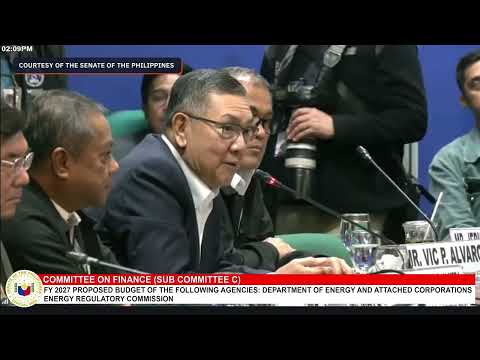
NEA Administrator Antonio Mariano Almeda told senators during deliberations on the Department of Energy’s proposed 2027 budget that the agency is now seeking the P7 billion in addition to its existing loan equity fund to cushion electric cooperatives from the financial impact of removing non-technical system losses from consumers’ electricity bills.

NEA seeks extra P7 billion to eliminate non-technical system losses

“The P7 billion is a fund in addition to the loan equity fund of the National Electrification Administration to loan to the electric cooperatives,” Almeda said on Thursday, September 17.

Under NEA’s proposed 2027 budget, the P850-million equity infusion is already intended to finance loans to electric cooperatives. The agency targets facilitating P850 million worth of loans to 18 cooperatives next year, up from P810 million targeted in 2026. 

There is no separate allocation in the NEP for system loss reduction.

Non-technical system losses refer to electricity that goes unaccounted for because of factors such as pilferage, illegal connections, and inaccurate or missing meters. They differ from technical losses, which naturally occur as electricity travels through distribution lines and cannot be completely eliminated.

System loss has become a hot policy issue after President Ferdinand Marcos Jr. used his July State of the Nation Address to call for an immediate amendment of the Electric Power Industry Reform Act in order to prohibit utilities from passing system loss charges, including the corresponding VAT, on to consumers. 

The directive has put pressure on energy agencies and regulators to work out how those charges can be reduced or removed without undermining the finances and operations of electric cooperatives and other distribution utilities. 

Must Read

Meralco chair Pangilinan: Power industry ‘may not survive’ if asked to absorb system loss


Meralco chair Pangilinan: Power industry ‘may not survive’ if asked to absorb system loss

Why electric co-ops need these loans

Almeda said electric cooperatives would have to spend heavily on metering as the government moves to stop passing non-technical losses on to consumers, including installing meters for currently unmetered connections and replacing meters as authorities crack down on electricity theft.

NEA estimates its four-stage program would require around P7.5 billion in capital expenditures. Almeda said the first phase, which would reduce non-technical system losses to 25%, would require around P4 billion. Another P1 billion would be needed for each of the next two stages, followed by P1.5 billion for complete elimination.

The proposed assistance would not be a subsidy. Instead, NEA would lend the money to electric cooperatives for investments needed to reduce their losses.

At an earlier DOE press conference, Almeda said NEA estimated that 62 of the country’s 121 electric cooperatives could suffer financial losses if 25% of non-technical system losses could no longer be recovered from consumers.

Almeda has pointed to the Zamboanga City Electric Cooperative as an example of what the program could achieve. He said its system loss rate fell from around 20% in January 2026 to roughly 13% by July following interventions that included additional metering, capital infusion, and management measures. – Rappler.com

Must Read

Cheaper PH electricity? Go beyond system loss; fix costly power contracts


Cheaper PH electricity? Go beyond system loss; fix costly power contracts

Similar Posts

  • |

    Petrol prices may bring relief in two days if global oil rates stay stable

    LAHORE: Federal Petroleum Minister Ali Pervaiz Malik has indicated that consumers could receive some relief in petroleum prices within the next two days if international crude oil rates remain stable, while acknowledging that elevated fuel costs continue to place pressure on households and the wider economy. Speaking in Lahore, the petroleum minister said the government was closely monitoring developments in the international oil market and would take the prevailing global prices into account during the next petroleum price review. Malik explained that petroleum prices in Pakistan are linked to international market trends and are calculated on the basis of a seven-day average. He said the Oil and Gas Regulatory Authority (OGRA) is responsible for determining the prices under the existing mechanism. He added that the movement of global oil prices during the next couple of days would be particularly important in determining whether consumers could receive positive news in the upcoming review. Government averts fuel supply crisis The minister said Pakistan had managed to maintain uninterrupted supplies of petroleum products despite severe pressure created by regional tensions and volatility in international energy markets. According to Malik, Prime Minister Shehbaz Sharif and his team took measures on both the economic and diplomatic fronts to ensure that the country did not experience a fuel shortage. He said the government had continued supplying petroleum products across the country even during a period when uncertainty in the region was creating serious risks for energy-importing nations. “There was no shortage of petroleum products in Pakistan during the tension,” Malik said, stressing that maintaining fuel supplies remained one of the government’s key priorities. He acknowledged, however, that preventing a shortage did not eliminate the financial burden caused by high international oil prices. International oil market remains a major concern Malik said the recent regional conflict created extraordinary volatility in global energy markets. He pointed to sharp increases in crude oil, petrol and diesel prices during the period of heightened tensions. He said crude oil prices had at one stage climbed as high as $170 per barrel, while diesel prices reached around $280 and petrol prices also touched $170. The minister further referred to periods when market expectations pointed towards even more dramatic increases, with petrol and diesel prices moving towards levels of around $500. Such volatility, he said, demonstrated the difficulties faced by countries that rely heavily on imported energy to meet domestic requirements. Pakistan, being an energy-importing country, remains particularly vulnerable to sudden increases in international oil prices because changes in global rates can quickly affect domestic fuel prices, transportation expenses and industrial costs. Expensive fuel putting pressure on people The petroleum minister conceded that high fuel prices are creating difficulties for ordinary citizens and businesses. He said an increase in petroleum prices does not remain confined to fuel stations, as higher transportation and energy costs eventually affect the prices of goods and services throughout the economy. According to Malik, expensive petroleum products increase the cost of moving agricultural produce, industrial raw materials and finished goods, thereby adding to inflationary pressure. “The people are suffering” because petroleum products are expensive, he said, while maintaining that the government was making efforts to provide relief within its available financial capacity. Petroleum levy collection exceeds target Malik also disclosed that the government collected around Rs1,900 billion through the petroleum levy during the previous year, exceeding the official target of Rs1,700 billion. The collection represents an important source of government revenue, but the minister acknowledged the broader economic implications of relying on petroleum-related revenues while consumers are already facing high fuel costs. He said the government had to balance revenue requirements with the need to protect consumers from excessive increases in petroleum prices. Prices cut when conditions allowed The minister said the government reduced petroleum prices whenever international market conditions and other relevant factors created room for downward revisions. He said Prime Minister Shehbaz Sharif had ordered reductions when an agreement was reached and circumstances permitted the government to pass on the benefit to consumers. Malik said the administration was attempting to manage fuel prices within the limits imposed by international markets and domestic economic conditions. He also recalled the prime minister’s commitment to introducing greater transparency in the petroleum pricing mechanism. The minister said the government had been required to make difficult decisions as part of broader efforts to stabilise the economy and place Pakistan on a sustainable development path. Heavy reliance on imported energy questioned Malik also raised concerns over Pakistan’s longstanding dependence on imported energy. He questioned why the country had continued relying on overseas energy supplies for decades despite having significant potential for developing domestic oil and gas resources. The minister said Pakistan obtains around 90% of its energy requirements from foreign sources, leaving the economy exposed to fluctuations in global energy prices and geopolitical developments. He argued that reducing this dependence should be treated as a long-term national priority. According to Malik, Pakistan has promising gas resources in areas such as Waziristan and Balochistan, and greater efforts are required to explore, develop and utilise domestic reserves. He said increasing local production could eventually reduce pressure on the country’s import bill and provide greater protection against international price shocks. Focus shifts towards domestic energy development The minister said Pakistan could not continue responding to every international energy crisis after it had already occurred. Instead, he stressed the need for long-term investment in exploration, infrastructure and domestic energy production. He said the government wants to move the country away from a cycle in which international price increases immediately translate into domestic economic difficulties. Malik described development of local energy resources as an important component of Pakistan’s broader economic strategy. He said the government was working towards an environment in which energy availability could support industrial expansion, investment and economic growth. Major energy infrastructure initiative planned Malik also referred to a new infrastructure initiative, saying the prime minister and the field marshal had assigned a major internationally recognised company to undertake energy infrastructure work within a

  • | | | | | |

    [In This Economy] Should Filipinos’ ‘consumption culture’ be blamed for the weak peso?

    BSP Governor Eli Remolona did not say that consumption is the enemy. Instead, the underlying message is that our country as a whole needs to find better ways to finance our investments.

Leave a Reply

Your email address will not be published. Required fields are marked *