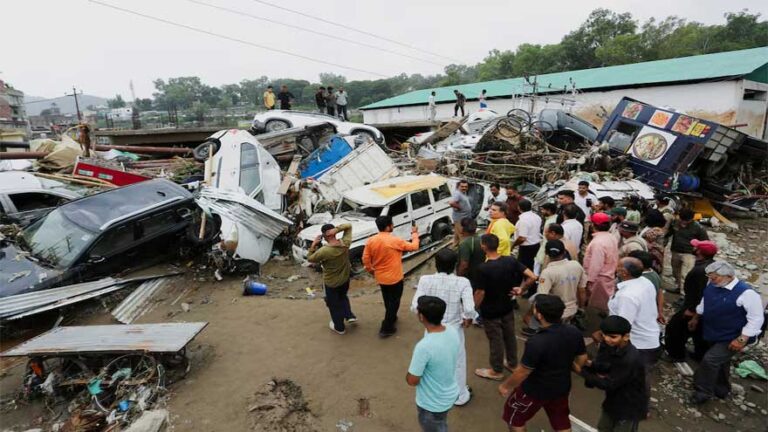
new cctv footage
| |

New CCTV footage emerges in Mir Raza Ali murder in…

Fresh CCTV footage has surfaced in the investigation into the murder of Mir Raza Ali, providing investigators with another potential lead as police continue to examine the circumstances surrounding his death.

The newly obtained footage, captured by a surveillance camera overlooking the area where Ali’s body was discovered, shows a motorcycle stopping briefly at the location. According to investigators, the recording is timestamped at 3:36 a.m. on July 29, with the motorcycle remaining at the scene for approximately 20 seconds before leaving.

Due to poor lighting, the footage does not clearly reveal the number of people riding the motorcycle or provide any identifying details, making further forensic analysis necessary.

Mir Raza Ali, a resident of Karachi’s Pakistan Employees Cooperative Housing Society (PECHS), went missing on July 28 after leaving his home at around 4:09 a.m. in an online taxi. His body was found two days later in Gulistan-e-Jauhar.

Police said the victim had sustained a gunshot wound to the chest, and his body was recovered in a severely deteriorated condition, indicating that it had remained at the location for some time before being discovered.

Investigators have also revealed that all of Mir Raza Ali’s social media accounts were deactivated a day before his body was found, adding another element to the ongoing probe.

Authorities are continuing to review CCTV footage, forensic evidence, and digital records as they work to determine the motive behind the killing and identify those responsible for the crime.
Similar Posts

  • | |

    Trump hails Makkah Defence pact, calls it bold ste…

    WASHINGTON: US President Donald Trump has welcomed the newly signed Makkah Joint Defence Agreement between Pakistan, Saudi Arabia and Türkiye, describing the trilateral pact as an important step toward greater regional security. Trump said he was pleased to see the three countries formalise the agreement, arguing that it demonstrated a growing willingness among Middle Eastern and regional states to strengthen their ability to protect themselves. The agreement was signed in Makkah on August 7 during a summit involving Prime Minister Shehbaz Sharif, Saudi Crown Prince Mohammed bin Salman and Turkish President Recep Tayyip Erdogan. It establishes a framework for closer defence cooperation, collective deterrence and enhanced strategic coordination among the three countries. Although the pact has drawn comparisons with NATO, security analysts say it is primarily an institutionalisation of longstanding political and military ties rather than the creation of a new offensive military alliance. The framework is expected to facilitate greater cooperation in areas including intelligence sharing, defence planning, military coordination and strategic consultations. The agreement comes amid an increasingly complex regional security environment marked by conflicts, shifting alliances and emerging military threats. Supporters argue that stronger coordination among the three countries could enhance deterrence and contribute to regional stability. Pakistan brings extensive military and operational experience, while Saudi Arabia offers significant economic and political influence. Türkiye, meanwhile, contributes a developed defence industry, military technology and industrial capabilities. Analysts believe combining these strengths could improve the partners’ collective preparedness. Turkish President Erdogan has also described the agreement as a significant message for global peace. Speaking in an interview with Al Jazeera Arabic, he said the decision to sign the pact in Makkah gave it additional significance, particularly amid tensions between the United States and Iran. Erdogan stressed that Pakistan, Türkiye and Saudi Arabia sought to position themselves as advocates of peace and said the three countries would continue supporting diplomatic efforts to prevent conflict. Asked whether the agreement was comparable to NATO’s Article 5, Erdogan said its collective defence principle meant the three countries would have the opportunity to respond jointly if any member faced a serious threat. He also revealed that the framework could eventually expand beyond the three founding members. According to Erdogan, the agreement leaves the door open for other countries to join, with Egypt among the potential future participants. The pact is therefore emerging as a significant development in regional security cooperation, while its proponents present it as a defensive mechanism designed to strengthen deterrence and promote stability rather than fuel confrontation.

  • | |

    Six Pakistani dramas that gave women powerful stories

    Pakistani television has produced many memorable female characters. Some of them stood out because they were not written simply as victims waiting to be rescued. Over the decades, several dramas showed women working, making difficult choices, facing social pressures and rebuilding their lives. These characters were ambitious, emotional and flawed. Most importantly, they were allowed to shape their own stories. Here are six dramas that created some of Pakistani television’s most memorable female leads. Ankahi (1982) Written by Haseena Moin, Ankahi introduced audiences to Sana Murad, played by Shehnaz Sheikh. Sana is confident, outspoken and determined. After her father’s death creates financial problems for the family, she decides to take responsibility. Despite having limited qualifications, she manages to secure a job after an unexpected meeting with a company chairman. Her journey through professional life becomes a mix of humour, challenges and personal growth. Sana’s character was significant because she was not defined by marriage or romance. She wanted to work and create a future for herself. Tanhaiyaan (1985) Haseena Moin’s Tanhaiyaan, directed by Shahzad Khalil, focused on two sisters who suddenly lose their parents and their family home. Played by Marina Khan and Shehnaz Sheikh, the sisters are forced to rebuild their lives independently. The drama presented women earning their own income without treating their decision to work as something unusual. Their struggles were balanced with friendship, humour and everyday challenges. That combination helped the drama remain popular long after its original broadcast. Maat (2011) Umera Ahmad’s Maat followed two sisters whose different priorities eventually take them in completely different directions. Saba Qamar played Saman, a woman strongly attracted to wealth, comfort and social status. Her sister Aiman, played by Aamina Sheikh, takes a quieter path. Aiman is repeatedly underestimated and overlooked. She faces difficult circumstances but continues building her life with patience and resilience. As the story progresses, the sisters’ fortunes change dramatically. The drama explores how ambition, relationships and personal choices can shape a person’s future. Durr-e-Shehwar (2012) Durr-e-Shehwar explored marriage from a perspective that was rarely shown without romanticising sacrifice. The central character enters marriage expecting affection and companionship. Instead, she faces emotional distance from her husband and hostility from her mother-in-law. The story is later viewed through the eyes of her daughter, Shandana. She initially believes her parents had a perfect marriage. She eventually discovers the struggles her mother endured. The drama raises questions about compromise, expectations and the sacrifices women make to preserve relationships. Digest Writer (2014) Saba Qamar played Fareeda, a young woman whose ambitions are often overshadowed by the expectations placed on her family’s son. Writing becomes Fareeda’s escape and her way of expressing herself. She begins publishing stories under the name Rashk-e-Hina. Her talent eventually attracts the attention of a television producer, giving her an opportunity to enter the drama industry. However, success does not come easily. Fareeda faces professional rivalry, betrayal and pressure from her family. The drama presents ambition as something meaningful while also showing the personal cost of pursuing a career in a difficult environment. Udaari (2016) Udaari tackled one of the most sensitive subjects in Pakistani television. The story follows Zebo, whose childhood is shattered by abuse. However, the drama does not define her entire identity through her trauma. Instead, Zebo gradually finds the courage to speak about what happened to her. Her mother also undergoes a major transformation. After realising the danger her daughter faces, she chooses to protect Zebo and rebuild their lives. Meera, a singer living nearby, also becomes an important source of support. One of the drama’s most powerful moments comes when Zebo confronts her abuser in court. Rather than accepting shame for what happened to her, she identifies herself as a survivor. Across four decades, these dramas demonstrate how Pakistani television has portrayed women in changing ways. From Sana’s determination to build a career to Zebo’s courage to seek justice, these characters were given stories beyond romance and victimhood.

  • | |

    Sam Smith reveals how Christian Cowan inspired new…

    Sam Smith is entering a new musical era, and this time, love is at the center of it. The Grammy-winning singer recently opened up about their upcoming fifth studio album, Hazel Eyes, revealing that much of the record was inspired by their relationship with fiancé Christian Cowan. Smith discussed the deeply personal project during an appearance on The New Yorker Radio Hour on August 11. [WNYC](https://wnyc.org/browse/shows/episode/simplecast/0952c9d3-73c5-47c0-a19f-950b525afeb7?utm_source=chatgpt.com) For Smith, the new album represents a major change from their earlier work. Their breakthrough album, In the Lonely Hour, became famous for songsa about heartbreak and unrequited love. This time, however, Smith is writing from a place of happiness and mutual love. The singer explained that Cowan has been extremely supportive throughout the creative process. Smith described the fashion designer as someone who encouraged them while they worked on the record. The album is especially personal because Smith considers it a love letter to Cowan and the relationship they are building together. However, they also admitted that sharing such intimate feelings through music can be difficult. Smith said there was a balance between deciding how much of their relationship to reveal and protecting something that remains private. That tension became part of the process of creating the album. Even the album title carries a connection to Cowan. Hazel Eyes is named after the designer’s eye color, making the title itself a subtle tribute to Smith’s fiancé. The record is scheduled for release on August 21. [People\.com](https://people.com/sam-smith-says-new-album-is-love-letter-to-fiance-christian-cowan-12058496?utm_source=chatgpt.com) One of the most meaningful songs on the project is “Everlasting Love.” Smith began writing the track shortly before their first date with Cowan, making it particularly significant in the story of their relationship. The song also represents a new experience for Smith because it focuses on love that is returned rather than one-sided. [People\.com](https://people.com/sam-smith-says-new-album-is-love-letter-to-fiance-christian-cowan-12058496?utm_source=chatgpt.com) Smith and Cowan have been together for several years and confirmed their engagement in July 2026. Their relationship has increasingly become an important source of inspiration for Smith’s art, while the couple has continued to protect many details of their private life. [People\.com](https://people.com/sam-smith-is-engaged-to-christian-cowan-11968083?utm_source=chatgpt.com) The upcoming album therefore marks more than a new chapter in Smith’s music career. It reflects a different emotional perspective, one shaped by stability, joy and being loved in return. After years of singing about heartbreak, Smith is now turning their happiest relationship into music. And with Cowan’s support throughout the process, Hazel Eyes promises to offer fans a more intimate and hopeful side of the singer.

  • | |

    IMF pushes Pakistan provinces for rs430bn tax incr…

    ISLAMABAD: The International Monetary Fund (IMF) has asked Pakistan’s provincial governments to generate an additional Rs430 billion in tax revenue during the current fiscal year, as part of broader efforts to strengthen public finances and increase provincial own-source revenues. According to official details, the proposed increase in tax collection is equivalent to 0.3 per cent of Pakistan’s Gross Domestic Product (GDP) and is expected to be shared among the four provinces in line with their allocations under the National Finance Commission (NFC) Award. The move is aimed at improving fiscal sustainability by encouraging provinces to rely more on locally generated revenues rather than transfers from the federal government. Officials believe stronger provincial tax collection would also help create greater financial discipline and support long-term economic reforms. Sources said each province would contribute to the additional revenue target based on its respective share under the NFC formula, although specific collection targets for individual provinces have yet to be announced. The recommendation comes as Pakistan continues implementing economic reforms under its programme with the IMF, with revenue mobilisation remaining one of the key priorities for both the federal and provincial governments. Meanwhile, the federal government has decided to establish an inter-ministerial committee, to be headed by the prime minister, for the implementation of decisions made by the National Economic Council (NEC). According to officials, the committee will include federal and provincial ministers along with senior government representatives. It will be responsible for monitoring the execution of national policies, reviewing progress on major development initiatives and ensuring timely implementation of decisions taken by the NEC. The committee is also expected to strengthen coordination between the federation and the provinces, particularly on economic planning, fiscal reforms and development projects that require close cooperation among different levels of government. Government sources said improved coordination is considered essential for achieving national economic objectives and ensuring that development programmes are implemented efficiently across the country. Economists say increasing provincial tax revenues has long been a key recommendation of international financial institutions, which argue that greater fiscal autonomy can improve governance, reduce dependence on federal transfers and create a more balanced financial system. The IMF’s latest recommendation is likely to shape upcoming provincial budgetary decisions as governments evaluate measures to expand their tax base while balancing the need to protect economic activity. The proposed revenue measures are expected to remain a major focus of fiscal policy discussions in the months ahead.

  • | |

    Karachi roads blocked as JI protests fuel levy

    Traffic was disrupted across several major parts of Karachi on Friday as Jamaat-i-Islami (JI) workers staged sit-ins against the federal petroleum levy. The protests were part of a nationwide campaign announced by the party. JI had said it would hold demonstrations at hundreds of locations across the country by blocking major roads. Karachi traffic police issued an advisory warning motorists about congestion, temporary diversions and partial road closures in several areas. Major routes affected included areas around Mazar-i-Quaid, Numaish Chowrangi, Saddar, Sharea Faisal, Shahrah-i-Pakistan, UP Mor, Power House Chowrangi, Defence Housing Authority, Sea View, Shahrah-i-Orangi, Hub River Road, Super Highway and National Highway. The traffic police advised citizens to avoid the protest-hit areas where possible and use alternative routes. Commuters were also asked to allow additional time for their journeys. According to updates shared by JI Karachi, protesters blocked the road connecting Sharea Faisal with Natha Khan. The Super Highway and Hub River Road were also affected. Another road connecting the Sharea Faisal Nursery Bus Stop with the airport was reportedly blocked as protesters gathered at the designated locations. The demonstrations prompted criticism from the Sindh government. Provincial government spokesperson Sadia Javed said the petroleum levy was a federal issue and questioned why Karachi’s residents were facing difficulties because of the protest. She accused the JI of using the demonstrations for political gains instead of addressing public issues through relevant constitutional forums. Javed said road blockades were affecting the daily lives of millions of Karachi residents and raised concerns about the movement of ambulances and patients during the disruptions. She urged the party to raise its objections in Parliament and other relevant forums rather than blocking roads. The government spokesperson also warned protesters against damaging public property or taking the law into their own hands. The demonstrations were not limited to Karachi. JI workers also gathered in Lahore, Islamabad, Quetta and Peshawar as part of the nationwide campaign. In Islamabad, protesters reportedly blocked Srinagar Highway near Golra Mor while attempting to march towards Chungi 26. Several locations across Sindh also witnessed demonstrations, including Thatta, Matiari, Tando Allahyar and Shikarpur.

  • |

    Xi backs Brazil against foreign interference in call with Lula

    Chinese President Xi Jinping expressed support for Brazil’s efforts to protect its sovereignty and resist foreign interference during a phone conversation with Brazilian President Luiz Inacio Lula da Silva, according to Chinese state media. The discussion took place just months before Brazil’s closely watched presidential election and against the backdrop of growing trade and diplomatic tensions with the United States. According to China’s Xinhua news agency, Xi praised Brazil’s role on the international stage and said Beijing values the country’s influence in global affairs. He stated that China supports Brazil in defending its independence, rejecting outside interference, and contributing to regional and international peace and stability. The phone call comes less than three months before Brazilians head to the polls in an election expected to be highly competitive. President Lula is seeking another term and faces a challenge from right wing candidate Flavio Bolsonaro, the son of former president Jair Bolsonaro. The Brazilian presidency said the two leaders also discussed strengthening economic cooperation. Both sides agreed on the importance of accelerating negotiations for a trade agreement between China and Mercosur, the South American trade bloc that includes Brazil, Argentina, Paraguay, and Uruguay. Such an agreement could expand trade opportunities between the region and the world’s second largest economy. During the conversation, which lasted more than an hour, Lula reaffirmed his commitment to expanding Brazil’s international trade network. He said his government is working to diversify export markets and reduce dependence on a limited number of trading partners, particularly as Brazil faces increased tariff pressure from the United States. Relations between Brasilia and Washington have become more strained in recent months. The United States introduced two additional rounds of tariffs on a range of Brazilian products this month, following a significant tariff increase imposed last year. The measures were linked to political tensions surrounding the legal case that resulted in former president Jair Bolsonaro being sentenced to prison over an alleged coup plot. Lula has strongly criticized the tariffs, arguing that they amount to political pressure during an election year. He has accused Washington of attempting to influence Brazil’s domestic affairs through economic measures, an allegation the United States has rejected. Diplomatic tensions have also surfaced over election related issues. According to diplomatic sources, Brazil recently refused entry visas for two American officials who planned to visit the country’s election authorities ahead of the October vote. The move reflected growing sensitivity within the Brazilian government over foreign involvement in electoral matters. Meanwhile, Flavio Bolsonaro has continued to question the reliability of Brazil’s electronic voting system despite repeated assurances from election officials that it is secure. His claims have echoed similar allegations made by US President Donald Trump regarding American elections, although no credible evidence has supported those accusations. While the Chinese government highlighted Xi’s support for Brazil in resisting external interference, the official statement released by the Brazilian presidency did not specifically mention that part of the discussion. Instead, it focused on economic cooperation and the importance of strengthening trade ties between Brazil, China, and the Mercosur bloc. The conversation underscores the increasingly close relationship between Beijing and Brasilia at a time when Brazil is balancing political challenges at home with shifting economic and diplomatic dynamics on the global stage.

Leave a Reply

Your email address will not be published. Required fields are marked *